Alcohal
Hadith Collection
11 Hadiths
Hadith 1
1 of 11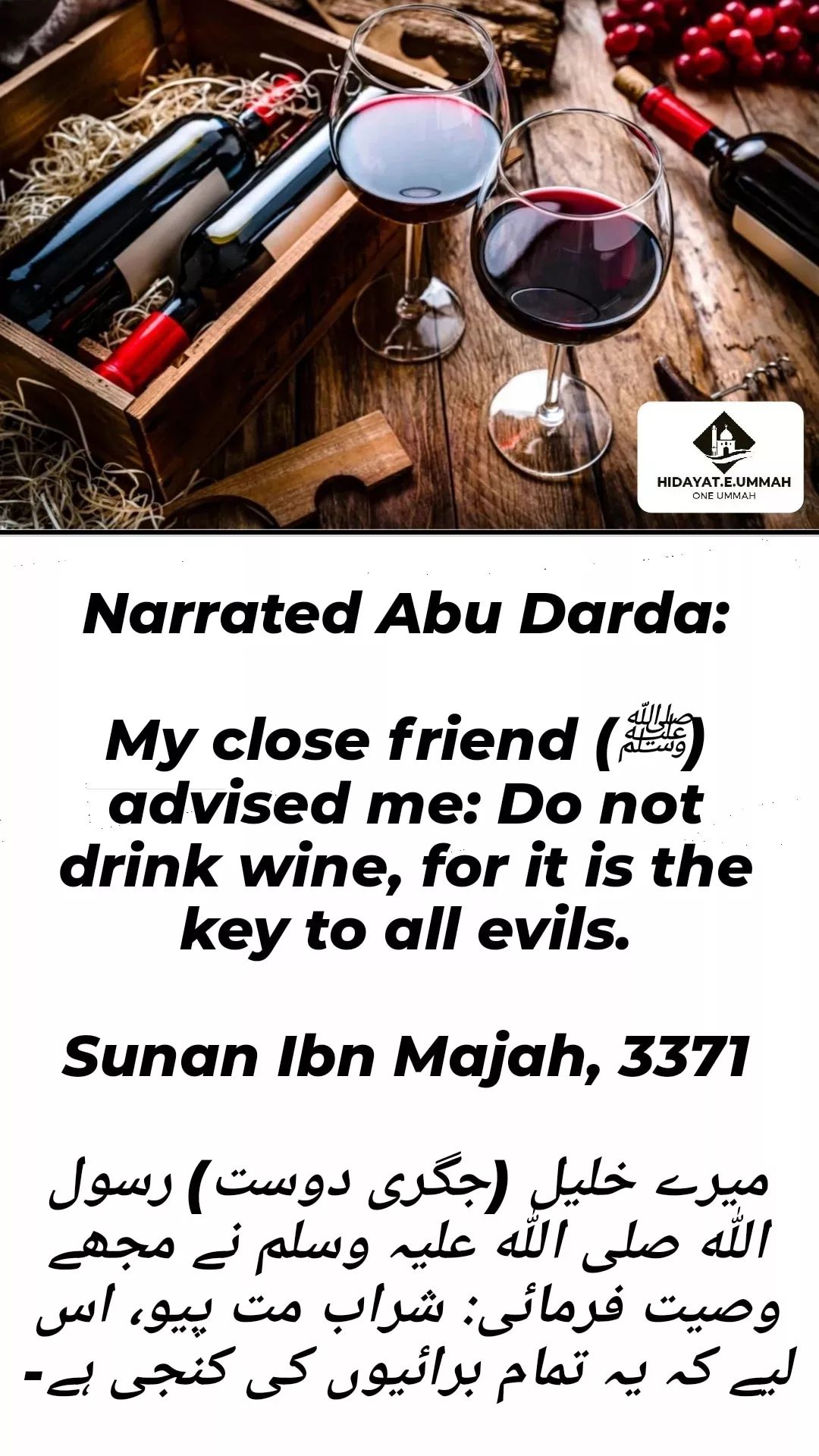
1. This hadith is a piece of advice from Prophet Muhammad (peace be upon him) to Abu Darda, emphasizing the harm of consuming wine or intoxicating substances.
2. Wine is referred to as 'the key to all evils' because it can cloud judgment, impair decision-making, and lead to sinful actions. Examples include harming others, neglecting responsibilities, or committing acts that one would not normally do.
3. Avoiding wine helps protect individuals from these negative consequences. It acts as a preventive measure to avoid situations that could lead to bigger problems.
4. Islam promotes self-control and accountability, and staying away from intoxicants supports a clear mind, enabling better moral conduct and proper worship.
5. This hadith serves as a reminder to avoid harmful behaviors, encouraging a lifestyle of responsibility, self-awareness, and mindful decision-making.
Hadith 2
2 of 11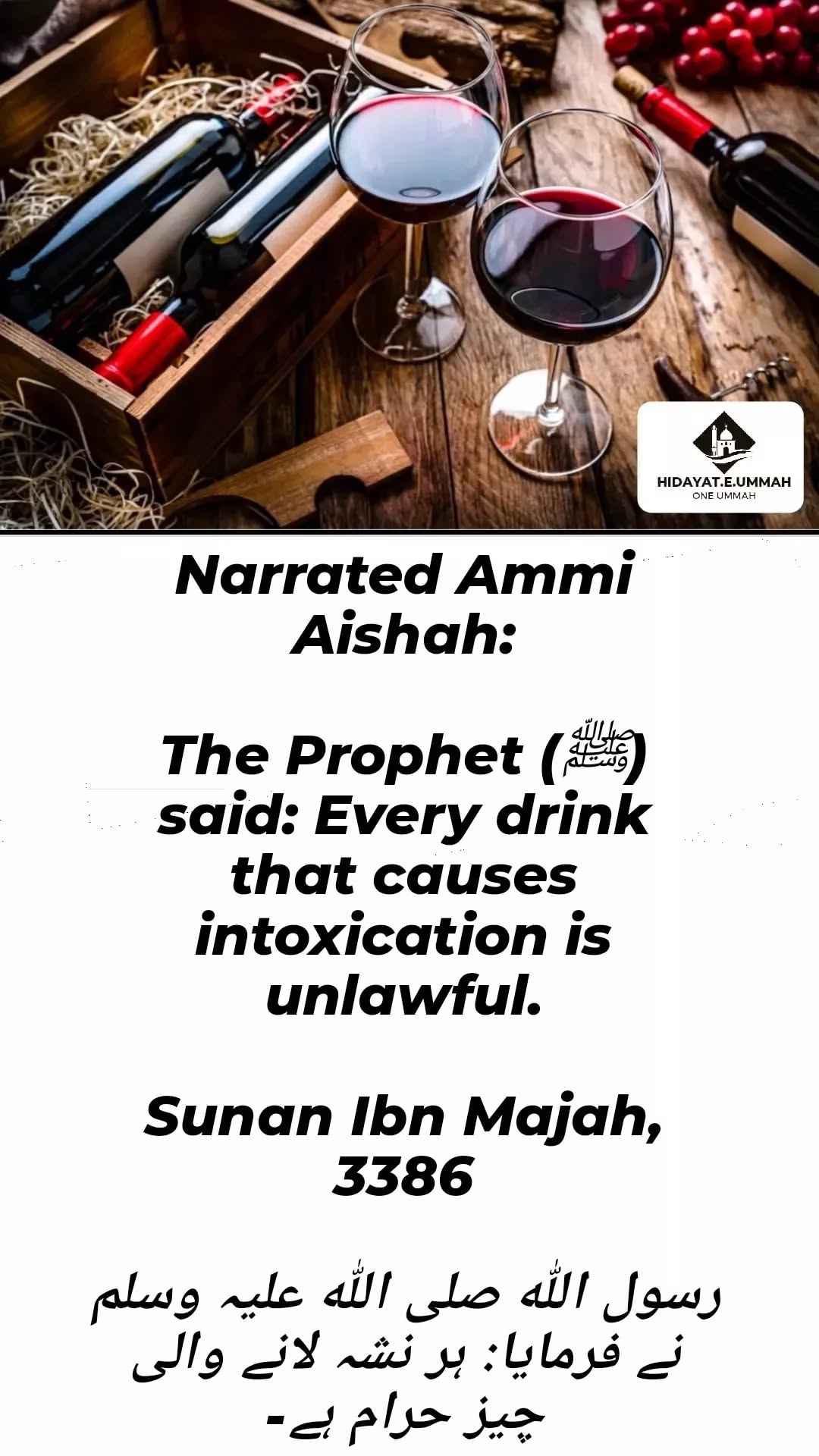
1. This hadith is a saying of Prophet Muhammad (peace be upon him) as narrated by Aishah, emphasizing the prohibition of intoxicating drinks in Islam.
2. The Prophet clearly states that any drink which causes intoxication, regardless of its type or amount, is considered unlawful (haram).
3. Intoxication is harmful because it impairs judgment, affects decision-making, and can lead to actions that are morally or spiritually damaging.
4. This prohibition aims to protect individuals and society from the negative consequences of intoxication, such as addiction, health problems, and social issues.
5. The hadith serves as a reminder for Muslims to avoid anything that can compromise their self-control, clarity of thought, or spiritual well-being.
Hadith 3
3 of 11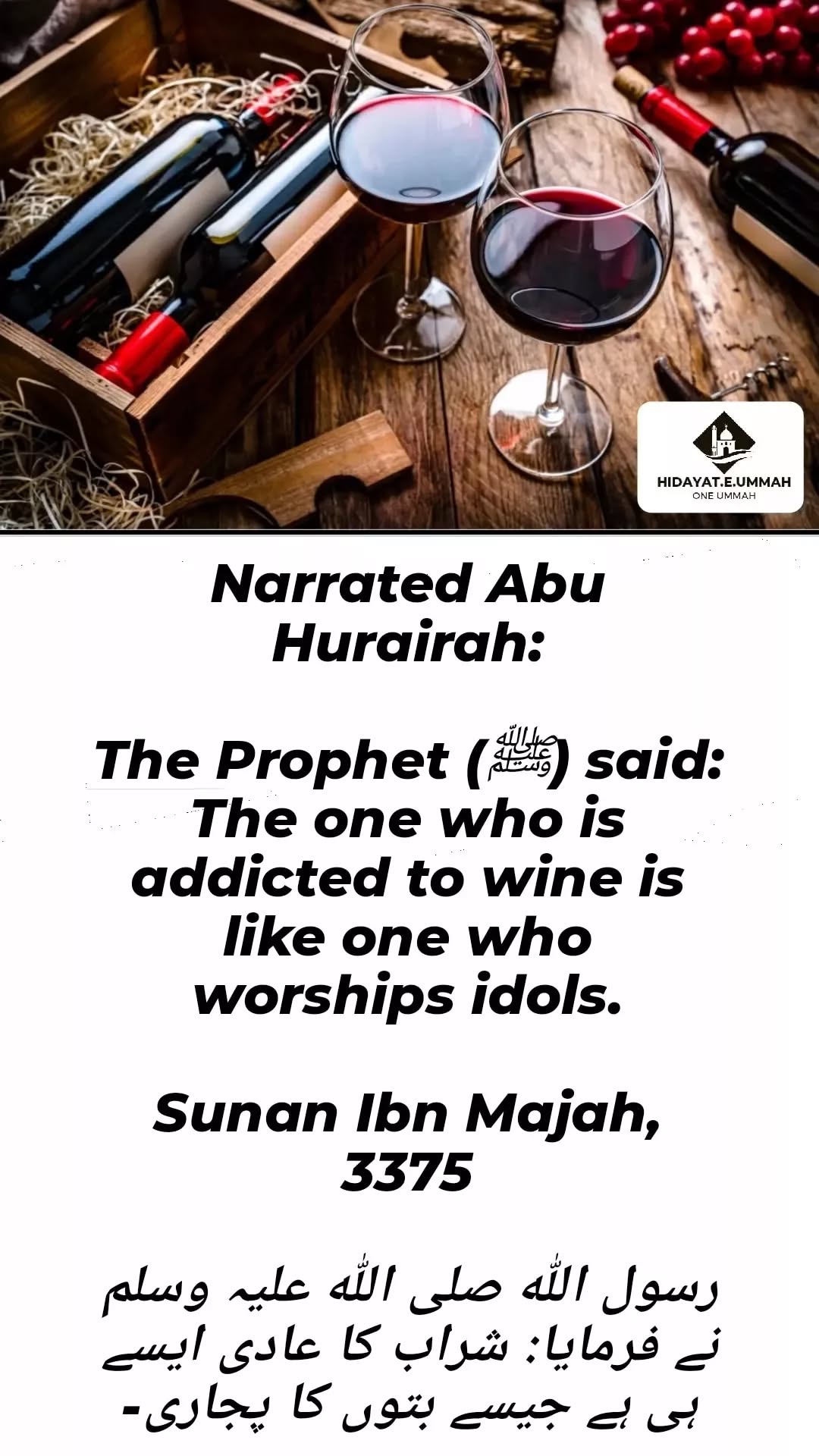
1. This hadith is a saying of Prophet Muhammad (peace be upon him) as narrated by Abu Hurairah, highlighting the severity of being addicted to wine or intoxicating substances.
2. The Prophet compares a person addicted to wine to someone who worships idols, emphasizing how both are deeply detrimental to a person's faith and spiritual state.
3. Addiction to wine leads to a loss of self-control and devotion to harmful desires, which can take the place of one's devotion to Allah.
4. Idol worship represents turning away from Allah, and similarly, addiction to intoxicants causes a person to stray from the principles of Islam and moral behavior.
5. This hadith serves as a strong warning to avoid becoming dependent on intoxicants, urging Muslims to prioritize their faith, self-discipline, and connection to Allah above all else.
Hadith 4
4 of 11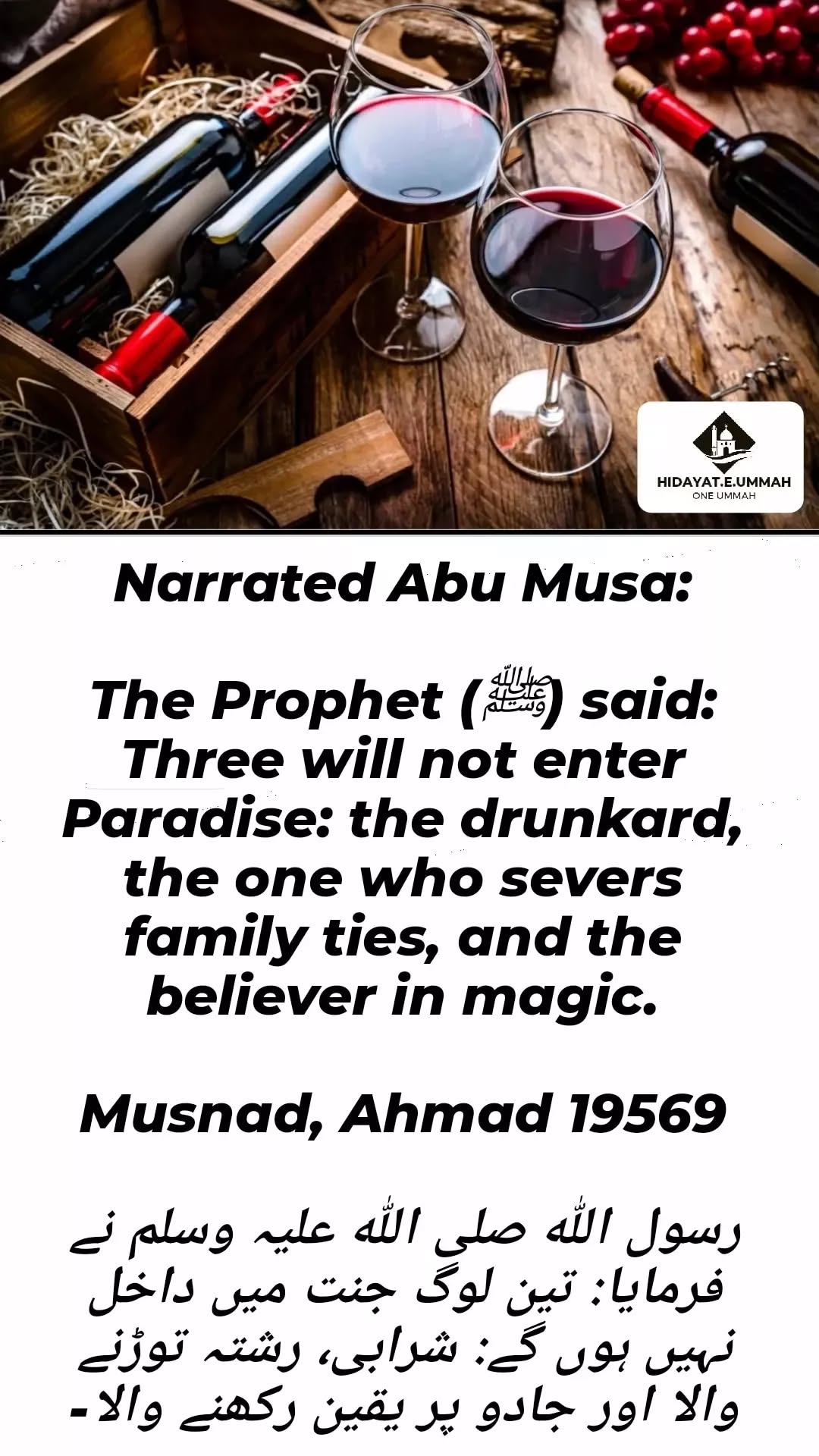
1. This hadith is a saying of Prophet Muhammad (peace be upon him) as narrated by Abu Musa, where the Prophet mentions three types of people who will not enter Paradise.
2. The first group is the drunkard—someone who consumes alcohol or any intoxicating substance. Intoxication leads to harmful behavior and loss of moral and spiritual integrity.
3. The second group is the one who severs family ties. This refers to a person who breaks or refuses to maintain good relationships with their relatives, which goes against the teachings of Islam.
4. The third group is the believer in magic. Believing in magic or using it to harm others goes against the fundamental belief in the power of Allah and His guidance.
5. This hadith serves as a warning that these behaviors, which go against the core values of Islam, will prevent someone from entering Paradise unless they repent and change their ways.
Hadith 5
5 of 11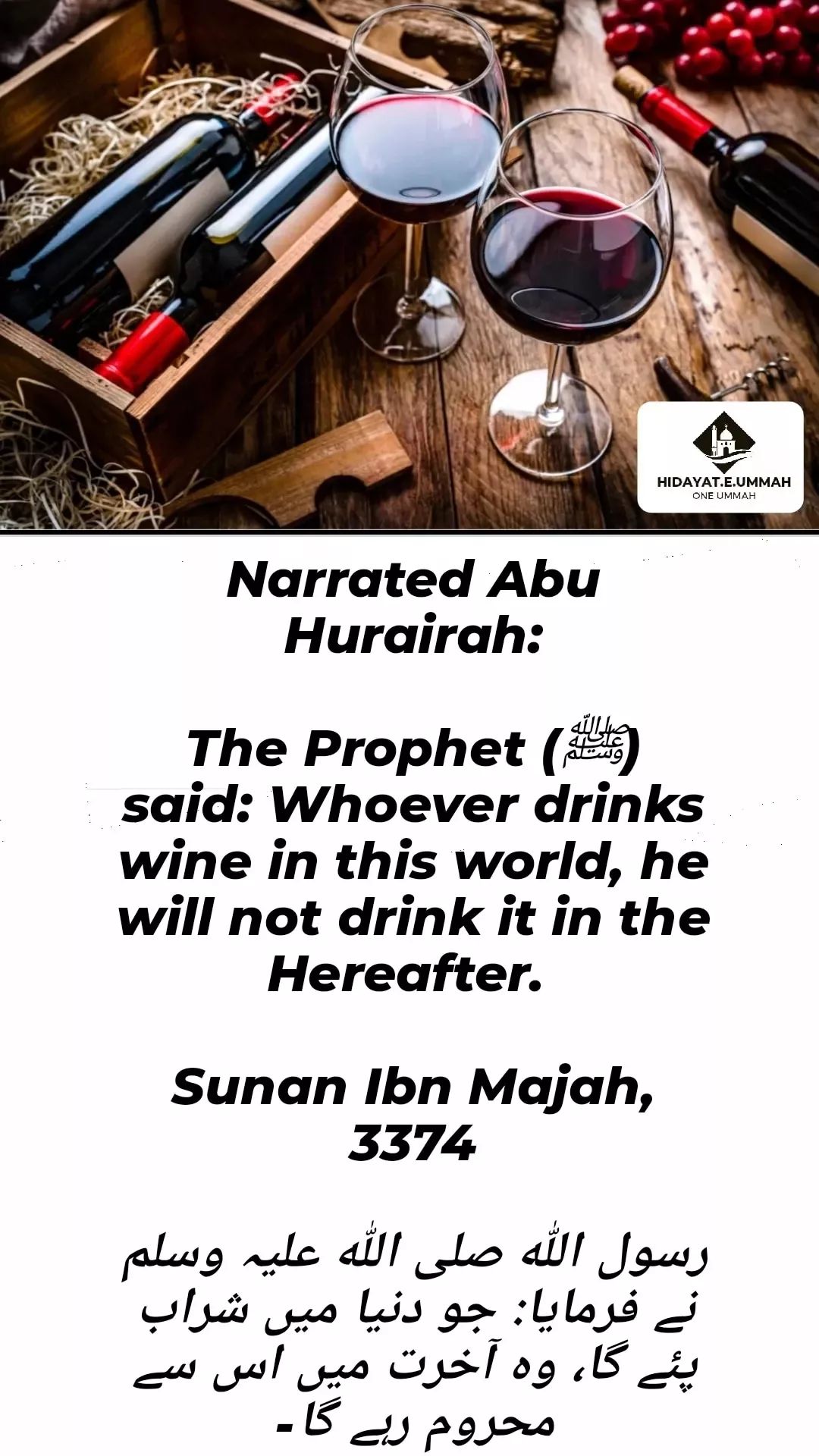
1. This hadith is a saying of Prophet Muhammad (peace be upon him) as narrated by Abu Hurairah, in which the Prophet speaks about the consequences of drinking wine.
2. The Prophet states that anyone who drinks wine in this world will not drink it in the Hereafter (after death).
3. This implies that those who consume wine in this world will face punishment in the Hereafter for their actions, as drinking alcohol is forbidden (haram) in Islam.
4. The hadith reminds Muslims to avoid intoxicating substances, as they not only harm individuals in this life but also affect their fate in the Hereafter.
5. The ultimate message is to stay away from sinful actions like drinking wine, which can prevent a person from attaining the rewards of Paradise.
Hadith 6
6 of 11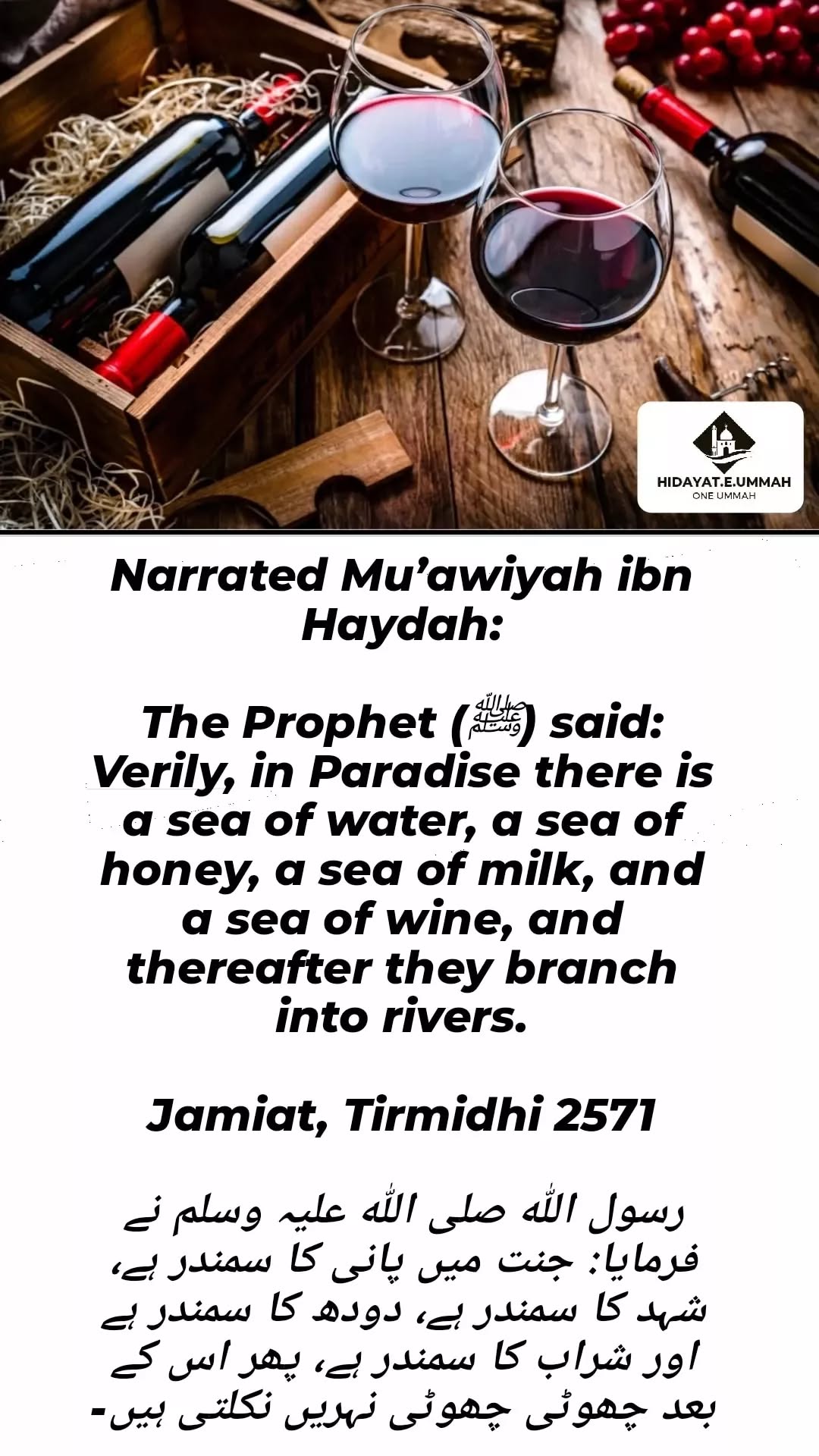
1. This hadith is a saying of Prophet Muhammad (peace be upon him) as narrated by Mu'awiyah ibn Haydah, describing the blessings of Paradise.
2. The Prophet mentions that in Paradise, there are four seas: a sea of water, a sea of honey, a sea of milk, and a sea of wine.
3. These seas symbolize the abundance and purity of the rewards in Paradise, each offering a different pleasure for the believers.
4. After these seas, the waters branch into rivers, which represent an endless supply of goodness and satisfaction for those who enter Paradise.
5. This hadith serves as a reminder of the unimaginable rewards and pleasures that await the righteous in the Hereafter, encouraging believers to strive for Paradise by following the teachings of Islam.
Hadith 7
7 of 11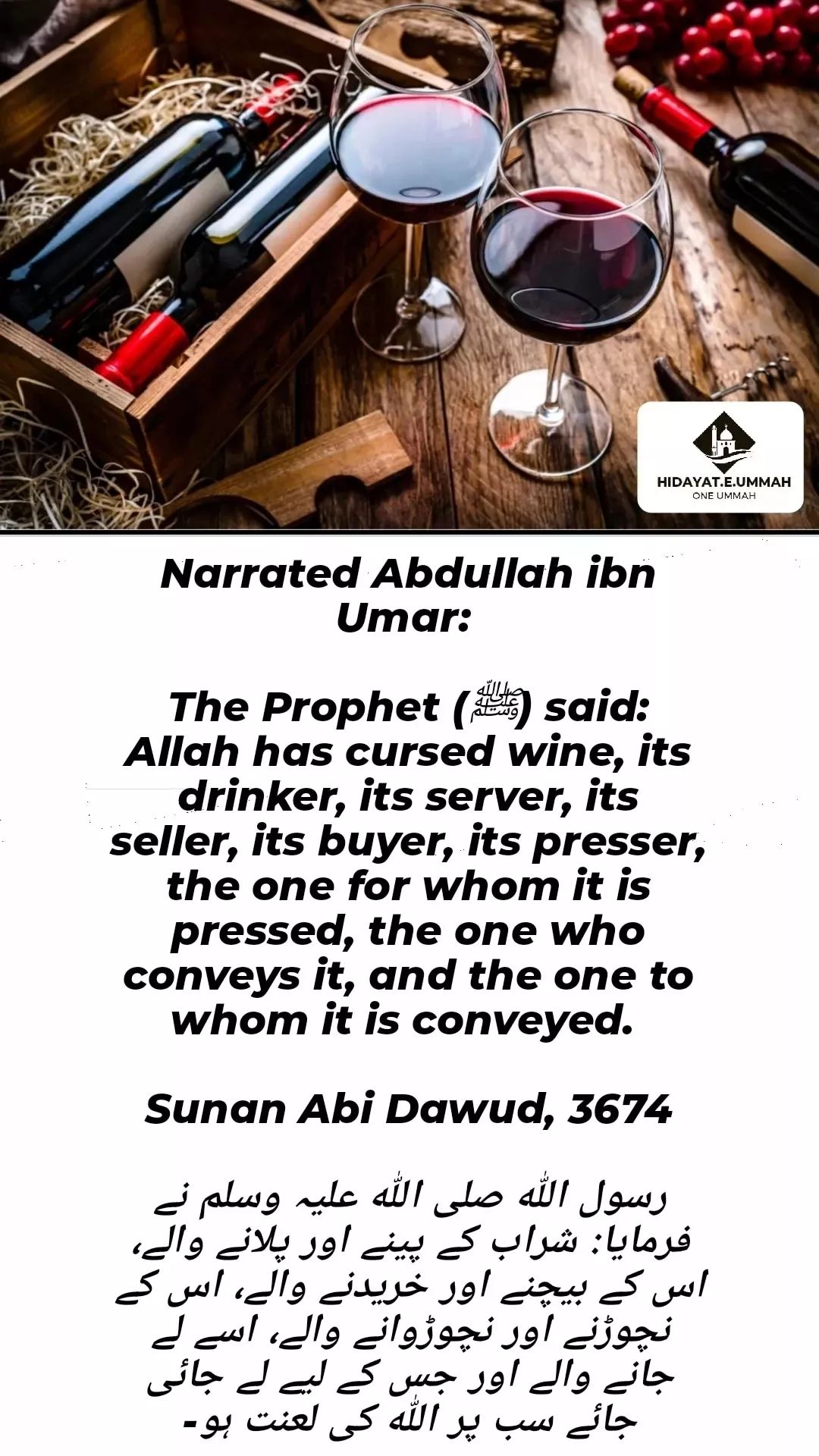
1. This hadith is a saying of Prophet Muhammad (peace be upon him) as narrated by Abdullah ibn Umar, in which the Prophet speaks about the curse of wine.
2. The Prophet says that Allah has cursed not only the drinker of wine but also everyone involved in its production and distribution, including the server, seller, buyer, presser, the person for whom it is pressed, the one who conveys it, and the one to whom it is conveyed.
3. This shows that the curse is not limited to the person who drinks wine, but extends to all those who contribute to making, selling, or passing it around, highlighting how serious the sin is.
4. The purpose of this hadith is to warn Muslims about the harmful consequences of alcohol, urging them to avoid any involvement with it in any form.
5. The overall message is that Islam strictly prohibits anything that leads to intoxication and encourages believers to stay away from all activities related to alcohol to maintain purity and righteousness.
Hadith 8
8 of 11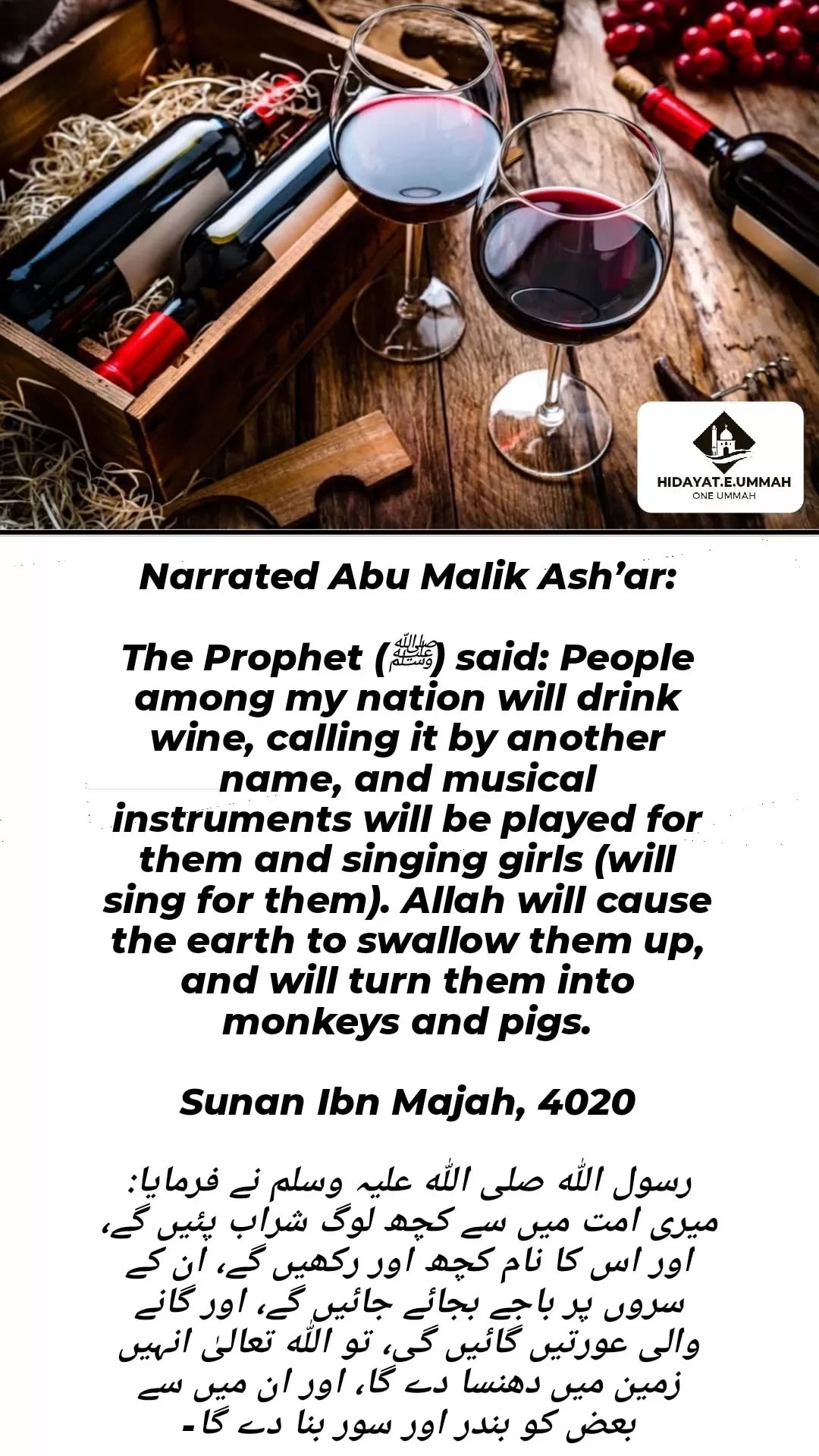
1. This hadith is a saying of Prophet Muhammad (peace be upon him) narrated by Abu Malik Ash'ari, where the Prophet warns about certain behaviors among his followers.
2. The Prophet mentions that some people in his nation will drink wine, but they will call it by a different name to disguise its true nature.
3. In addition to drinking alcohol, these people will also listen to music and have musical instruments played for them, and they will indulge in entertainment such as singing girls.
4. The Prophet warns that because of these sinful behaviors, Allah will punish these people severely. He will cause the earth to swallow them up and turn them into monkeys and pigs.
5. The lesson from this hadith is a strong warning about indulging in forbidden actions such as consuming alcohol, listening to music, and engaging in immoral entertainment. It emphasizes the importance of avoiding these sins to protect one's faith and avoid Allah's punishment.
Hadith 9
9 of 11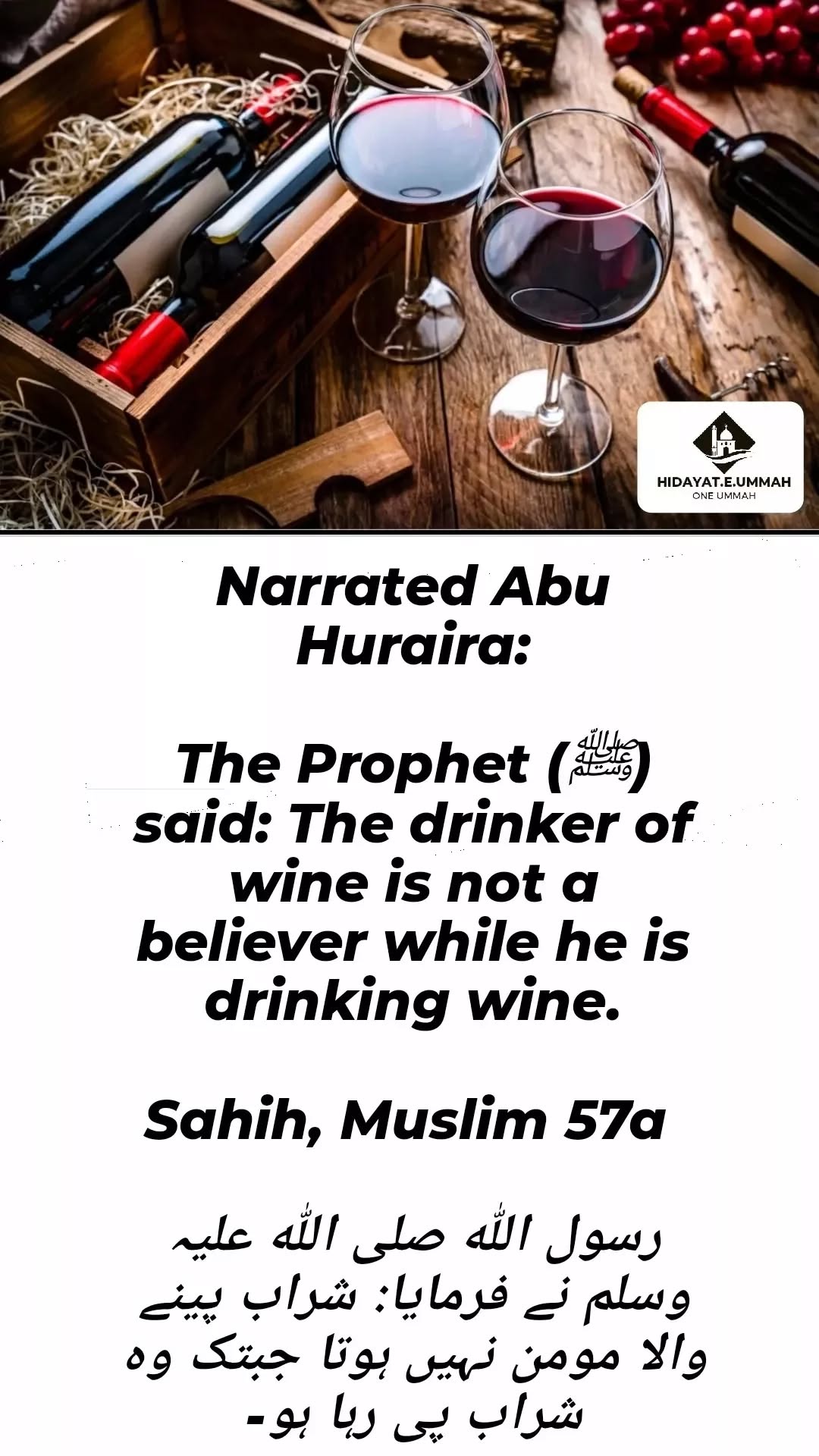
1. This hadith is a saying of Prophet Muhammad (peace be upon him) narrated by Abu Huraira, emphasizing the serious nature of consuming wine.
2. The Prophet states that the drinker of wine is not considered a true believer while they are drinking wine. This implies that drinking alcohol takes a person away from the state of true faith.
3. The hadith highlights the impact of consuming intoxicants on one's spiritual state. Intoxication affects judgment and can lead to sinful behavior, making it incompatible with true belief in Islam.
4. The message is not that the person is permanently without faith, but that drinking wine is a grave sin that diminishes a person’s connection to their faith while they are engaged in it.
5. The overall lesson is that Muslims should avoid drinking wine or any intoxicants to maintain their faith and spiritual integrity.
Hadith 10
10 of 11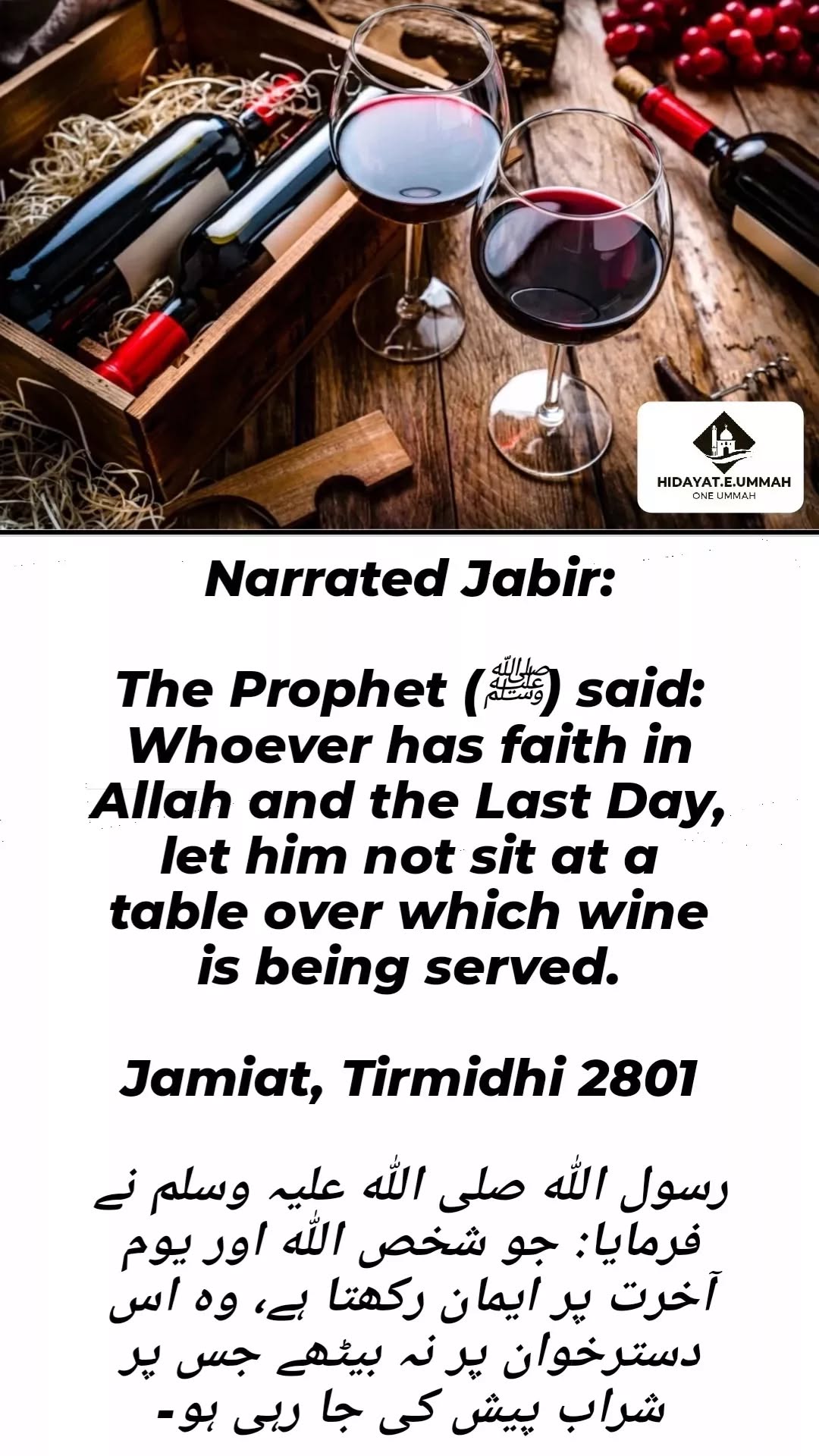
1. This hadith is a saying of Prophet Muhammad (peace be upon him) narrated by Jabir, where the Prophet provides guidance on how Muslims should behave in relation to wine.
2. The Prophet advises that anyone who truly has faith in Allah and believes in the Last Day (the Day of Judgment) should avoid sitting at a table where wine is being served.
3. This shows that consuming wine is not only forbidden, but being in the presence of it can also negatively affect one's faith.
4. The hadith highlights the importance of maintaining moral integrity and spiritual awareness in all situations, even when others are engaging in sinful actions like drinking wine.
5. The overall message is that a true believer should avoid situations where alcohol is present to safeguard their faith and remain focused on upholding Islamic principles.
Hadith 11
11 of 11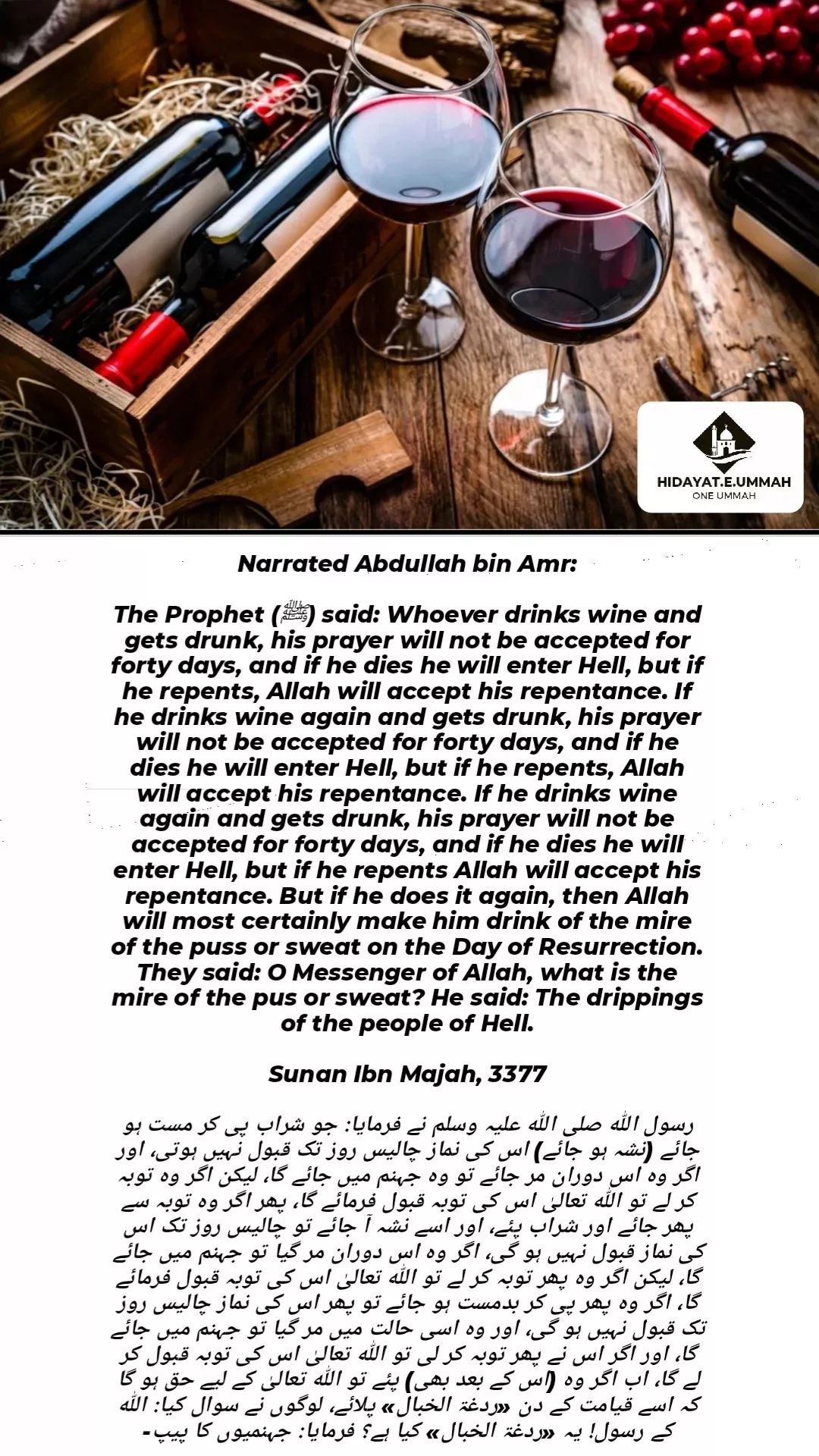
1. This hadith is a saying of Prophet Muhammad (peace be upon him) narrated by Abdullah bin Amr, explaining the serious consequences of drinking wine and getting drunk.
2. The Prophet states that if a person drinks wine and gets drunk, their prayers will not be accepted for forty days. This shows how drinking alcohol negatively affects a person's spiritual connection to Allah.
3. If a person who drinks wine dies while still in that state, they will enter Hell, highlighting the severity of this sin.
4. However, if the person repents sincerely, Allah will accept their repentance, showing that Allah's mercy is available to those who seek forgiveness.
5. If the person drinks wine again and repeats the same behavior, the same consequences will apply: no prayers for forty days and possible entry into Hell, but repentance will still be accepted.
6. If the person continues drinking wine and getting drunk, a final severe punishment awaits them: on the Day of Resurrection, they will be made to drink the 'mire of the pus or sweat', which is the filthy, disgusting drippings from the people of Hell.
7. The hadith emphasizes the importance of avoiding the sin of drinking wine, the need for sincere repentance, and the severe consequences of repeated sinful behavior if one does not change.