
Anger
Hadith Collection
6 Hadiths
Hadith 1
1 of 6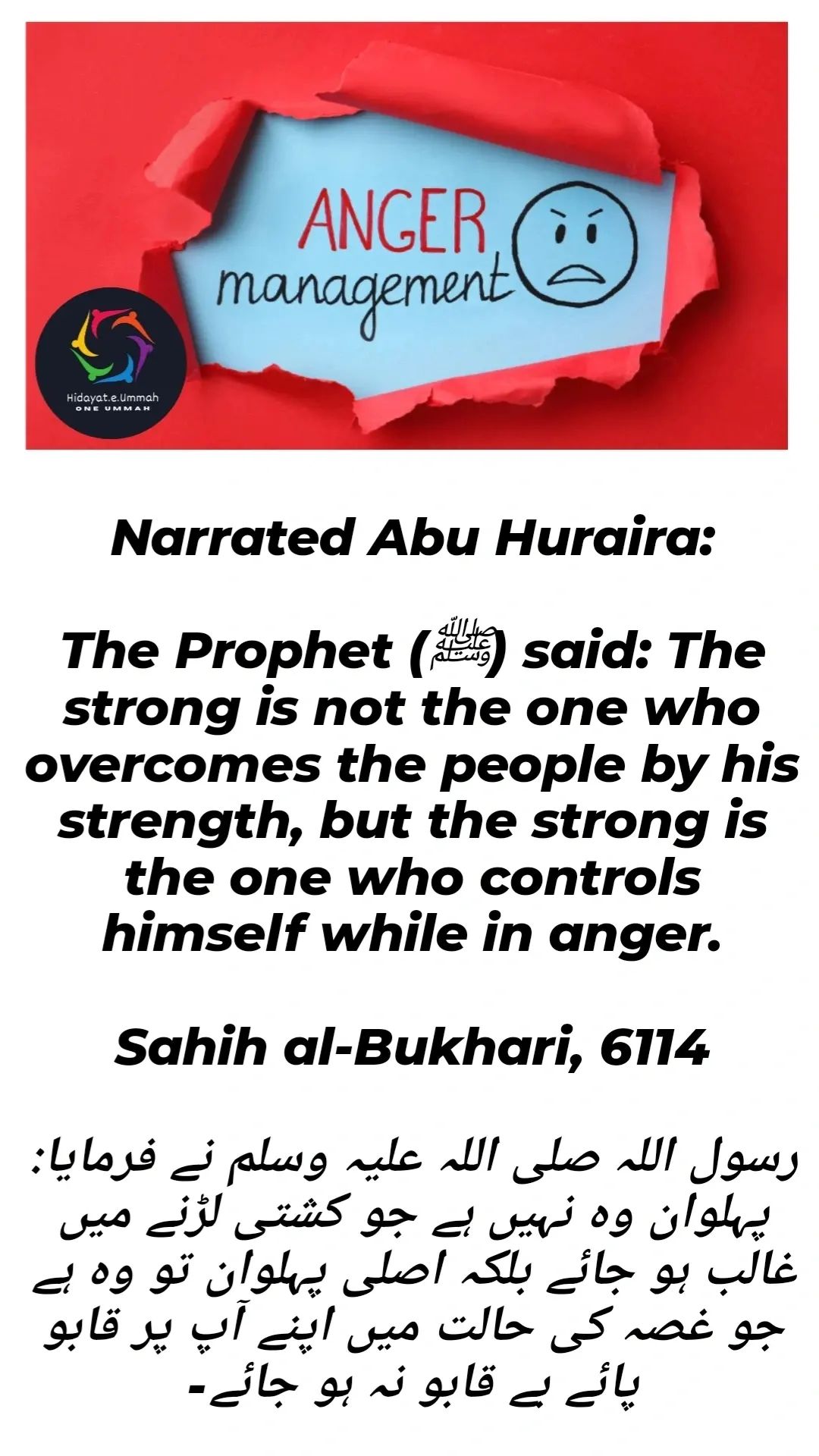
1. This hadith is narrated by Abu Huraira, where the Prophet Muhammad ( SAW Peace be upon him) teaches about true strength.
2. The Prophet explains that physical strength or overpowering others is not the true measure of strength.
3. Instead, true strength is about controlling one's own emotions, especially anger, in difficult situations.
4. This highlights the importance of self-discipline and emotional control, which are considered signs of a strong and virtuous person.
5. The lesson emphasizes that patience and calmness in moments of anger show greater character than physical strength or the ability to dominate others.
Hadith 2
2 of 6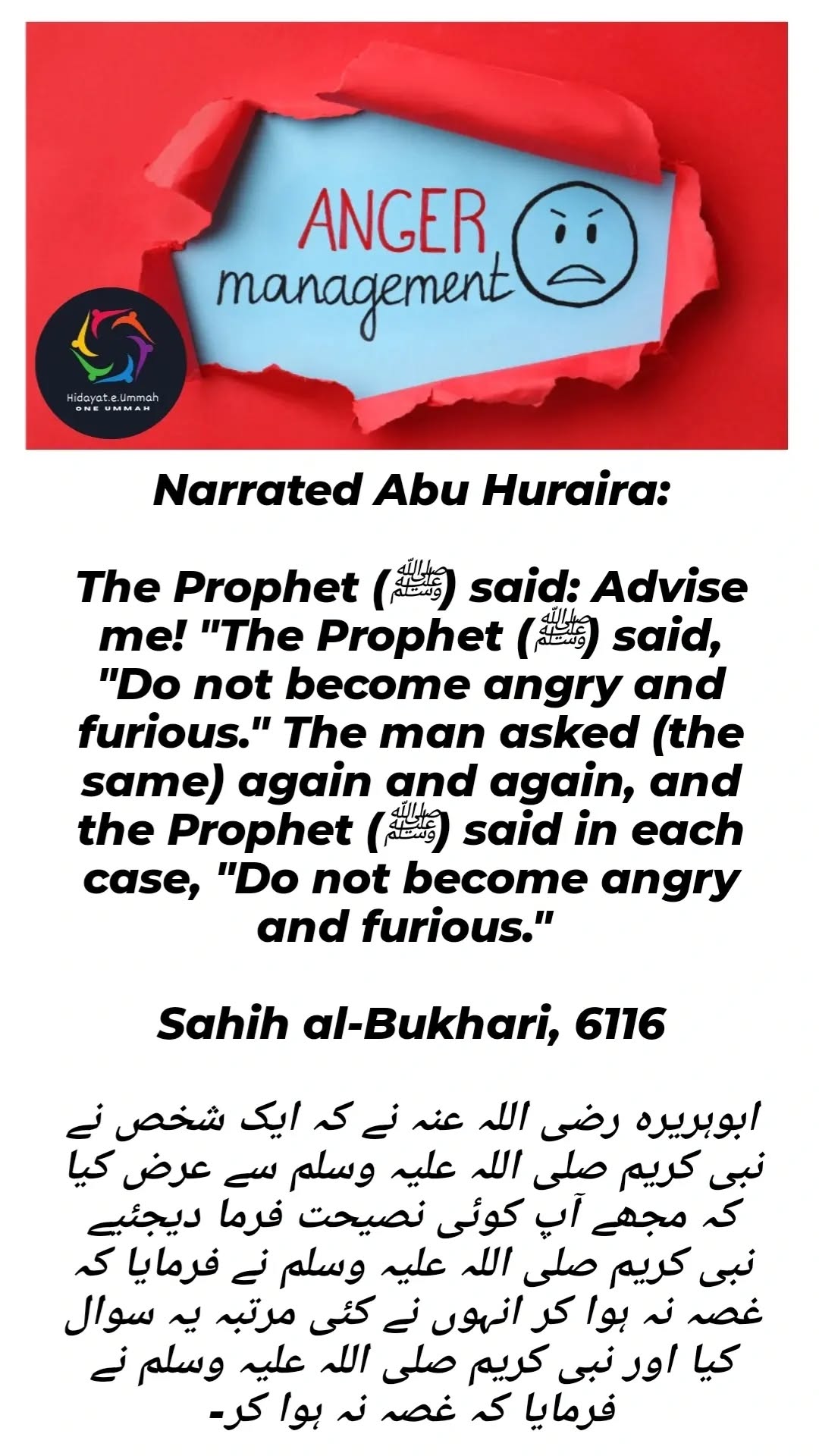
1. This hadith is a saying of Prophet Muhammad (peace be upon him) narrated by Abu Huraira, where a man asked the Prophet for advice. The Prophet's response was simple yet powerful.
2. The Prophet advised the man to avoid anger, telling him, 'Do not become angry and furious.' This was his repeated advice every time the man asked for guidance.
3. The repetition of the same advice emphasizes the seriousness of controlling one's anger, as anger can lead to negative consequences such as bad actions and regrets.
4. The Prophet's response teaches Muslims the importance of patience, self-control, and maintaining composure, even in challenging situations.
5. This hadith highlights that anger is a harmful emotion that can cloud judgment and lead to actions that go against Islamic values, such as causing harm to others or losing self-respect.
6. The overall message is to cultivate calmness and restraint, ensuring that anger does not overpower one's actions or thoughts, and to seek Allah’s help in managing emotions in difficult circumstances.
Hadith 3
3 of 6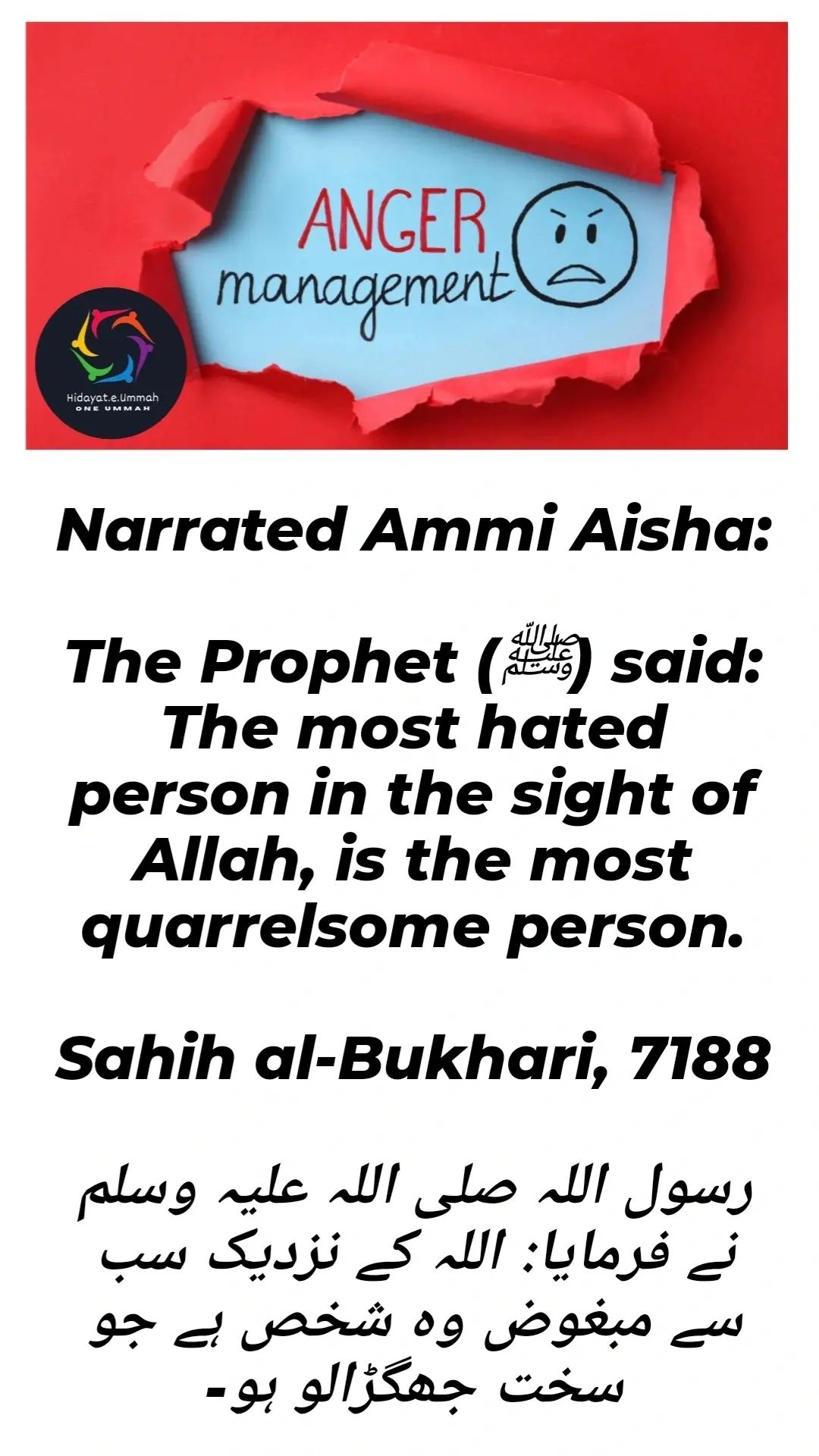
1. This hadith is a saying of Prophet Muhammad (peace be upon him) narrated by Aisha, where the Prophet describes the qualities of the person most disliked by Allah.
2. The Prophet mentions that the most hated person in the sight of Allah is the one who is the most quarrelsome, meaning someone who is constantly involved in arguments and disputes.
3. The hadith warns against being overly argumentative, as it leads to conflict, harm to relationships, and creates a negative atmosphere.
4. This teaches Muslims to avoid unnecessary fights and arguments and instead promote peace, understanding, and cooperation with others.
5. Being quarrelsome goes against the values of kindness, patience, and tolerance that Islam encourages.
6. The overall message is to adopt a peaceful, humble, and patient demeanor in dealings with others, avoiding arrogance and disputes that lead to discord.
Hadith 4
4 of 6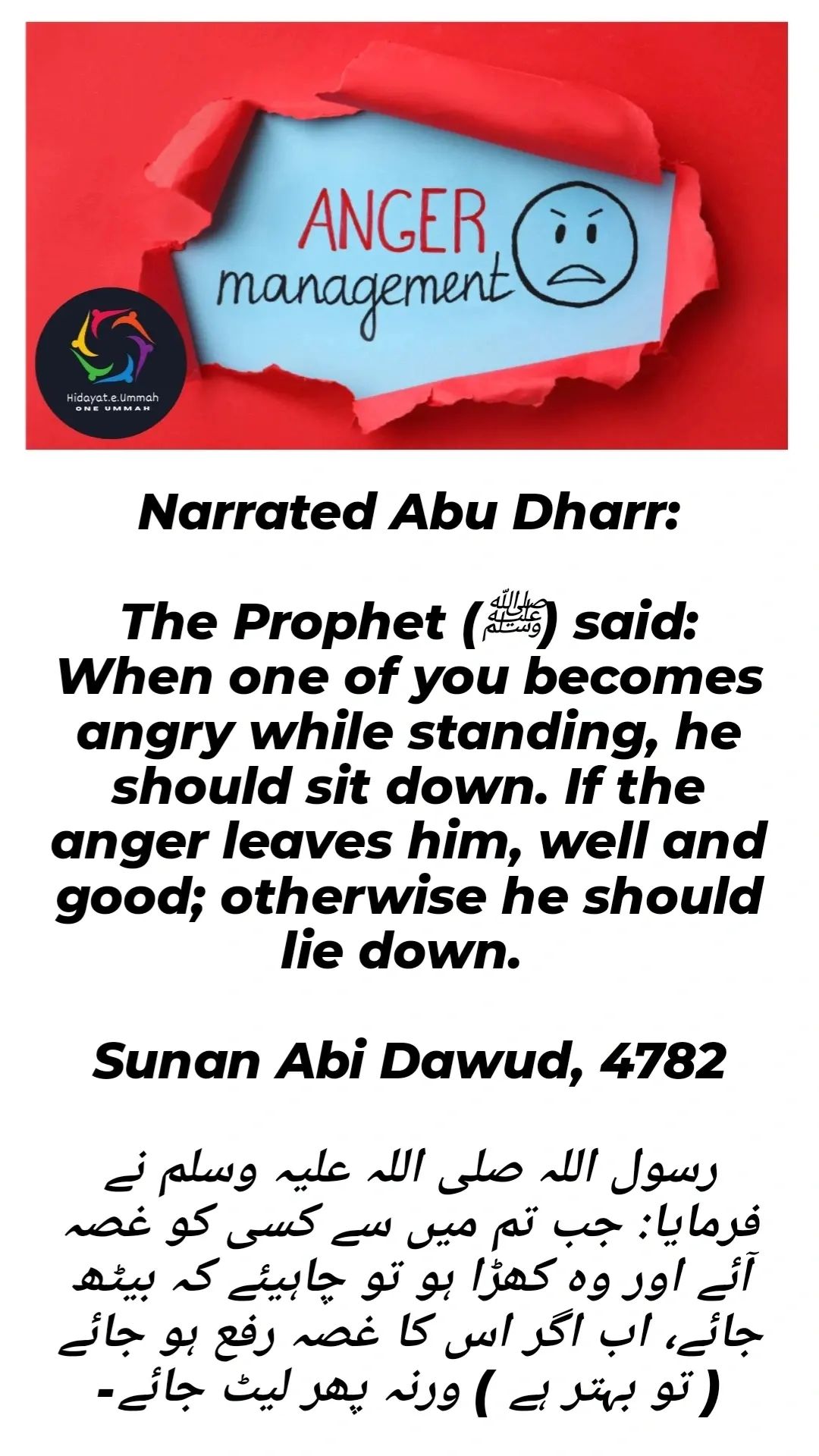
1. This hadith is a saying of Prophet Muhammad (peace be upon him) narrated by Abu Huraira, where a man asked the Prophet for advice.
2. The Prophet’s response to the man’s request was simple: 'Do not become angry and furious.' He repeated this advice each time the man asked again.
3. The repetition of the advice emphasizes the importance of controlling one’s anger, as anger can lead to negative consequences such as hurting others and making poor decisions.
4. This hadith teaches Muslims to practice patience and self-control in difficult situations, instead of reacting with anger or frustration.
5. The overall message is to remain calm and composed, as anger can cloud judgment and lead to actions that go against the teachings of Islam.
Hadith 5
5 of 6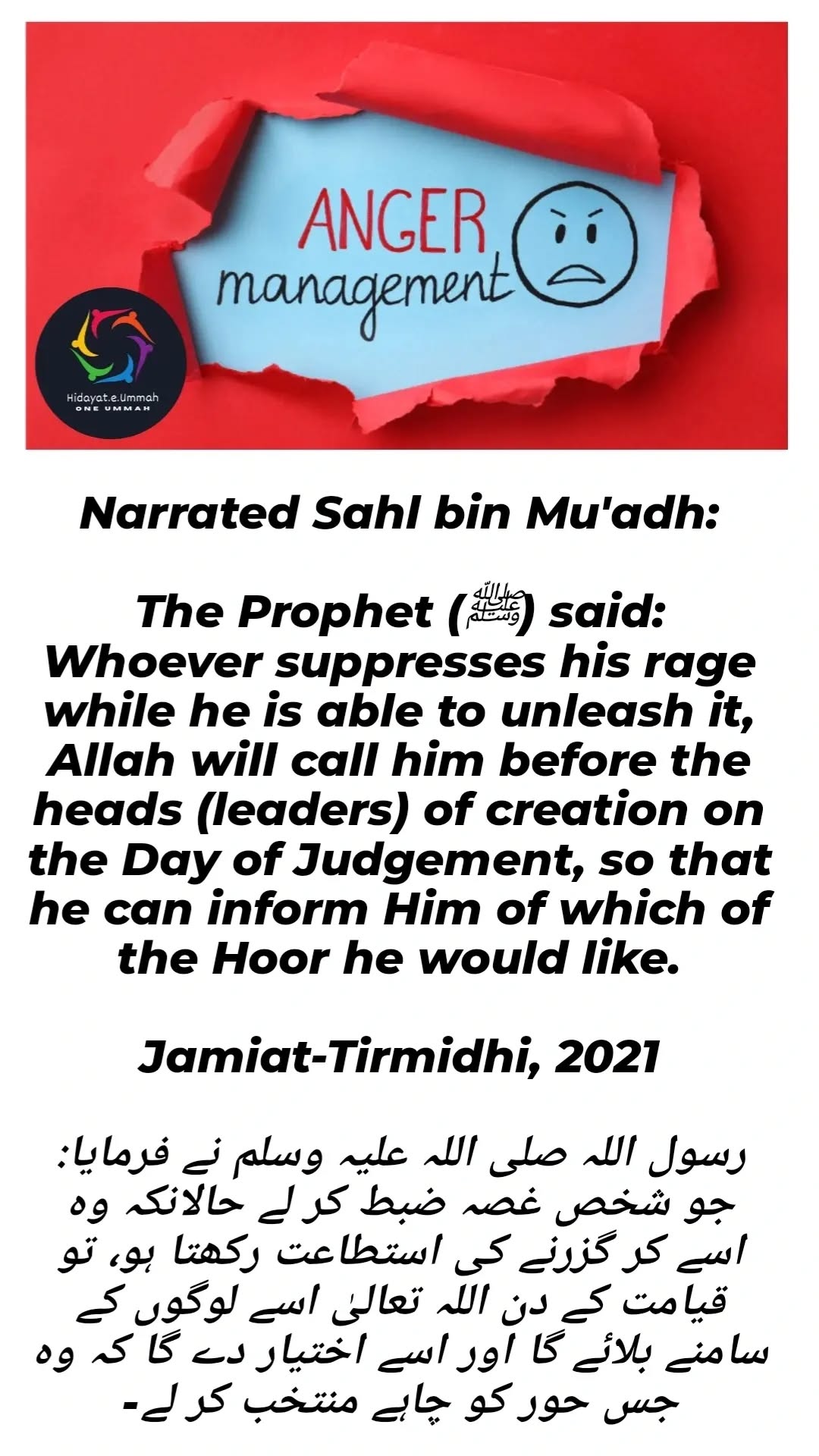
1. This hadith is narrated by Sahl bin Mu'adh, where the Prophet Muhammad (peace be upon him) describes the reward for someone who controls their anger.
2. The Prophet mentions that if a person suppresses their rage, even when they have the ability to unleash it, Allah will reward them in a special way on the Day of Judgment.
3. Allah will call the person before the leaders of creation and grant them the honor of choosing from the Hoor, the beautiful beings of Paradise.
4. This hadith emphasizes the great reward for those who practice self-control and patience, especially when faced with situations that may provoke anger.
5. The overall message is that controlling one’s anger not only brings personal peace and harmony, but it also earns immense spiritual rewards in the Hereafter.
Hadith 6
6 of 6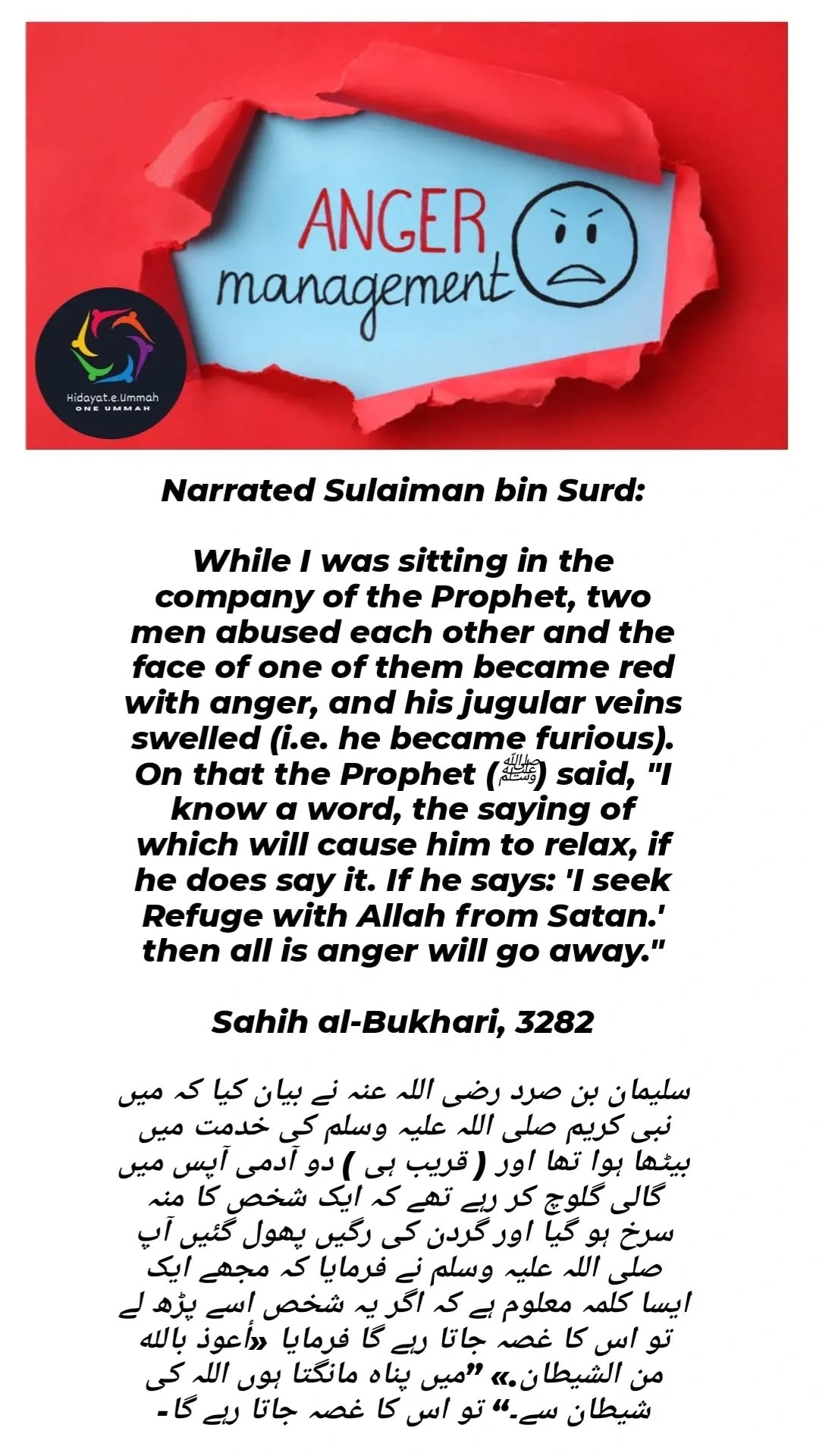
1. This hadith is narrated by Sulaiman bin Surd, who describes a situation where two men were arguing in the presence of Prophet Muhammad (peace be upon him).
2. One of the men became extremely angry, with his face turning red and his veins swelling due to his rage.
3. The Prophet observed the situation and offered a solution to help calm the angry man. He mentioned that saying, 'I seek refuge with Allah from Satan,' would help to relax him and eliminate his anger.
4. This hadith teaches that anger is often fueled by negative influences, and seeking Allah's protection against Satan can help in regaining self-control and composure.
5. The overall message is to address anger with spiritual remedies and to turn to Allah for assistance in maintaining patience and calmness in challenging situations.