
Backbiting
Hadith Collection
7 Hadiths
Hadith 1
1 of 7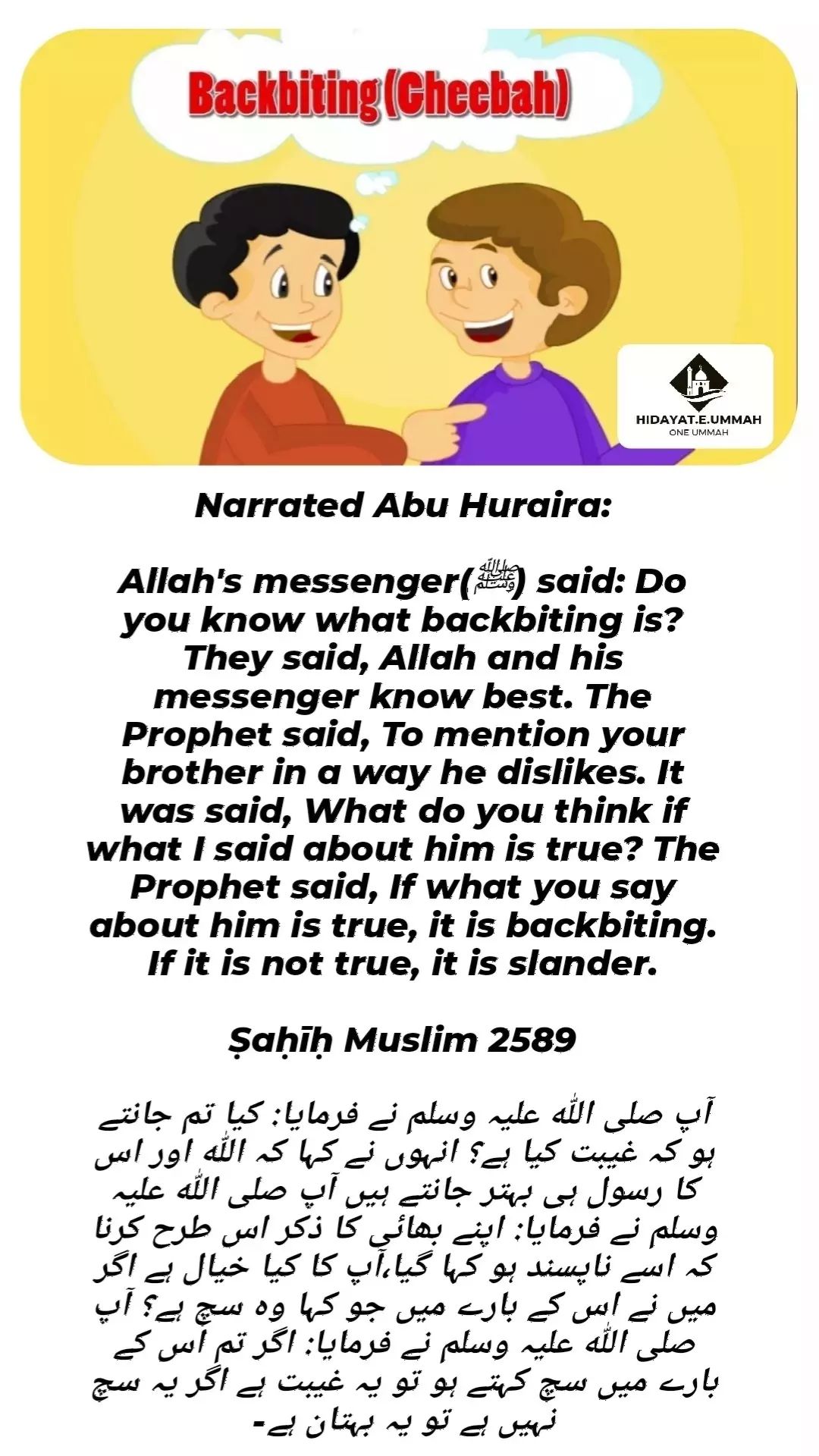
1. In this hadith, the Prophet ( SAW Peace be upon him) explains what backbiting (ghibah) is, emphasizing its seriousness.
2. Backbiting is defined as speaking about someone in a way they would dislike, even if what is said is true.
3. If what is said about the person is false, then it becomes slander, which is an even more severe sin.
4. This hadith teaches the importance of guarding one's tongue and avoiding harmful speech about others.
5. It encourages Muslims to foster kindness, respect, and avoid behaviors that harm relationships or the reputation of others.
Hadith 2
2 of 7
1. This hadith highlights the grave consequences of engaging in backbiting (ghibah), which is speaking ill of someone behind their back.
2. The Prophet ( SAW Peace be upon him) warns that a person who habitually backbites may be deprived of entering Paradise.
3. This emphasizes how seriously Islam views the sin of harming others through speech.
4. The hadith encourages believers to protect their tongues, refrain from gossip, and speak only in ways that bring goodness and unity.
5. It serves as a reminder to uphold the dignity and respect of others in all interactions.
Hadith 3
3 of 7
1. This verse from Surah Al-Hujurat compares backbiting to eating the flesh of one's dead brother, a metaphor meant to evoke disgust and highlight the severity of the sin.
2. It teaches that backbiting, which involves speaking negatively about someone behind their back, is detestable and should be avoided.
3. The verse encourages believers to reflect on their actions and avoid harming others through speech or behavior.
4. The command to 'fear Allah' reminds believers of their accountability to Allah and the importance of maintaining good character.
5. This verse promotes mutual respect, love, and unity within the Muslim community by discouraging harmful behaviors like backbiting.
Hadith 4
4 of 7
1. This hadith highlights the seriousness of backbiting, equating it metaphorically to eating the flesh of one’s brother, which is a deeply shocking and repulsive act.
2. The Prophet (peace be upon him) uses this imagery to emphasize the harm caused by speaking ill of someone behind their back.
3. The statement, 'clean your teeth,' was a metaphorical way to point out the wrong action of backbiting, showing its spiritual impurity.
4. The man’s response, 'I have not eaten meat,' indicates his misunderstanding, but the Prophet clarified that backbiting is like consuming someone’s dignity or honor.
5. This hadith teaches Muslims to refrain from speaking negatively about others in their absence and to be mindful of their words, promoting kindness and respect in interactions.
Hadith 5
5 of 7
1. This hadith highlights two reasons for punishment in the grave: negligence in cleanliness after urinating and engaging in backbiting.
2. The Prophet (peace be upon him) emphasizes that while these may seem like minor actions, they carry significant consequences in the Hereafter.
3. Neglecting cleanliness after urination can lead to impurity, which affects the validity of prayer and reflects a lack of care in fulfilling religious duties.
4. Backbiting harms relationships and damages the dignity of others, making it a grave sin despite being common in daily conversations.
5. The hadith serves as a reminder to avoid harmful habits, maintain personal hygiene, and uphold respect for others to ensure spiritual well-being and avoid punishment in the grave.
Hadith 6
6 of 7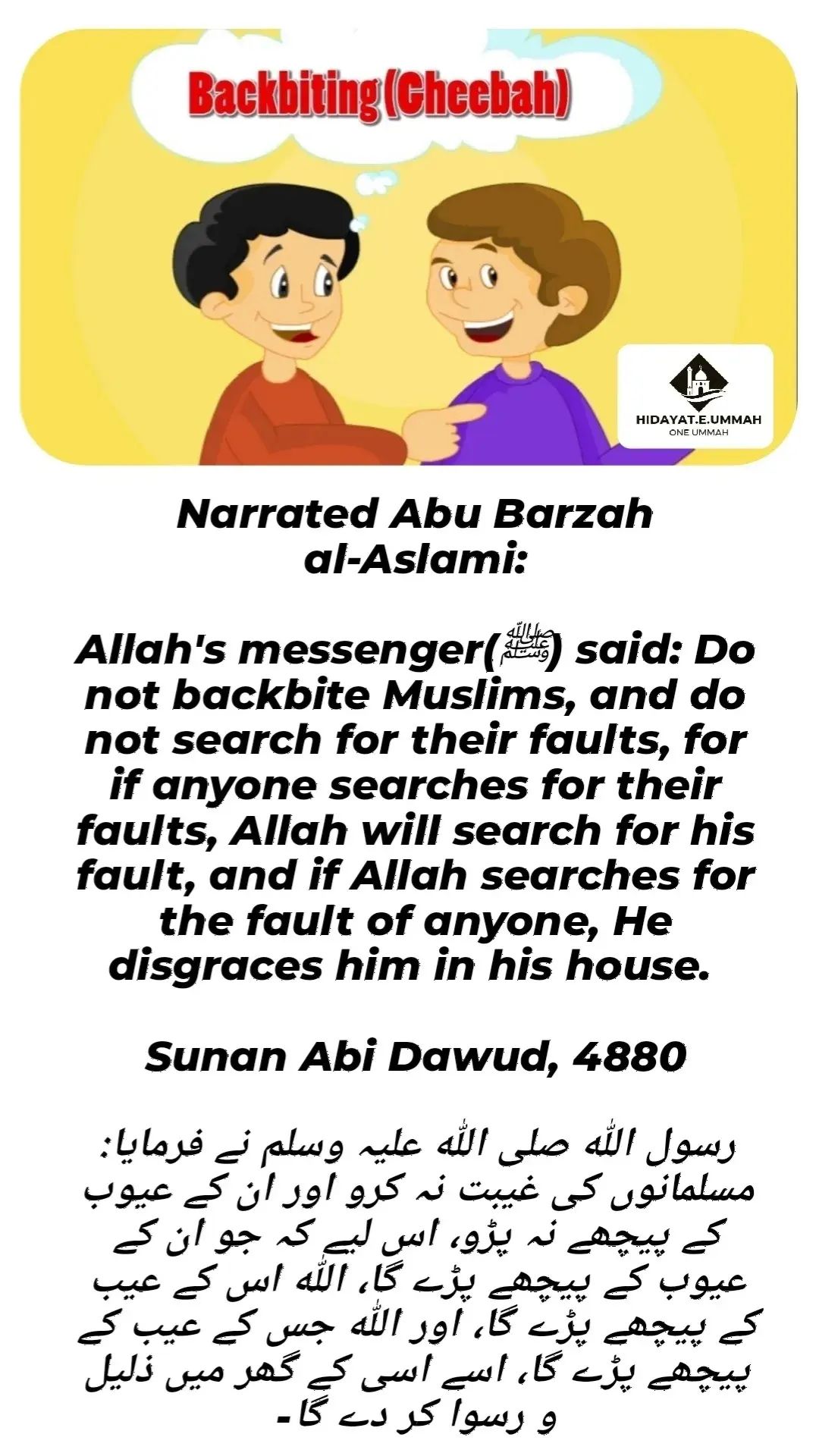
1. This hadith forbids Muslims from engaging in backbiting, which involves speaking about someone in a way they would dislike if they were present.
2. It also warns against searching for the faults of others, as this leads to harm and division within the community.
3. The Prophet (peace be upon him) explains that if someone looks for the faults of others, Allah will expose their own faults as a consequence.
4. Allah's exposure of a person's faults can lead to disgrace, even within their own household, emphasizing the seriousness of this behavior.
5. The hadith serves as a reminder to focus on improving oneself, avoid judging others, and protect the dignity of fellow Muslims.
Hadith 7
7 of 7
1. This verse from Surah Humazah condemns those who engage in fault-finding and backbiting, emphasizing the severity of these actions.
2. 'Woe' signifies a severe warning or curse from Allah, indicating that such behaviors lead to punishment and displeasure.
3. A 'fault-finder' refers to someone who constantly criticizes or highlights the flaws of others in a harmful way.
4. A 'backbiter' is someone who speaks ill of others behind their backs, damaging their reputation and causing harm.
5. The verse reminds believers to avoid such destructive behaviors and to uphold respect, kindness, and integrity in their interactions.