
Cat and Dog
Hadith Collection
7 Hadiths
Hadith 1
1 of 7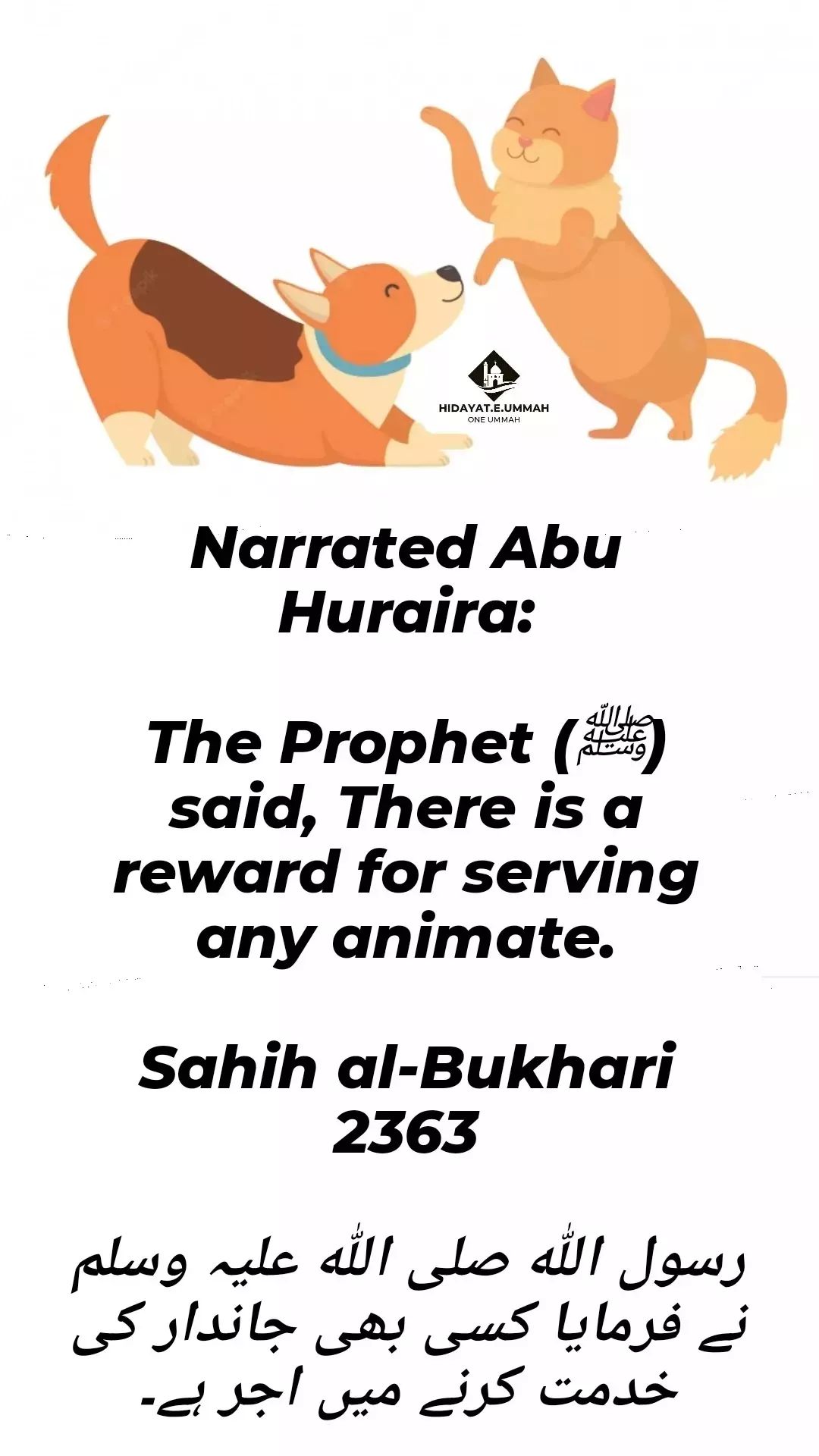
1. This hadith emphasizes that there is a reward for showing kindness and care towards any living creature.
2. The reward is not limited to humans; it includes all animals and any living being that requires help, compassion, or care.
3. The Prophet (Peace Be Upon Him) taught that acts of kindness, such as feeding or caring for animals, helping them when they are in need, and showing empathy towards all living beings, are highly rewarded by Allah.
4. This hadith encourages people to be mindful of their treatment of all creatures, reminding us that showing compassion to animals, as well as people, is an act of worship and a way to earn Allah's pleasure.
5. It highlights the importance of empathy and respect for all of Allah's creations, no matter how big or small.
6. In essence, this hadith teaches that every act of kindness, no matter how seemingly small, holds value and can earn great reward from Allah.
Hadith 2
2 of 7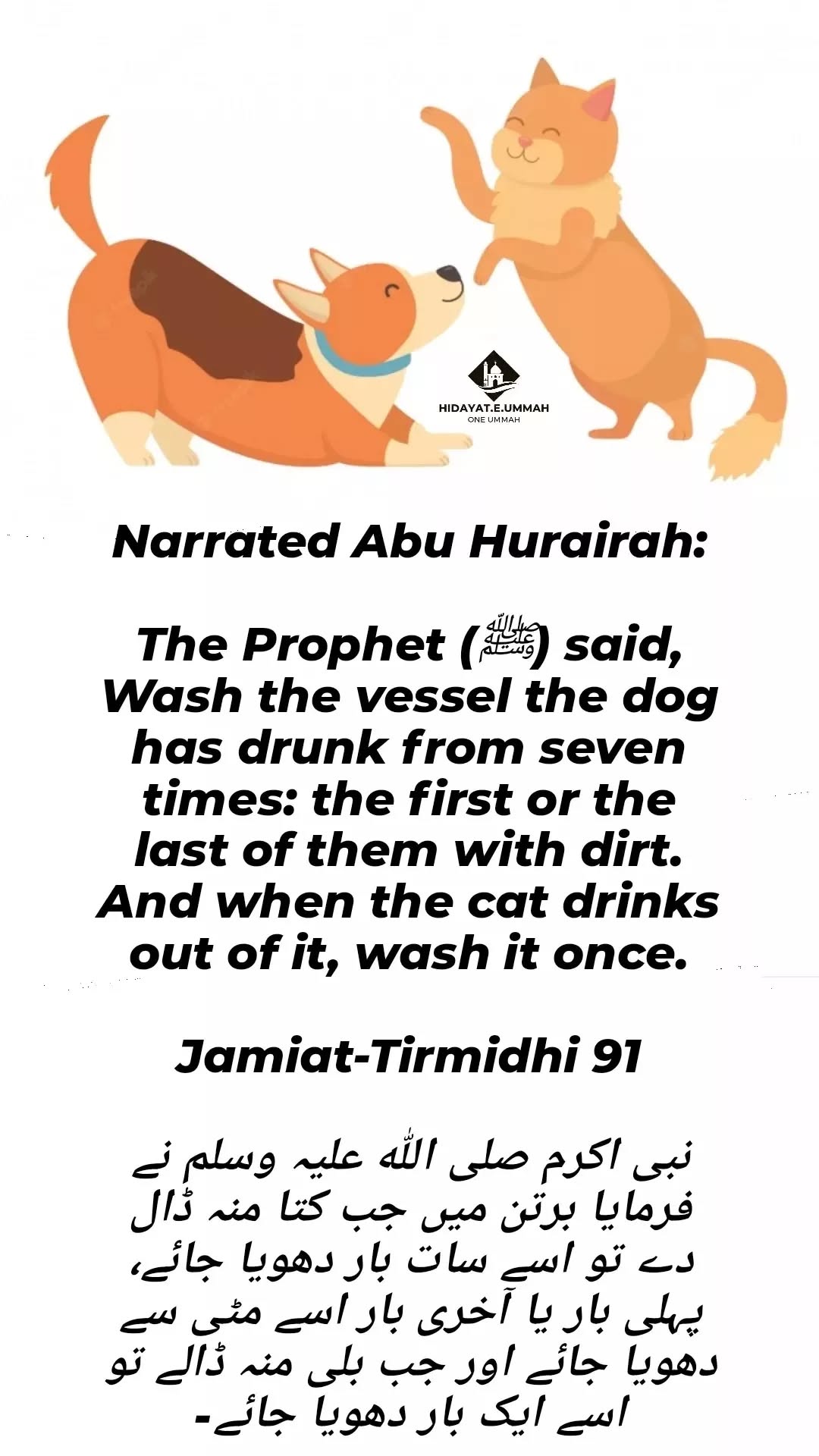
1. This hadith gives specific instructions on how to clean a vessel (such as a bowl or cup) that an animal has drunk from.
2. If a dog drinks from the vessel, the Prophet (Peace Be Upon Him) instructed to wash it seven times, and at least one of those washes should be with dirt or a cleaning substance to purify it properly.
3. The reason for this is because dogs are considered ritually impure in Islam, and it is important to ensure the vessel is thoroughly cleaned before it can be used again.
4. On the other hand, if a cat drinks from the vessel, it only needs to be washed once. This is because cats are generally considered clean animals in Islam.
5. The purpose of these instructions is to maintain cleanliness and purity in everyday life, which is highly valued in Islam.
6. The hadith emphasizes the importance of purifying any items that might have come into contact with impurities, while also highlighting the difference in treatment based on the animal involved.
Hadith 3
3 of 7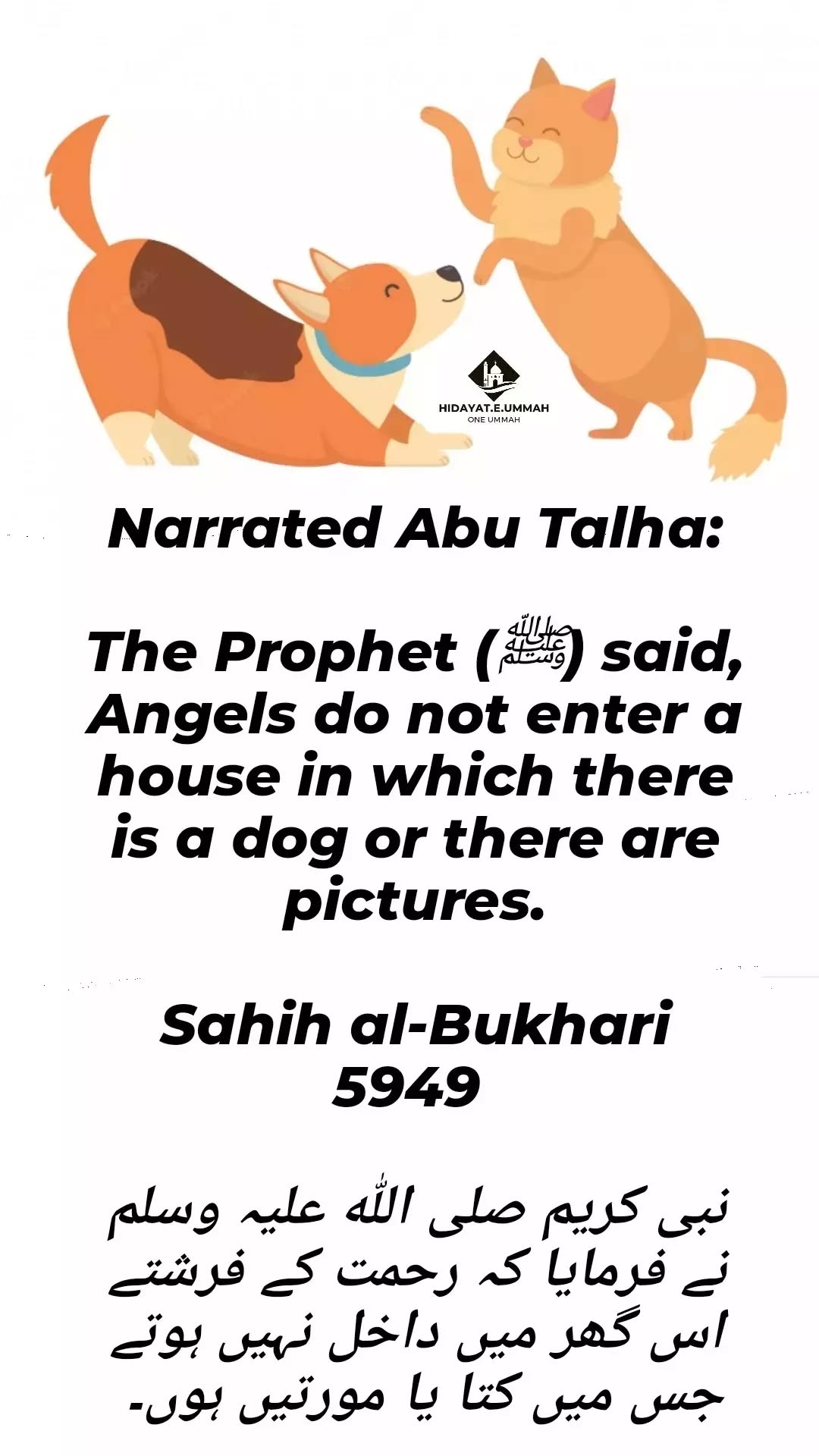
1. This hadith highlights two factors that prevent angels from entering a house: the presence of a dog and the presence of pictures.
2. The Prophet (Peace Be Upon Him) mentions that angels, who bring blessings and mercy, do not enter homes where there are dogs. This is because dogs are considered impure in Islamic law, and their presence may prevent angels from visiting.
3. Similarly, the hadith mentions that angels do not enter homes that have pictures, particularly those of living beings, because such images can be seen as resembling the act of creating life, which is only the prerogative of Allah.
4. The purpose of this is to ensure the spiritual purity of the home, keeping it free from things that may distract or interfere with the presence of divine blessings.
5. The hadith is not meant to condemn dogs entirely, but rather to advise on maintaining spiritual cleanliness in the home. Dogs can still be kept for purposes like guarding or hunting, but their presence inside the house should be managed carefully.
6. It also teaches that Muslims should be mindful of their environment, as it can impact their spiritual atmosphere.
Hadith 4
4 of 7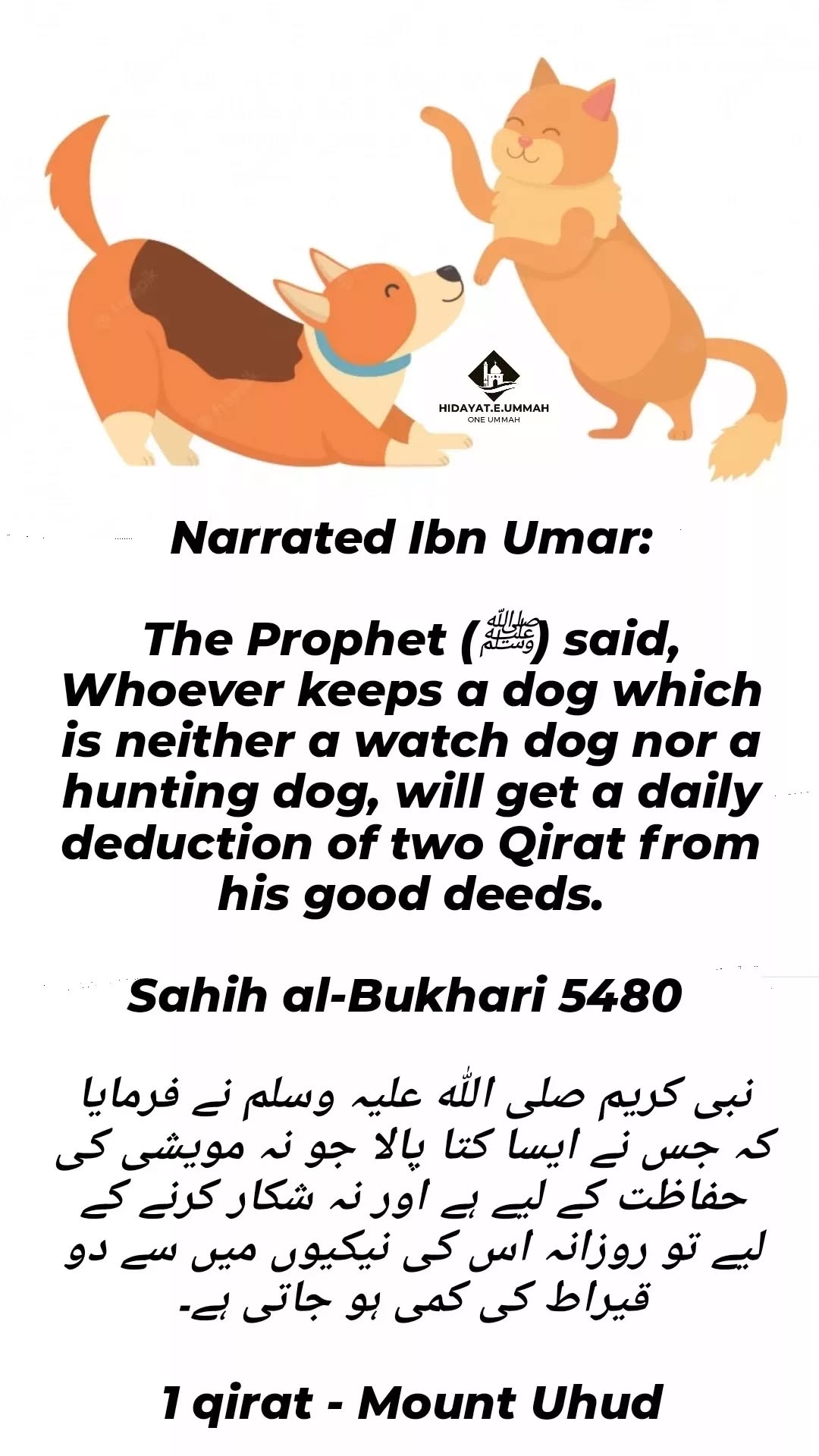
1. This hadith discusses the consequences of keeping a dog without a valid reason such as for guarding the house or for hunting.
2. The Prophet (Peace Be Upon Him) mentions that if a person keeps a dog that is neither a guard dog nor a hunting dog, they will lose two Qirat of their good deeds every day. A Qirat is a unit of reward, and losing it means that the person will lose a portion of their good deeds.
3. The reasoning behind this is that the presence of a dog, especially one that is not serving a useful purpose, may cause distractions or make the environment less spiritually clean.
4. The hadith does not prohibit keeping dogs for legitimate reasons, such as for security or hunting purposes. These uses are acceptable in Islam and do not result in the loss of rewards.
5. The emphasis here is on maintaining spiritual discipline and avoiding unnecessary distractions or impurities in one's surroundings.
6. This hadith encourages Muslims to be mindful of their actions and the impact they have on their spiritual state, reminding them that every action counts in their journey to earn rewards from Allah.
Hadith 5
5 of 7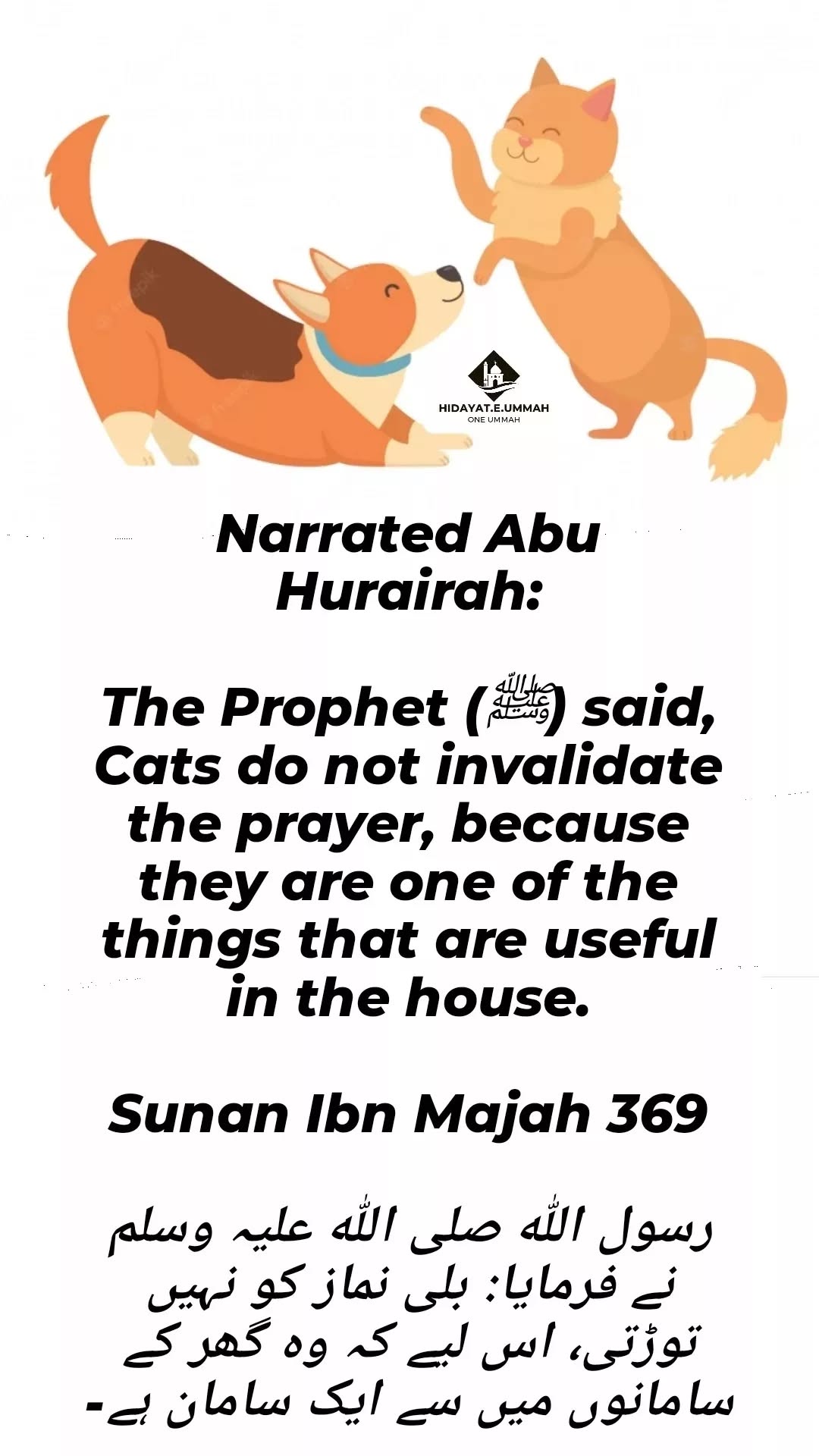
1. In this hadith, the Prophet (Peace Be Upon Him) clarifies that cats do not invalidate the prayer.
2. Cats are considered clean animals in Islam and are known to be useful in the house, such as helping to catch pests like mice.
3. The ruling here is that the presence of a cat during prayer does not affect its validity or make it impure.
4. This contrasts with the ruling on dogs, which are not considered clean in the same way, especially in the context of prayer and other religious activities.
5. The hadith encourages Muslims to appreciate the positive role that animals like cats can play in daily life, while still maintaining cleanliness and focusing on their religious duties.
6. It highlights the flexibility in Islamic law regarding animals that are generally considered helpful and clean, ensuring that they do not cause undue hardship or complications for worshippers.
Hadith 6
6 of 7
1. This hadith narrates a story about a woman who was punished by Allah and entered the Hellfire because of her mistreatment of a cat.
2. The woman tied up the cat without feeding it or allowing it to roam freely to find food, such as insects or small animals from the earth.
3. The cat suffered due to her neglect, and this was considered a grave sin in Islam.
4. The hadith teaches the importance of being kind and responsible towards animals, as their well-being is a matter of concern in Islam.
5. Islam emphasizes compassion for all living creatures, and this story serves as a warning against cruelty towards animals.
6. The punishment in this story shows that even seemingly small acts of cruelty can lead to serious consequences in the Hereafter.
7. The lesson is that Muslims should be mindful of their treatment of animals, ensuring they are treated with care, kindness, and respect.
Hadith 7
7 of 7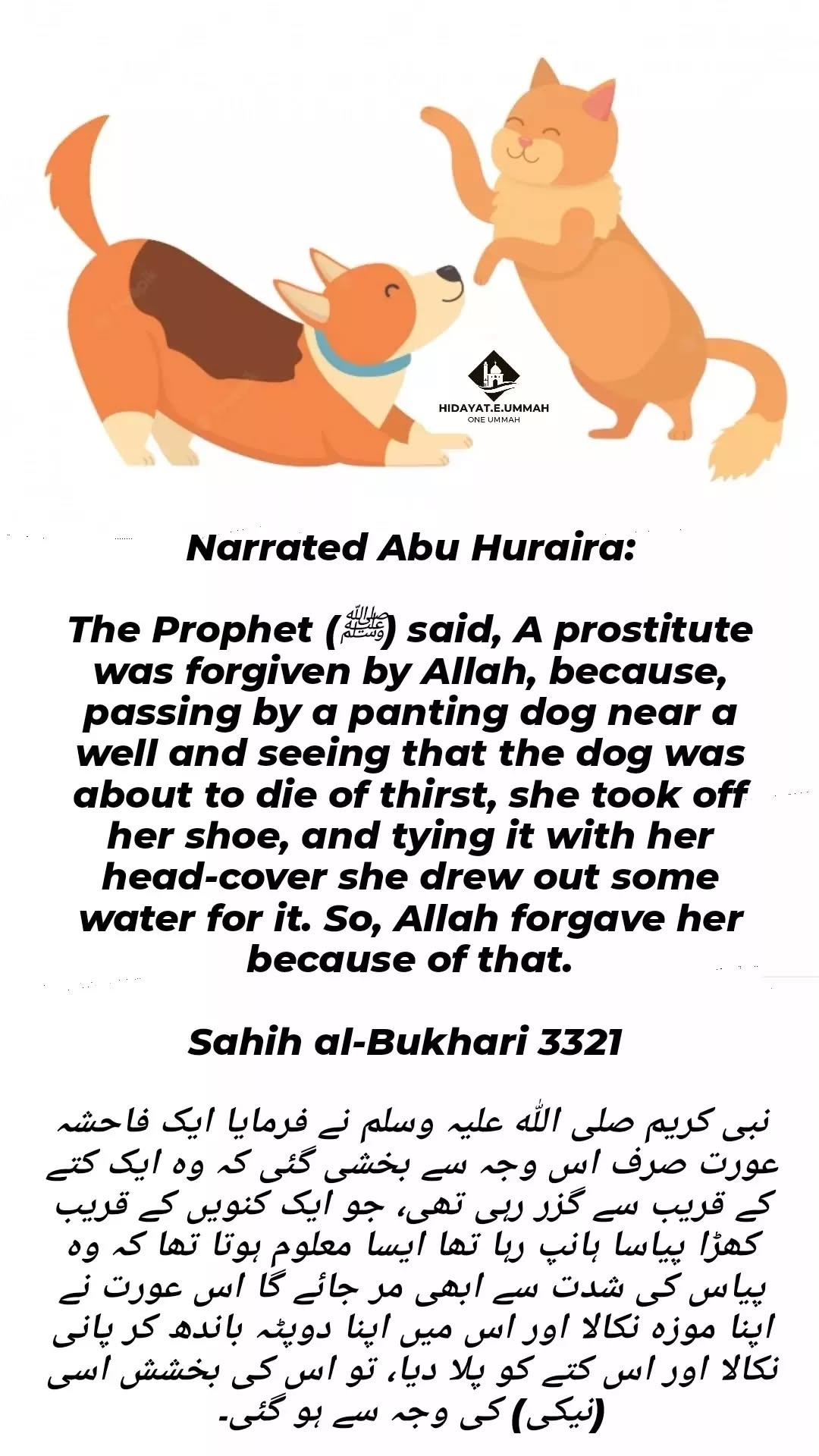
1. This hadith tells the story of a prostitute who was forgiven by Allah for her past sins.
2. One day, while passing by a thirsty dog near a well, she noticed the dog was panting and on the verge of dying from thirst.
3. Out of compassion, she decided to help the dog. She took off her shoe and tied it with her head-cover to use as a makeshift container to draw water from the well for the dog.
4. Allah, in His mercy, forgave the woman for her sins because of this act of kindness towards an animal.
5. The lesson from this story is that even small acts of kindness and compassion, like helping an animal in need, can lead to forgiveness from Allah.
6. It also highlights that Allah’s mercy is vast and can forgive those who show sincere compassion and good deeds, no matter their past.
7. Muslims are encouraged to be kind to all creatures and to seek Allah’s forgiveness through good actions, as even a small good deed can bring great reward.