
Dates
Hadith Collection
11 Hadiths
Hadith 1
1 of 11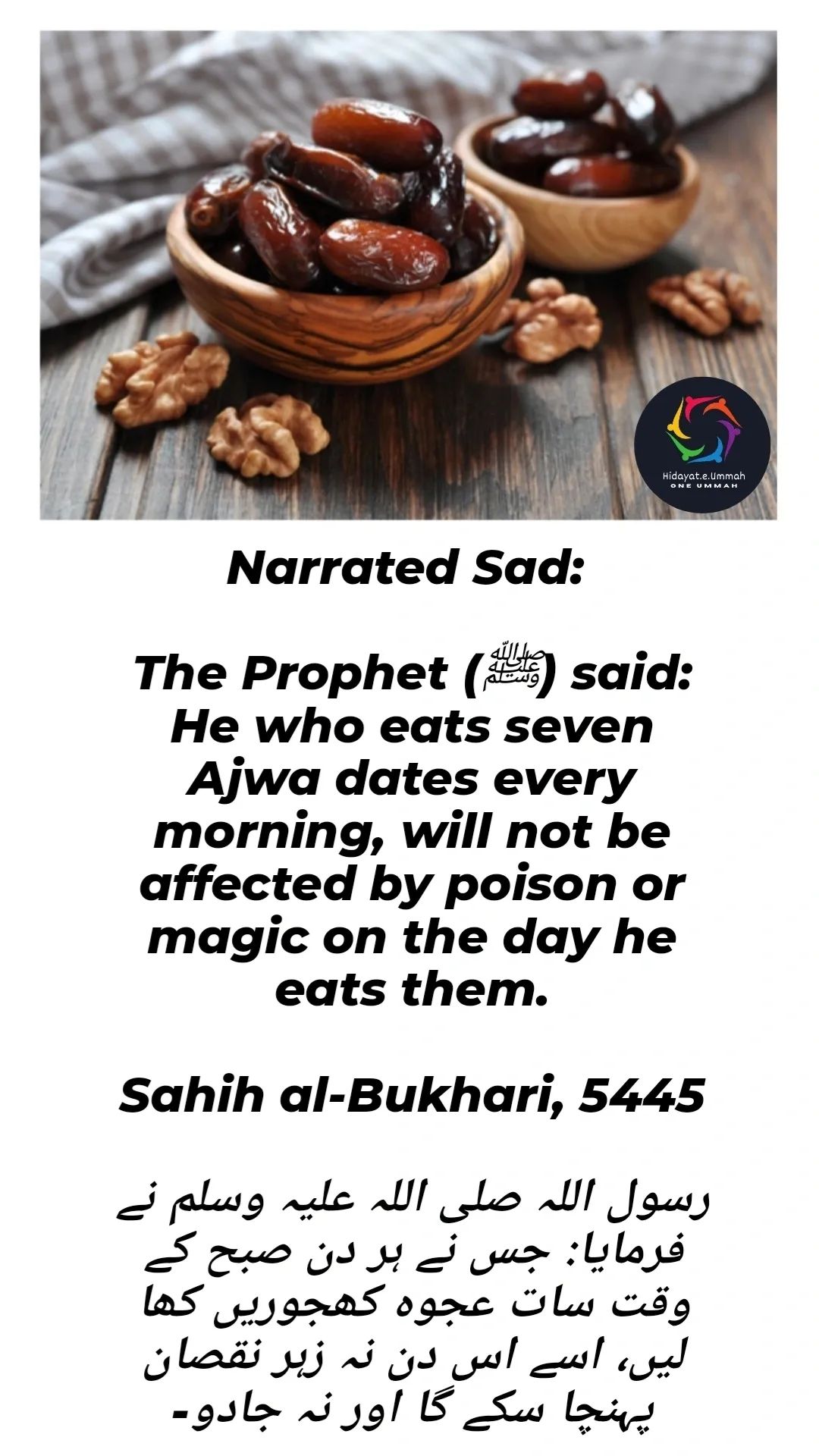
In this hadith, the Prophet Muhammad ( SAW Peace be upon him) mentions that Allah has ninety-nine Names, and anyone who memorizes and understands them will enter Paradise. The term 'counting' in this context means knowing these Names by heart and reflecting on their meanings.
**Lesson:**
- Memorizing and understanding the Names of Allah is a way to earn great rewards and is linked to entering Paradise.
Hadith 2
2 of 11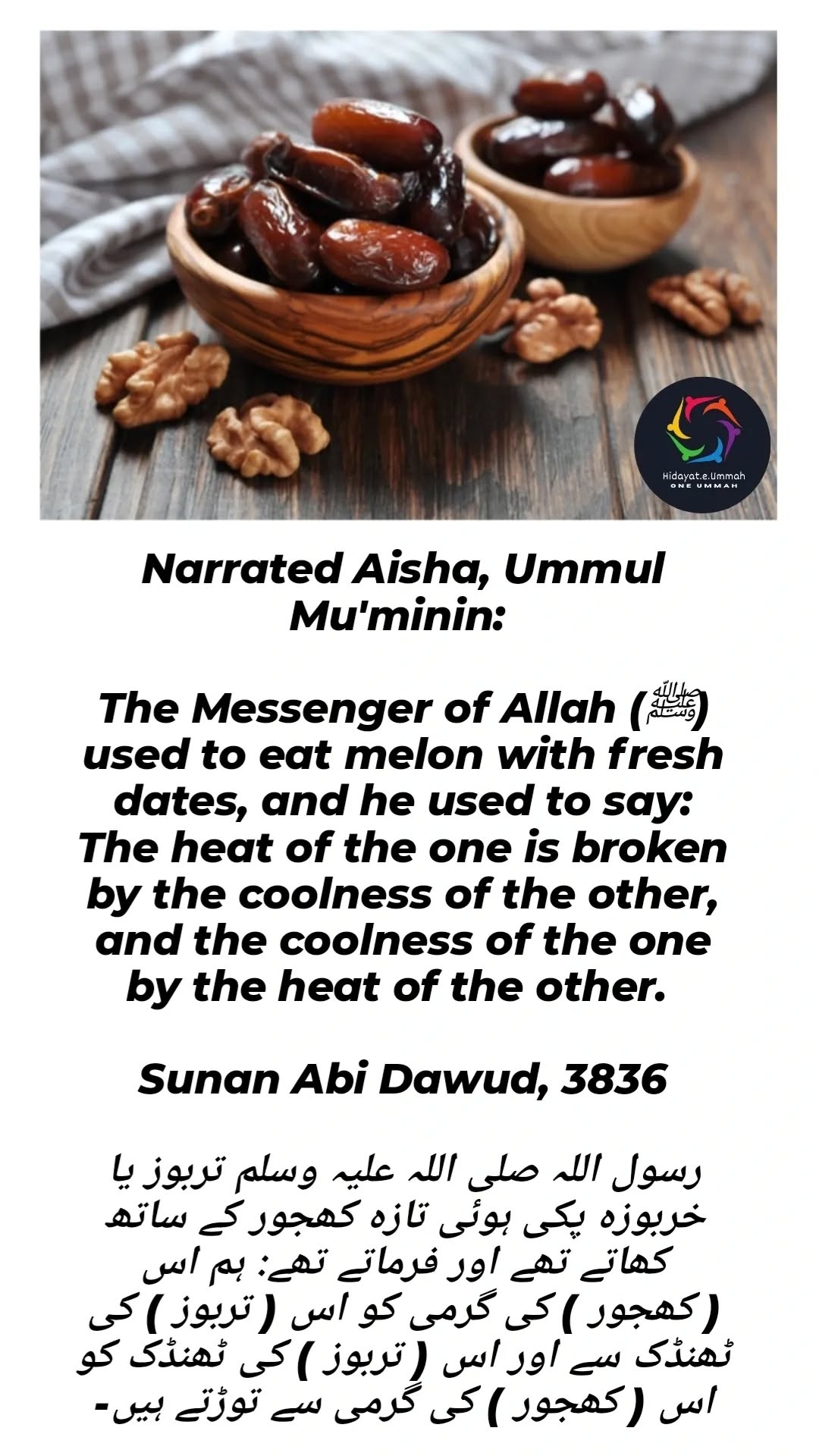
In this hadith, Aisha (RA) narrates that the Prophet Muhammad ( SAW Peace be upon him) enjoyed eating melon with fresh dates. He explained that the heat in the dates is balanced by the coolness of the melon, and the coolness of the melon is balanced by the heat in the dates.
**Lesson:**
- The hadith reflects the Prophet’s wisdom in maintaining balance in diet and his preference for wholesome and complementary foods.
Hadith 3
3 of 11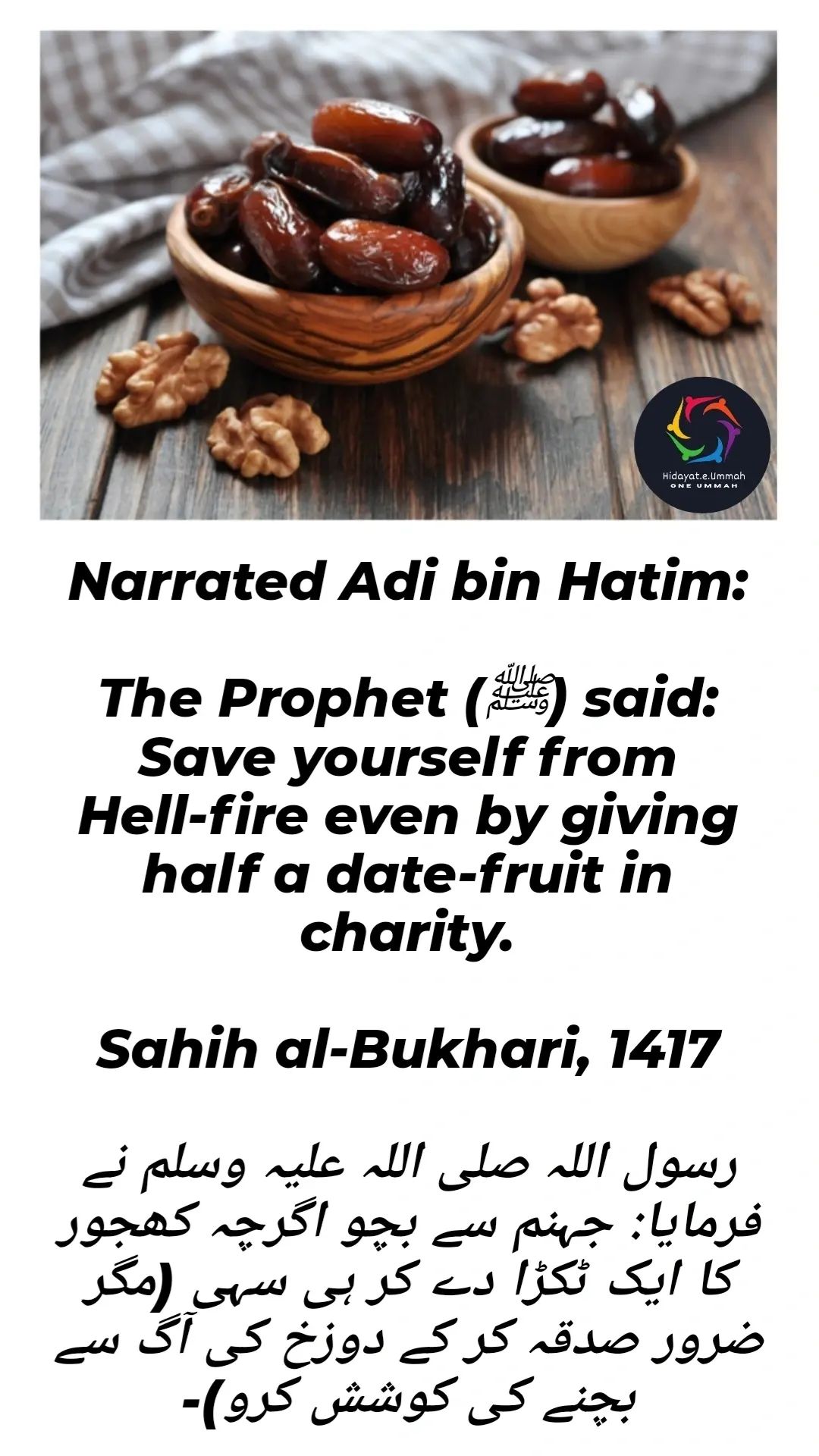
In this hadith, the Prophet Muhammad ( SAW Peace be upon him) emphasizes the importance of giving charity, no matter how small the contribution. He explains that even giving something as small as half a date in charity can help protect a person from Hellfire.
**Lesson:**
- Small acts of kindness and charity are valuable in the sight of Allah. Every good deed, no matter how minor, has the potential to bring great reward and protection from harm in the Hereafter.
Hadith 4
4 of 11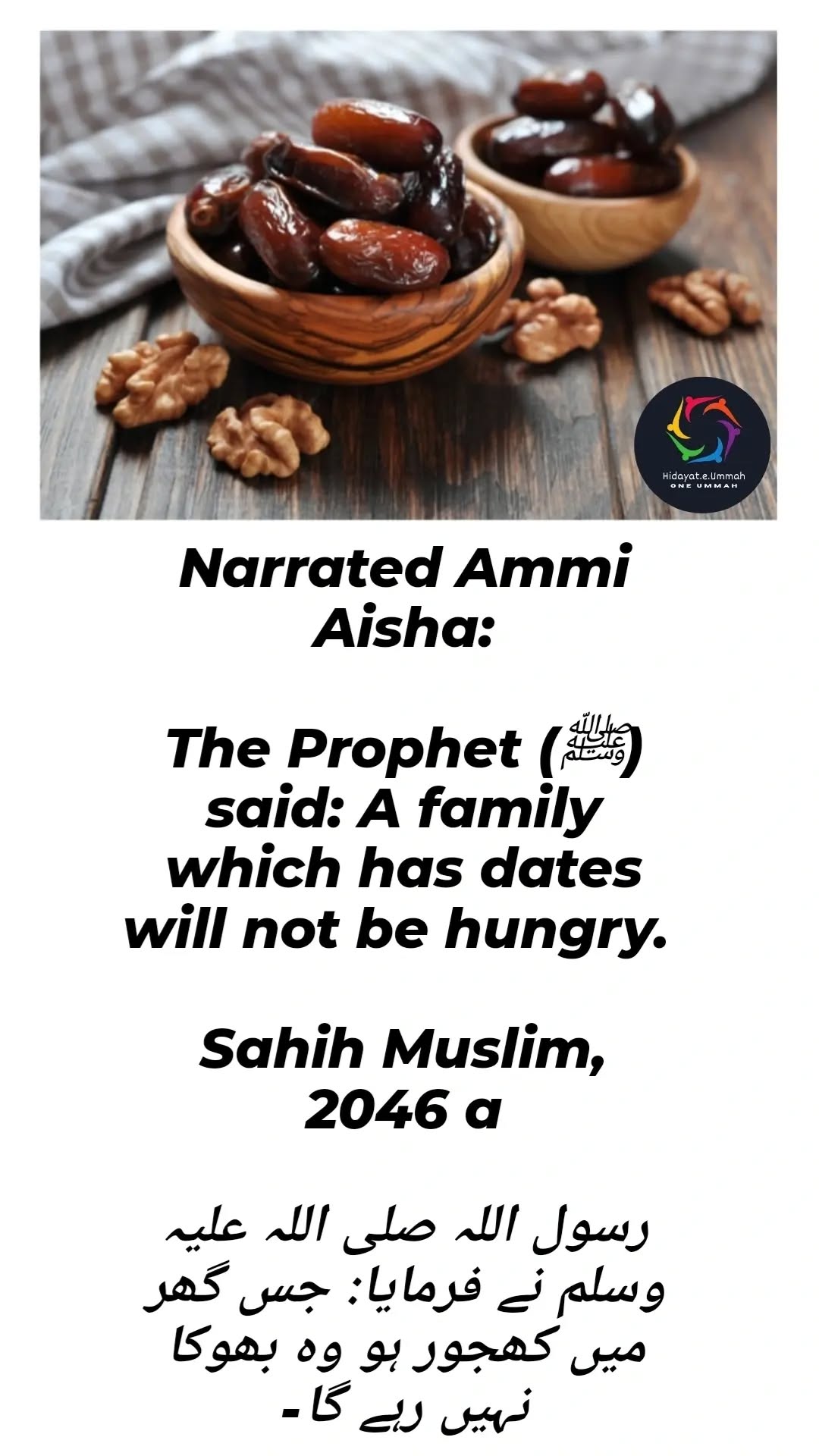
In this hadith, the Prophet Muhammad ( SAW Peace be upon him) highlights the blessings and sustenance found in dates. He mentions that a family that possesses dates will not go hungry, indicating the nutritional value and importance of dates as a basic and reliable food source.
**Lesson:**
- Dates are a blessed and essential food in Islam, often seen as a symbol of provision and sustenance. It encourages gratitude for simple, beneficial foods that can sustain life.
Hadith 5
5 of 11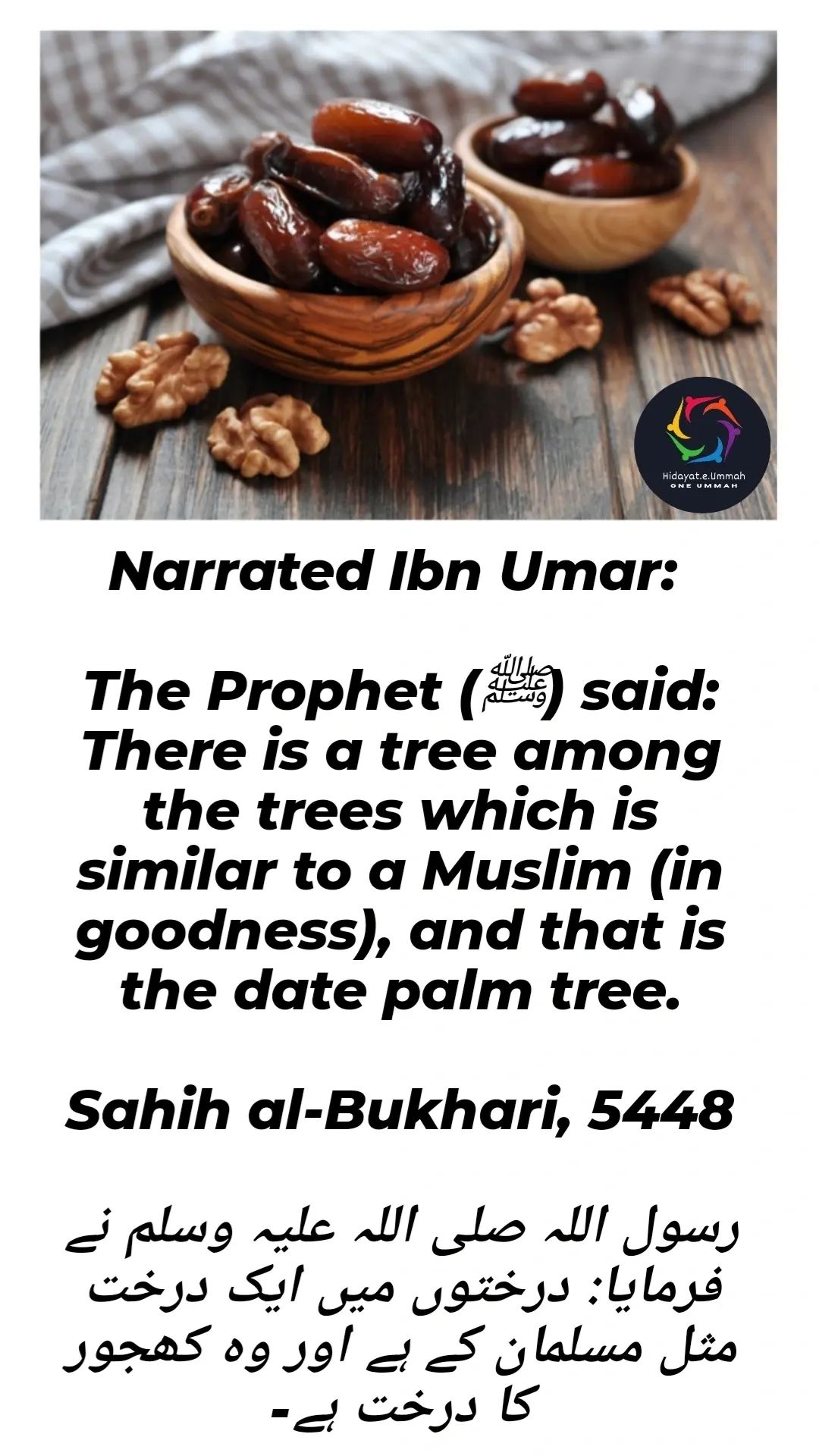
In this hadith, the Prophet Muhammad ( SAW Peace be upon him) compares a Muslim to the date palm tree. Just as the date palm tree is strong, beneficial, and deeply rooted, a good Muslim is firm in faith, beneficial to others, and steadfast in their character. The comparison emphasizes the qualities of productivity, resilience, and providing benefit to society, which are traits of a true believer.
**Lesson:**
- Muslims should strive to be like the date palm tree: deeply rooted in faith, strong against challenges, and a source of goodness for others.
Hadith 6
6 of 11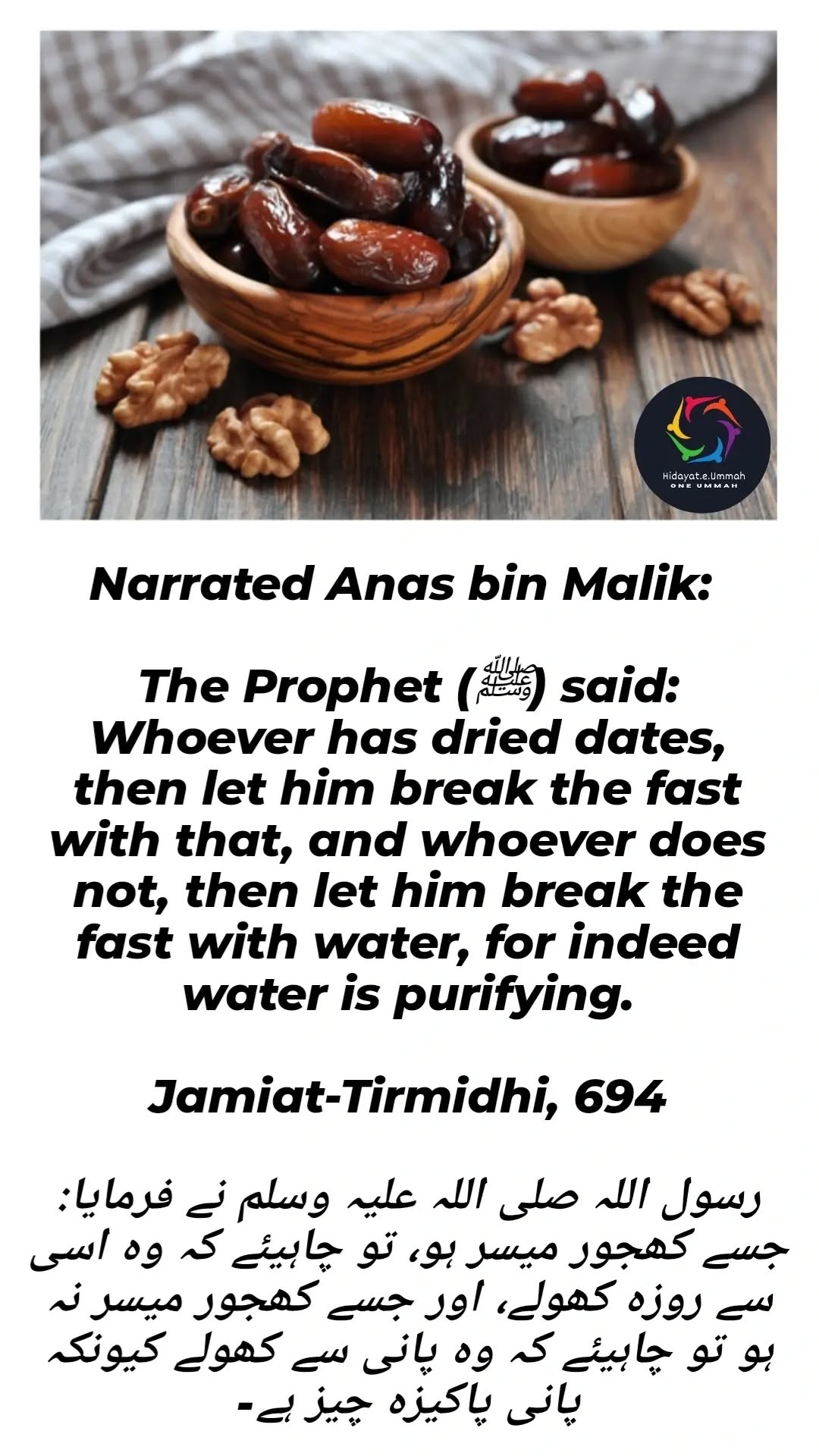
In this hadith, the Prophet Muhammad ( SAW Peace be upon him) teaches the recommended way to break the fast during Ramadan. He advises that if someone has dried dates, they should use them to break their fast because dates are nutritious and quickly replenish energy. If dates are unavailable, one should break their fast with water, as it cleanses and refreshes the body. This guidance emphasizes simplicity and practicality in worship.
**Lesson:**
- Breaking the fast with dates or water is a Sunnah (practice of the Prophet).
- It highlights the importance of simplicity and gratitude for available blessings.
Hadith 7
7 of 11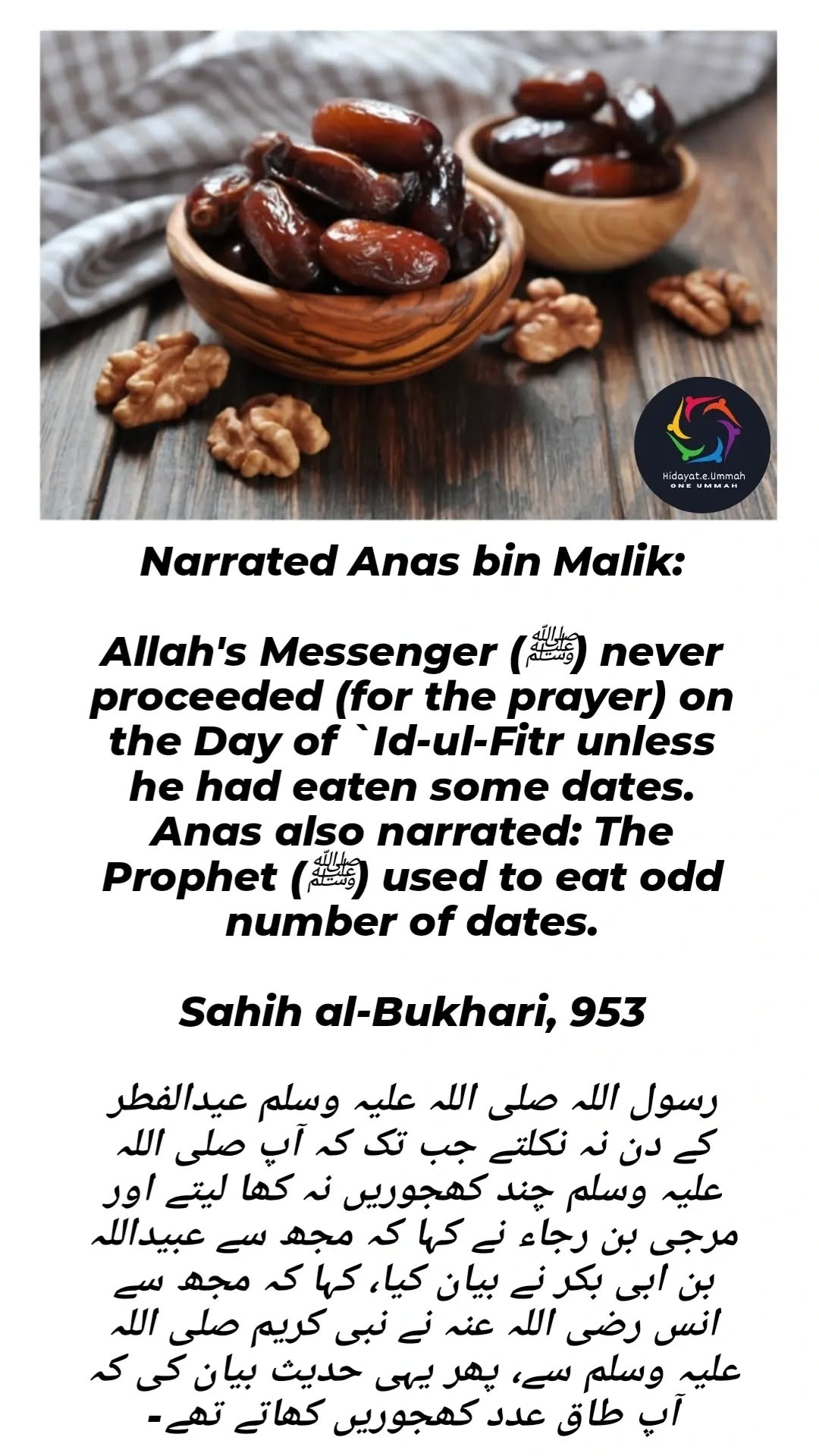
In this hadith, the Prophet Muhammad ( SAW Peace be upon him) describes the practice of the Prophet Muhammad ( SAW Peace be upon him) on the morning of Eid-ul-Fitr. Before heading out for the Eid prayer, he would eat some dates and ensure that the number of dates he ate was odd. This Sunnah (tradition) symbolizes gratitude for Allah’s blessings and marks the conclusion of fasting during Ramadan with a simple yet meaningful act of worship.
**Lesson:**
- Start the day of Eid-ul-Fitr by eating before the prayer as a sign of breaking the fast.
- Following the Prophet’s example of eating an odd number of dates highlights mindfulness and adherence to his practices.
Hadith 8
8 of 11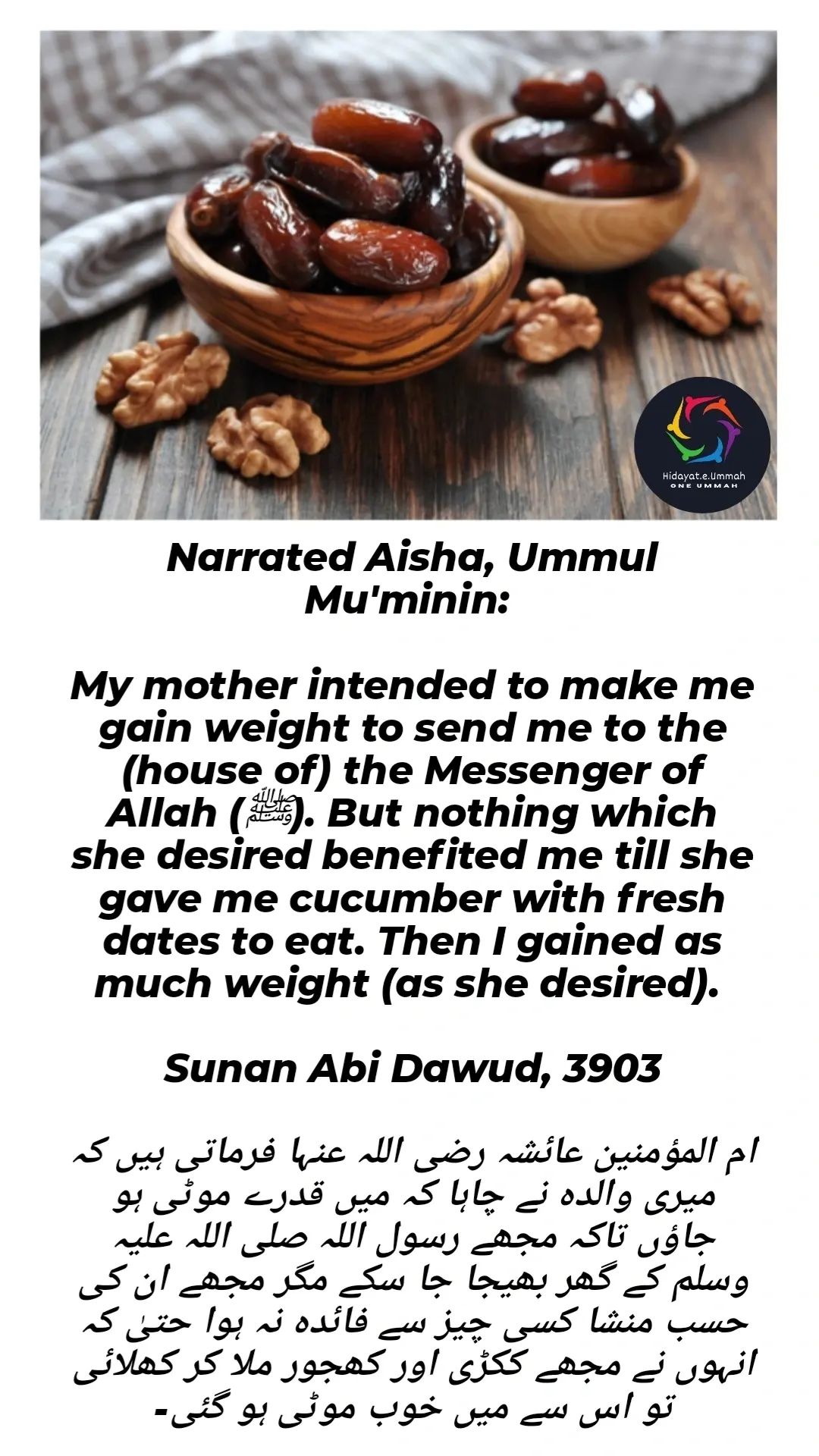
This hadith describes an incident from the life of Aisha (RA), the wife of the Prophet Muhammad ( SAW Peace be upon him). Her mother wanted her to gain weight in preparation for her marriage to the Prophet. Despite trying different foods, nothing worked until she gave Aisha a combination of cucumbers and fresh dates, which helped her gain the desired weight. This highlights the nutritional value of these natural foods.
**Lesson:**
- The combination of natural foods like cucumbers and dates can have health benefits.
- It reflects the simplicity of food habits during the Prophet’s time and the use of wholesome, natural ingredients for health.
Hadith 9
9 of 11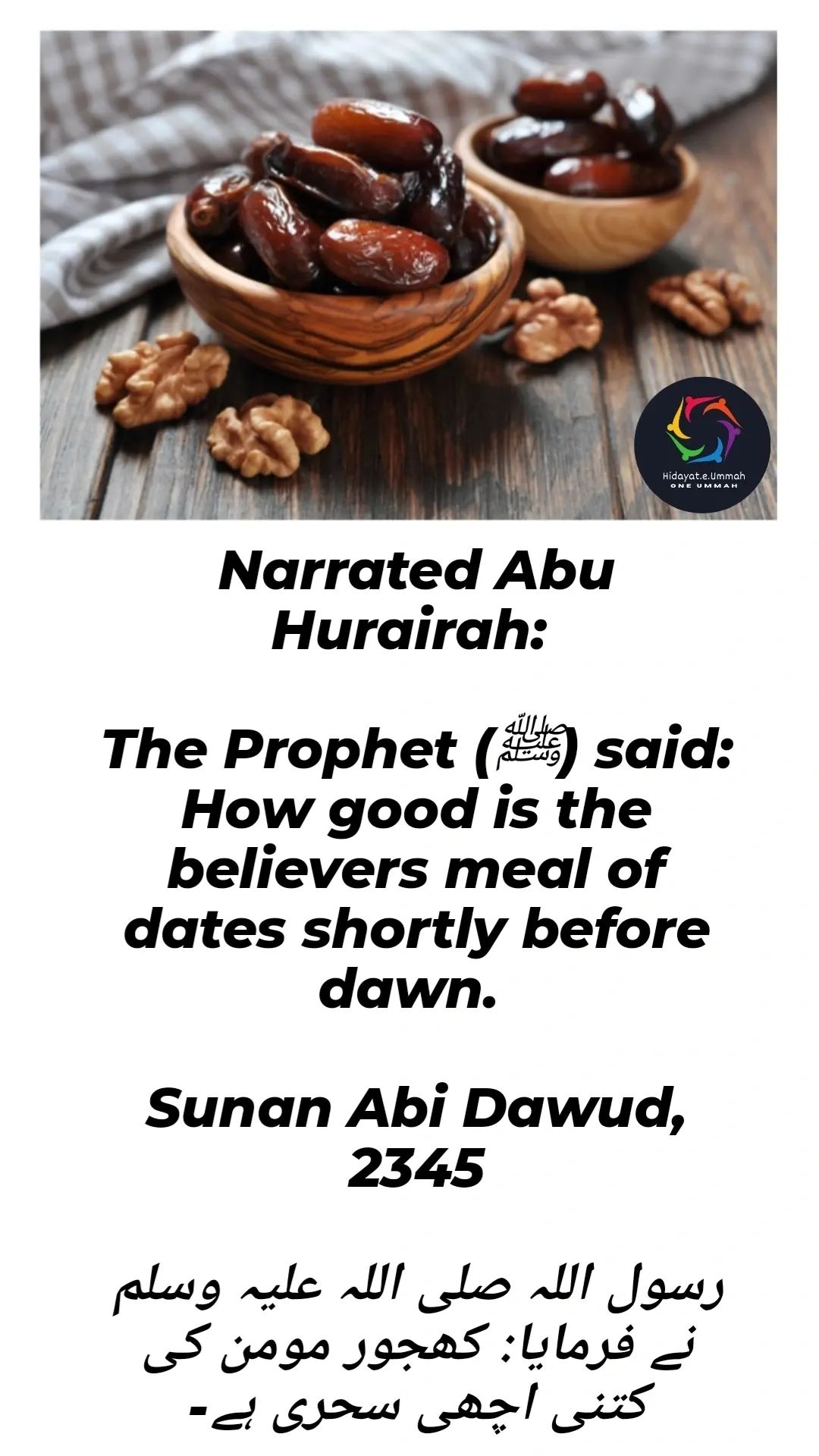
In this hadith, the Prophet Muhammad ( SAW Peace be upon him) highlights the benefits of eating dates as a pre-dawn meal (suhoor) for believers. He praises dates as a wholesome and nourishing food that is ideal to consume before beginning the fast. Dates provide natural energy and sustenance, making them a simple yet effective choice for suhoor.
**Lesson:**
- Dates are highly recommended for suhoor due to their nutritional value.
- The simplicity and blessing of consuming natural, healthy foods is emphasized in Islamic tradition.
Hadith 10
10 of 11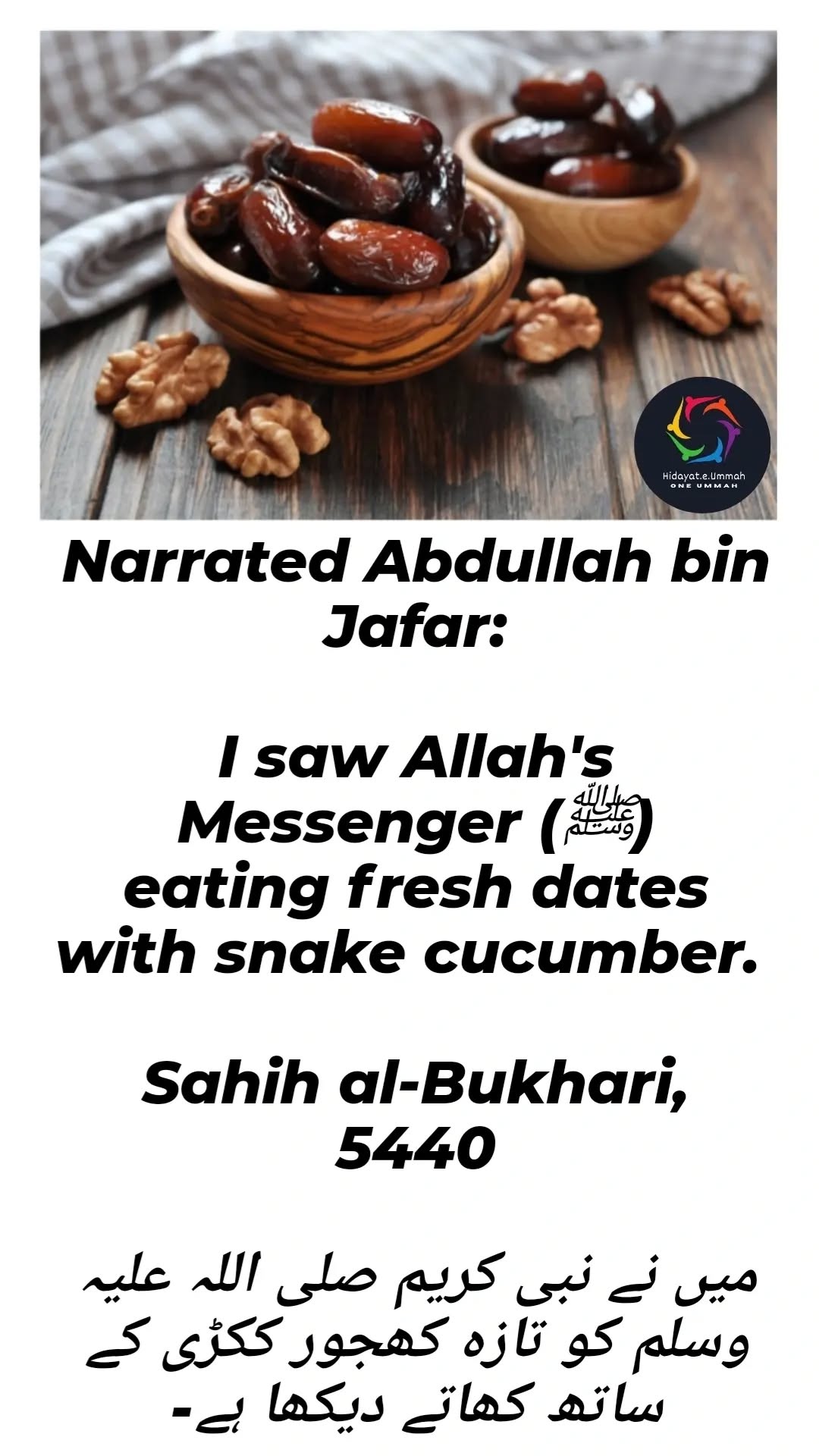
In this hadith, Abdullah bin Ja'far narrates that he saw the Prophet Muhammad ( SAW Peace be upon him) eating fresh dates along with snake cucumber. This highlights the simplicity of the Prophet’s eating habits and his preference for combining foods with complementary qualities. Fresh dates are naturally sweet and warm in nature, while snake cucumber is cooling and refreshing, making the combination both nutritious and balanced.
**Lesson:**
- The Prophet’s diet was simple and consisted of wholesome, natural foods.
- Combining foods with balancing properties can be beneficial for health and well-being.
Hadith 11
11 of 11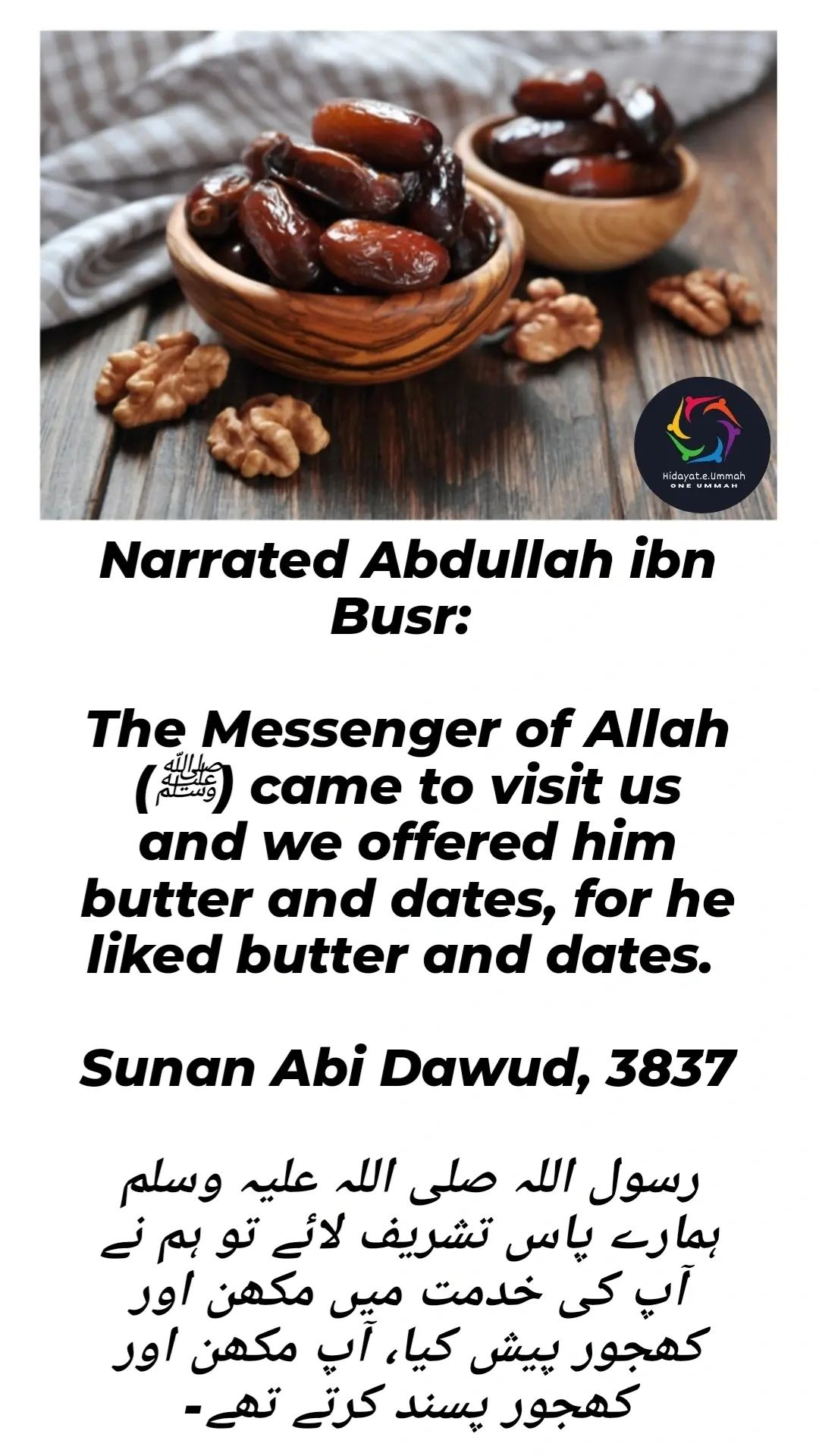
In this hadith, Abdullah ibn Busr narrates that the Prophet Muhammad ( SAW Peace be upon him) visited their home, and they offered him butter and dates because he liked this combination. This demonstrates the Prophet's preference for simple, natural, and wholesome foods and highlights the hospitality shown to him by his companions.
**Lesson:**
- The Prophet appreciated simple and nutritious food.
- It is a good practice to show hospitality to guests by offering food they enjoy.