
Dream
Hadith Collection
11 Hadiths
Hadith 1
1 of 11
This hadith, narrated by Umm Kurz Al-Ka'biyyah, highlights the end of prophecies and the continued existence of good dreams in the lives of believers.
1. **End of Prophecy:**
- The Prophet ( SAW Peace be upon him) mentions that prophecy has come to an end with him, indicating that there will be no new prophets after him.
2. **Good Dreams:**
- Although prophecies have ended, the Prophet ( SAW Peace be upon him) reassures that **good dreams** (those aligned with truth and goodness) will continue to be a part of the lives of believers.
**Lesson:**
- This hadith emphasizes the end of the era of prophecy, but also provides comfort that dreams with positive and truthful meanings still remain as a source of guidance.
Hadith 2
2 of 11
This hadith, narrated by 'Ubada bin As-Samit, explains the connection between good dreams and prophecy.
1. **Good Dreams as Part of Prophethood:**
- The Prophet ( SAW Peace be upon him) mentions that the good dreams of a faithful believer are a small part of the prophetic experience, comparing them to a fraction of prophecy.
- The numbers mentioned (forty-six, seventy, or forty-fifth) vary slightly in different narrations, but they all suggest that good dreams hold a significant spiritual value.
2. **The Importance of Good Dreams:**
- While prophethood has ended with the Prophet Muhammad ( SAW Peace be upon him), good dreams continue to be a means of divine communication for believers, offering guidance and reassurance.
**Lesson:**
- This hadith highlights the special status of good dreams in the life of a believer, reinforcing their spiritual importance as a part of the legacy of prophethood.
Hadith 3
3 of 11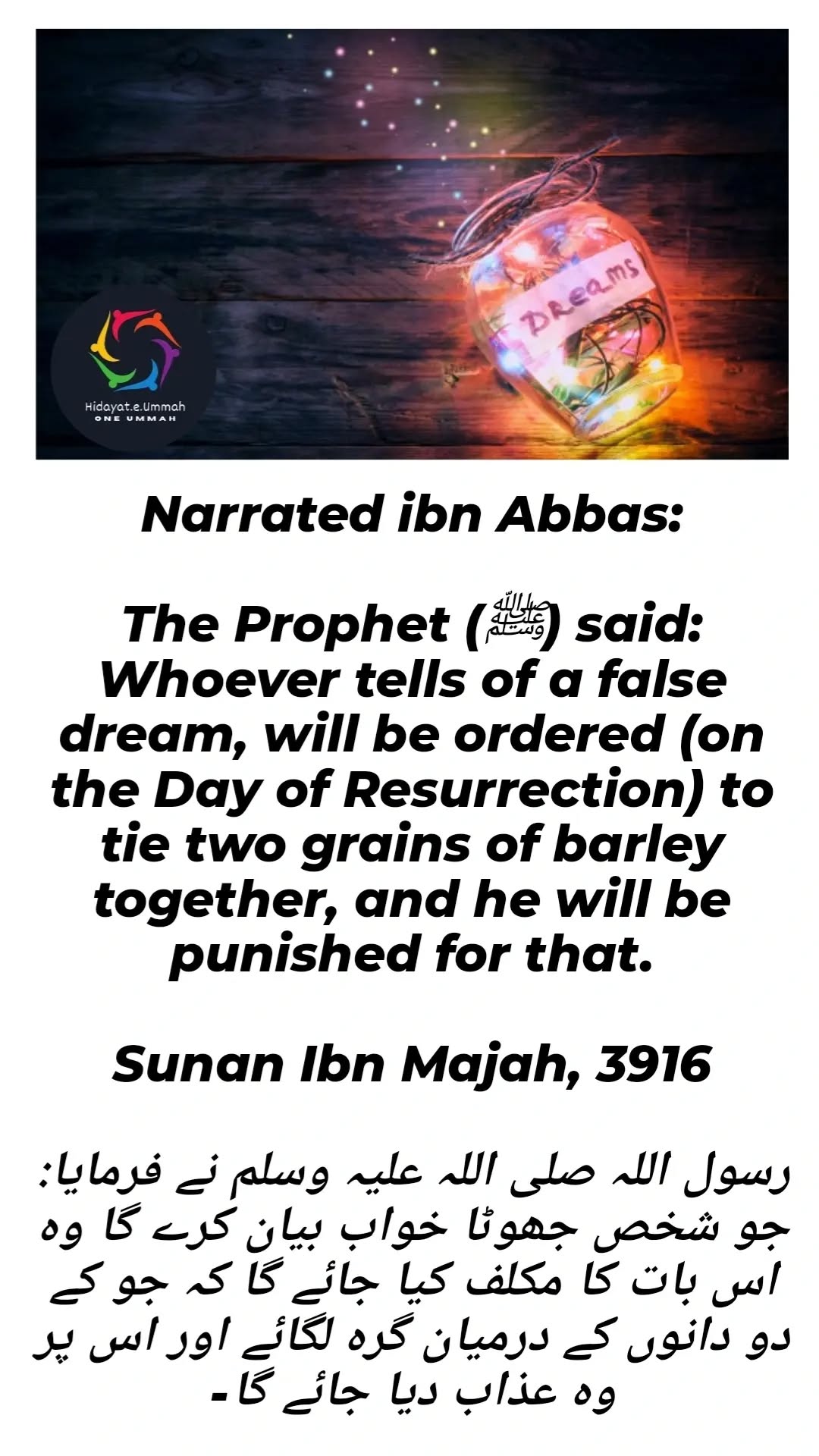
This hadith, narrated by Ibn Abbas, highlights the consequences of lying about dreams.
1. **Consequences of False Dreams:**
- The Prophet ( SAW Peace be upon him) warns that those who fabricate false dreams will face severe punishment on the Day of Resurrection.
- Specifically, they will be commanded to tie two grains of barley together, a task they will be unable to accomplish, symbolizing the futility and seriousness of lying.
2. **Importance of Truthfulness:**
- The hadith emphasizes the importance of honesty, even in matters like dreams, as spreading false information can lead to punishment in the Hereafter.
**Lesson:**
- This hadith reminds us to be truthful in all aspects of life, including our dreams, as lying can have dire spiritual consequences.
Hadith 4
4 of 11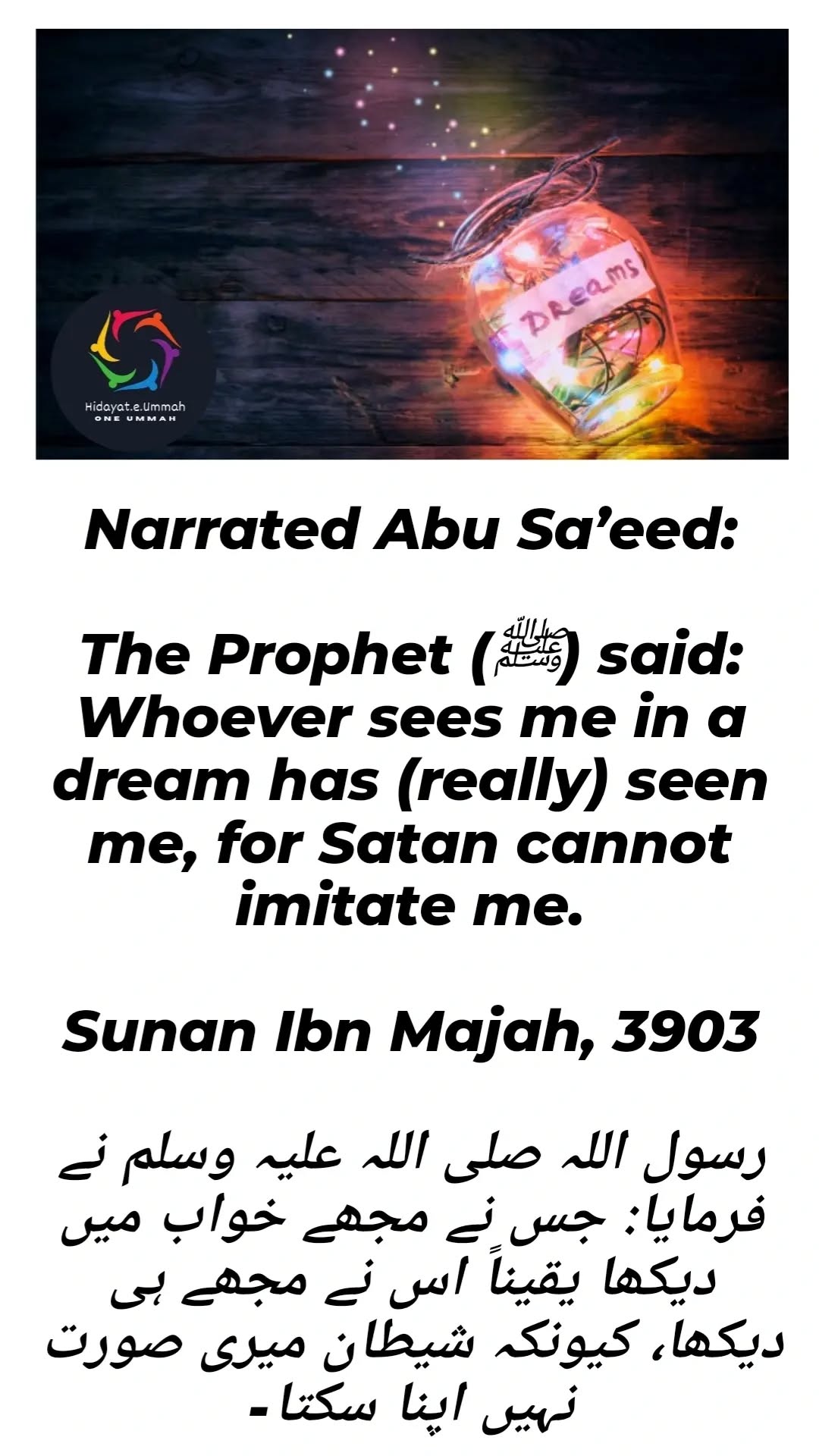
This hadith, narrated by Abu Sa'eed, addresses the authenticity of seeing the Prophet ( SAW Peace be upon him) in a dream.
1. **Authenticity of Seeing the Prophet ( SAW Peace be upon him) in a Dream:**
- The Prophet ( SAW Peace be upon him) assures that anyone who sees him in a dream has indeed seen him, as Satan is incapable of imitating his true form.
- This highlights the special nature of dreams involving the Prophet ( SAW Peace be upon him), distinguishing them from regular dreams or deceptive dreams caused by Satan.
2. **Significance of Such Dreams:**
- This statement underlines the importance of dreams that involve the Prophet ( SAW Peace be upon him), as they are considered true and blessed, providing spiritual benefits to the person who sees them.
**Lesson:**
- The hadith encourages Muslims to take such dreams seriously and see them as a sign of closeness to the Prophet ( SAW Peace be upon him) and as a source of inspiration and guidance.
Hadith 5
5 of 11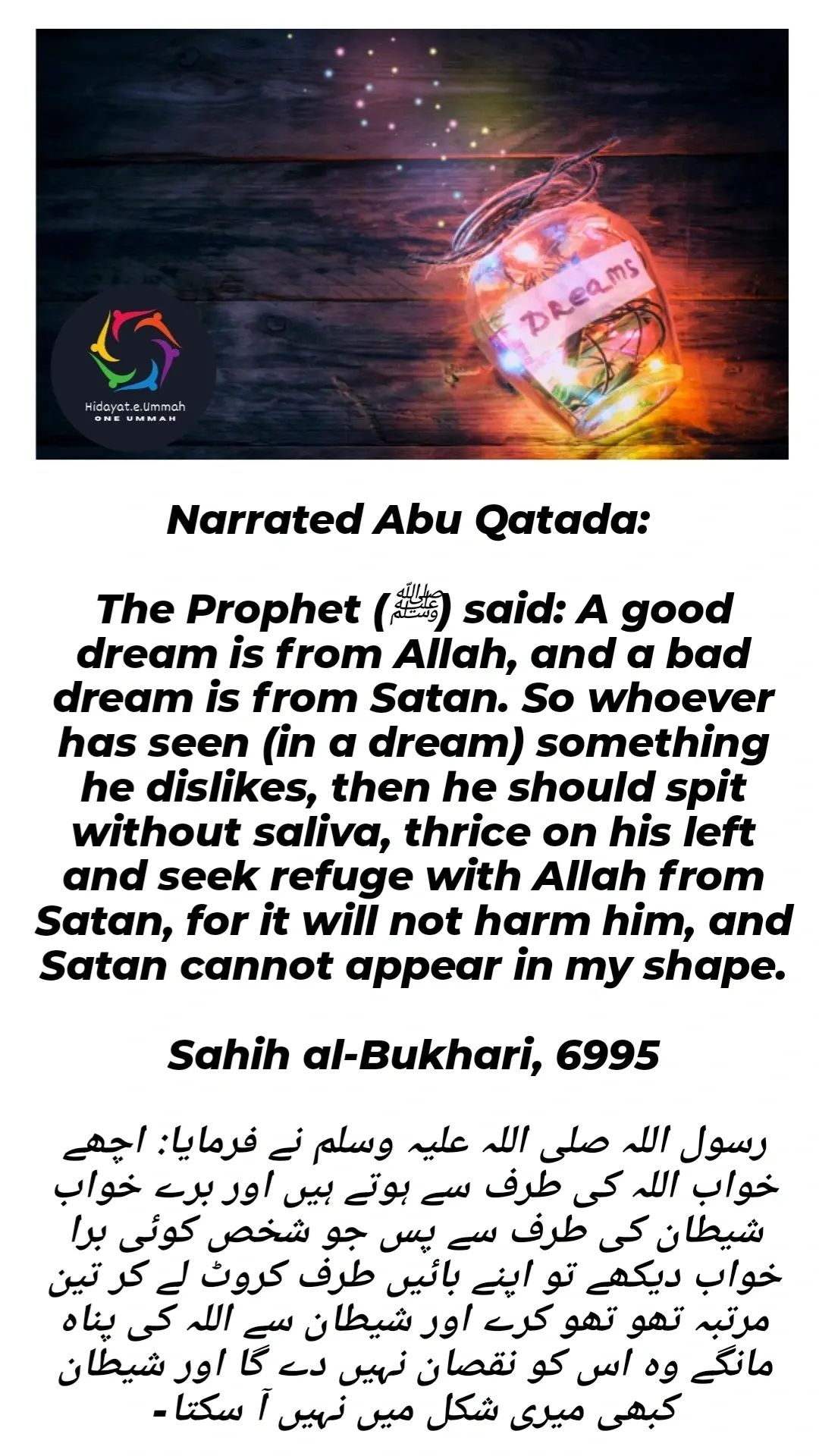
This hadith, narrated by Abu Qatada, explains the origin of good and bad dreams, and the actions to take when one experiences a bad dream.
1. **Source of Good and Bad Dreams:**
- A **good dream** comes from Allah, while a **bad dream** is from Satan. This distinction emphasizes the positive, beneficial nature of dreams inspired by Allah.
- A bad dream may cause fear or discomfort, but the Prophet ( SAW Peace be upon him) reassures that it is from Satan and should not be taken seriously.
2. **What to Do After a Bad Dream:**
- If someone experiences a bad dream, they should:
- **Spit without saliva** three times on their left side, which is a symbolic act of rejecting the negative influence.
- **Seek refuge in Allah** from Satan by saying supplications, which will protect them from harm.
- Following these actions ensures that the bad dream will not harm them.
3. **Satan Cannot Appear in the Prophet's Shape:**
- The hadith also reassures that Satan cannot appear in the form of the Prophet ( SAW Peace be upon him), so if one sees the Prophet ( SAW Peace be upon him) in a dream, it is a true and blessed dream.
**Lesson:**
- The hadith provides practical guidance for handling bad dreams and emphasizes the importance of seeking protection from Allah. It encourages Muslims to remain calm and trust in Allah's protection when faced with negative dreams.
Hadith 6
6 of 11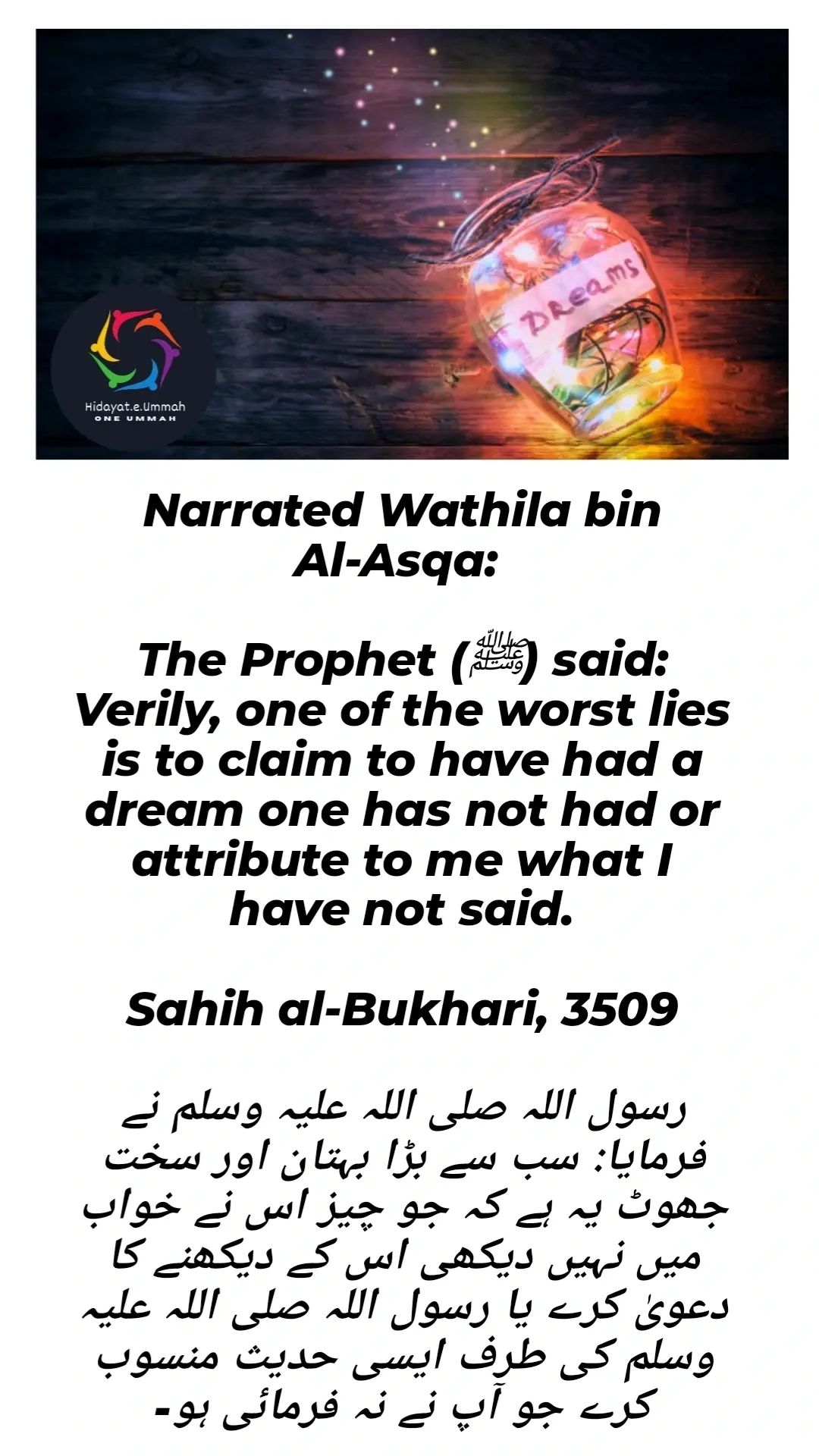
This hadith, narrated by Wathila bin Al-Asqa, warns against two serious forms of dishonesty related to dreams and the Prophet ( SAW Peace be upon him).
1. **False Dreams:**
- One of the worst lies a person can commit is to **claim to have had a dream** that they did not actually have. This shows the importance of honesty, even when it comes to dreams.
- Fabricating dreams is considered a serious offense because it involves deception, and such actions can lead to greater harm and distrust.
2. **Attributing False Words to the Prophet ( SAW Peace be upon him):**
- Another severe form of lying is to **attribute something to the Prophet ( SAW Peace be upon him)** that he did not actually say. This includes fabricating statements or teachings in his name, which can mislead others and distort the true message of Islam.
**Lesson:**
- The hadith serves as a strong reminder about the importance of truthfulness in all aspects of life, especially when it comes to dreams and the words of the Prophet ( SAW Peace be upon him). It encourages Muslims to avoid any form of dishonesty, as such actions are considered major lies in the eyes of Allah.
Hadith 7
7 of 11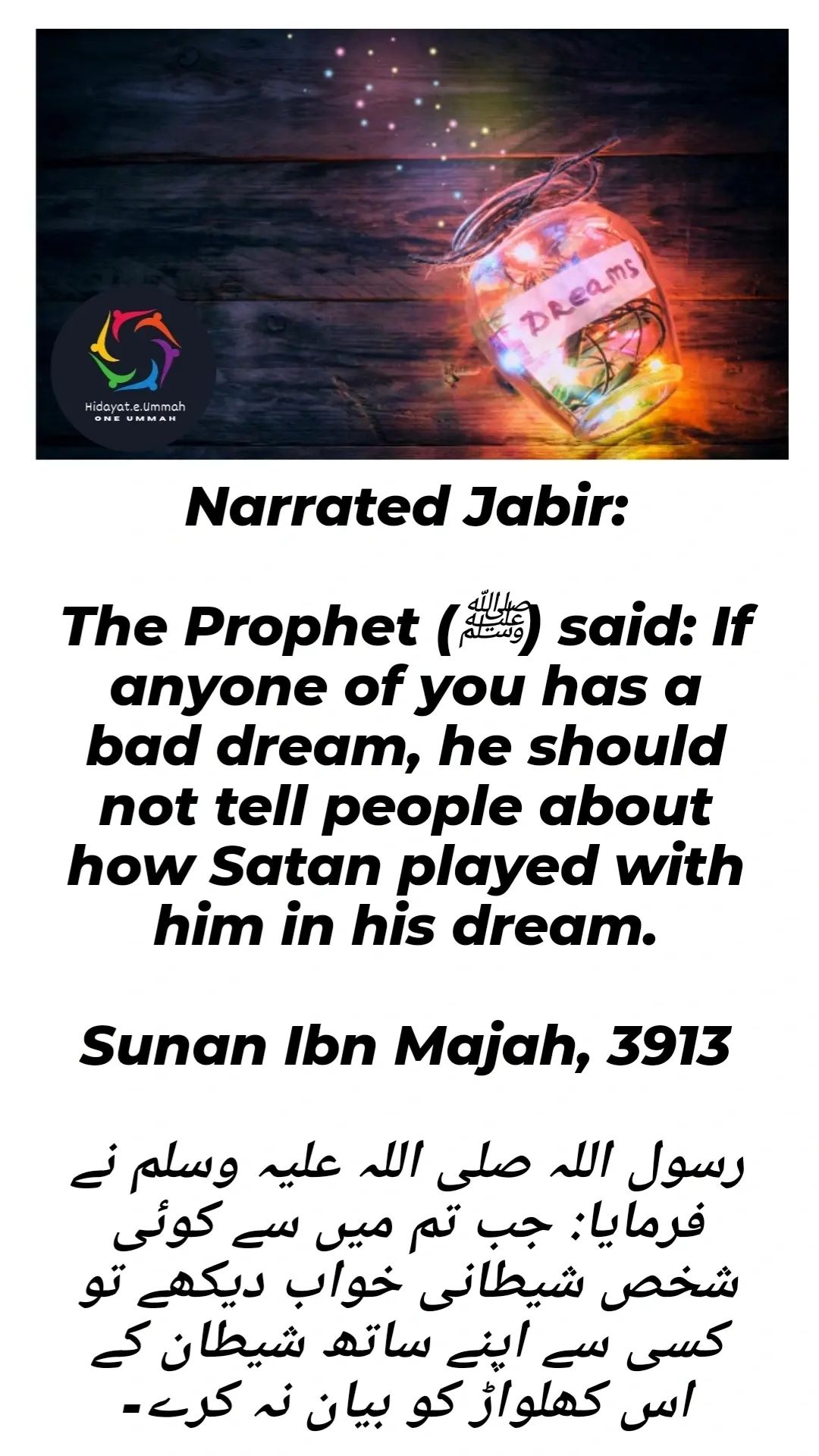
This hadith, narrated by Jabir, provides guidance on how to handle bad dreams and the role of Satan in them.
1. **Avoid Sharing Bad Dreams:**
- If someone experiences a **bad dream**, especially one where **Satan plays a role**, they should not **share** or **talk about** it with others. This helps prevent the negative feelings or fear that might arise from discussing unsettling dreams.
- The focus here is on avoiding the spread of negativity and ensuring that the person does not let the bad dream affect their daily life or relationships with others.
2. **Satan's Influence in Dreams:**
- The hadith acknowledges that bad dreams are often **influenced by Satan**, and they may be intended to create fear, confusion, or discomfort. However, Muslims are taught not to dwell on these dreams or let them affect their peace of mind.
**Lesson:**
- This hadith encourages Muslims to remain calm and composed, especially when experiencing bad dreams, and not to allow Satan’s whispers to impact their reality. It also reminds us to be mindful of what we share with others, as not everything negative needs to be communicated.
Hadith 8
8 of 11
This hadith, narrated by Abu Hurayra, highlights the importance of **giving gifts** in fostering love and positive relationships among people.
1. **The Power of Giving Gifts:**
- The Prophet ( SAW Peace be upon him) encourages **giving gifts** to others, as it helps strengthen bonds of **affection** and mutual love. The simple act of giving gifts can create a sense of goodwill, connection, and appreciation.
- Gifts don't necessarily have to be material or expensive; even small gestures can bring joy and strengthen relationships.
2. **Fostering Love Through Generosity:**
- The hadith shows that **love** is a key outcome of generosity. By giving gifts, we create opportunities for love to grow, whether between family members, friends, or even strangers.
**Lesson:**
- This hadith encourages us to practice generosity and giving, knowing that it leads to stronger, more loving relationships. It reminds us that even small acts of kindness and sharing can have a significant impact on building harmony and affection within our communities.
Hadith 9
9 of 11
This hadith, narrated by Ammi Aisha, describes the generosity and politeness of the Prophet Muhammad ( SAW Peace be upon him) when receiving and giving gifts.
1. **Receiving Gifts Graciously:**
- The Prophet ( SAW Peace be upon him) used to **accept gifts** that were offered to him, which shows his appreciation for others' kindness and generosity.
- His acceptance of gifts reflects his humility and graciousness, understanding that receiving gifts is a part of maintaining good relationships and expressing mutual respect.
2. **Reciprocity in Giving Gifts:**
- The Prophet ( SAW Peace be upon him) also made sure to **give something in return** for the gifts he received, emphasizing the value of reciprocity and the importance of not just taking, but also giving back.
- This act promotes a sense of fairness, respect, and gratitude between people.
**Lesson:**
- This hadith teaches us the importance of being gracious in accepting gifts and practicing reciprocity. By returning kindness, we help strengthen relationships and maintain a balance in our interactions with others.
Hadith 10
10 of 11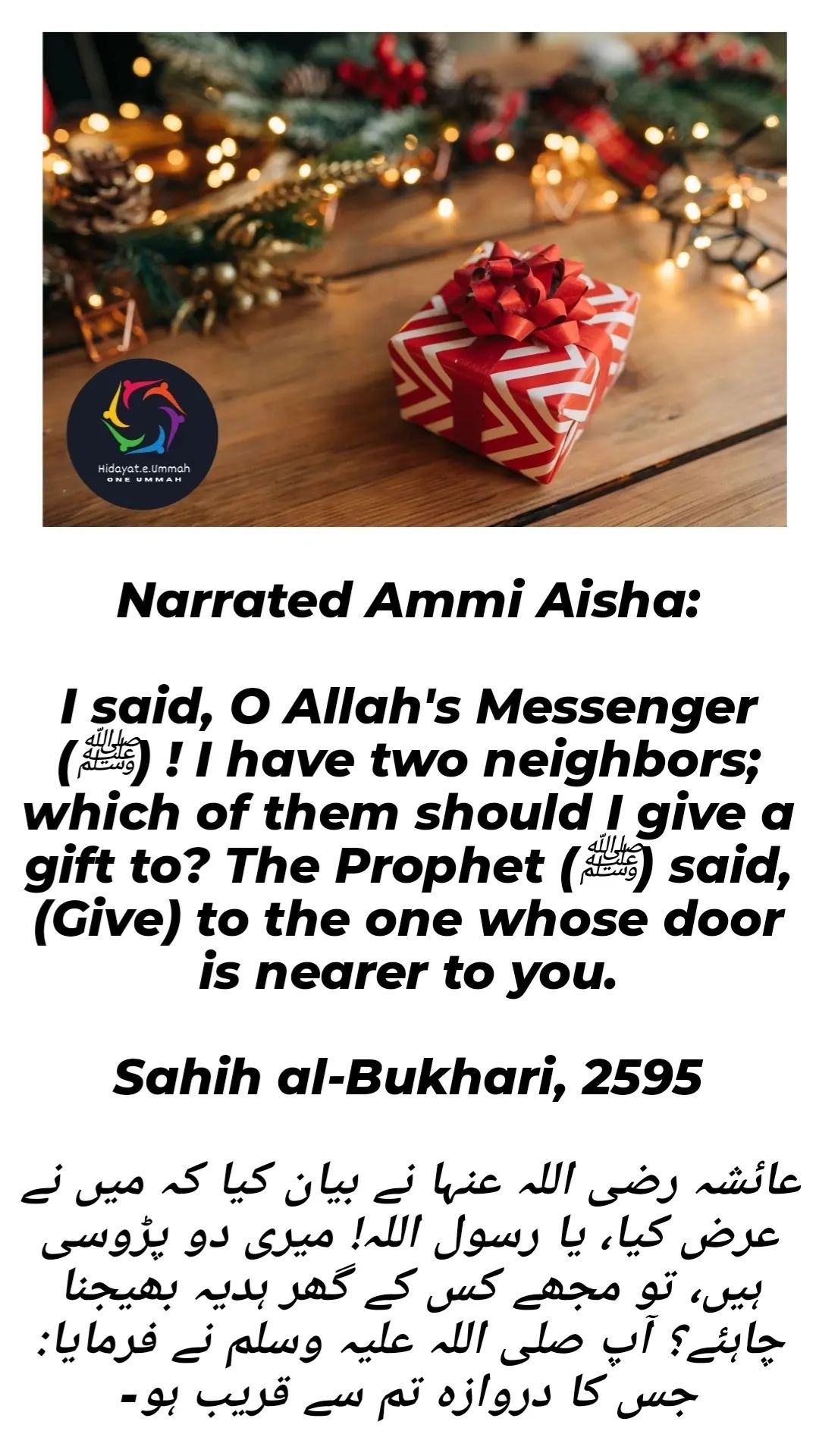
This hadith, narrated by Ammi Aisha, shows the Prophet Muhammad's ( SAW Peace be upon him) guidance on giving gifts to neighbors.
1. **Choosing the Right Neighbor to Give a Gift:**
- When Aisha (RA) asked the Prophet ( SAW Peace be upon him) which of her two neighbors should receive a gift, the Prophet ( SAW Peace be upon him) advised that she should give it to the one whose door is nearest to her.
- This shows the importance of **proximity** in choosing who to give gifts to, emphasizing kindness towards those closest to us in our community.
2. **Promoting Neighborly Love:**
- The advice reflects the importance of maintaining good relationships with neighbors and the immediate community.
- By focusing on those nearby, it encourages regular acts of kindness and fostering connections with those we interact with most.
**Lesson:**
- This hadith teaches us the importance of showing kindness and generosity, starting with those closest to us. It highlights that giving gifts can strengthen relationships, especially with our neighbors.
Hadith 11
11 of 11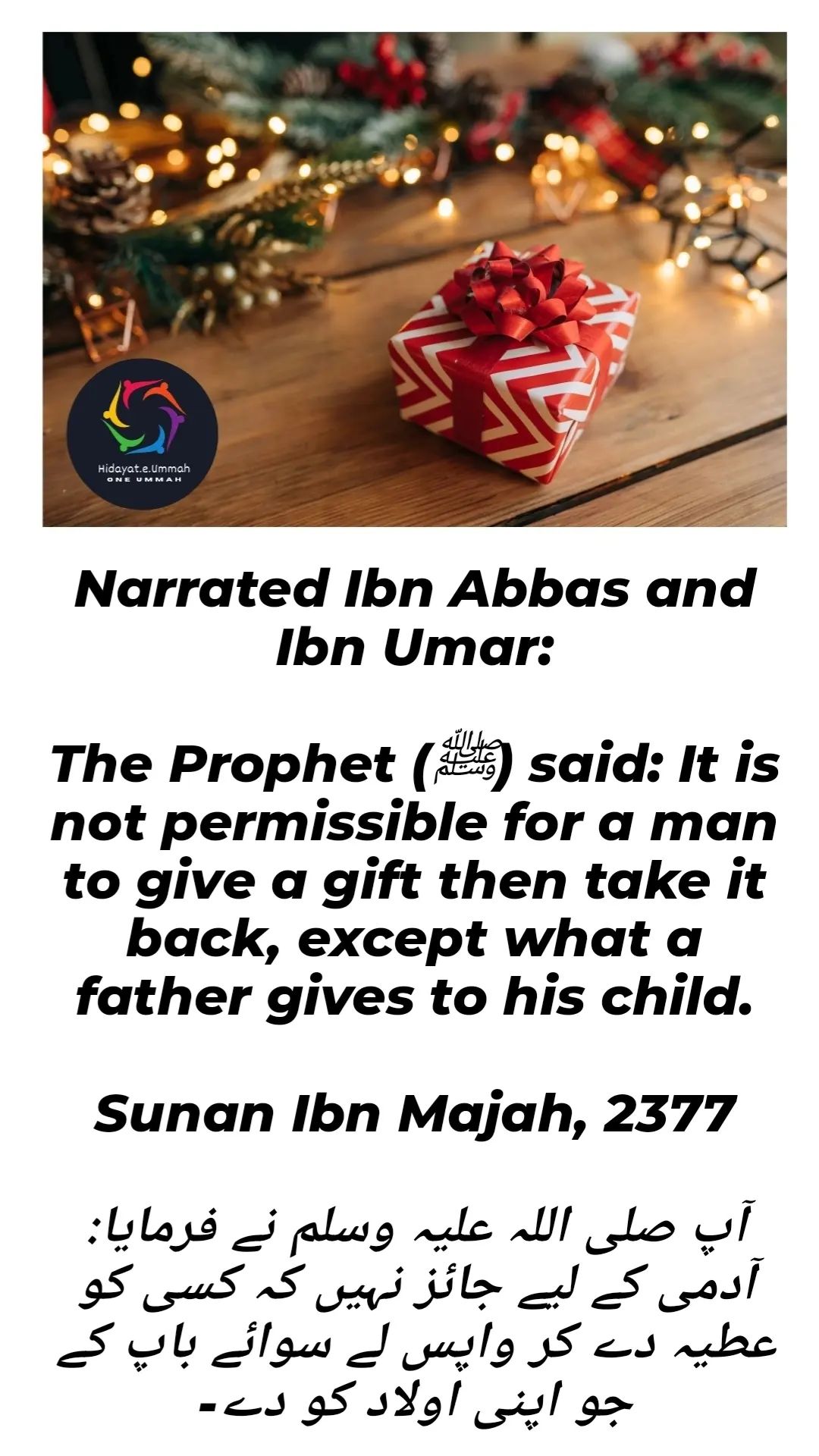
This hadith, narrated by Ibn Abbas and Ibn Umar, discusses the permissibility of taking back a gift once given.
1. **The Prohibition of Taking Back Gifts:**
- The Prophet ( SAW Peace be upon him) clarified that it is not allowed for a person to give a gift and then take it back, as it would be considered unjust.
- This emphasizes the importance of **trust and respect** in gift-giving, where the giver must be sincere and not expect to retract the gift later.
2. **Exception for Parents:**
- The only exception to this rule is that a **father** is allowed to take back something he has given to his child. This exception is due to the parental right and responsibility to manage what is best for the child.
**Lesson:**
- This hadith teaches us that giving gifts should be done with pure intentions, and taking them back is not permissible in most cases. It also reflects the special relationship and authority of parents over their children.