
Du'a
Hadith Collection
22 Hadiths
Hadith 1
1 of 22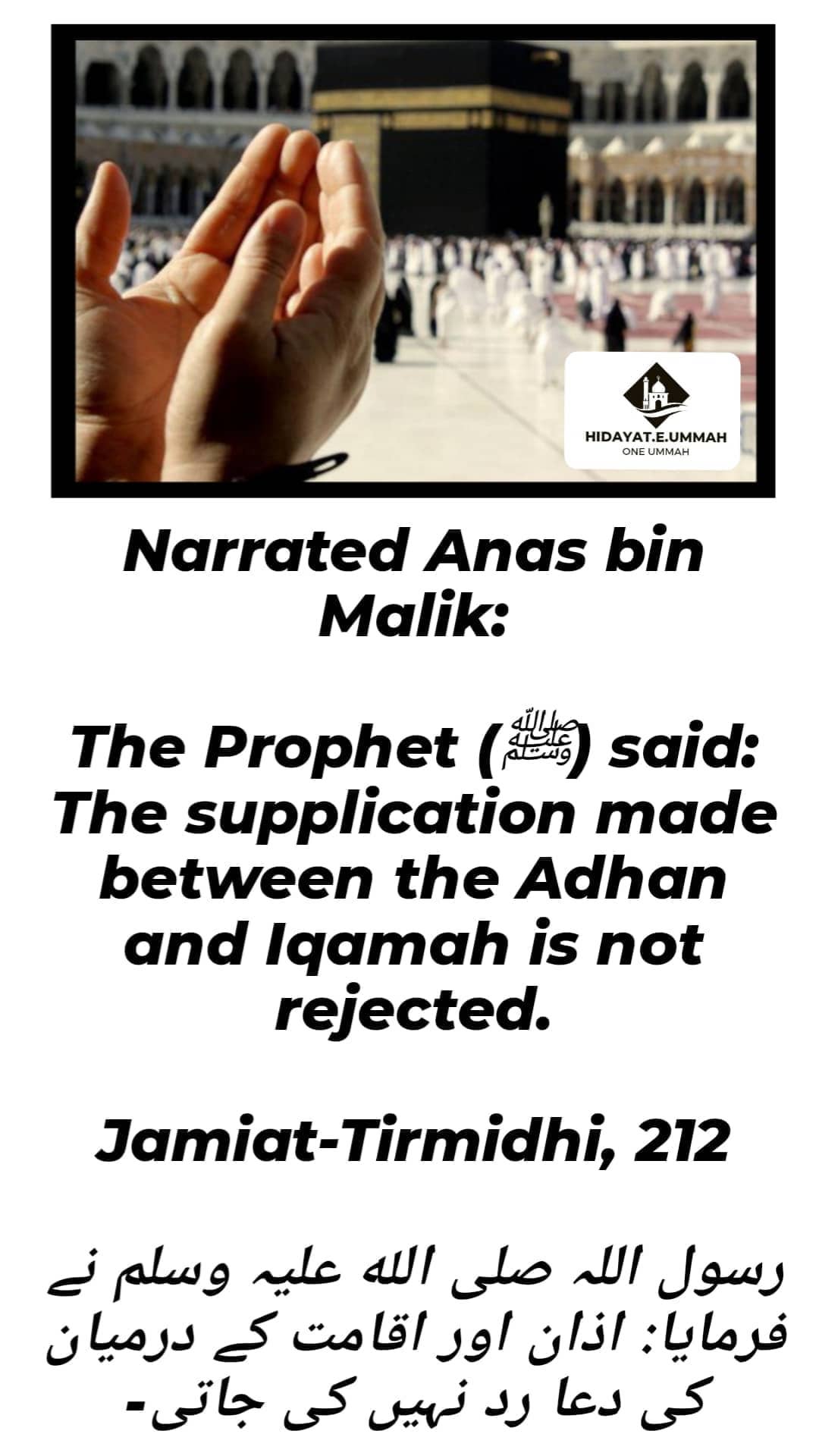
1. This hadith is a saying of Prophet Muhammad (peace be upon him) narrated by Anas bin Malik, highlighting the importance of the time between the Adhan (call to prayer) and the Iqamah (call to begin the prayer).
2. The Prophet states that any supplication (dua) made during this time is not rejected, meaning it is a special period when prayers are highly likely to be accepted by Allah.
3. This hadith encourages Muslims to take advantage of this blessed time to make heartfelt supplications for their needs, desires, and forgiveness.
4. It serves as a reminder of the significance of connecting with Allah during moments associated with acts of worship, such as prayer.
5. The overall message is to seize the spiritual opportunities provided by Allah, like the time between the Adhan and Iqamah, to strengthen one's relationship with Him and seek His mercy and blessings.
Hadith 2
2 of 22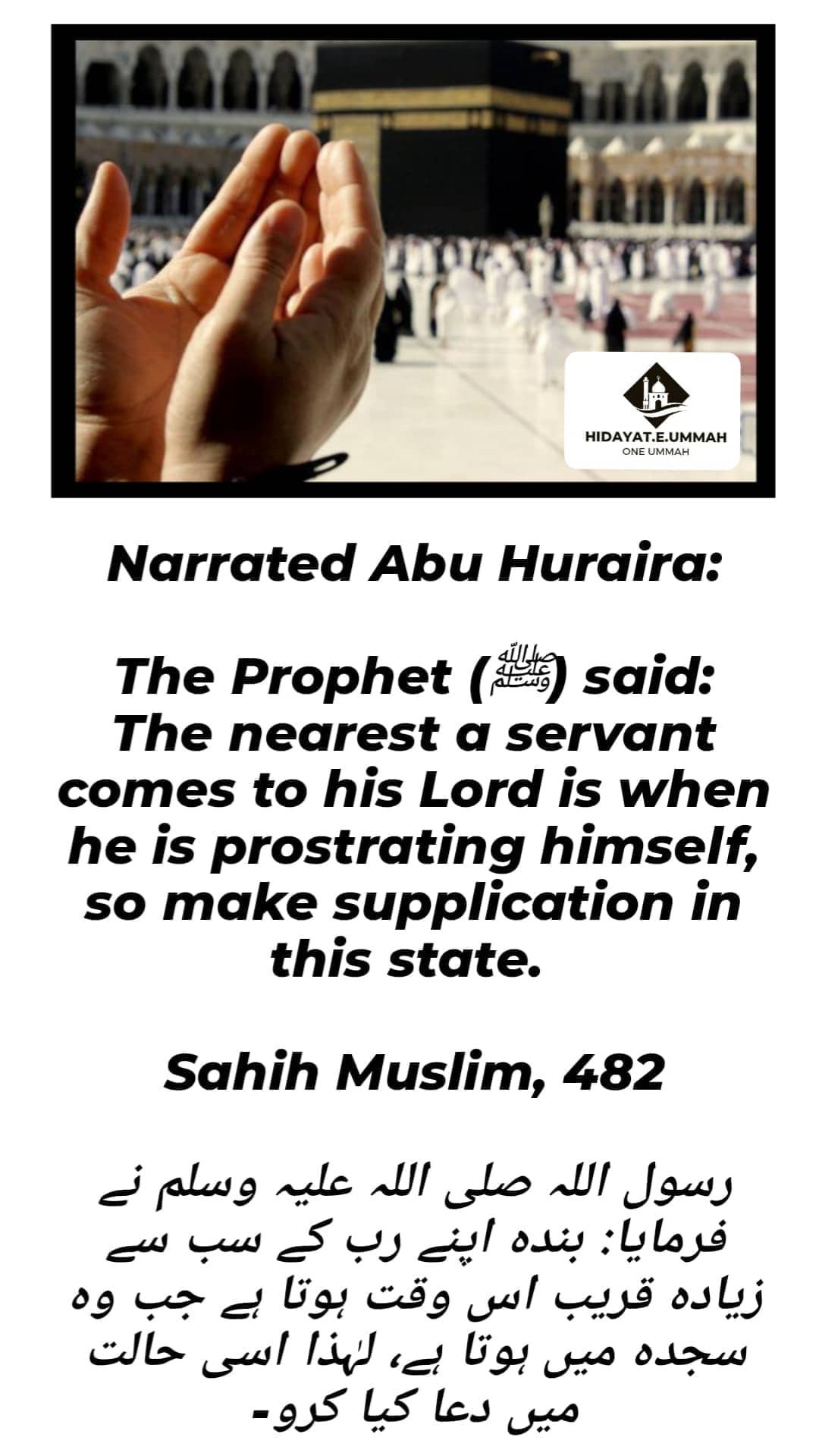
1. This hadith is a saying of Prophet Muhammad (peace be upon him) narrated by Abu Huraira, emphasizing the significance of the state of prostration (sujood) in prayer.
2. The Prophet mentions that a servant is closest to Allah during prostration, highlighting the deep spiritual connection achieved in this position of humility.
3. Prostration symbolizes submission and devotion to Allah, as the individual places their forehead on the ground, acknowledging Allah's greatness and their dependence on Him.
4. The Prophet encourages believers to make supplications (dua) while in this state, as it is a moment when prayers are most likely to be accepted.
5. This hadith teaches Muslims to maximize the spiritual benefits of their prayers by using the state of sujood to sincerely ask Allah for guidance, forgiveness, and blessings.
6. The overall message is to strengthen one's relationship with Allah through humility and heartfelt supplication, especially during the most spiritually significant moments in prayer.
Hadith 3
3 of 22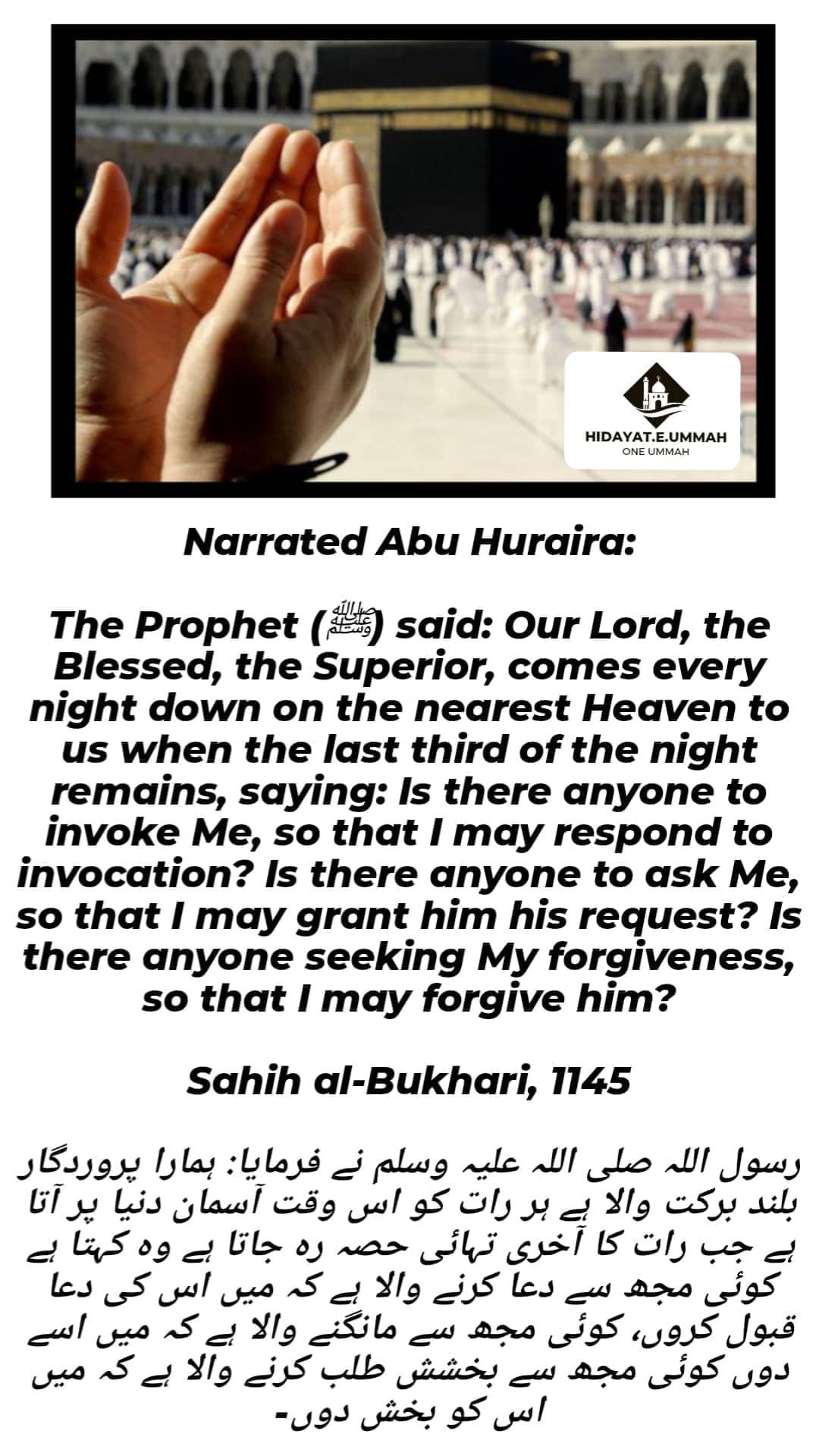
1. This hadith is a saying of Prophet Muhammad (peace be upon him) narrated by Abu Huraira, describing a special moment of divine mercy that occurs every night.
2. The Prophet explains that in the last third of the night, Allah descends to the nearest Heaven to offer His mercy, forgiveness, and acceptance of prayers.
3. Allah calls out, inviting anyone who wishes to invoke Him to do so, with the promise of a response to their supplication (dua).
4. He also asks if there is anyone seeking something from Him so that He may grant their request, emphasizing His willingness to fulfill the needs of His servants.
5. Additionally, Allah offers forgiveness to those who seek it during this blessed time, highlighting His endless mercy and readiness to pardon sins.
6. This hadith encourages Muslims to wake up during the last third of the night, a time known as Tahajjud, to pray, make supplications, and seek forgiveness from Allah.
7. The overall message is to take advantage of this special time of divine closeness to strengthen one’s relationship with Allah and seek His blessings, mercy, and guidance.
Hadith 4
4 of 22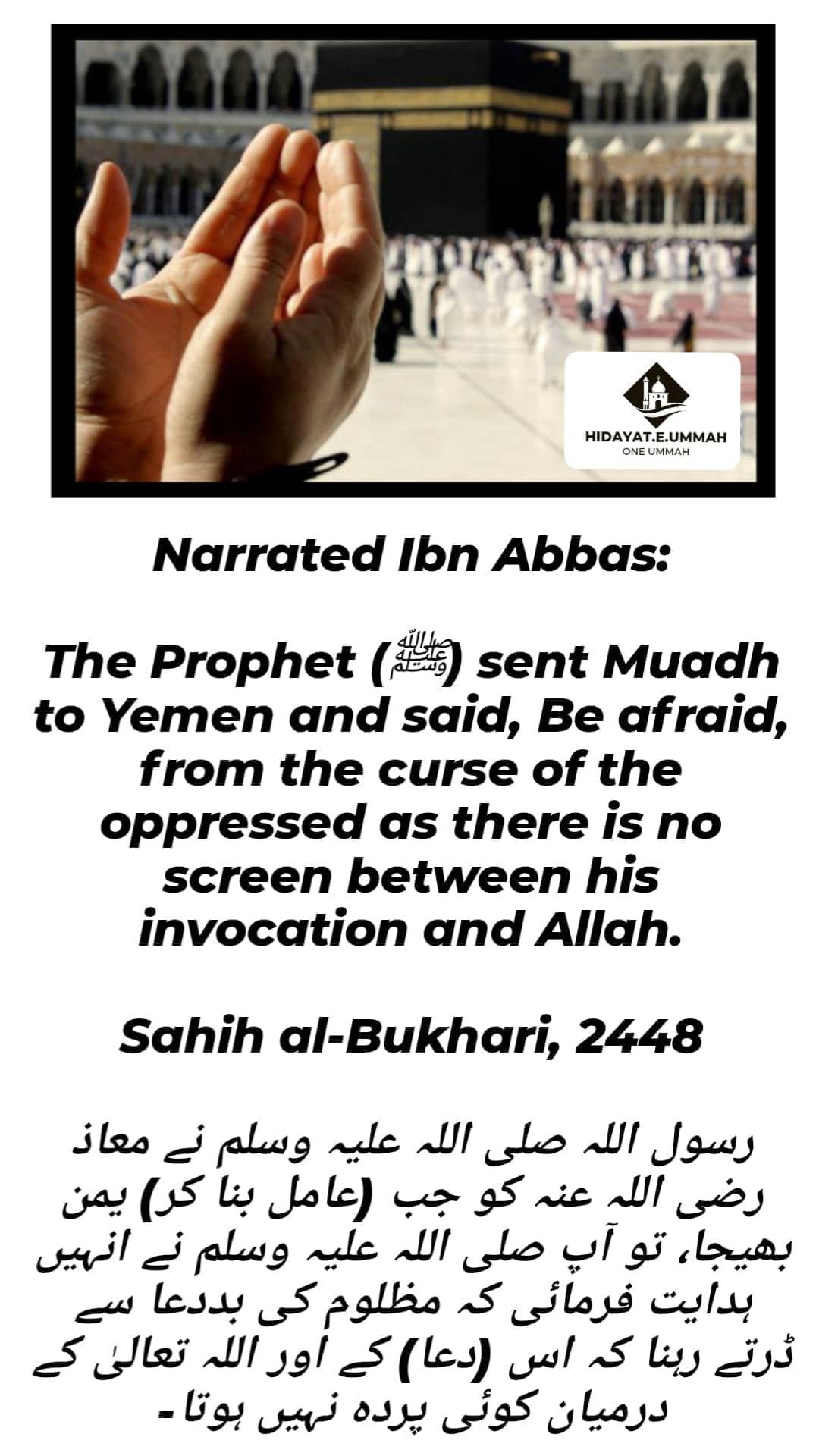
1. This hadith is a saying of Prophet Muhammad (peace be upon him) narrated by Ibn Abbas, where the Prophet gives important advice to Muadh when sending him as a representative to Yemen.
2. The Prophet warns Muadh to be cautious and avoid oppressing others, as the supplication (dua) of an oppressed person is directly heard by Allah.
3. The phrase 'there is no screen between his invocation and Allah' means that the dua of an oppressed person is not blocked or delayed; it reaches Allah immediately and is likely to be accepted.
4. This hadith highlights the severity of injustice and oppression, teaching Muslims to be fair and compassionate in their dealings with others.
5. It also serves as a reminder to those in positions of authority or responsibility to act justly and avoid causing harm to those under their care.
6. The overall message is that Allah is always aware of the struggles of the oppressed, and He will respond to their prayers, offering hope to those who face injustice and warning to those who commit it.
Hadith 5
5 of 22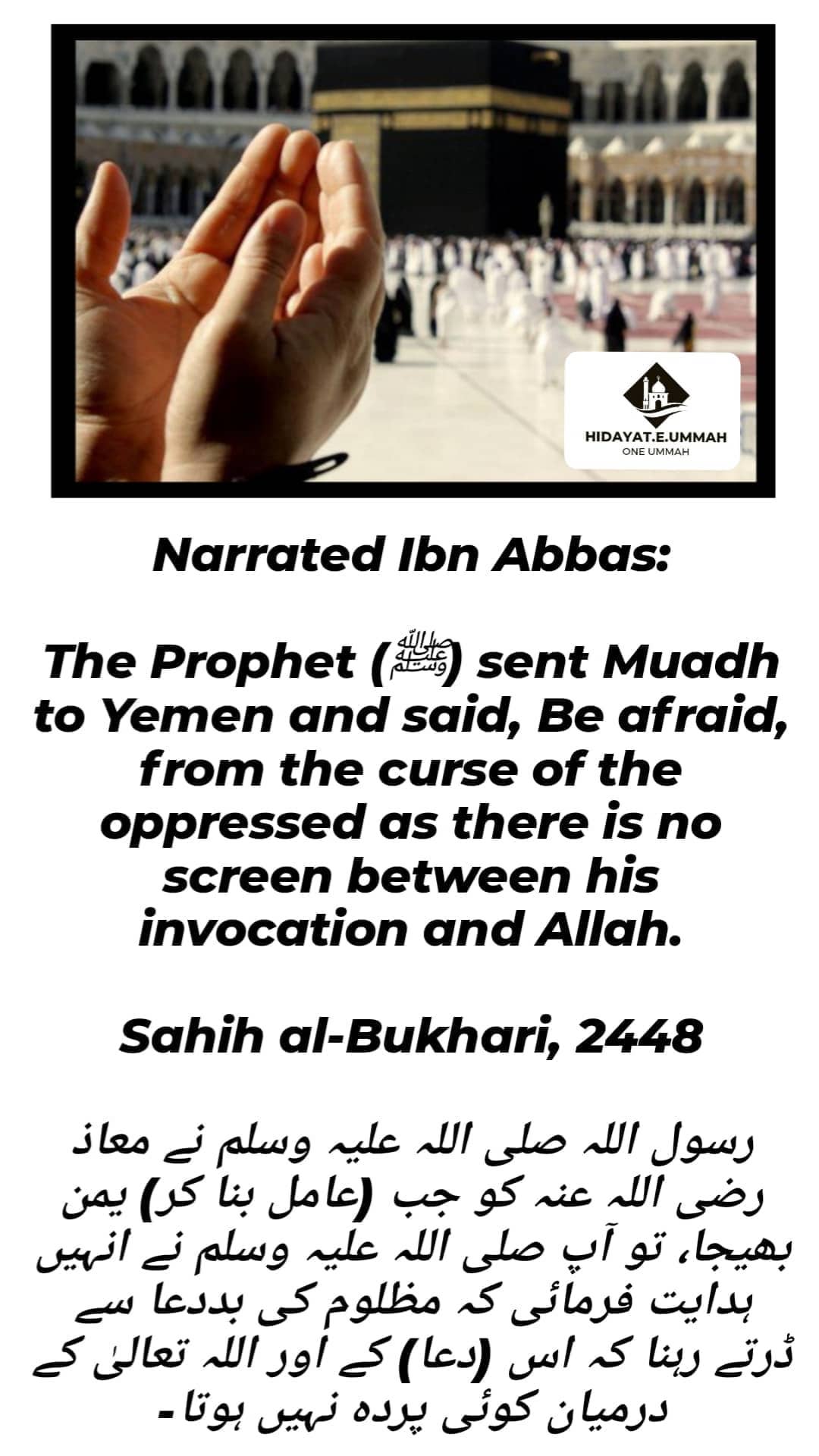
1. This hadith is a saying of Prophet Muhammad (peace be upon him) narrated by Ibn Abbas, offering guidance to Muadh as he was sent to Yemen on a mission.
2. The Prophet advises Muadh to be cautious and avoid causing oppression or harm to others, as the curse (dua) of an oppressed person holds great weight.
3. The Prophet emphasizes that the dua of the oppressed has no barrier between it and Allah, meaning it is heard and accepted directly by Allah.
4. This hadith underscores the gravity of injustice, warning everyone to refrain from wronging others, as oppression leads to severe consequences in this world and the Hereafter.
5. It serves as a powerful reminder for people in authority or leadership positions to act with fairness, justice, and compassion in their dealings.
6. The overall message is that Allah is the ultimate source of justice, and He hears the prayers of the oppressed, offering comfort to those who suffer injustice and a warning to those who oppress others.
Hadith 6
6 of 22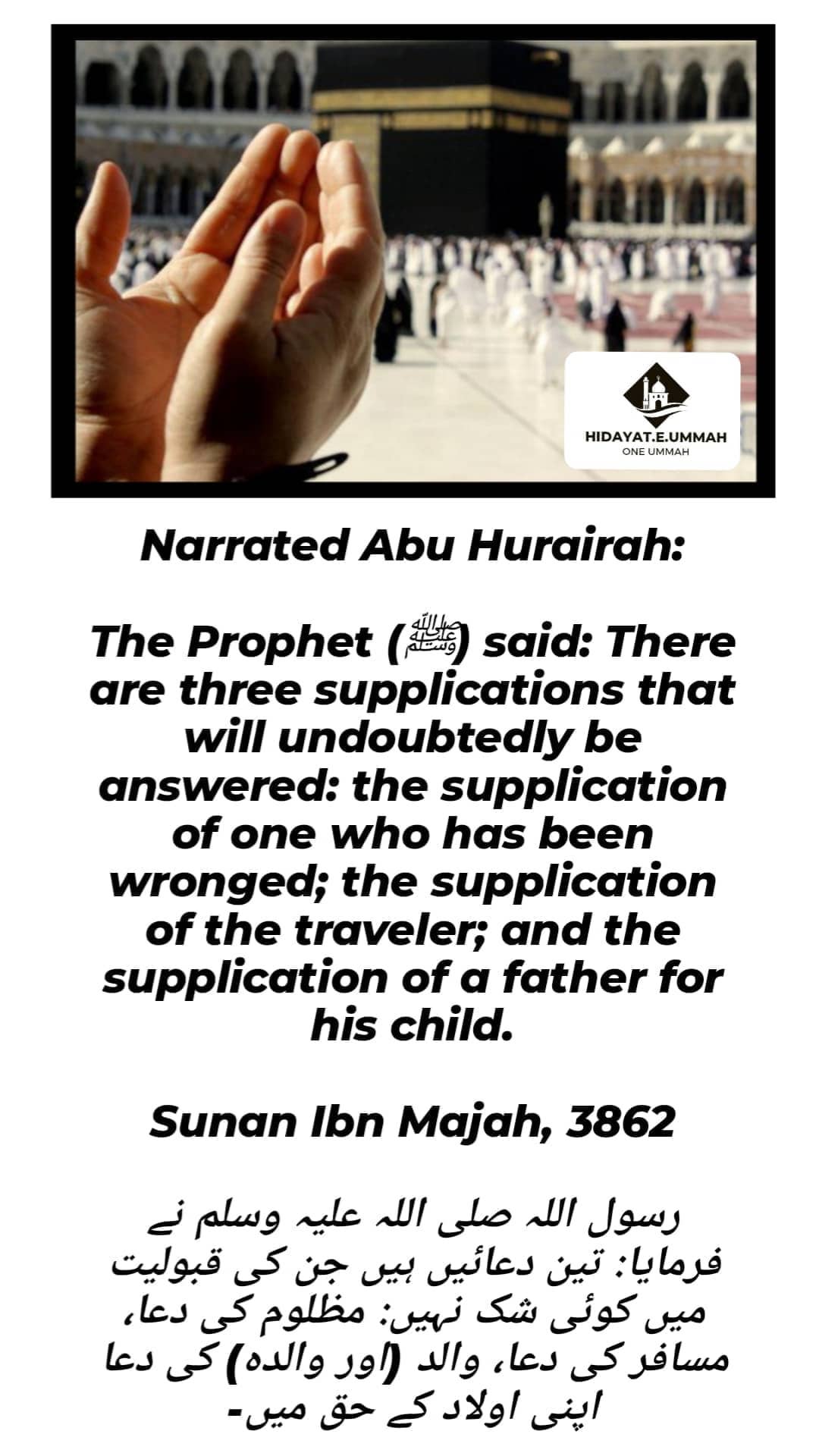
1. This hadith is a saying of Prophet Muhammad (peace be upon him) narrated by Abu Hurairah, highlighting three types of supplications (duas) that are guaranteed to be accepted by Allah.
2. The first is the supplication of a person who has been wronged or oppressed. Allah hears the cries of the oppressed and ensures that justice is served, making their dua powerful and assured of a response.
3. The second is the supplication of a traveler. During travel, a person often faces challenges and hardships, which increases their sincerity in calling upon Allah, making their dua more likely to be accepted.
4. The third is the supplication of a father for their child. This shows the importance of the parent-child relationship and the profound effect of a parent's heartfelt prayers for the well-being and success of their child.
5. This hadith encourages believers to avoid wronging others, cherish the prayers of their parents, and take advantage of the opportunities to pray during travel.
6. The overall message is to recognize the power of sincere supplication, especially in these specific circumstances, and to trust in Allah's justice and mercy.
Hadith 7
7 of 22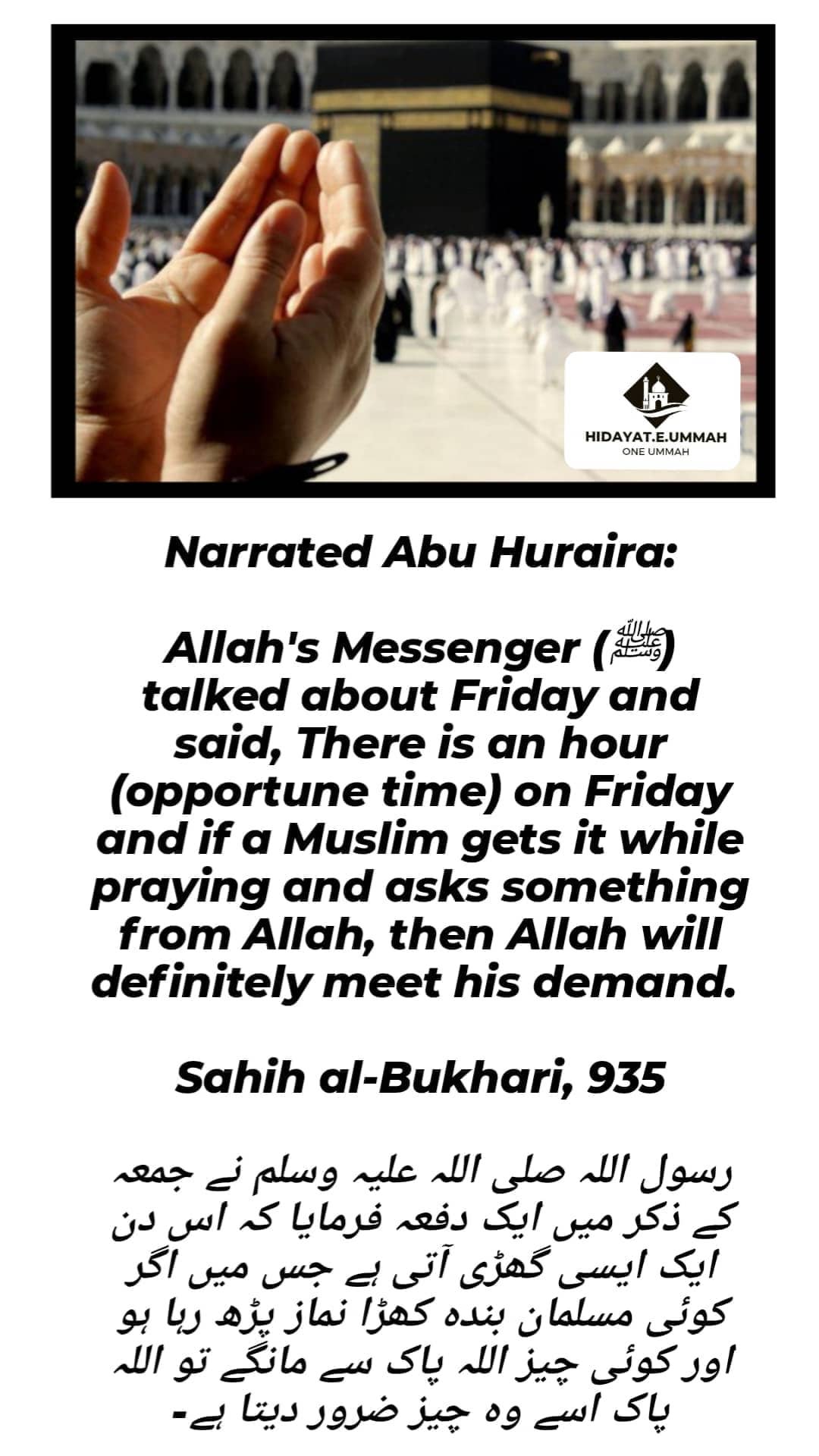
1. This hadith is a saying of Prophet Muhammad (peace be upon him) narrated by Abu Huraira, emphasizing the special significance of Friday in Islam.
2. The Prophet mentions that there is a specific hour or moment on Friday when prayers (duas) made by a Muslim are guaranteed to be answered by Allah.
3. This moment is described as occurring while a Muslim is engaged in prayer and sincerely asking Allah for their needs and desires.
4. The hadith encourages Muslims to take advantage of the blessings of Friday by increasing their prayers, worship, and supplications on this special day.
5. It highlights the mercy and generosity of Allah, who has provided this opportunity for His servants to have their duas accepted.
6. The overall message is to make Friday a day of reflection, devotion, and connection with Allah, especially by seeking this opportune time to pray for one’s needs and forgiveness.
Hadith 8
8 of 22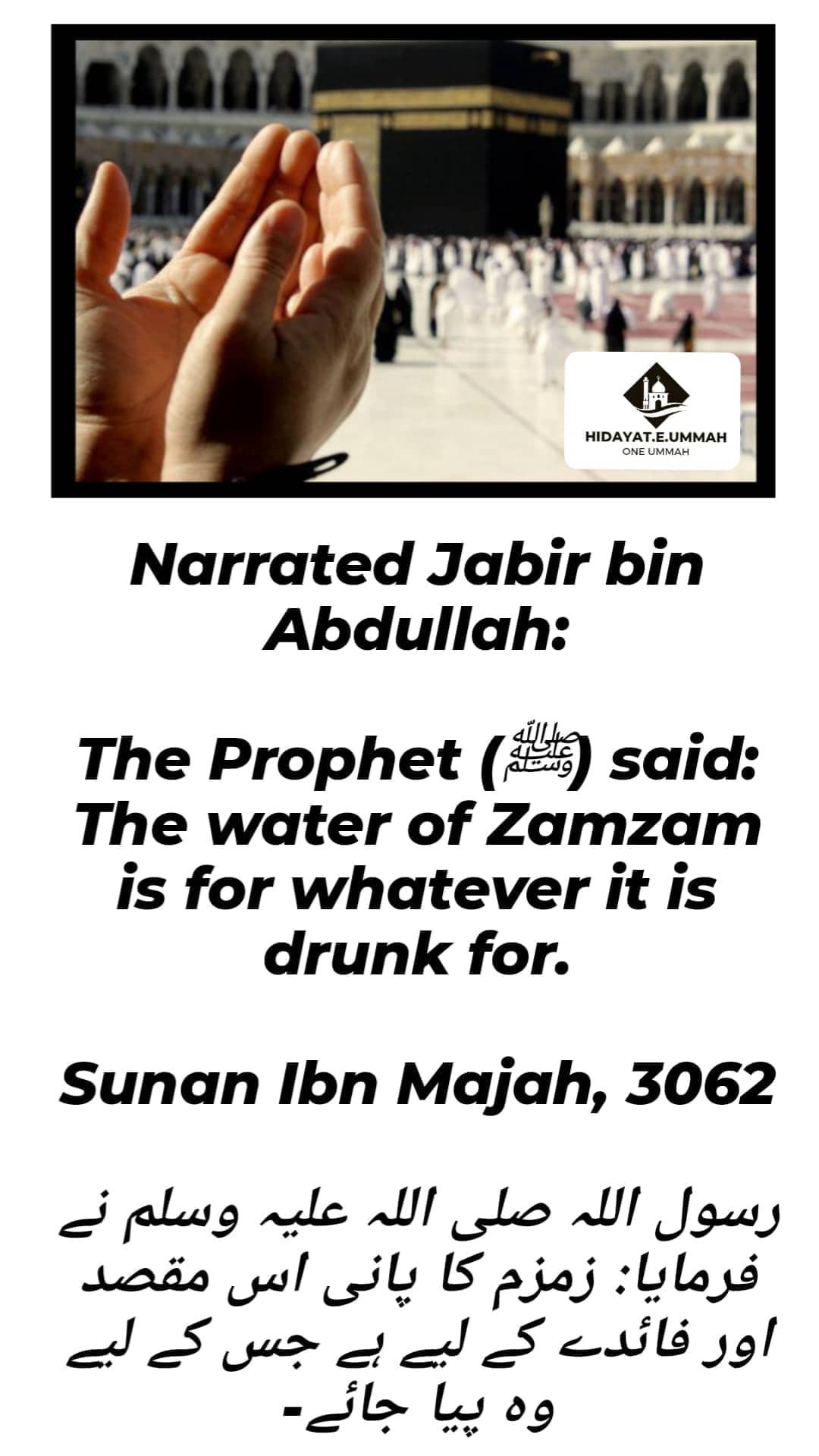
1. This hadith is a saying of Prophet Muhammad (peace be upon him) narrated by Jabir bin Abdullah, describing the special qualities of Zamzam water.
2. The Prophet explains that the water of Zamzam serves the purpose for which it is consumed, meaning that it can bring physical, spiritual, or emotional benefits depending on the intention of the one drinking it.
3. If someone drinks Zamzam water with the intention of healing, sustenance, or strengthening faith, Allah may grant them what they seek through their sincerity and faith.
4. This hadith highlights the unique blessings and miraculous nature of Zamzam water, which has been a sacred source of water for Muslims since the time of Prophet Ibrahim (peace be upon him).
5. It encourages Muslims to drink Zamzam water with good intentions and prayers, trusting in Allah's ability to fulfill their needs and grant blessings.
6. The overall message is to approach acts of worship and blessings with sincerity, recognizing that Allah responds to intentions and prayers associated with sacred practices like consuming Zamzam water.
Hadith 9
9 of 22
1. This hadith is a saying of the Prophet Muhammad (peace be upon him), narrated by Umm Salamah.
2. It teaches the importance of saying good and positive things when visiting someone who is sick or nearing death.
3. The Prophet mentioned that angels present during such moments respond with 'Amin' to the prayers and words you say, which means they ask Allah to accept and fulfill your words.
4. This means your kind and positive statements, like prayers for recovery, mercy, or blessings, are more likely to be accepted by Allah.
5. The hadith encourages believers to speak words of comfort, hope, and supplication, avoiding negative or harmful speech in such sensitive situations.
Hadith 10
10 of 22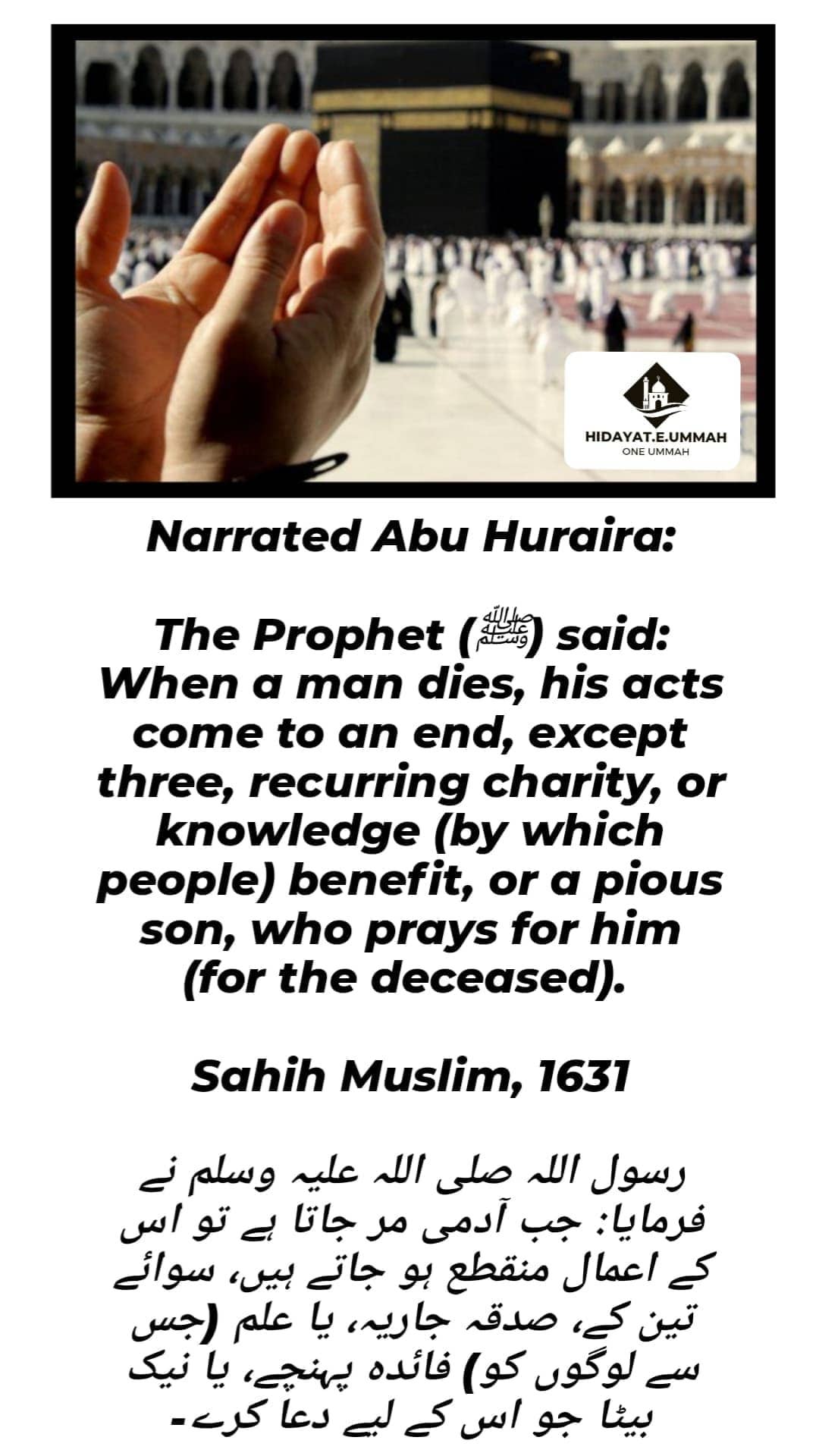
1. This hadith is narrated by Abu Huraira, where the Prophet Muhammad (peace be upon him) says that when a person dies, their deeds come to an end.
2. However, there are three things that continue to benefit the deceased after their death: recurring charity, beneficial knowledge, and a pious child who prays for them.
3. Recurring charity means any good deed or donation made by the deceased that continues to help others, even after their passing.
4. Beneficial knowledge refers to knowledge or teachings shared by the deceased that continue to benefit others. /n A pious child who prays for the deceased is someone who asks Allah for mercy and forgiveness on behalf of their deceased parent.
5. This hadith highlights the importance of doing good deeds that have long-lasting effects and encourages the living to leave a legacy of charity, knowledge, and prayer.
Hadith 11
11 of 22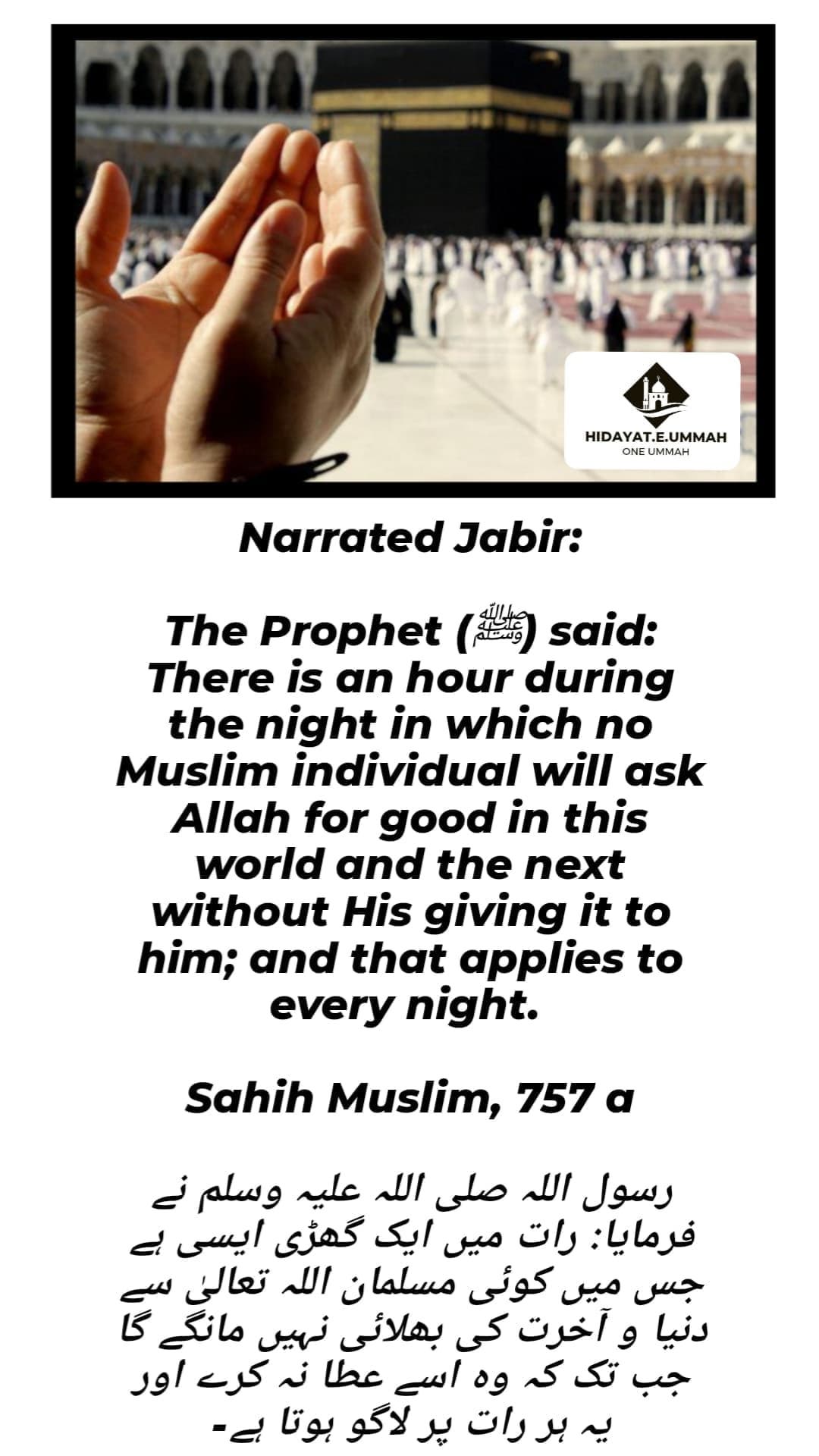
1. This hadith is narrated by Jabir, where the Prophet Muhammad (peace be upon him) mentions a special hour during the night.
2. In this hour, if a Muslim prays to Allah and asks for something good, whether it be for this world or the next, Allah will grant their request.
3. This moment of divine mercy and blessing occurs every night, meaning that every Muslim has the opportunity to make such prayers daily.
4. The hadith encourages Muslims to take advantage of this special time, especially when seeking Allah’s help, guidance, and blessings.
5. It highlights Allah’s generosity and His willingness to answer the sincere prayers of His servants.
Hadith 12
12 of 22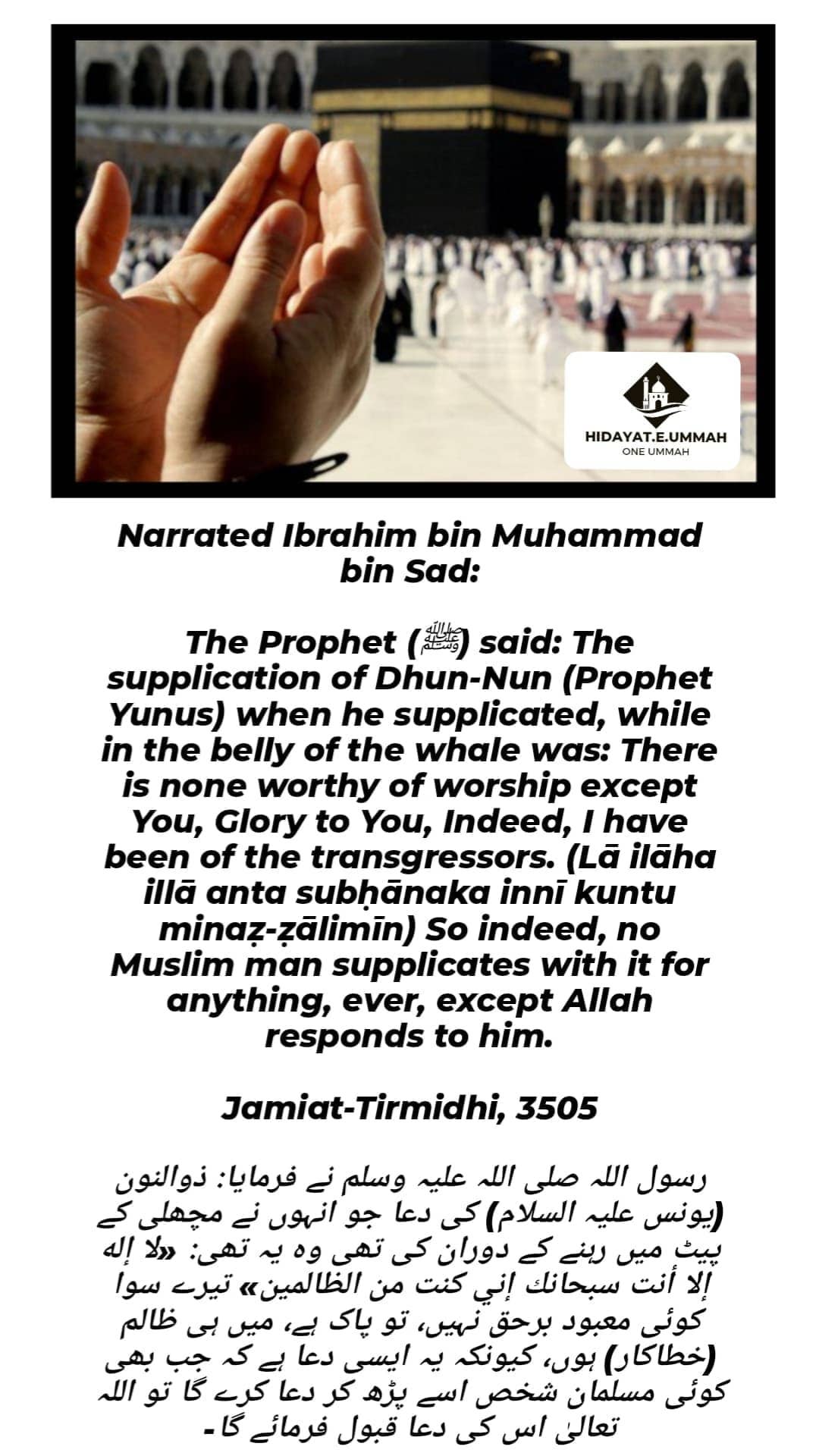
1. This hadith is narrated by Ibrahim bin Muhammad bin Sad, where the Prophet Muhammad (peace be upon him) talks about the supplication made by Prophet Yunus (Dhun-Nun).
2. Prophet Yunus made this supplication while he was in the belly of the whale, saying: 'There is none worthy of worship except You, Glory to You, Indeed, I have been of the transgressors.' (Lö ilöha illö anta subhönaka inni kuntu minaz-*ölimin).
3. The Prophet Muhammad (peace be upon him) explains that any Muslim who makes this same supplication for anything, Allah will certainly respond to their prayer.
4. This supplication is a powerful reminder of the importance of seeking forgiveness and acknowledging Allah’s greatness and mercy, especially during times of difficulty.
5. The hadith highlights the effectiveness of this prayer, showing that Allah responds to it whenever it is sincerely recited by a believer.
Hadith 13
13 of 22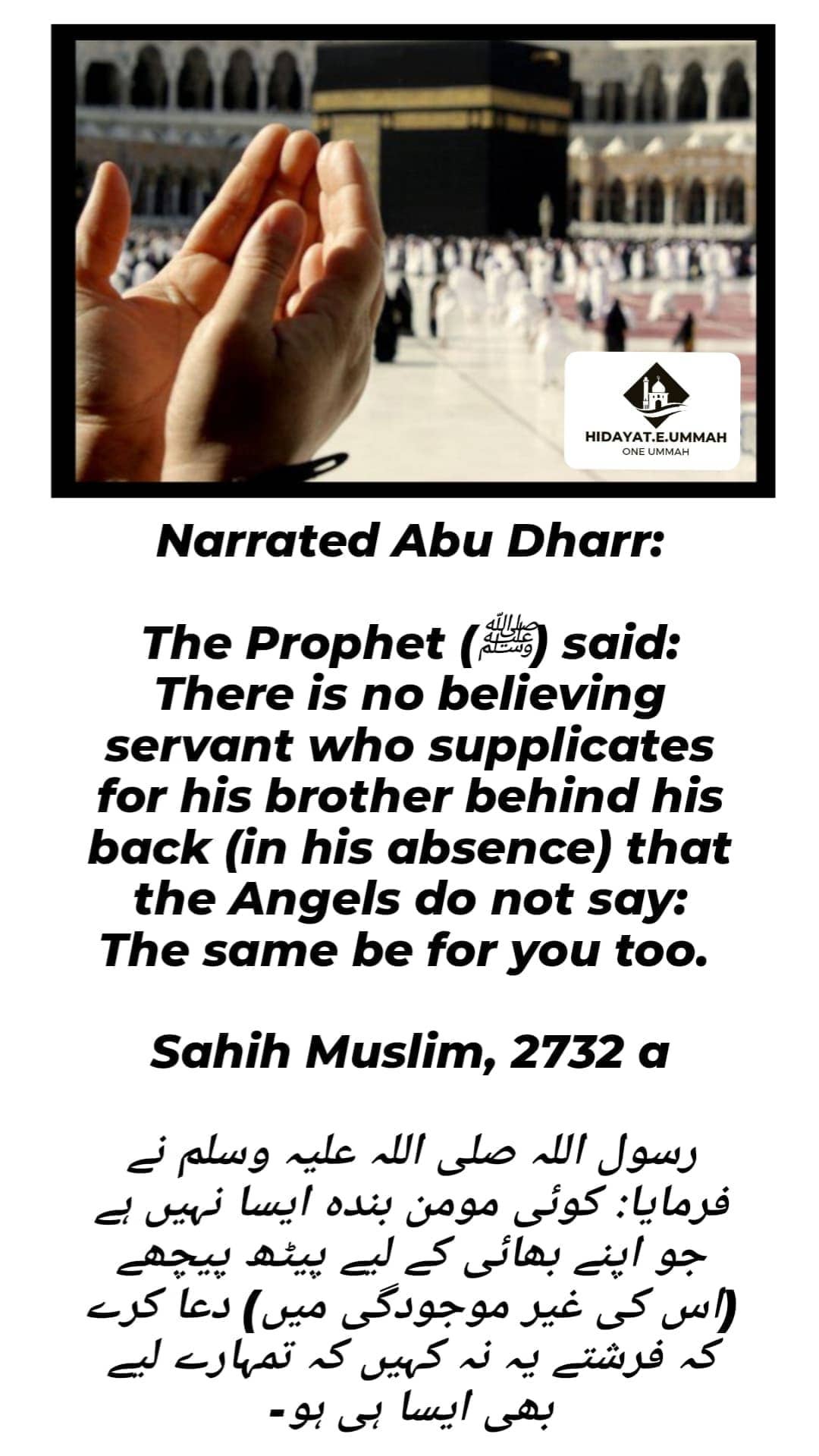
1. This hadith is narrated by Abu Dharr, where the Prophet Muhammad (peace be upon him) explains the reward for making supplications for others.
2. The Prophet says that when a believing servant prays for his brother (or fellow Muslim) in their absence, the Angels respond with: 'The same be for you too.'
3. This means that when you pray for someone else, asking Allah for blessings, forgiveness, or good things, the Angels pray for you in return.
4. This hadith encourages Muslims to pray for others, as it brings both the person being prayed for and the one praying benefit.
5. It highlights the importance of selflessness and kindness in supplication, showing that praying for others brings rewards to the one who prays as well.
Hadith 14
14 of 22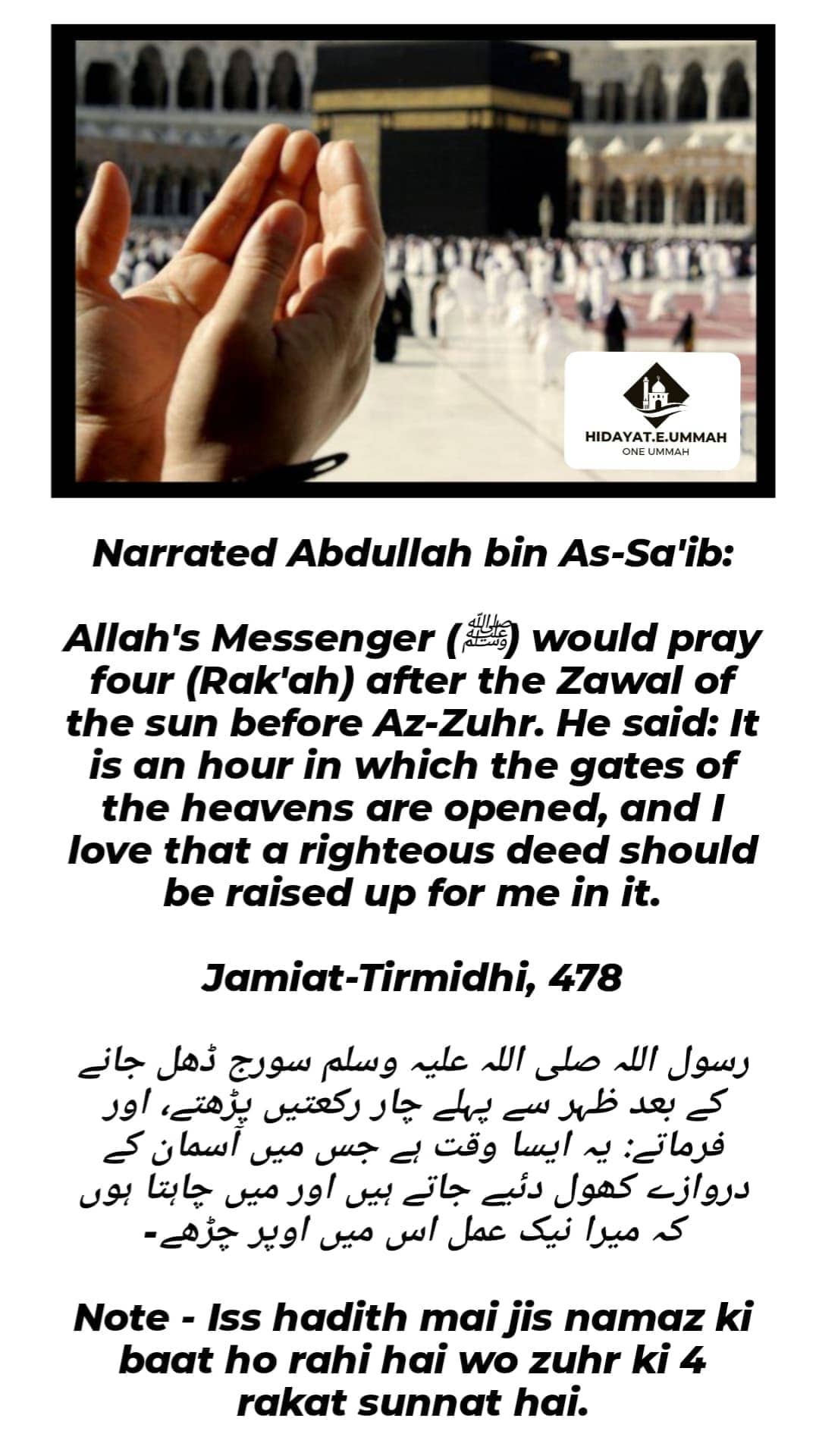
1. This hadith is narrated by Abdullah bin As-Sa'ib, where he describes the Prophet Muhammad (peace be upon him) praying four Rak'ahs after the Zawal of the sun, which is the time just after midday but before the Az-Zuhr prayer.
2. The Prophet explained that this time is special because it is when the gates of the heavens are opened.
3. The Prophet (peace be upon him) expressed his love for performing righteous deeds during this time, as it is a blessed moment when good deeds are elevated and accepted by Allah.
4. This hadith encourages Muslims to engage in extra acts of worship, like these four Rak'ahs, during the time when the heavens are open, seeking Allah's blessings and favor.
5. It highlights the importance of taking advantage of specific times for prayer and righteous deeds to earn the most reward from Allah.
Hadith 15
15 of 22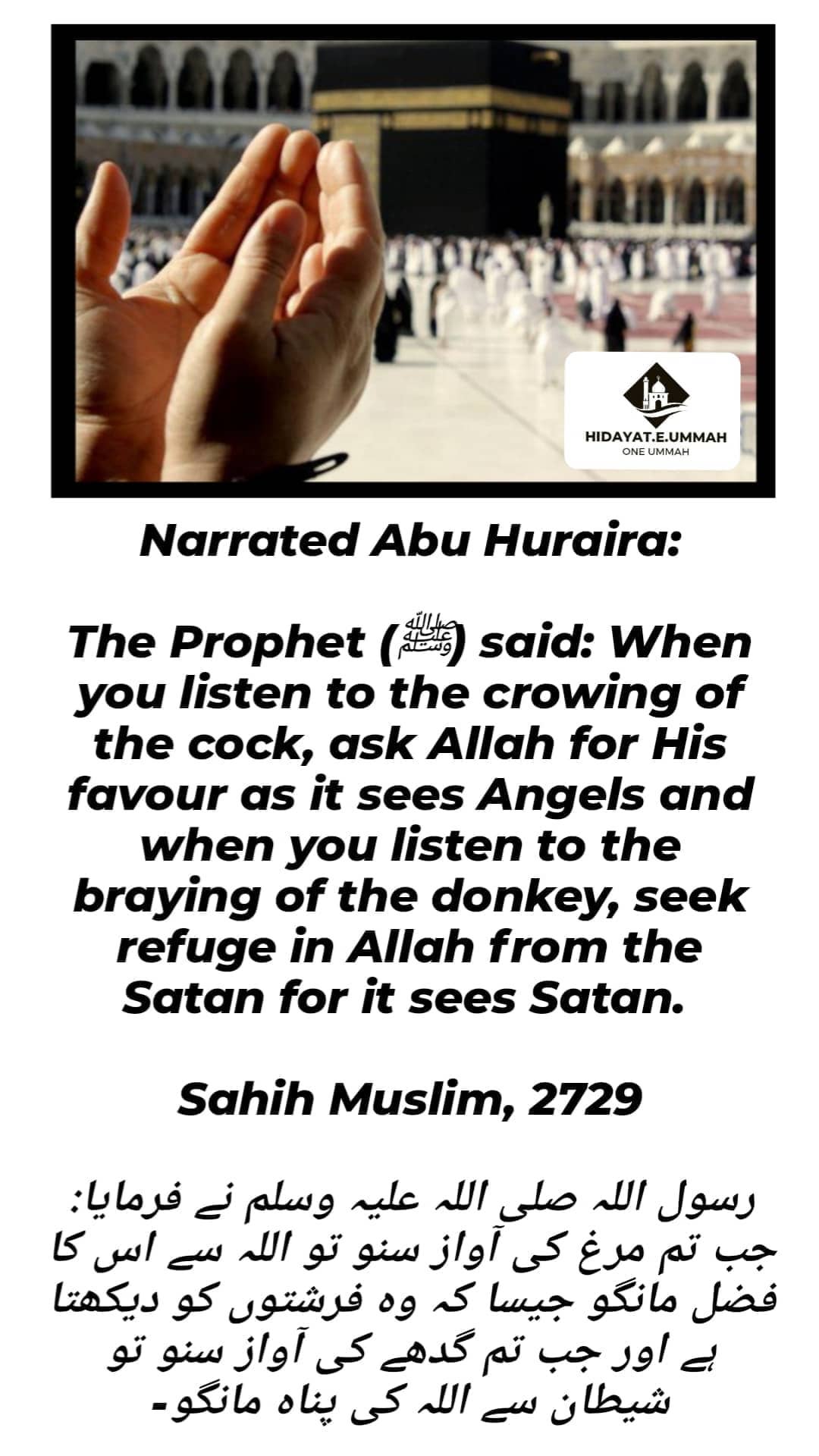
1. This hadith is narrated by Abu Huraira, where the Prophet Muhammad (peace be upon him) explains what to do when hearing the sounds of certain animals.
2. The Prophet says that when you hear the crowing of a cock (rooster), you should ask Allah for His favor because the cock sees angels.
3. On the other hand, when you hear the braying of a donkey, you should seek refuge in Allah from Satan because the donkey sees Satan.
4. This hadith highlights the spiritual significance of these animals' sounds, encouraging Muslims to respond appropriately by seeking Allah's blessings or protection.
5. It teaches that there are times and situations when specific supplications can be made for protection or blessings, based on the teachings of the Prophet.
Hadith 16
16 of 22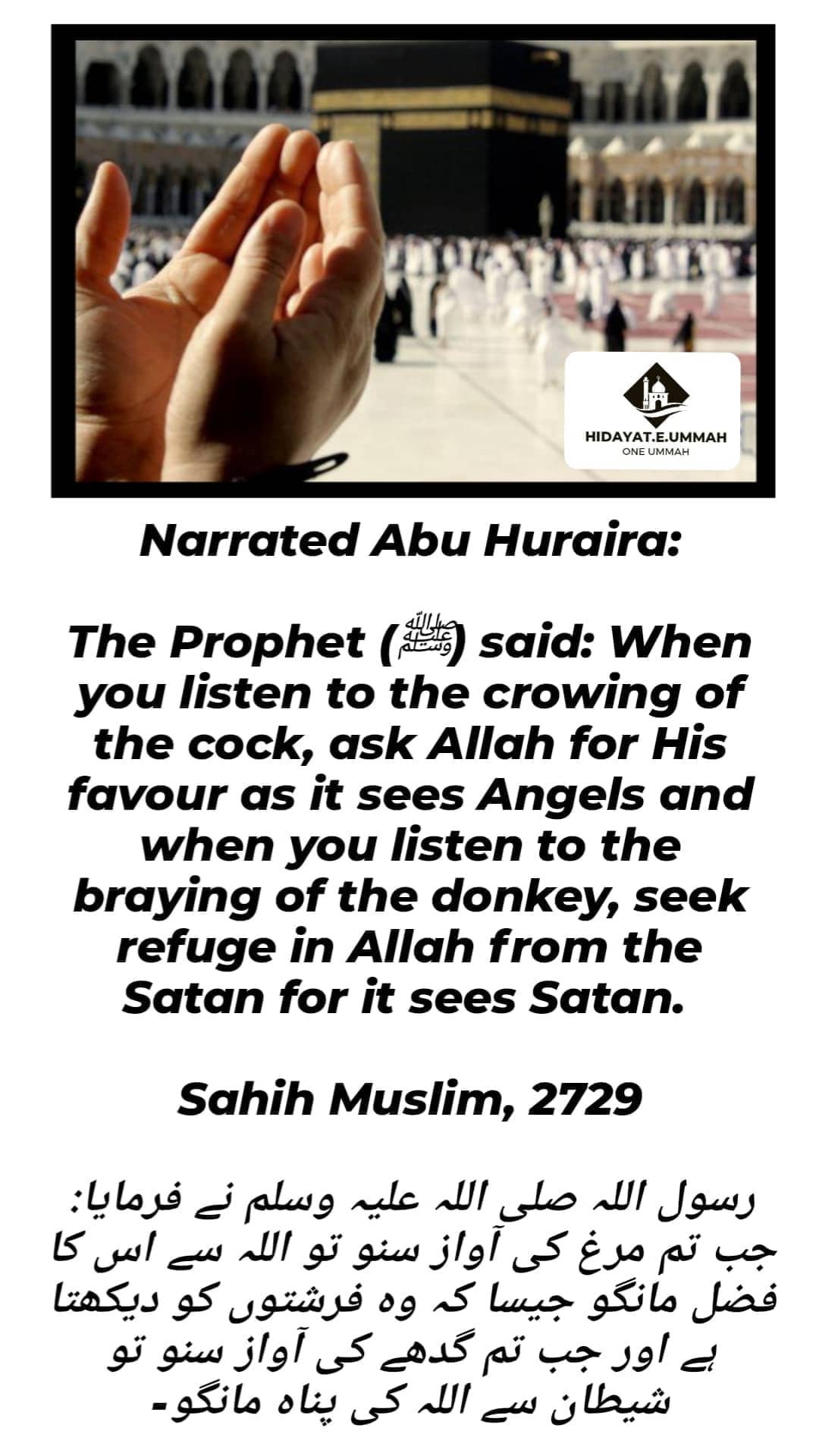
1. This hadith is narrated by Abu Huraira, where the Prophet Muhammad (peace be upon him) teaches what to do when hearing the sounds of certain animals.
2. The Prophet says that when you hear the crowing of a cock (rooster), you should ask Allah for His favor because the cock sees angels.
3. In contrast, when you hear the braying of a donkey, you should seek refuge in Allah from Satan because the donkey sees Satan.
4. This hadith highlights the spiritual importance of these animal sounds, guiding Muslims to make appropriate supplications based on the situation.
5. It teaches that certain moments or sounds have deeper significance, and specific actions, like seeking Allah’s favor or protection, should be taken in response.
Hadith 17
17 of 22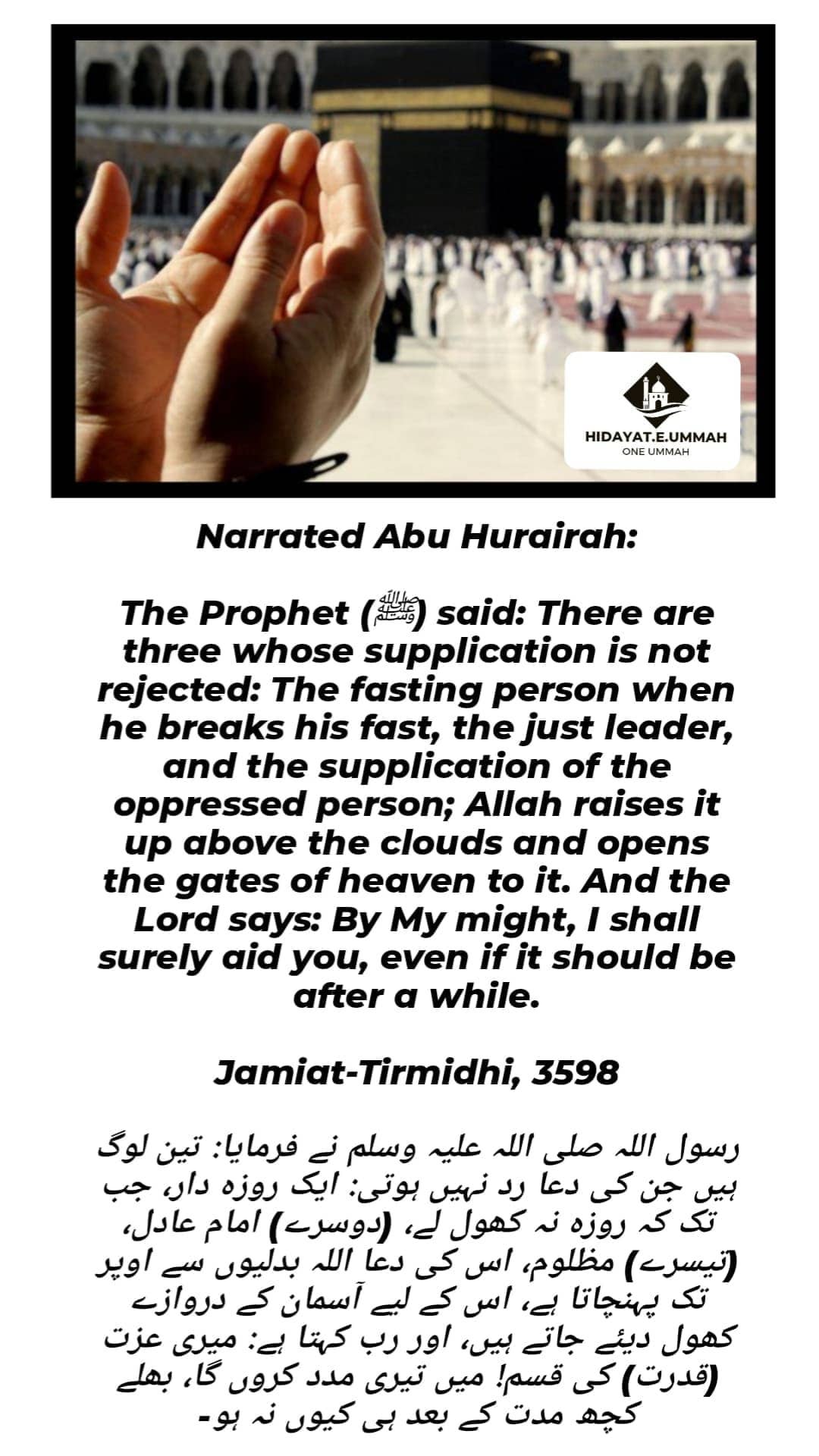
1. This hadith is narrated by Abu Hurairah, where the Prophet Muhammad (peace be upon him) describes three types of people whose supplications are never rejected by Allah.
2. The first is the fasting person when they break their fast. When a person is fasting and makes a supplication at the time of breaking their fast, Allah accepts it.
3. The second is the just leader. A leader who is fair and just in their rule has their supplications accepted by Allah.
4. The third is the supplication of the oppressed person. When someone is wronged or oppressed and makes a prayer, Allah listens to it.
5. The hadith emphasizes that the supplication of the oppressed is especially powerful, as Allah raises it above the clouds and opens the gates of heaven to it.
6. Allah promises to answer the prayer of the oppressed, even if it takes time, showing His support and justice for those who are wronged.
Hadith 18
18 of 22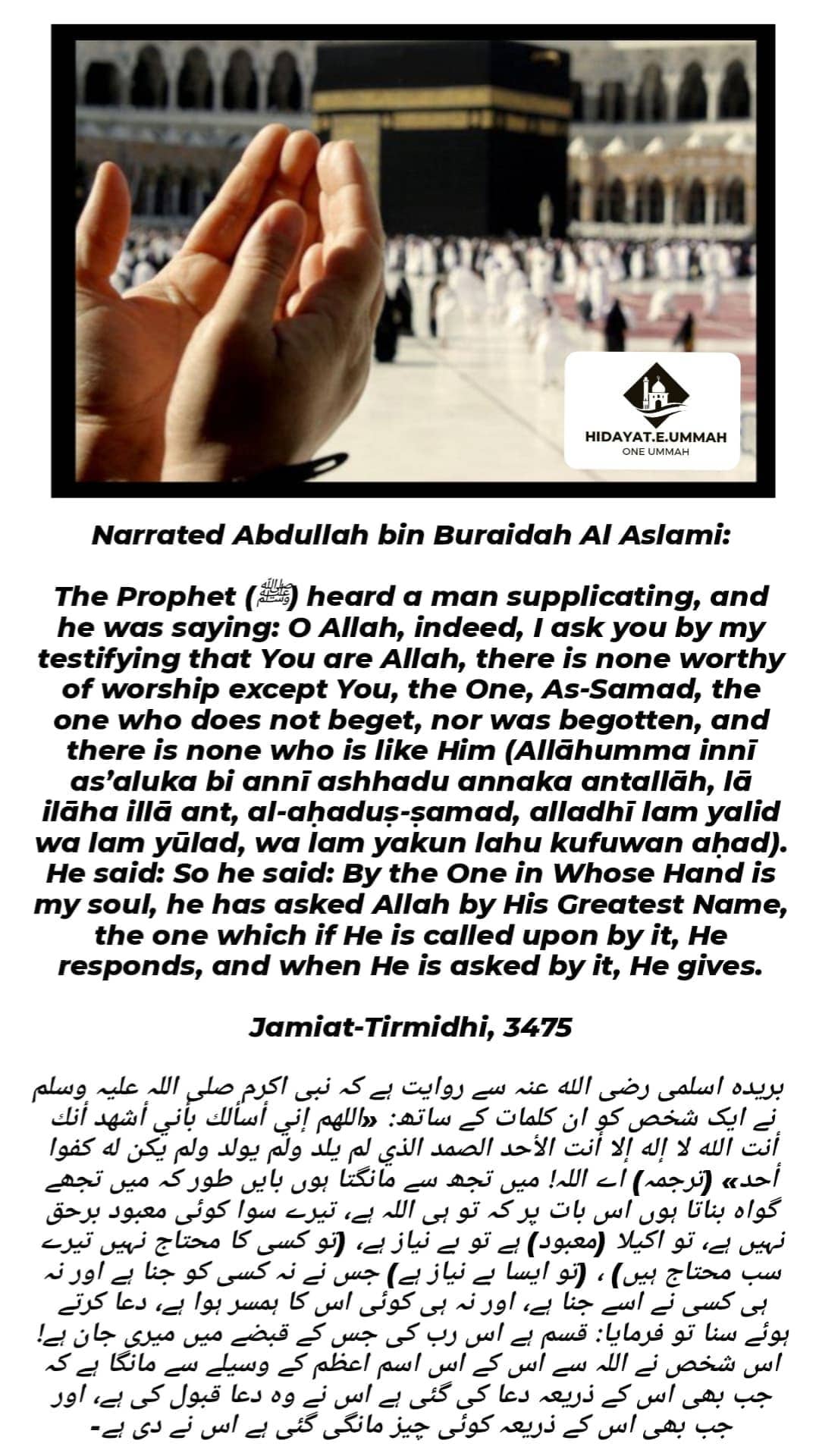
1. This hadith is narrated by Abdullah bin Buraidah Al Aslami, where the Prophet Muhammad (peace be upon him) listens to a man making a supplication to Allah.
2. The man is asking Allah by testifying that He is the One, the only God worthy of worship, and that He is unique, eternal, and without any equal. The supplication includes praising Allah with His attributes: 'the One, As-Samad (the Eternal), the One who does not beget, nor was begotten, and there is none like Him.'
3. The Prophet Muhammad (peace be upon him) affirms that this man has asked Allah by His Greatest Name, which is so powerful that when Allah is called by it, He responds and grants the request.
4. This hadith teaches us that calling upon Allah with sincere words, praising His unique qualities, and invoking His Greatest Name is a powerful way to seek His help and blessings.
5. It encourages Muslims to make supplications with understanding and reverence, using the beautiful names and attributes of Allah to invoke His mercy and response.
Hadith 19
19 of 22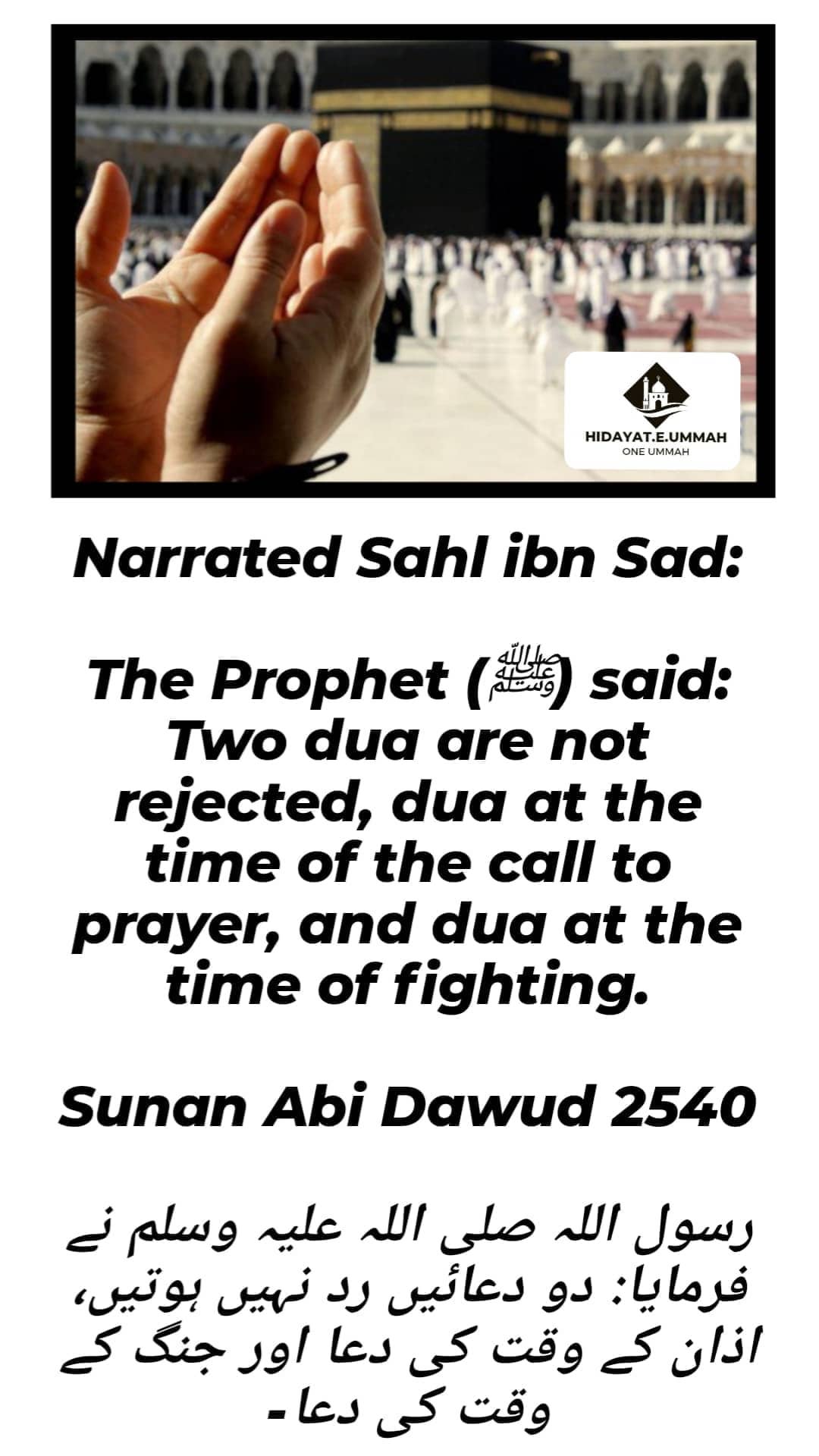
1. This hadith is narrated by Sahl ibn Sad, where the Prophet Muhammad (peace be upon him) mentions two types of supplications (dua) that are never rejected by Allah.
2. The first is the dua made at the time of the call to prayer (adhan). When the adhan is being called, it is a special moment to make supplications, and Allah promises to accept those prayers.
3. The second is the dua made during a time of fighting. When Muslims are engaged in battle or a difficult struggle, their prayers for help and victory are answered by Allah.
4. This hadith highlights the importance of making dua during these two moments, as they are times when Allah is especially attentive to His servants’ needs.
5. It teaches Muslims to seize these blessed moments for supplication, as Allah's mercy and response are assured.
Hadith 20
20 of 22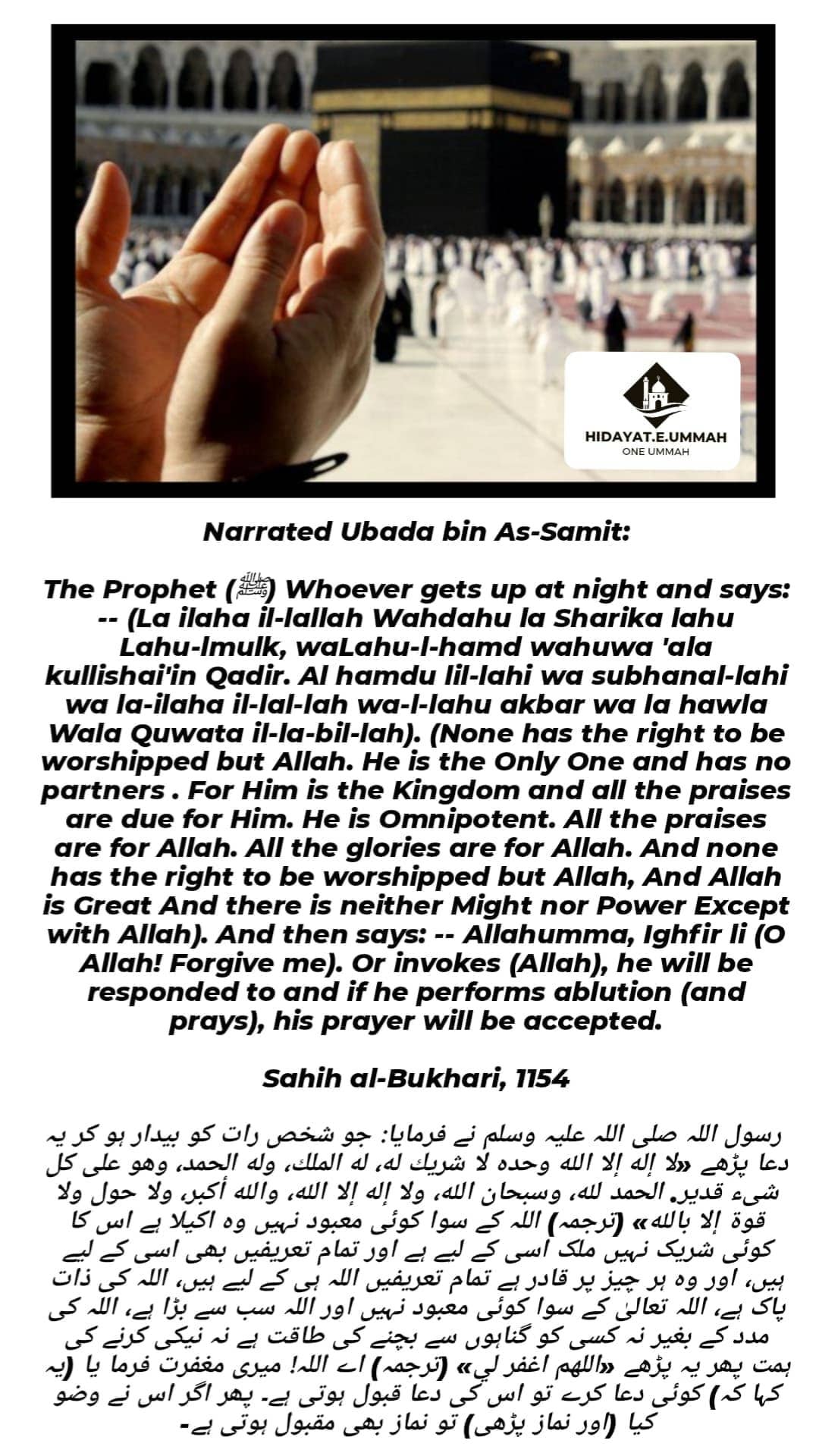
1. This hadith is narrated by Ubada bin As-Samit, where the Prophet Muhammad (peace be upon him) describes a powerful prayer he would make at night.
2. The Prophet would begin by saying a series of praises and affirmations about Allah, including: 'None has the right to be worshipped but Allah. He is the Only One and has no partners. For Him is the Kingdom and all the praises are due to Him. He is Omnipotent.'
3. The Prophet also says other phrases such as 'All the praises are for Allah. All the glories are for Allah. And Allah is Great. There is neither Might nor Power except with Allah.'
4. After this, the Prophet would ask Allah for forgiveness, saying: 'Allahumma, Ighfir li' (O Allah! Forgive me).
5. The hadith assures that if the Prophet (peace be upon him) made this prayer, he would be responded to by Allah, and if he performed ablution (wudu) and then prayed, his prayer would be accepted.
6. This hadith teaches Muslims the importance of beginning their supplications with praise and acknowledgment of Allah's greatness and power, as well as seeking forgiveness with sincerity.
Hadith 21
21 of 22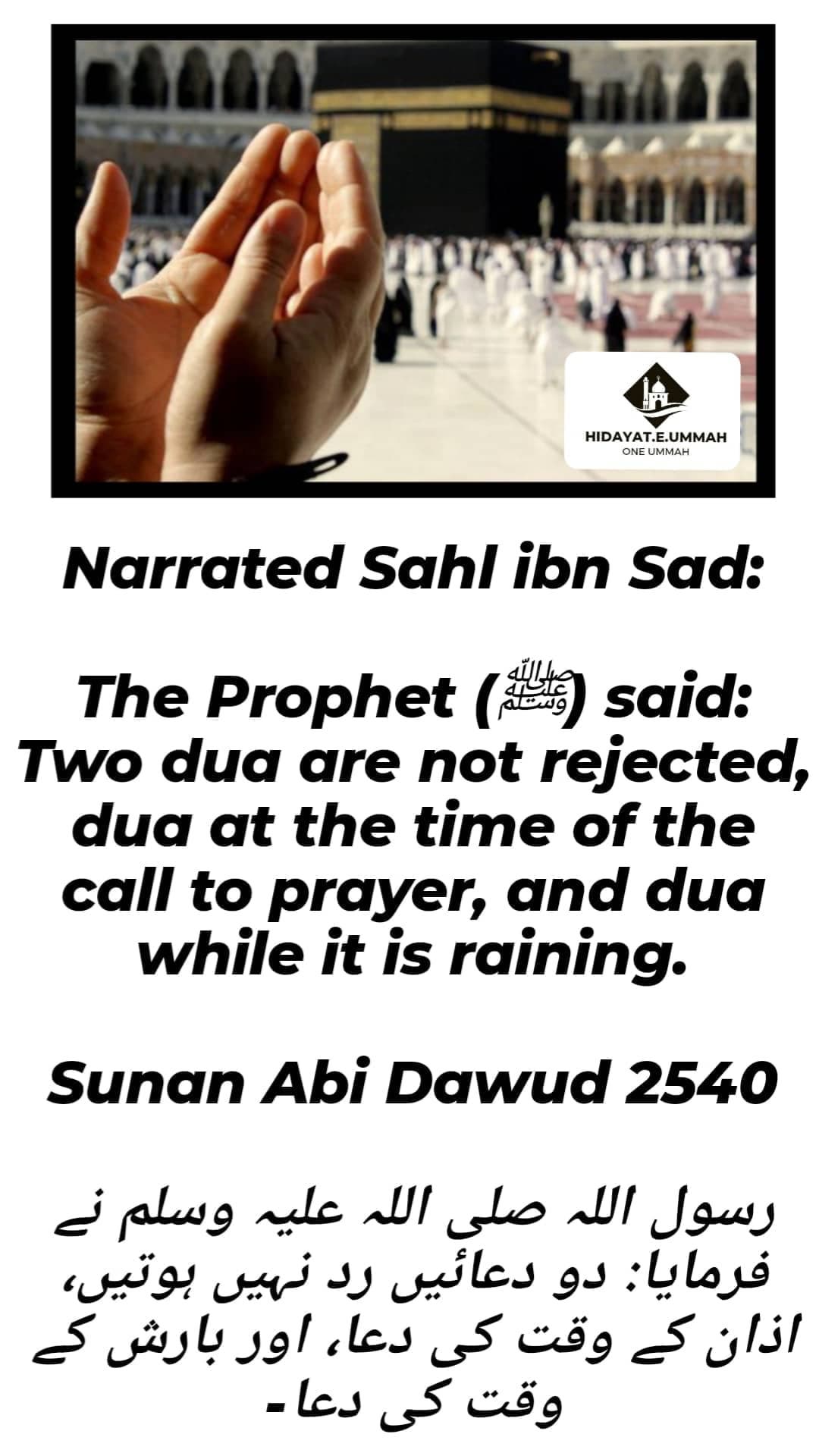
1. This hadith is narrated by Sahl ibn Sad, where the Prophet Muhammad (peace be upon him) mentions two times when dua (supplication) is never rejected by Allah.
2. The first time is during the call to prayer (adhan). When the adhan is being called, it is a special moment to make supplications, and Allah promises to accept them.
3. The second time is when it is raining. During rainfall, it is a blessed moment to make dua, and Allah listens to the prayers made at that time.
4. This hadith encourages Muslims to take advantage of these special moments for making supplications, as they are times when Allah is especially responsive.
5. It teaches that both the time of the adhan and the time of rain are occasions when prayers are most likely to be answered by Allah.
Hadith 22
22 of 22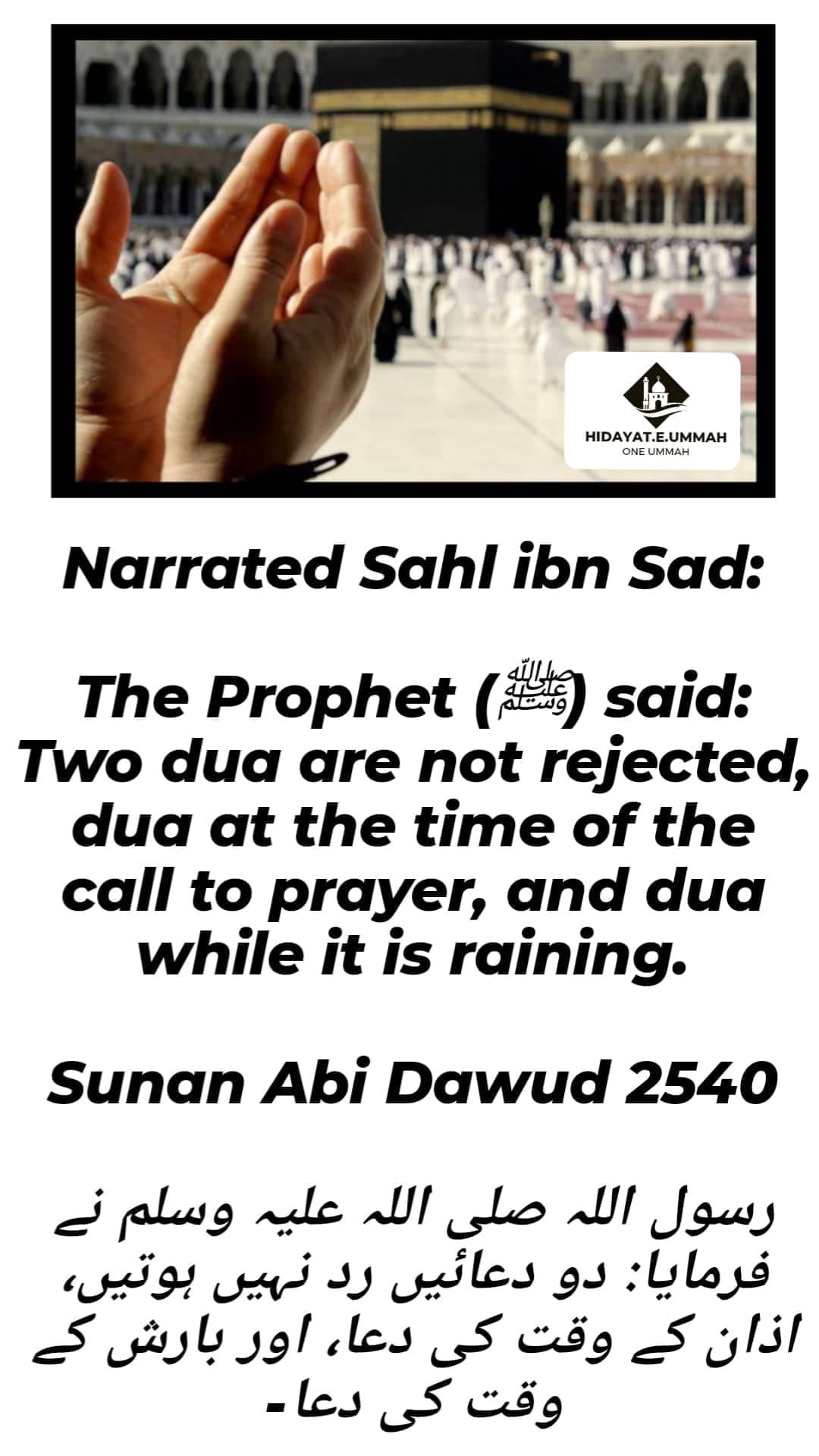
1. This hadith is narrated by Sahl ibn Sad, where the Prophet Muhammad (peace be upon him) explains that there are two special times when Allah never rejects a person's dua (supplication).
2. The first time is during the call to prayer (adhan). When the adhan is being called, it is a moment when supplications are accepted by Allah.
3. The second time is while it is raining. Rain is a blessed time, and any dua made during this time will be answered by Allah.
4. This hadith emphasizes that these two moments—during the adhan and when it rains—are opportunities to make duas, as Allah is particularly responsive at these times.
5. It encourages Muslims to make the most of these times by asking Allah for their needs and desires, knowing that their prayers are likely to be answered.