
Grave
Hadith Collection
16 Hadiths
Hadith 1
1 of 16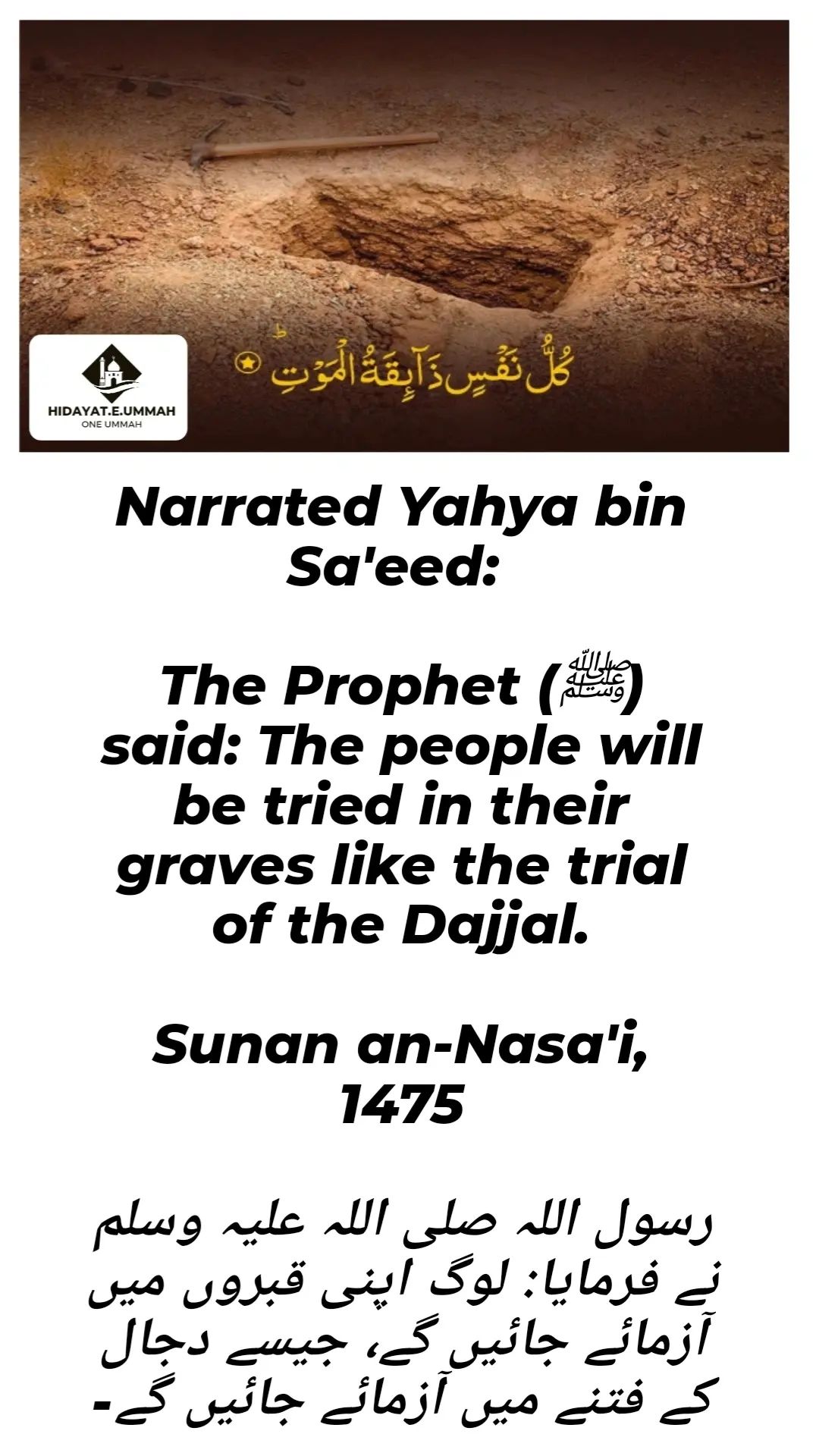
1. This hadith, narrated by Yahya bin Sa'eed, discusses the trial that people will face after their death.
2. The Prophet (peace be upon him) mentioned that after a person is buried, they will undergo a trial in their graves.
3. This trial will be similar to the trial of the Dajjal (the false Messiah), a significant figure in Islamic eschatology, who will lead people astray before the Day of Judgment.
4. The trial in the grave is a test of faith, where angels will question the deceased about their belief in Allah, the Prophet Muhammad (peace be upon him), and their actions in this life.
5. The hadith emphasizes the importance of being prepared for the hereafter and remaining steadfast in faith to face such trials.
Hadith 2
2 of 16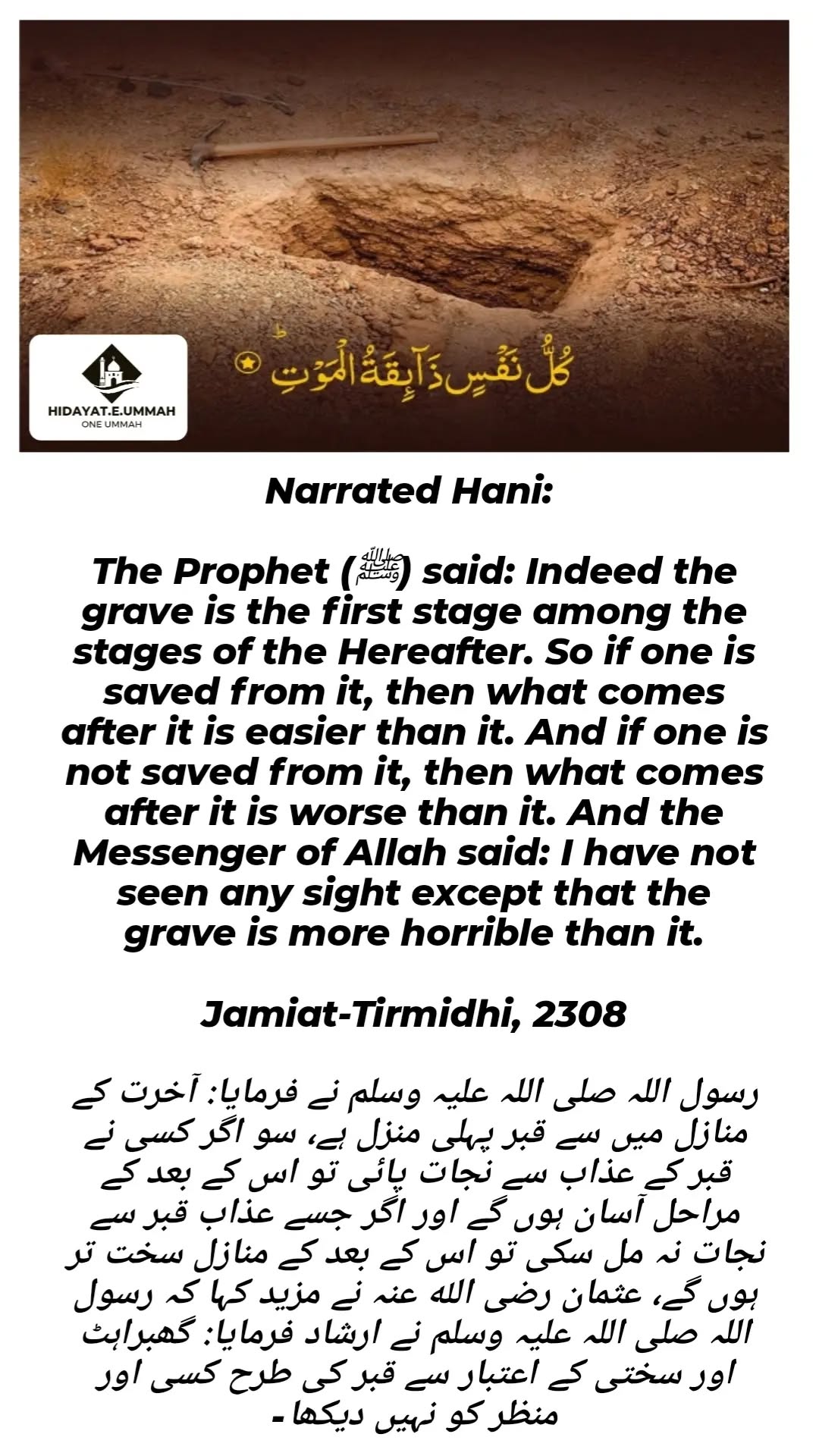
1. This hadith, narrated by Hani, highlights the significance of the grave as the first stage in the Hereafter.
2. The Prophet (peace be upon him) explains that if a person is saved from the hardships of the grave, the trials that follow will be easier for them.
3. However, if a person is not saved from the grave's trials, the challenges they will face in the Hereafter will be much worse.
4. The Prophet (peace be upon him) further mentions that, from all the things he has seen, the grave is the most terrifying.
5. The hadith stresses the importance of being mindful of the trials of the grave and preparing for the Hereafter with faith and good deeds.
Hadith 3
3 of 16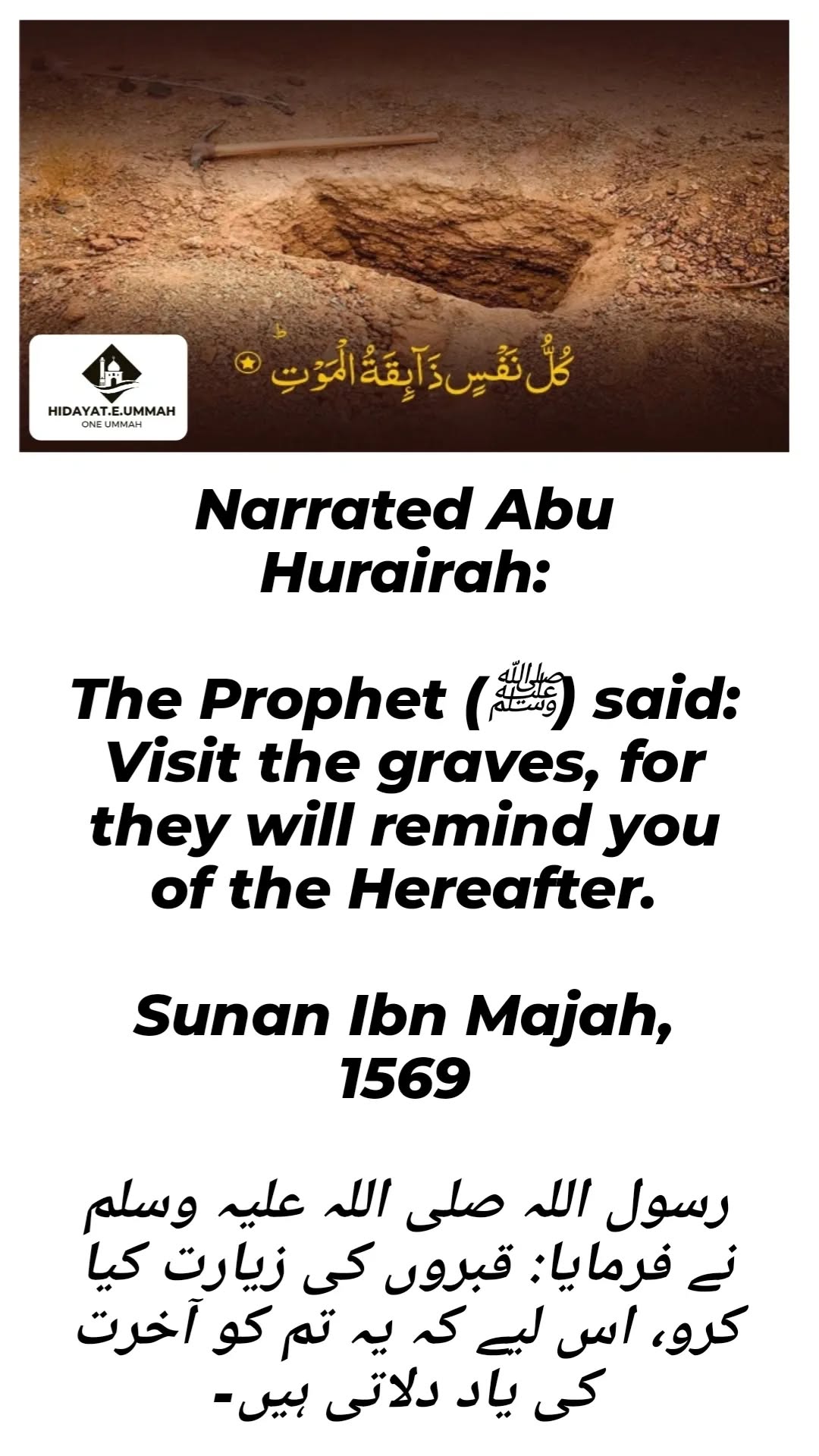
1. This hadith, narrated by Abu Hurairah, emphasizes the importance of visiting graves.
2. The Prophet (peace be upon him) encourages visiting graves as it serves as a reminder of the Hereafter.
3. By visiting the graves, a person reflects on the reality of death and the life after death, which can help strengthen their faith and commitment to righteous actions.
4. The hadith reminds us to be mindful of the transient nature of life and the inevitable reality of death.
Hadith 4
4 of 16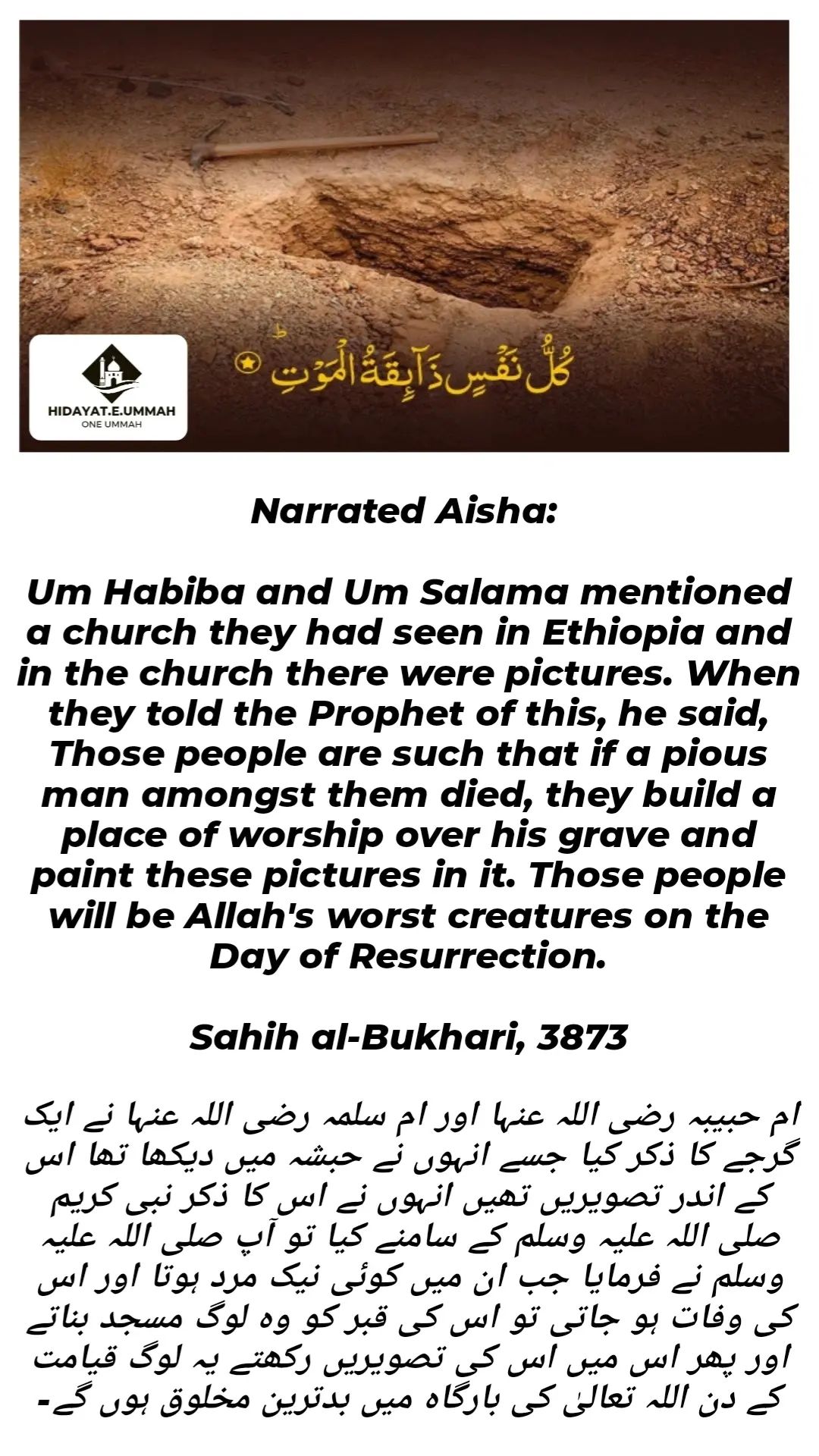
1. In this hadith, Um Habiba and Um Salama describe a church they saw in Ethiopia, which had pictures on the walls.
2. The Prophet (peace be upon him) explains that the people who build places of worship over the graves of pious individuals and paint pictures of them are misguided.
3. He warns that these people will be among the worst creatures on the Day of Resurrection.
4. The hadith highlights the prohibition of creating images or statues of religious figures and the importance of worshipping Allah alone, without idolizing the dead.
Hadith 5
5 of 16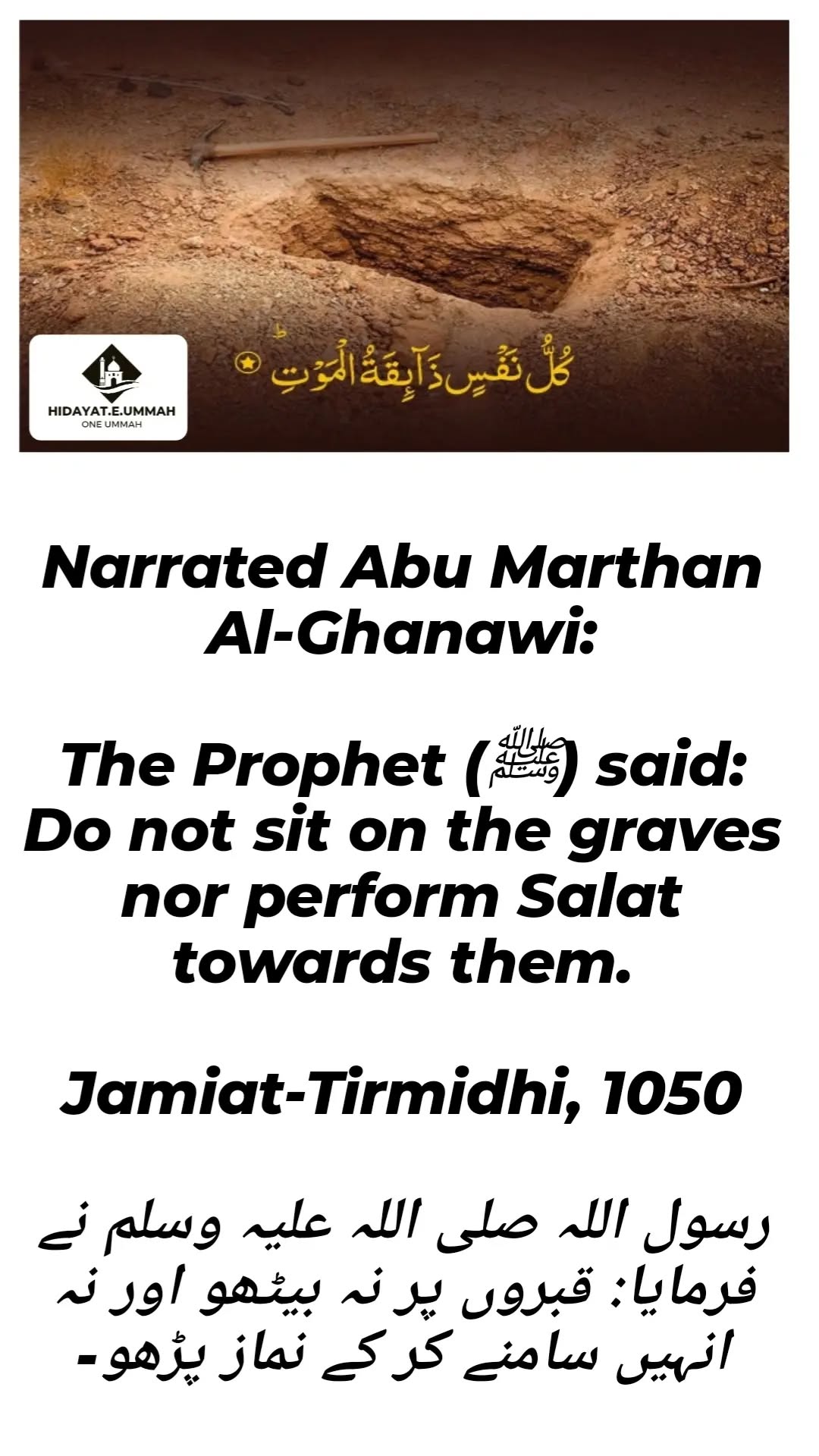
1. In this hadith, the Prophet (peace be upon him) advises against sitting on graves.
2. He also forbids performing Salat (prayer) towards graves.
3. The message is to avoid showing excessive reverence or directing worship towards the graves of deceased individuals.
4. This hadith emphasizes the importance of maintaining the proper focus of worship towards Allah alone and not directing it towards anyone or anything else, including graves.
Hadith 6
6 of 16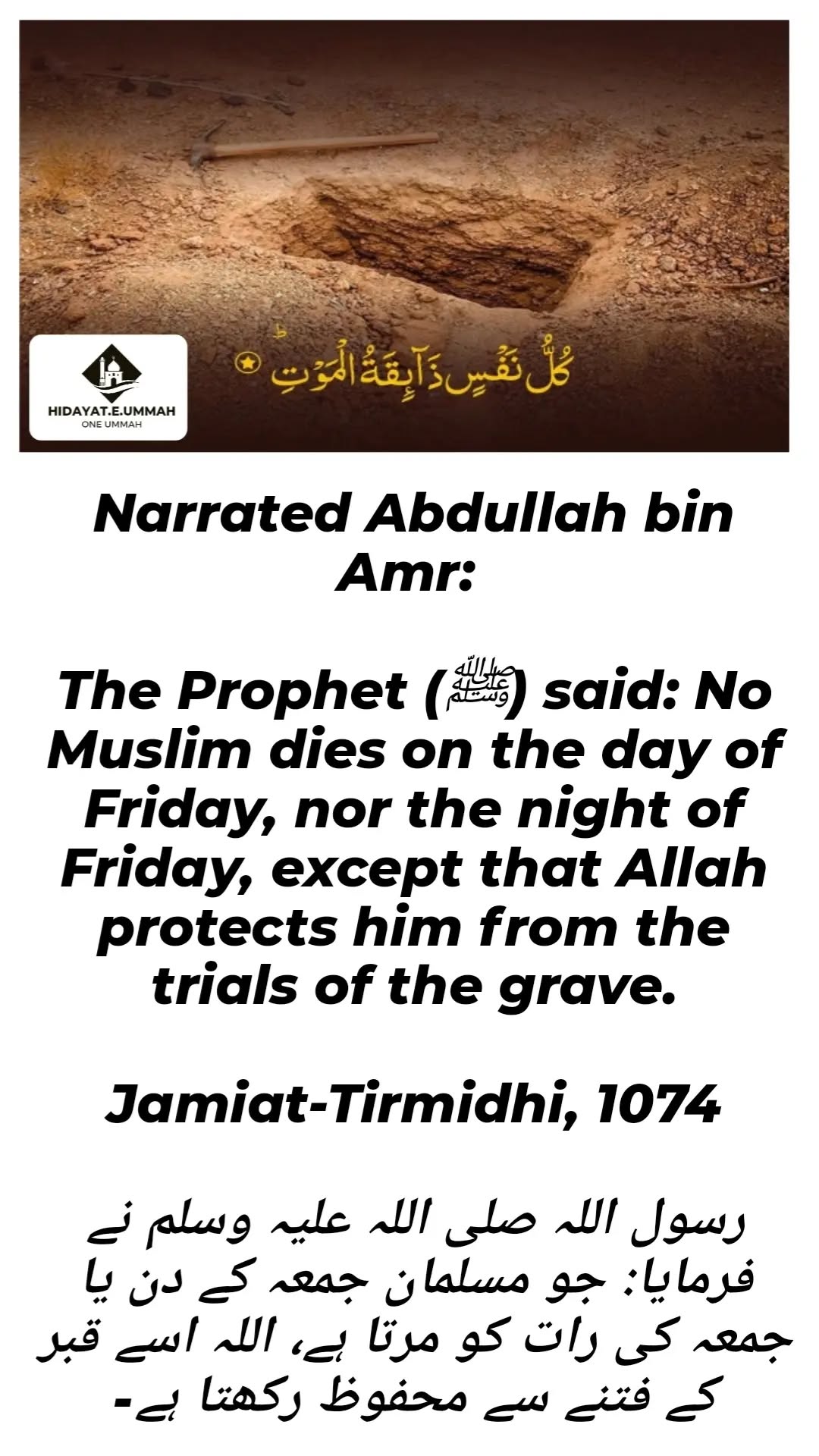
1. In this hadith, the Prophet (peace be upon him) informs that a Muslim who dies on the day or night of Friday will be protected by Allah from the trials of the grave.
2. The trials of the grave refer to the questioning and punishment that some people may face in their graves.
3. This is a special mercy and protection from Allah for those who pass away on Friday.
4. It encourages Muslims to be mindful of the blessings of Friday and to strive for goodness, as it is a day of great significance in Islam.
Hadith 7
7 of 16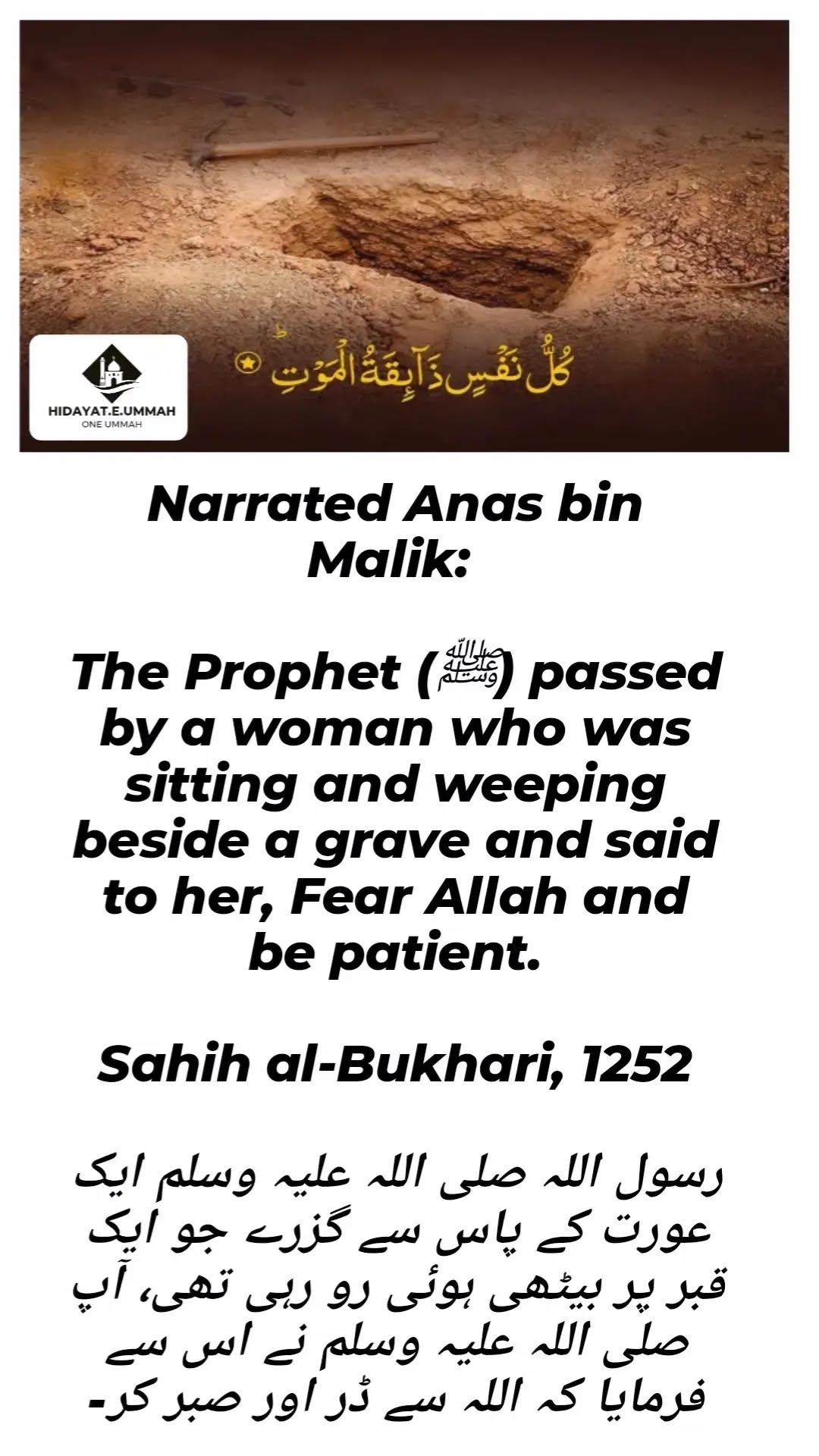
1. In this hadith, the Prophet (peace be upon him) mentions that a person who dies due to an abdominal illness, such as a stomach condition or related disease, will not be punished in the grave.
2. The Prophet (peace be upon him) is highlighting that those who pass away from such illnesses are protected from the punishment in the grave, showing Allah's mercy and compassion for those who suffer from illness.
3. This hadith serves as a reminder of Allah's mercy towards those who endure pain and suffering in this life, and it offers comfort to those who are grieving loved ones who have passed away from illness.
Hadith 8
8 of 16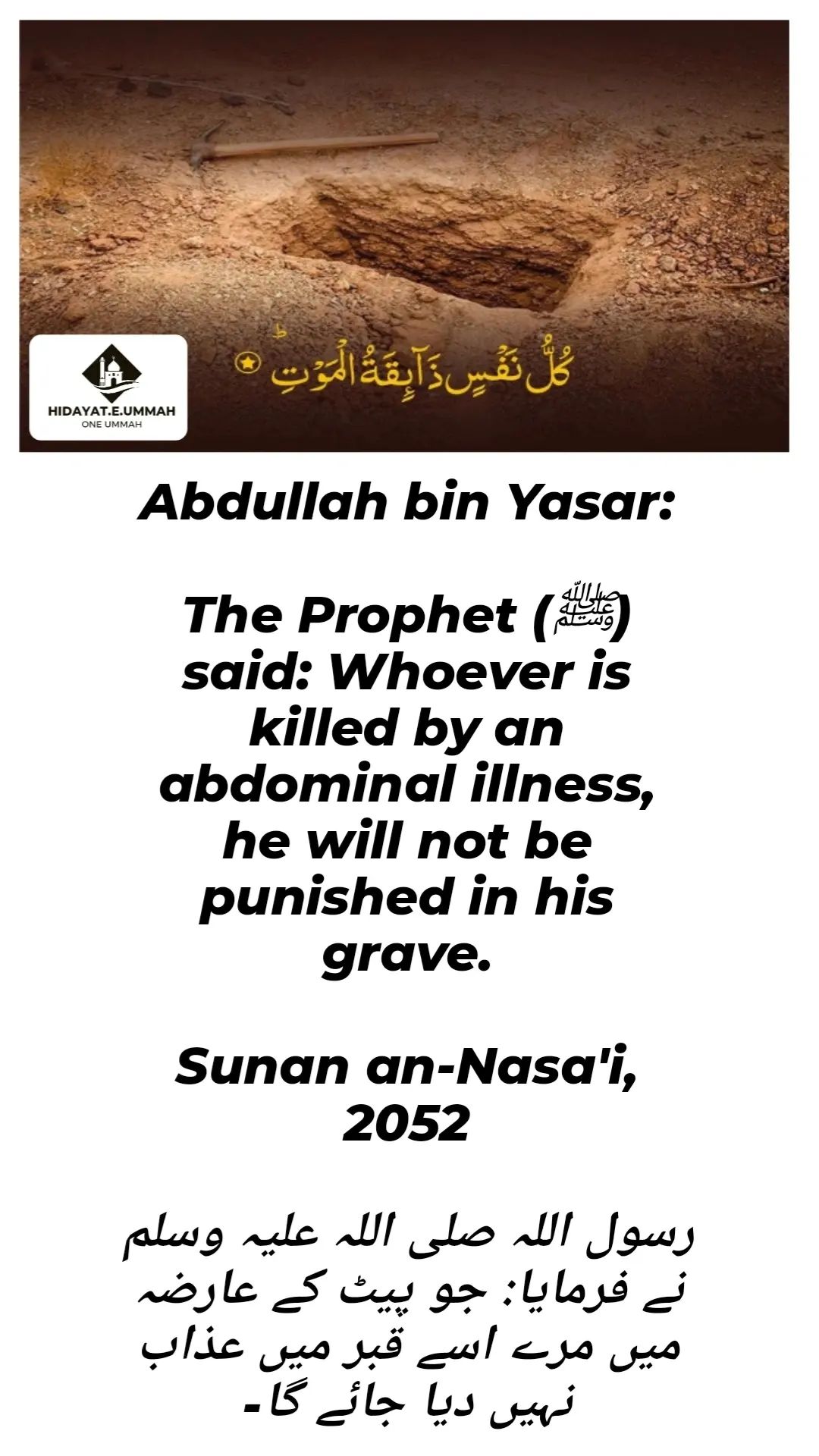
1. The Prophet (peace be upon him) mentioned that a person who dies due to an abdominal illness, such as a disease or condition affecting the stomach or internal organs, will not face punishment in the grave.
2. This hadith reflects the mercy of Allah for those who suffer from physical illnesses. It assures that such individuals will be spared from the trials and punishment in their graves.
3. It serves as a reminder of Allah’s compassion and provides hope to those who suffer from diseases, indicating that enduring illness can be a means of protection from greater hardships in the afterlife.
Hadith 9
9 of 16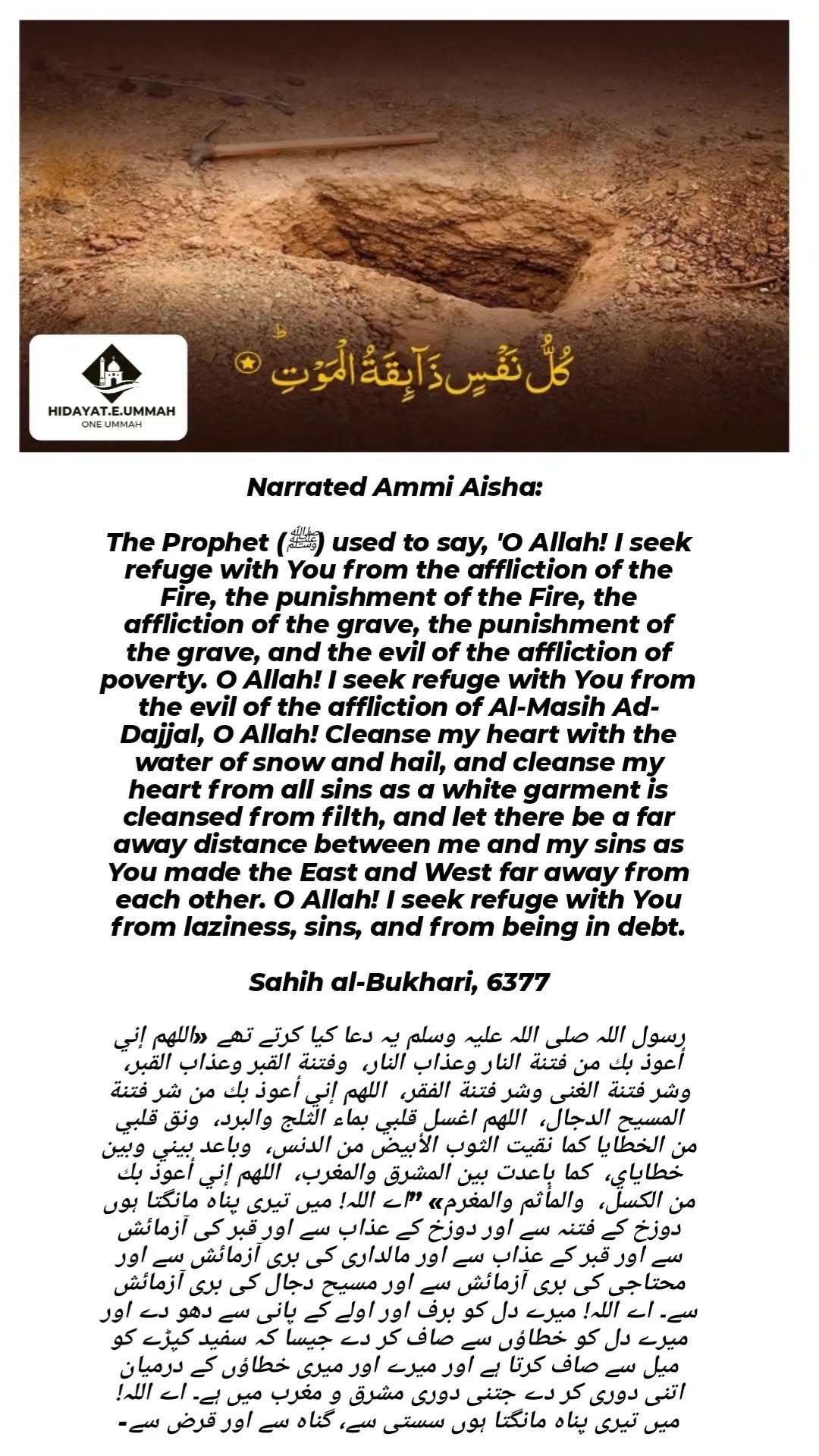
1. In this hadith, the Prophet (peace be upon him) taught a comprehensive prayer seeking protection from various afflictions, both in this life and the Hereafter.
2. The Prophet sought refuge from the punishment of Hellfire and the grave, as well as from the affliction of poverty and the trials of the false messiah (Al-Masih Ad-Dajjal), a major figure in Islamic eschatology.
3. He also asked for his heart to be cleansed from sins, just as a white garment is cleansed from dirt, symbolizing purity and forgiveness.
4. The prayer also includes seeking protection from laziness, sins, and debt, highlighting the importance of avoiding these burdens in life.
5. This hadith is a reminder of the significance of asking Allah for protection from life's difficulties and for spiritual and physical purification.
Hadith 10
10 of 16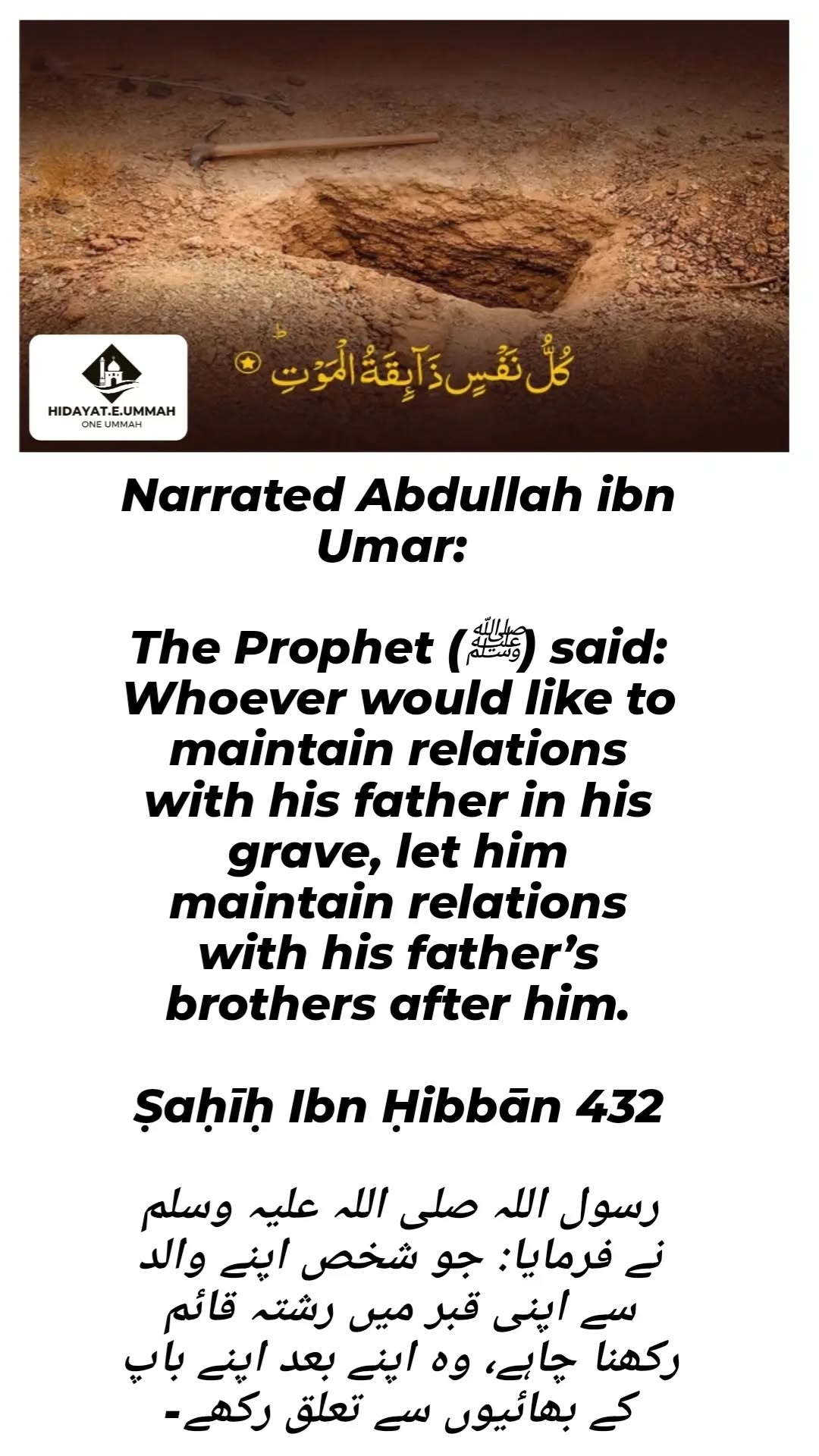
1. In this hadith, the Prophet (peace be upon him) taught that maintaining good relations with family members is highly valued in Islam.
2. The Prophet (peace be upon him) specifically emphasized the importance of maintaining ties with one's father's brothers (i.e., paternal uncles) after the father's death.
3. This act of maintaining relations with the father's brothers is seen as a way of honoring and showing respect to the father, even after his passing.
4. The hadith highlights the significance of family bonds and how acts of kindness towards family members can benefit a person and bring blessings.
5. It serves as a reminder that honoring deceased loved ones can be done through supporting their close family members.
Hadith 11
11 of 16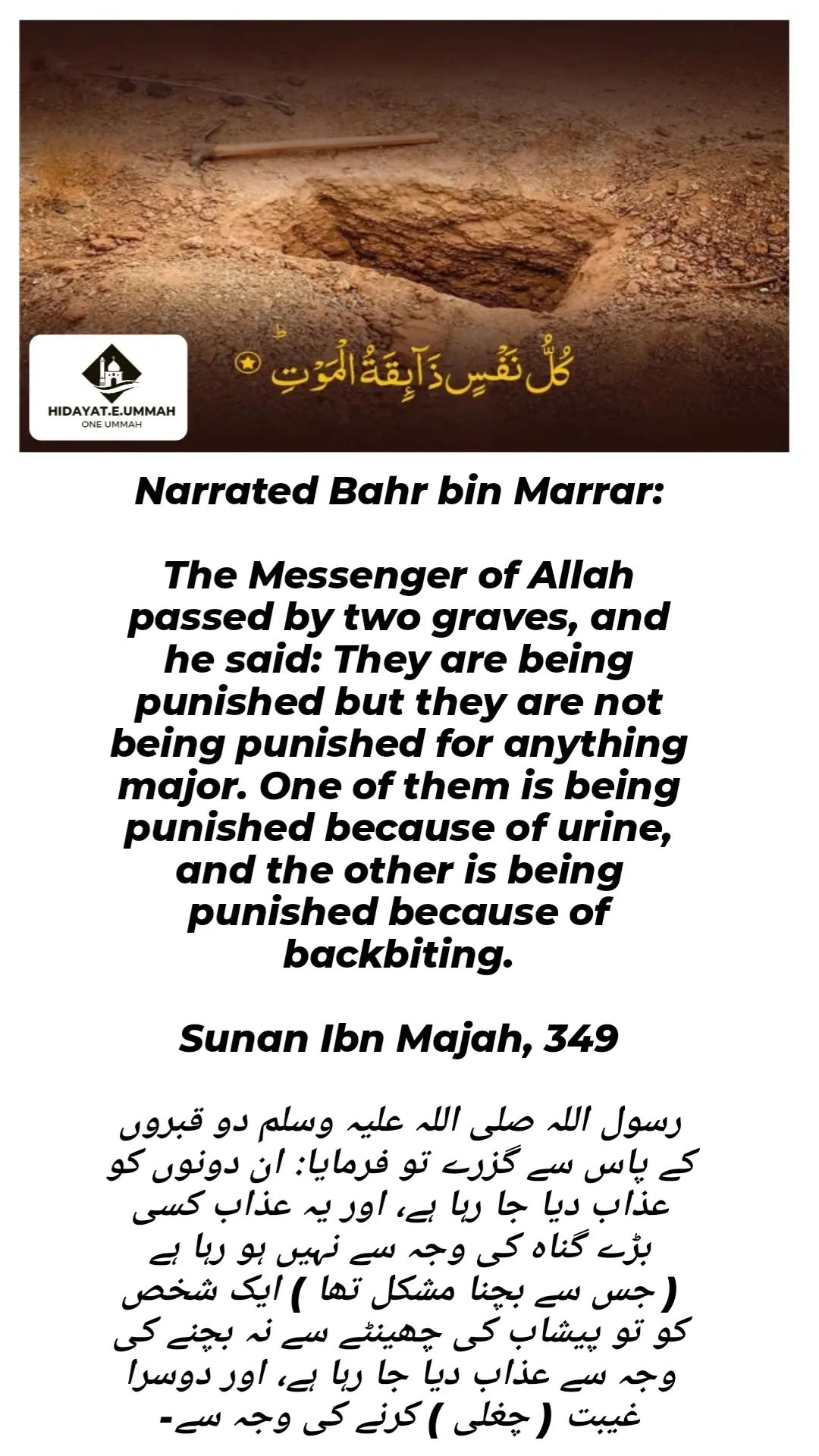
1. In this hadith, the Prophet Muhammad (peace be upon him) passed by two graves and mentioned that the people in them were being punished.
2. However, he clarified that the punishment they were facing was not due to major sins, but rather for seemingly small actions that they had committed in their lives.
3. One person was being punished due to not being careful when relieving themselves (urinating), while the other was being punished for backbiting.
4. This teaches us the importance of avoiding minor sins, as they can still lead to punishment if not repented for.
5. The hadith serves as a reminder to be cautious in our actions, even regarding things we may not think are significant, like proper hygiene and guarding our speech.
Hadith 12
12 of 16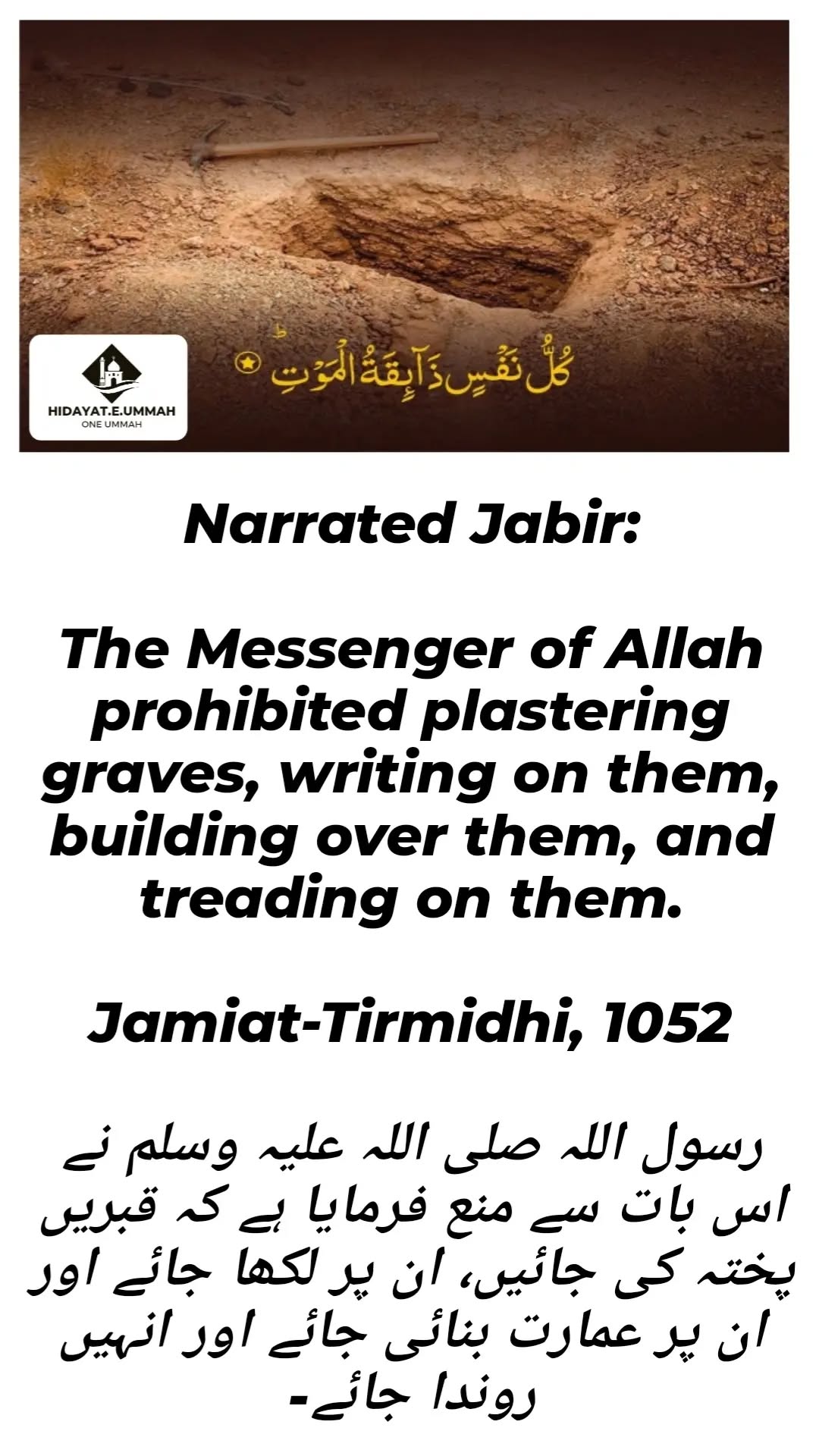
1. In this hadith, the Prophet Muhammad (peace be upon him) prohibited certain practices related to graves.
2. He forbade plastering graves, which means covering or decorating them excessively, as it can lead to the exaggeration of respect for the deceased.
3. Writing on graves was also prohibited, likely to avoid the creation of monuments that could lead to the veneration of graves in an improper way.
4. Building over graves is forbidden to prevent people from treating graves like buildings or landmarks of pride, and to maintain respect for the simplicity of graves.
5. The Prophet (peace be upon him) also forbade treading on graves, as this can be disrespectful to the deceased.
6. This hadith highlights the importance of maintaining respect and humility when it comes to graves, keeping them simple and avoiding practices that may lead to inappropriate reverence or disrespect.
Hadith 13
13 of 16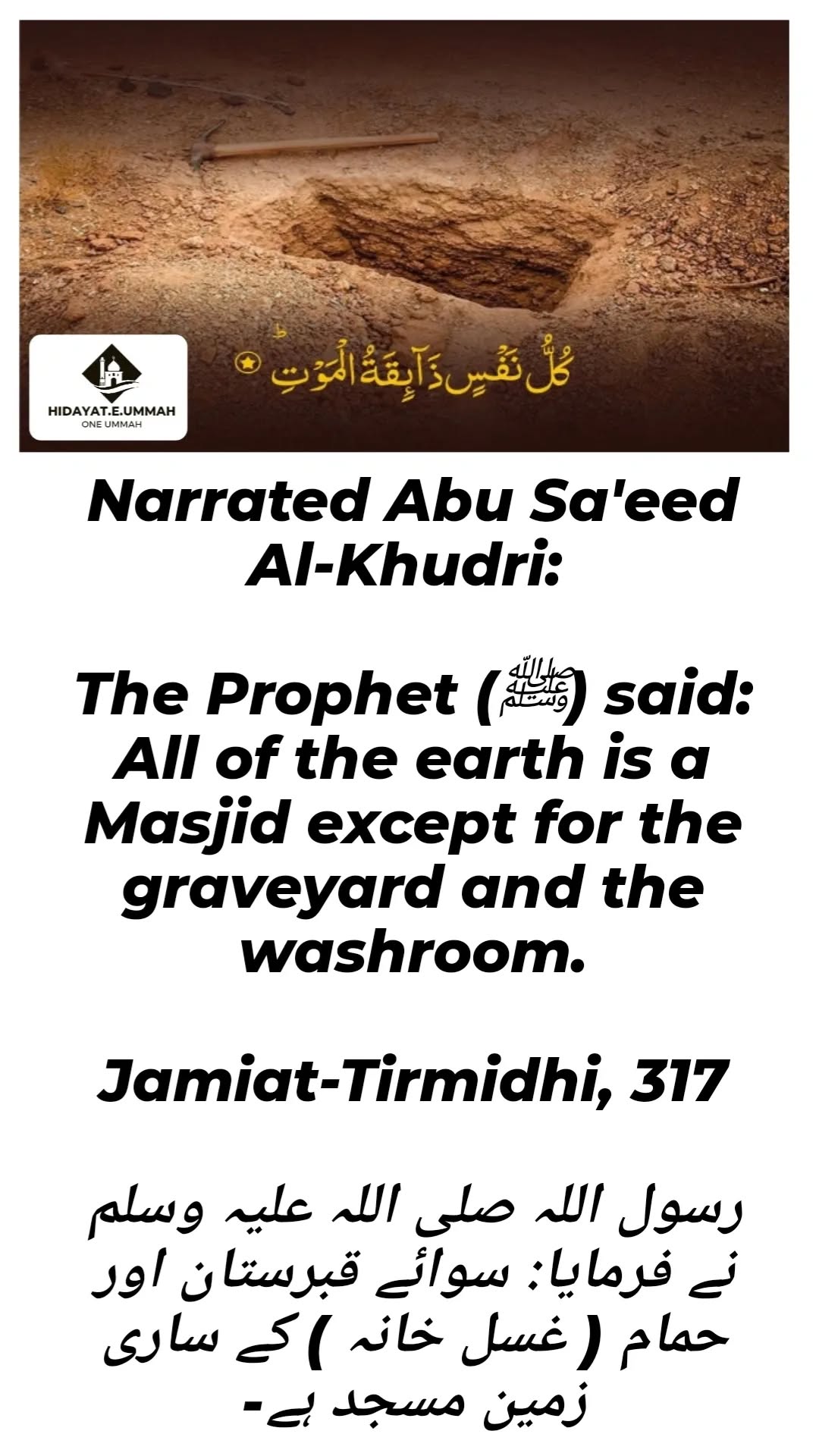
1. In this hadith, the Prophet (peace be upon him) states that the entire earth is a place of worship (Masjid) for Muslims.
2. This means that Muslims are allowed to pray anywhere on earth, as long as it is pure and clean.
3. However, the Prophet (peace be upon him) makes an exception for two places: the graveyard and the washroom.
4. The graveyard is excluded because it is a place of mourning and reflection, and it is not suitable for prayer.
5. The washroom is excluded because it is a place of personal hygiene and impurity, which is not appropriate for offering prayers.
6. This hadith highlights the flexibility in Islam regarding prayer, as it allows worship in most places, while still maintaining respect for certain locations.
Hadith 14
14 of 16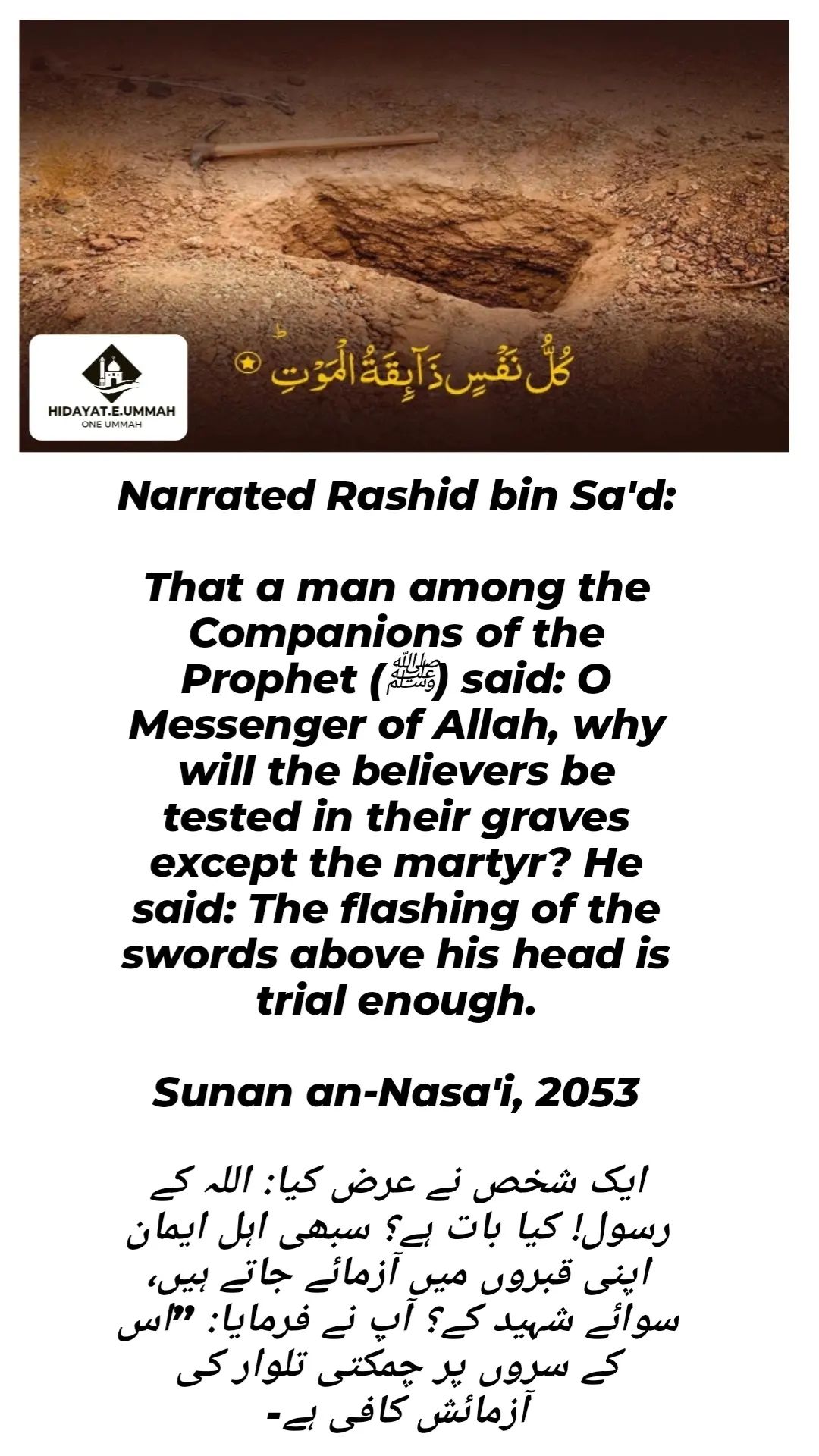
1. In this hadith, a companion of the Prophet (peace be upon him) asks why believers are tested in their graves, but martyrs are not.
2. The Prophet (peace be upon him) responds that the martyr's trial is the flashing of the swords above their head during battle.
3. The Prophet (peace be upon him) implies that martyrs have already faced the ultimate test of courage and faith by sacrificing their lives for Allah's cause.
4. This exemption from the trial in the grave is a reward and honor given to martyrs due to their sacrifice.
5. The trial in the grave is a test for all believers except for martyrs, who are spared from it because of their noble act of martyrdom.
Hadith 15
15 of 16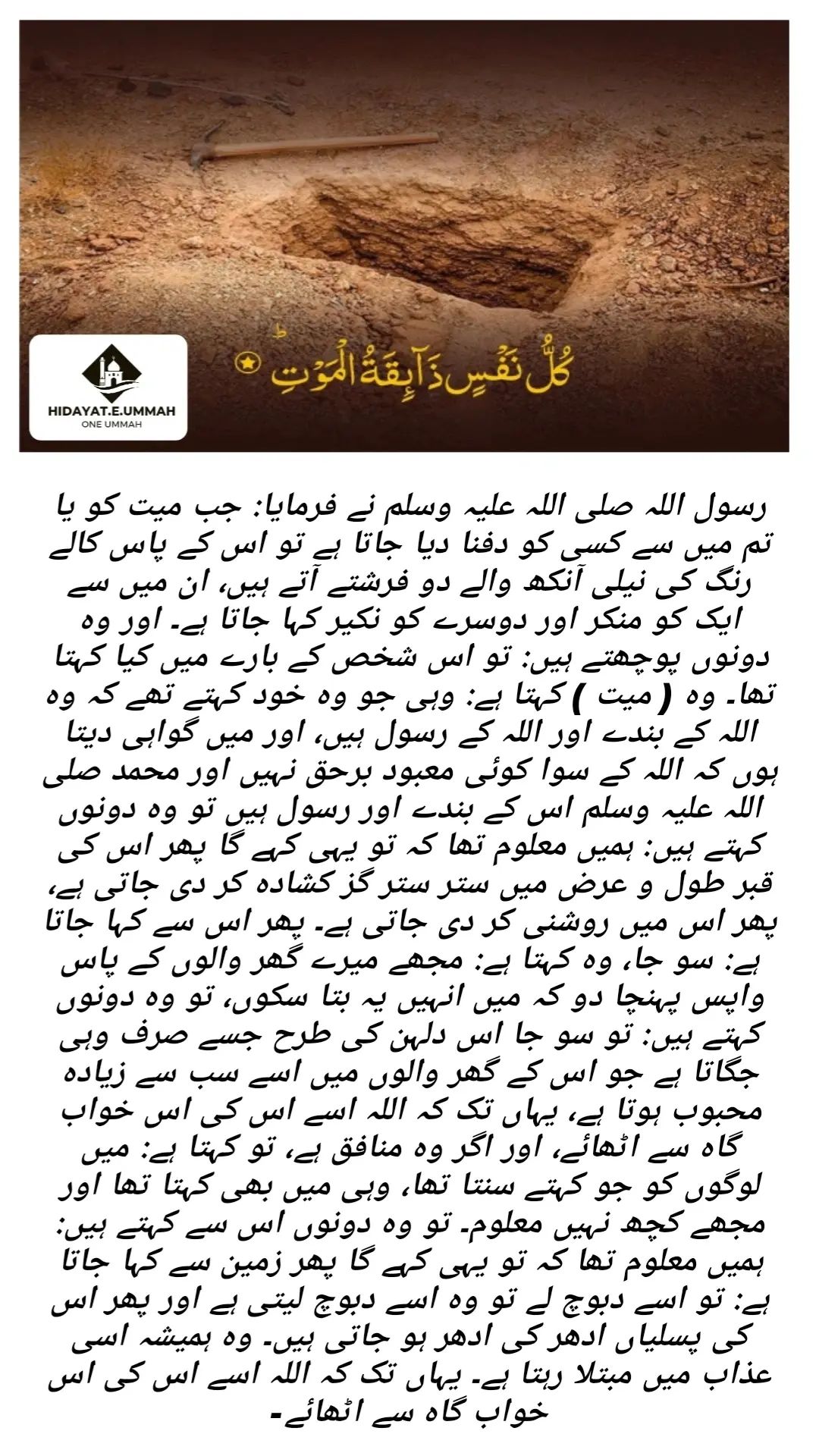
The strong man is not the one who wrestles others, but the one who controls himself when angry. – Prophet Muhammad (peace be upon him)
Hadith 16
16 of 16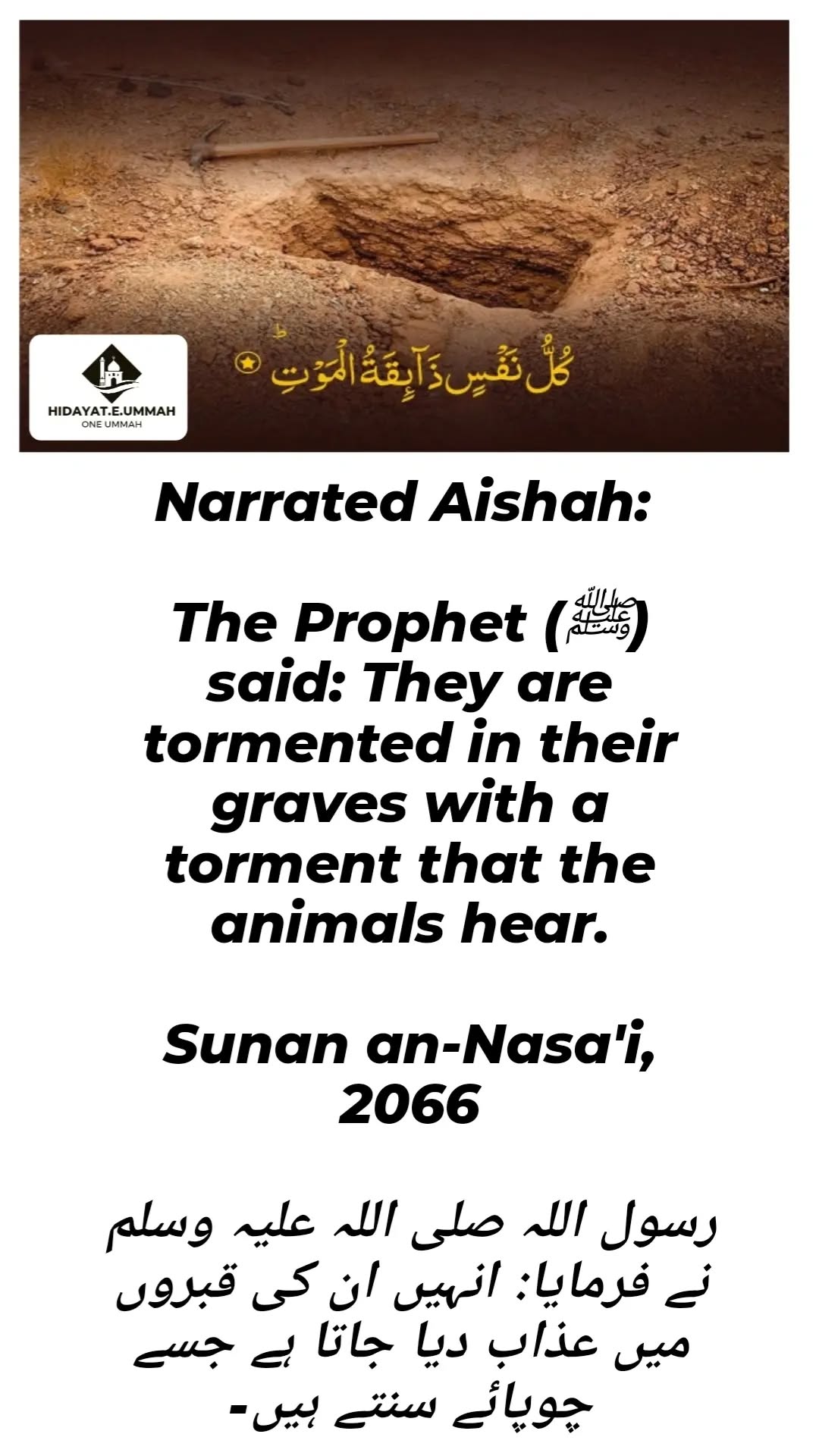
1. In this hadith, Aisha (may Allah be pleased with her) narrates that the Prophet (peace be upon him) said that some people will be tormented in their graves.
2. The torment they face will be so severe that even the animals can hear it.
3. This indicates the intensity of the punishment for those who are deserving of it in the grave.
4. The hadith serves as a warning to be mindful of our actions in this life and to strive for righteousness to avoid such punishment.
5. The reference to animals hearing the torment highlights how severe and noticeable the punishment is, even to creatures that do not understand the human condition.