
Hair
Hadith Collection
18 Hadiths
Hadith 1
1 of 18
The best among you are those who have the best manners and character. – Prophet Muhammad (peace be upon him)
Hadith 2
2 of 18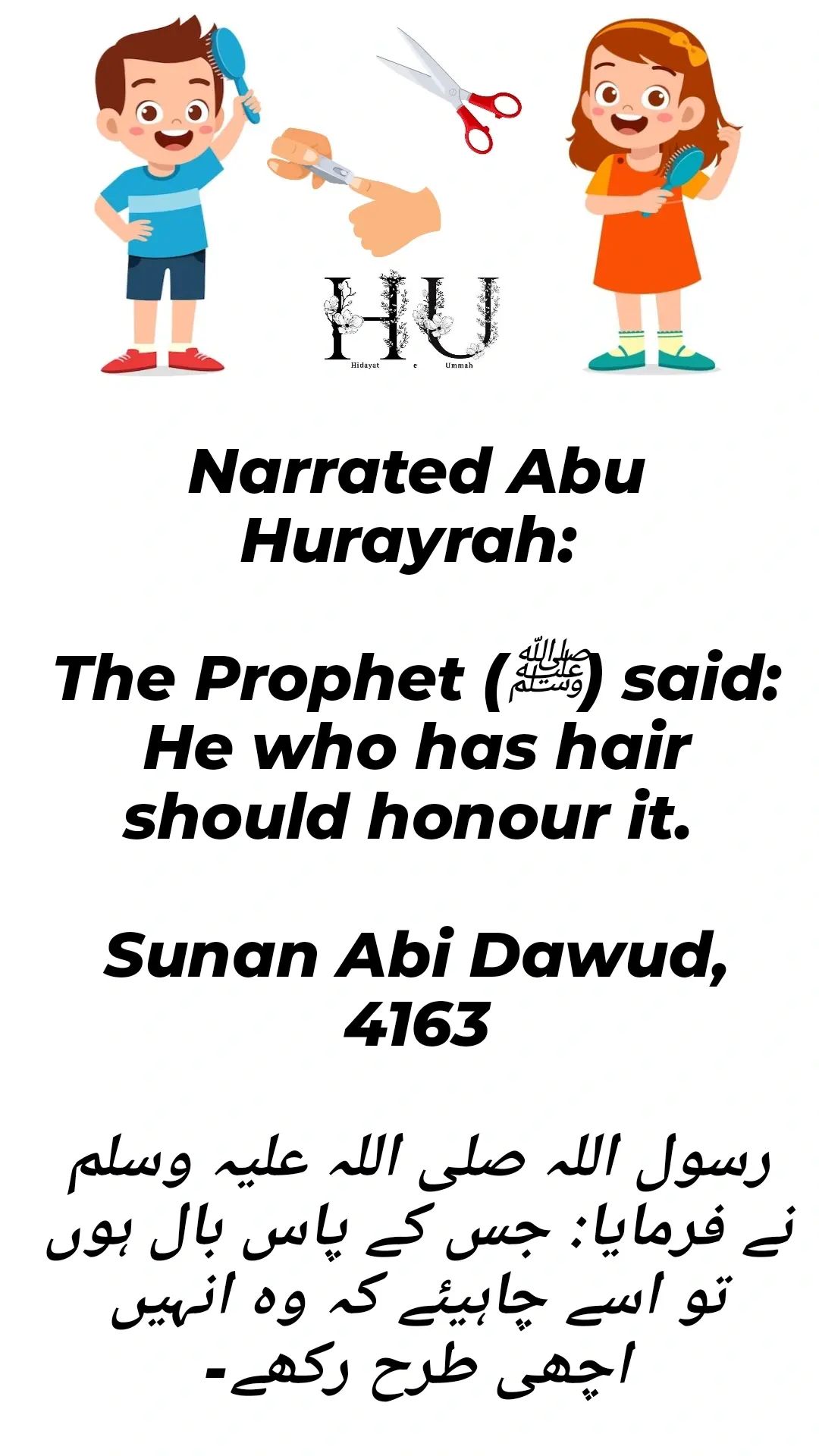
Honoring One's Hair: This hadith highlights the importance of maintaining and taking care of one's hair as a form of respect for oneself.
1. **The Importance of Grooming:**
- The Prophet ( SAW Peace be upon him) advises those who have hair to honor it, which can be understood as a call to maintain cleanliness and grooming. This encompasses keeping hair neat, clean, and well-kept.
2. **Respect for the Body:**
- Honoring one's hair is a reflection of showing respect for the body that Allah has entrusted to us. It also encourages self-care and personal hygiene, which are important aspects of faith.
**Lesson:**
- Maintaining and caring for one's appearance, including hair, is not only a form of personal respect but also an expression of gratitude towards the body and the blessings of Allah.
Hadith 3
3 of 18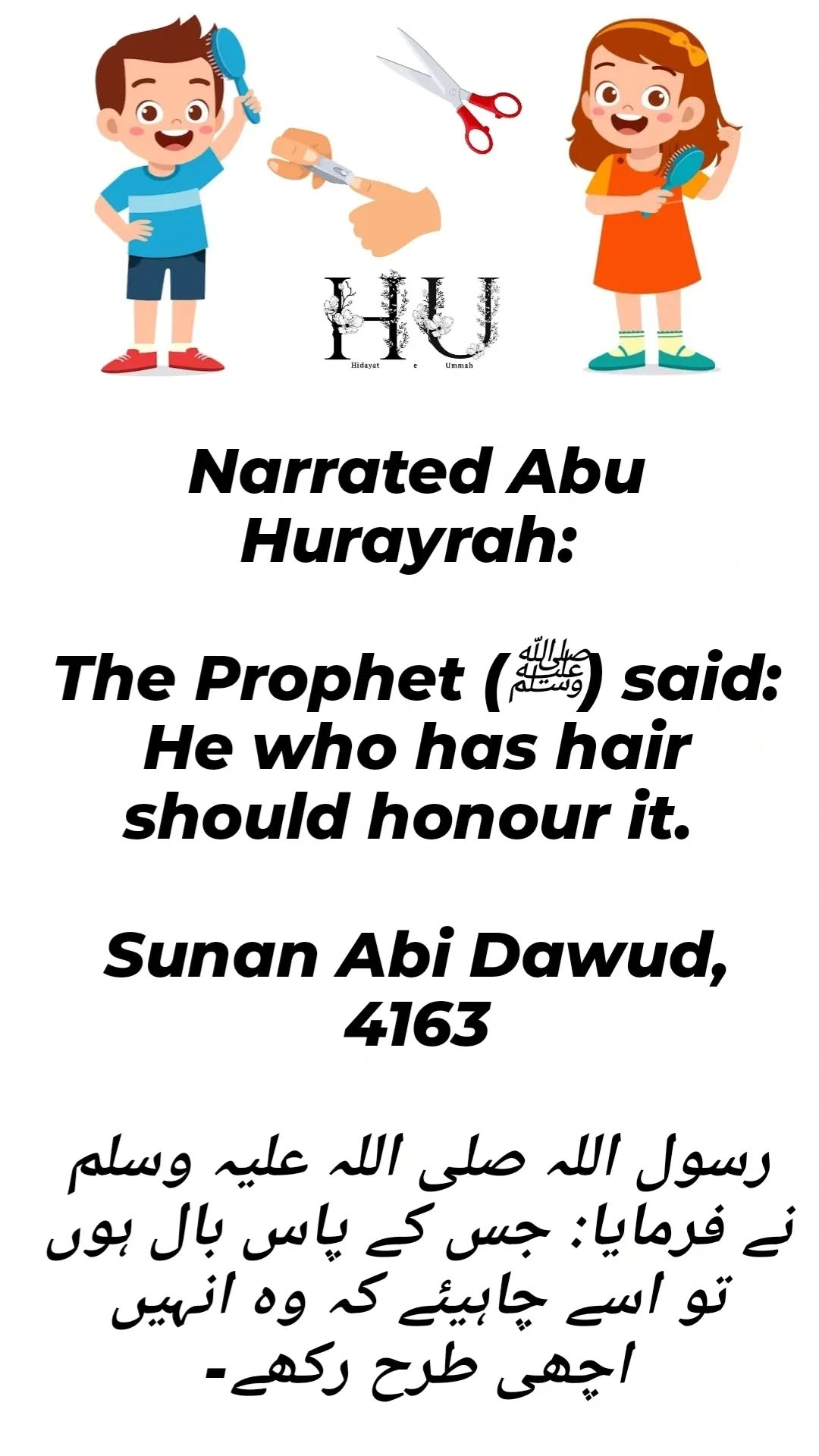
Honoring One's Hair: This hadith highlights the importance of maintaining and taking care of one's hair as a form of respect for oneself.
1. **The Importance of Grooming:**
- The Prophet ( SAW Peace be upon him) advises those who have hair to honor it, which can be understood as a call to maintain cleanliness and grooming. This encompasses keeping hair neat, clean, and well-kept.
2. **Respect for the Body:**
- Honoring one's hair is a reflection of showing respect for the body that Allah has entrusted to us. It also encourages self-care and personal hygiene, which are important aspects of faith.
**Lesson:**
- Maintaining and caring for one's appearance, including hair, is not only a form of personal respect but also an expression of gratitude towards the body and the blessings of Allah.
Hadith 4
4 of 18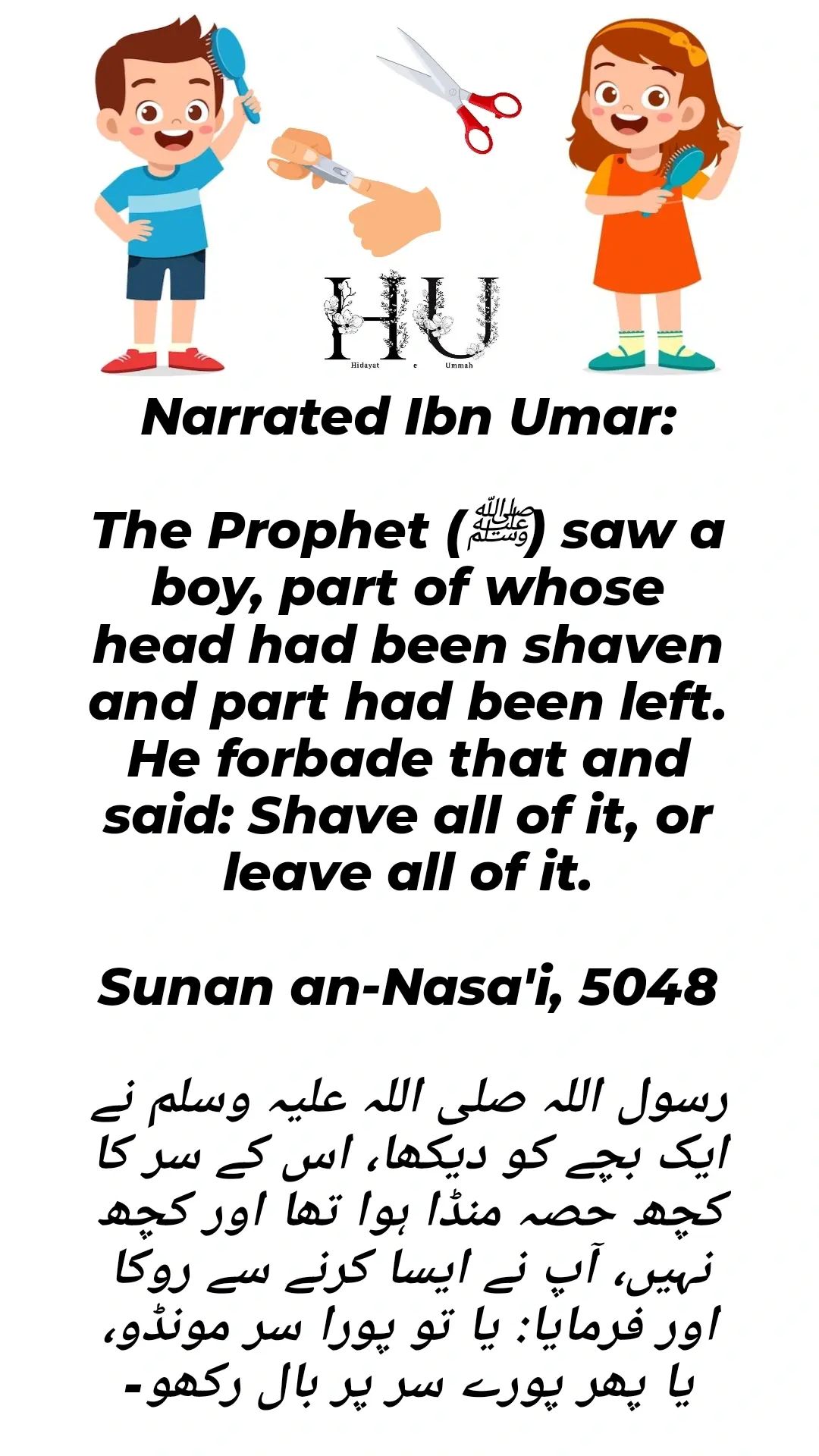
The Prohibition of Uneven Shaving: This hadith deals with the Prophet's ( SAW Peace be upon him) guidance on grooming and the proper way to shave or trim one's hair.
1. **Prohibition of Uneven Shaving:**
- The Prophet ( SAW Peace be upon him) saw a boy with part of his head shaved and part left, and he forbade this practice, teaching that hair should either be shaved entirely or left untouched.
2. **Uniform Grooming:**
- The hadith emphasizes uniformity in grooming, which reflects a broader principle of balance and completeness in following the Sunnah.
**Lesson:**
- This teaches us the importance of maintaining consistency and order in our appearance, avoiding practices that lead to disarray or imbalance.
Hadith 5
5 of 18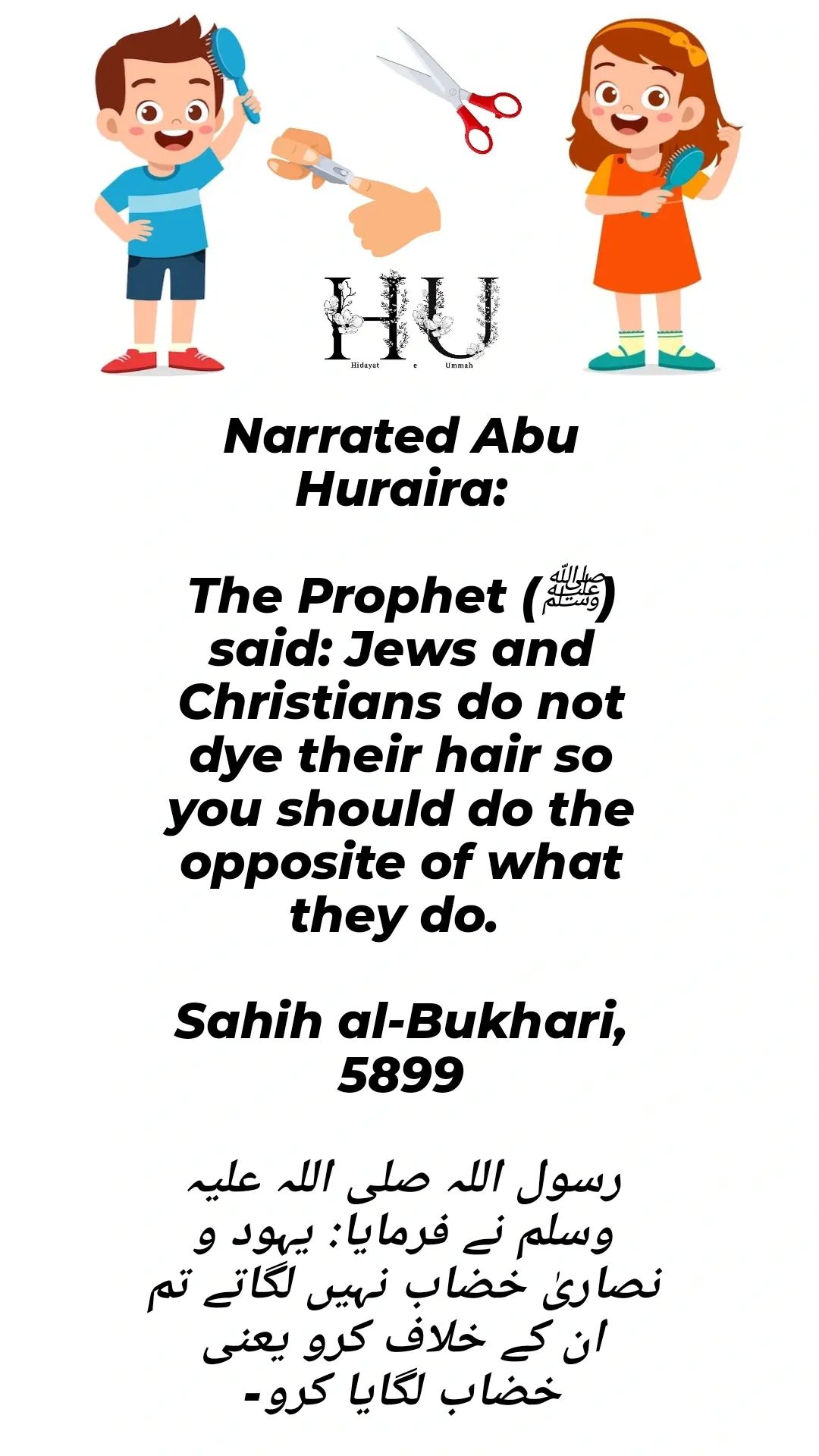
The Encouragement to Dye Hair: This hadith provides guidance on differentiating Muslim practices from those of Jews and Christians, specifically regarding the practice of dyeing hair.
1. **The Practice of Dyeing Hair:**
- The Prophet ( SAW Peace be upon him) encourages Muslims to dye their hair, highlighting it as a practice that distinguishes them from Jews and Christians, who typically did not dye their hair.
2. **Maintaining a Distinct Identity:**
- This practice serves as a reminder for Muslims to maintain their unique identity and avoid blindly imitating others.
**Lesson:**
- Muslims are encouraged to uphold their distinct cultural and religious practices, and in doing so, follow the guidance of the Prophet ( SAW Peace be upon him) in maintaining an appearance that reflects their faith.
Hadith 6
6 of 18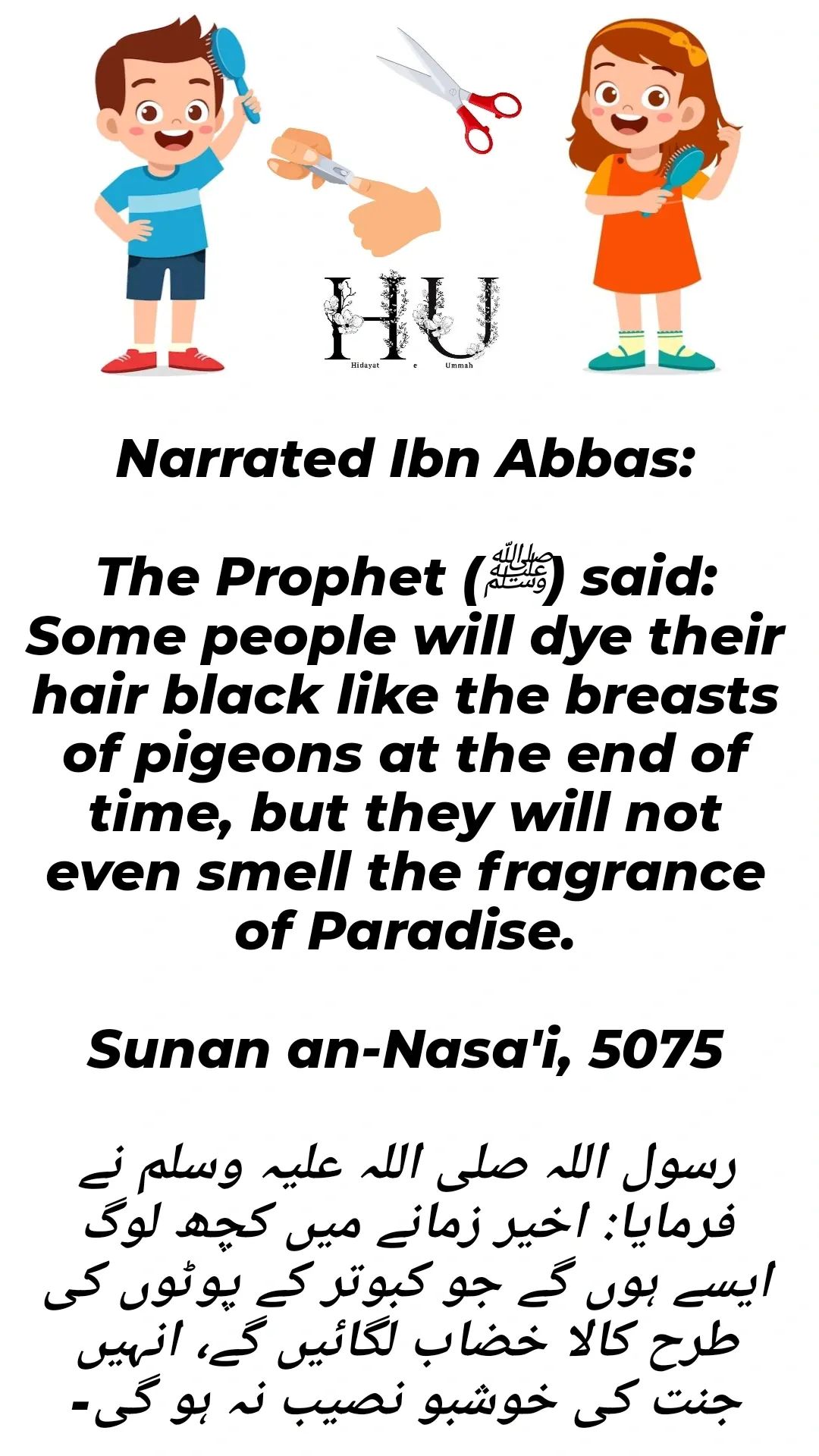
The Warning Against Dyeing Hair Black: This hadith warns against a specific form of dyeing hair that will be prevalent towards the end of times, describing it in a negative light.
1. **Dyeing Hair Black Like Pigeon Breasts:**
- The Prophet ( SAW Peace be upon him) mentions that some people will dye their hair black, resembling the black color of pigeon breasts. This specific practice is criticized as a sign of a deeper issue in those who do it.
2. **Spiritual Consequences:**
- Despite their outward appearance, those who engage in this practice will not even smell the fragrance of Paradise, indicating the severe spiritual consequences of this act.
**Lesson:**
- The hadith serves as a reminder that outward appearances, such as altering one’s hair in a certain way, should not be done with pride or for showing off. True beauty and worth are based on inner righteousness and sincerity.
Hadith 7
7 of 18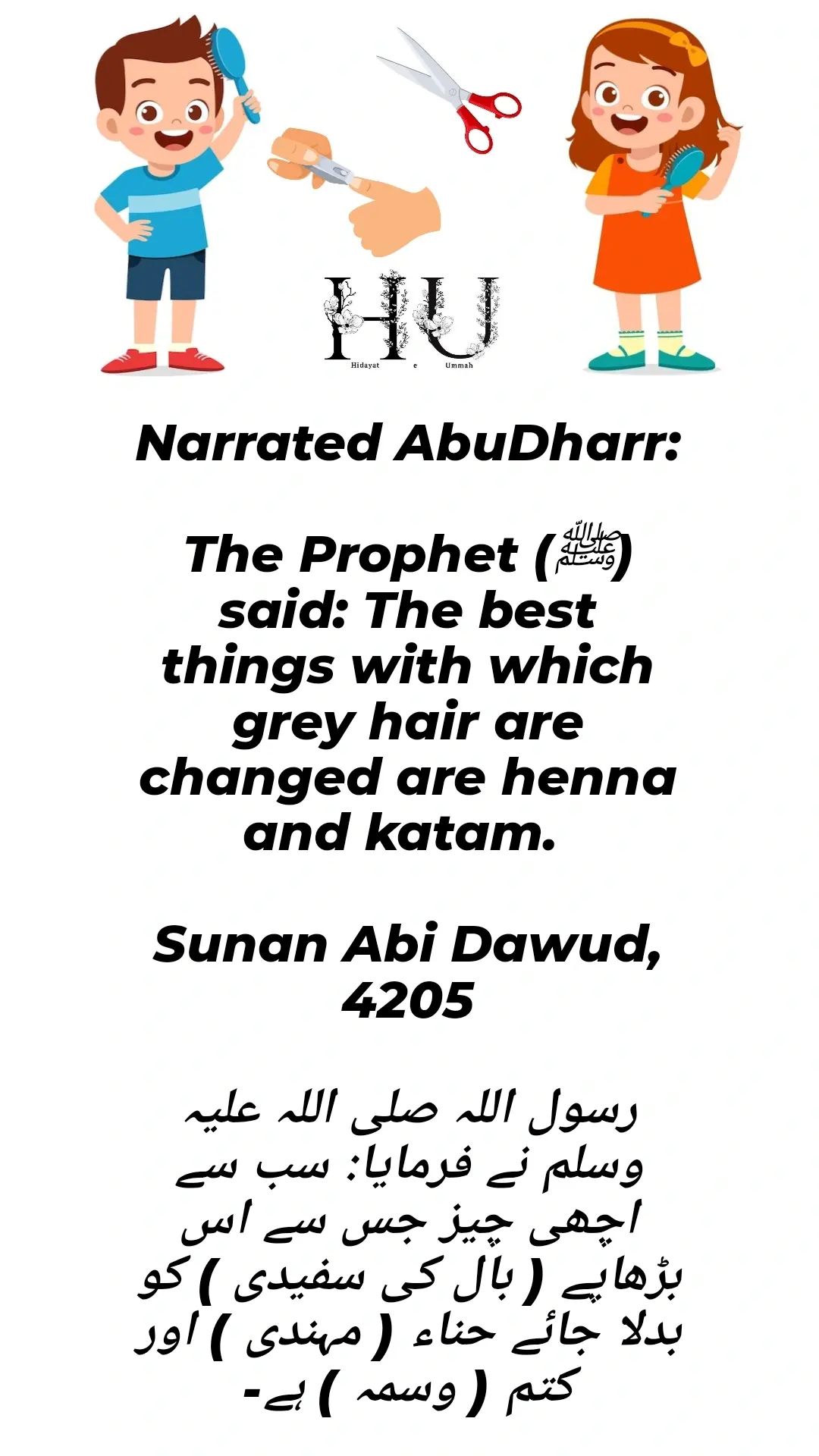
The Recommendation to Change Grey Hair: This hadith encourages the use of natural substances like henna and katam to change grey hair, offering a beneficial practice to Muslims.
1. **The Use of Henna and Katam:**
- The Prophet ( SAW Peace be upon him) specifically recommended using henna and katam as the best methods to change the color of grey hair, highlighting these natural substances for their effectiveness and virtue.
2. **Aesthetic and Spiritual Consideration:**
- While this practice addresses the outward appearance, it also reflects an attitude of care and personal grooming, showing the importance of maintaining dignity and self-respect.
**Lesson:**
- The use of henna and katam is encouraged as a natural and beneficial way to change grey hair, keeping in line with the Prophet's ( SAW Peace be upon him) guidance on personal care and grooming.
Hadith 8
8 of 18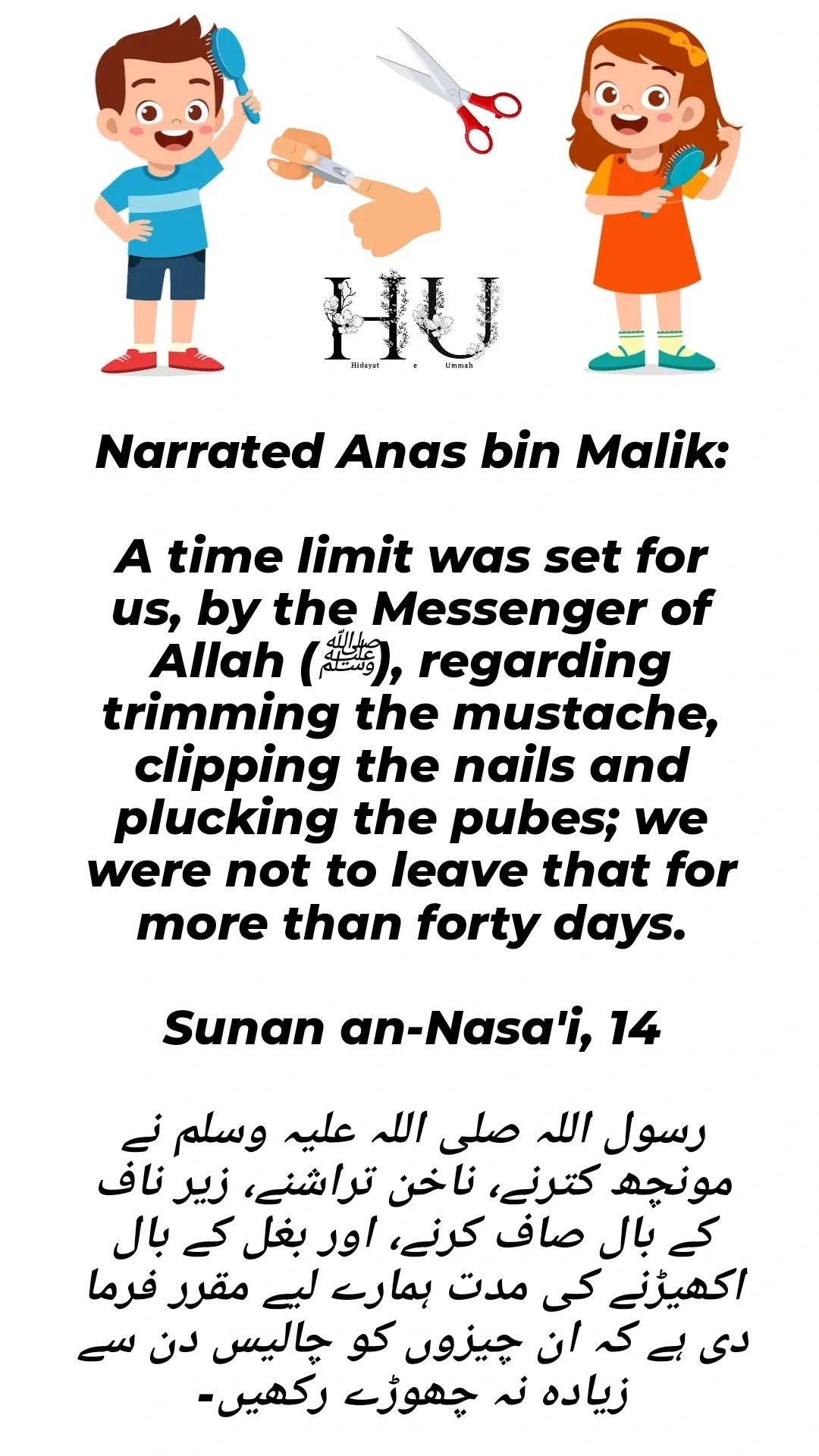
The Time Limit for Grooming Practices: This hadith sets a specific time limit for important grooming practices, encouraging Muslims to maintain cleanliness and personal hygiene in accordance with the Prophet's ( SAW Peace be upon him) guidance.
1. **Trimming the Mustache, Clipping the Nails, and Plucking the Pubes:**
- The Prophet ( SAW Peace be upon him) set a clear time frame for these grooming practices, instructing that they should not be left undone for more than forty days.
2. **The Importance of Personal Hygiene:**
- The time limit reflects the significance of maintaining cleanliness, a core principle in Islam, as well as the importance of regular self-care.
**Lesson:**
- Muslims are encouraged to trim their mustaches, clip their nails, and pluck their pubes regularly, ensuring they don't leave these practices undone for more than forty days, promoting hygiene and following the Sunnah.
Hadith 9
9 of 18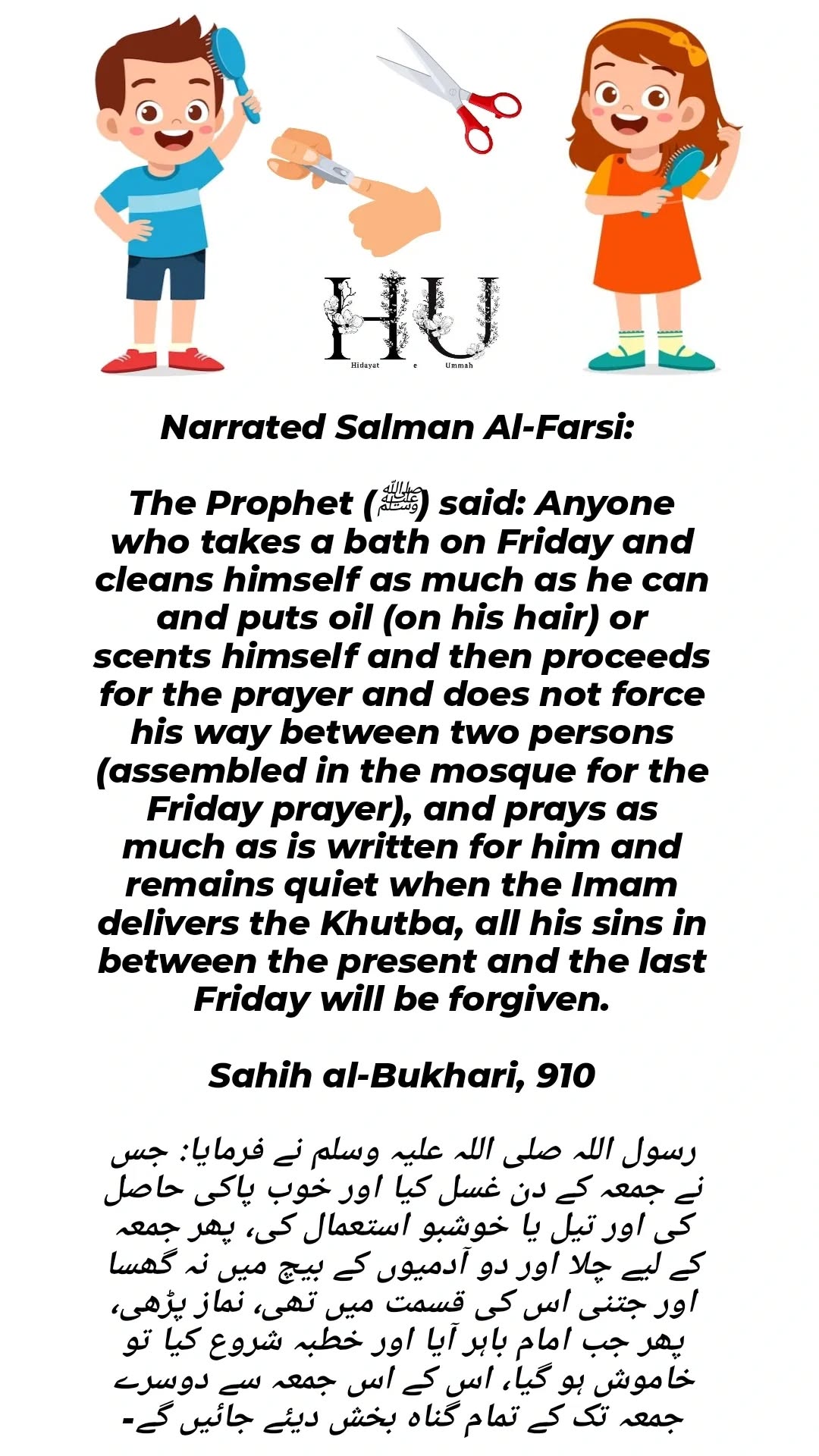
The Virtue of Friday Bath and Prayers: This hadith highlights the immense spiritual reward for Muslims who prepare for the Friday prayer in the prescribed manner.
1. **Taking a Bath and Grooming:**
- The Prophet ( SAW Peace be upon him) emphasized the importance of cleanliness by encouraging Muslims to take a bath on Friday and groom themselves, including applying oil or perfume to their hair and body.
2. **Attending Friday Prayer and Showing Respect:**
- Muslims are urged to arrive at the mosque without pushing or forcing their way between people, to offer the prescribed number of prayers, and to remain quiet during the Imam's Khutbah (sermon).
3. **Forgiveness of Sins:**
- Those who observe these etiquettes, from one Friday to the next, will have their sins forgiven by Allah.
**Lesson:**
- Friday holds great significance in Islam, and by preparing properly for the Friday prayer, Muslims can receive forgiveness for their sins and reap great spiritual rewards.
Hadith 10
10 of 18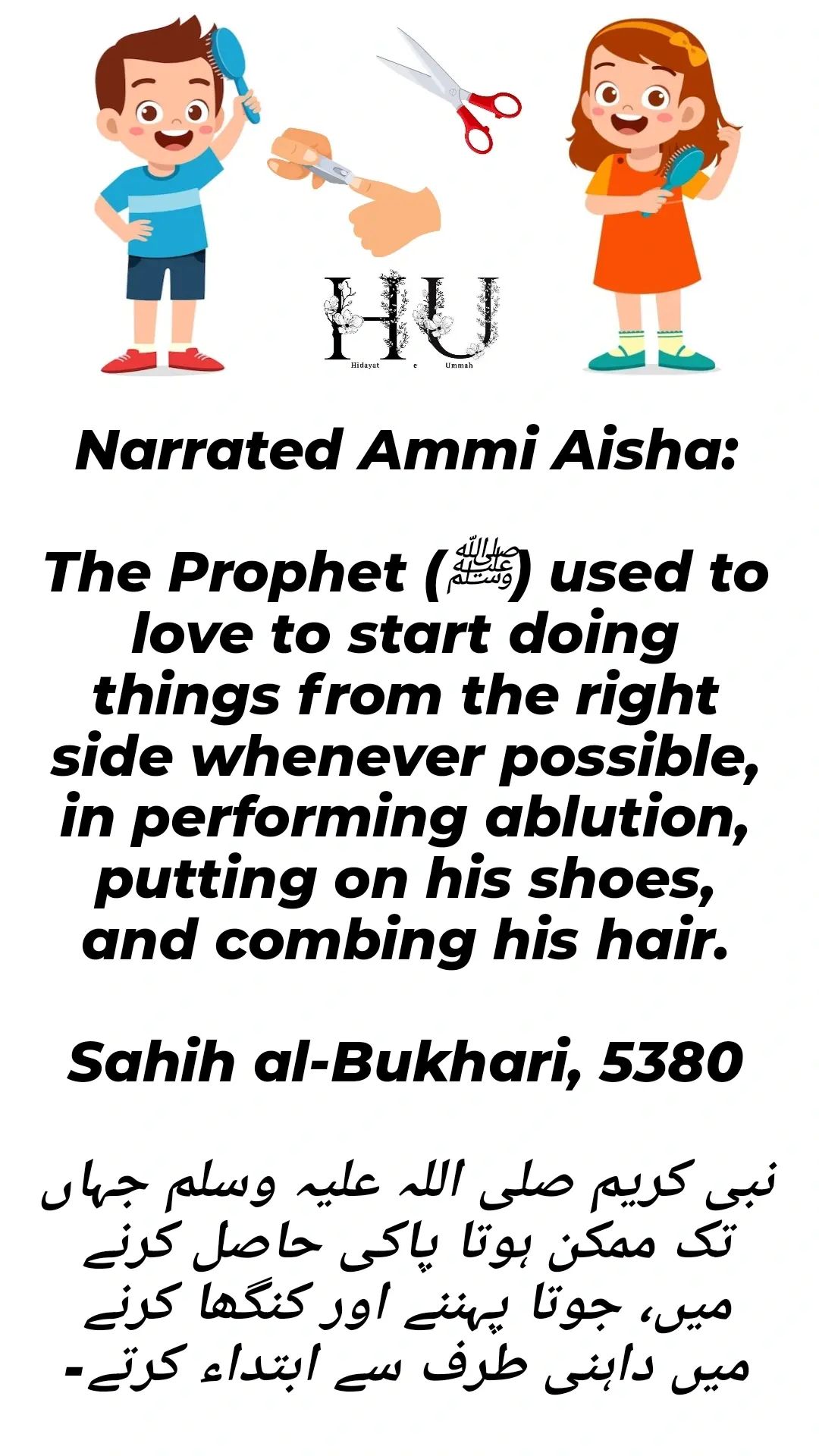
The Prophet's Preference for Starting with the Right Side: This hadith illustrates the Prophet Muhammad's ( SAW Peace be upon him) habit of starting actions with the right side, showing the importance of favoring the right hand or side in various tasks.
1. **Ablution (Wudu):**
- The Prophet ( SAW Peace be upon him) would begin his ablution by washing his right hand and foot before the left, emphasizing cleanliness and the use of the right side.
2. **Putting on Shoes:**
- He would also start with the right foot when putting on shoes, following the practice of preferring the right side in everyday tasks.
3. **Combing His Hair:**
- When combing his hair, the Prophet ( SAW Peace be upon him) would also start from the right side, making the right side a symbol of preference and goodness.
**Lesson:**
- This practice highlights the significance of the right side in Islamic traditions and serves as a model for Muslims to follow in their daily routines.
Hadith 11
11 of 18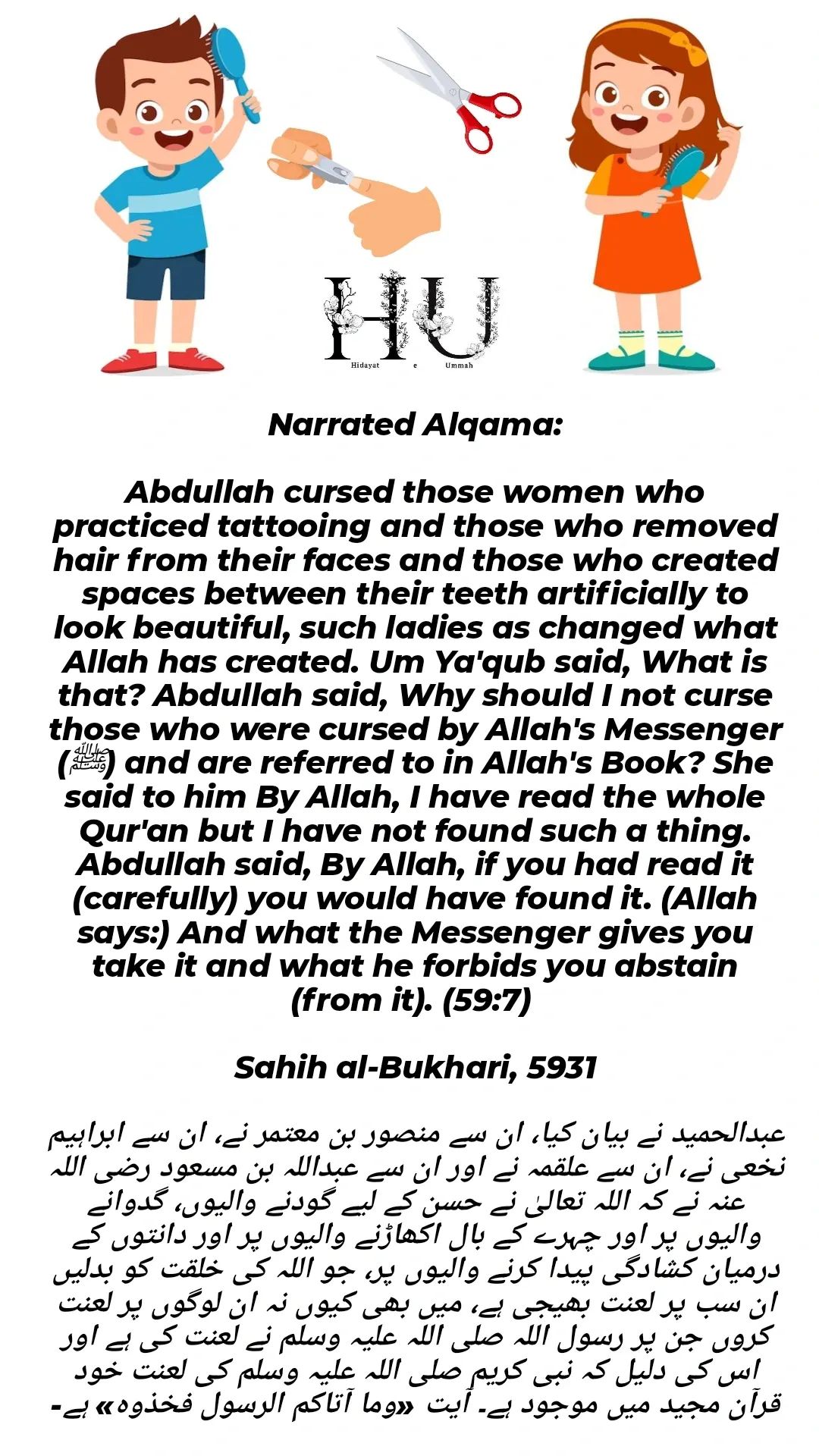
Narrated Alqama:
**Hadith Explanation:** This hadith records Abdullah ibn Mas'ud's strong stance against practices like tattooing, facial hair removal, and artificially altering physical appearances for the sake of beauty. These acts are seen as altering Allah's creation, which was discouraged by the Prophet ( SAW Peace be upon him).
1. **Prohibition of Tattooing:**
- Tattooing involves permanent alterations to the skin, which is viewed as changing Allah's natural creation.
2. **Facial Hair Removal:**
- The hadith specifically mentions women removing facial hair for beauty purposes, emphasizing simplicity and natural appearance.
3. **Artificial Teeth Modifications:**
- Creating gaps between teeth to change appearance was also discouraged as part of altering what Allah has naturally given.
4. **Qur'anic Principle:**
- Abdullah (RA) highlights the importance of adhering to what the Prophet ( SAW Peace be upon him) commanded. He refers to the Qur'anic verse (59:7): _"And whatever the Messenger has given you — take it, and whatever he has forbidden you — refrain from it.”_
**Lesson:**
- The hadith emphasizes contentment with Allah’s creation and adherence to the Prophet’s ( SAW Peace be upon him) teachings regarding modesty and natural beauty.
Hadith 12
12 of 18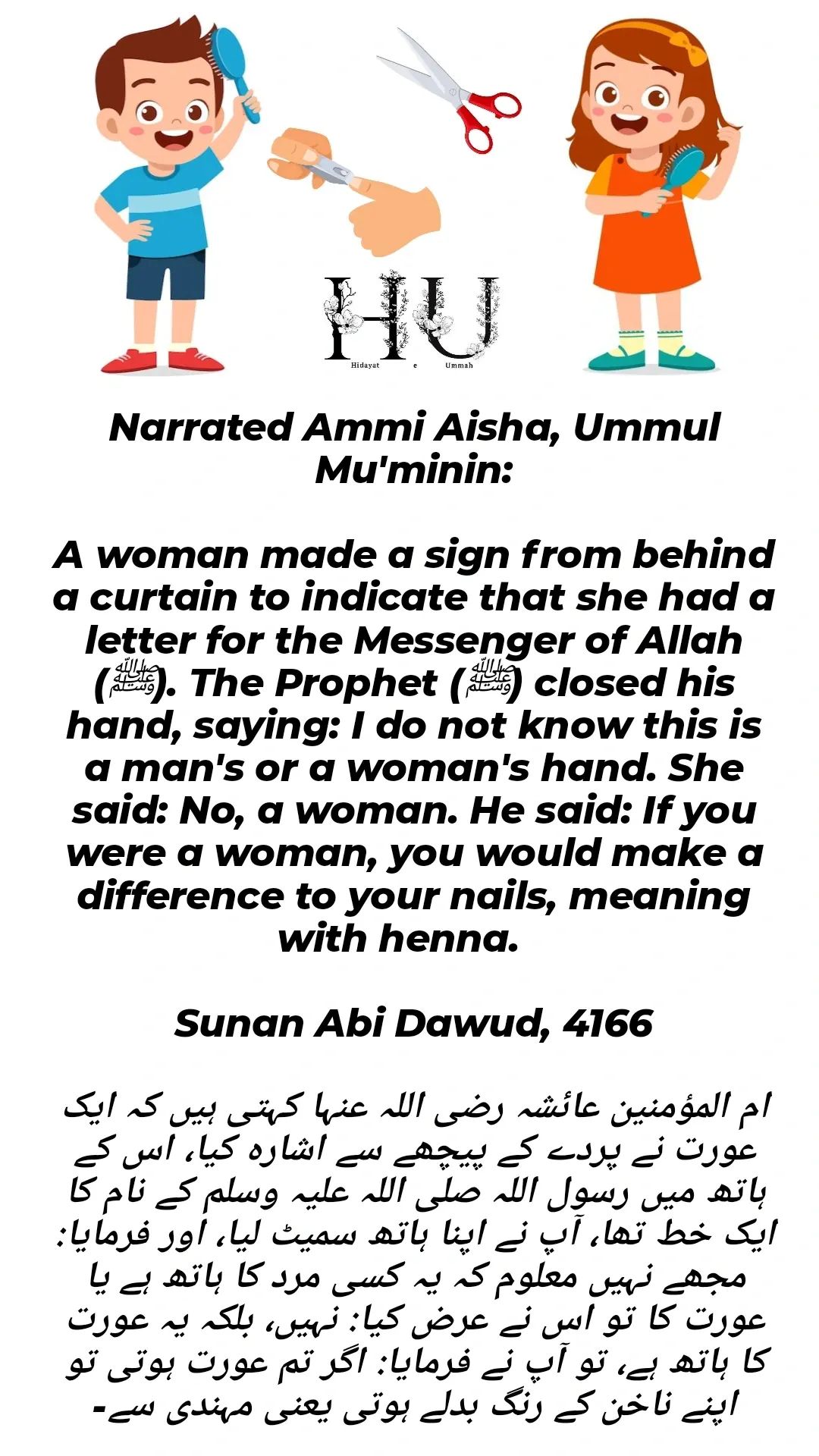
Narrated Ammi Aisha, Ummul Mu'minin:
**Hadith Explanation:** This hadith highlights the importance of maintaining distinct characteristics for men and women in appearance, a principle emphasized in Islamic teachings.
1. **The Prophet's Inquiry:**
- When a person extended a letter from behind a curtain, the Prophet ( SAW Peace be upon him) couldn't identify whether it was a man or a woman due to the lack of visible feminine characteristics.
2. **The Prophet's Instruction:**
- Upon learning it was a woman, the Prophet ( SAW Peace be upon him) advised that women should differentiate themselves by applying henna to their nails. Henna was traditionally used by women as a form of modest adornment.
3. **Cultural Context:**
- In many Islamic societies, henna is considered a beautiful and permissible way for women to beautify themselves while maintaining modesty.
**Lesson:**
- Islam encourages appropriate gender distinctions in appearance within the boundaries of modesty.
- This narration highlights the Prophet's ( SAW Peace be upon him) attention to detail and guidance on maintaining respectful, culturally appropriate norms.
Hadith 13
13 of 18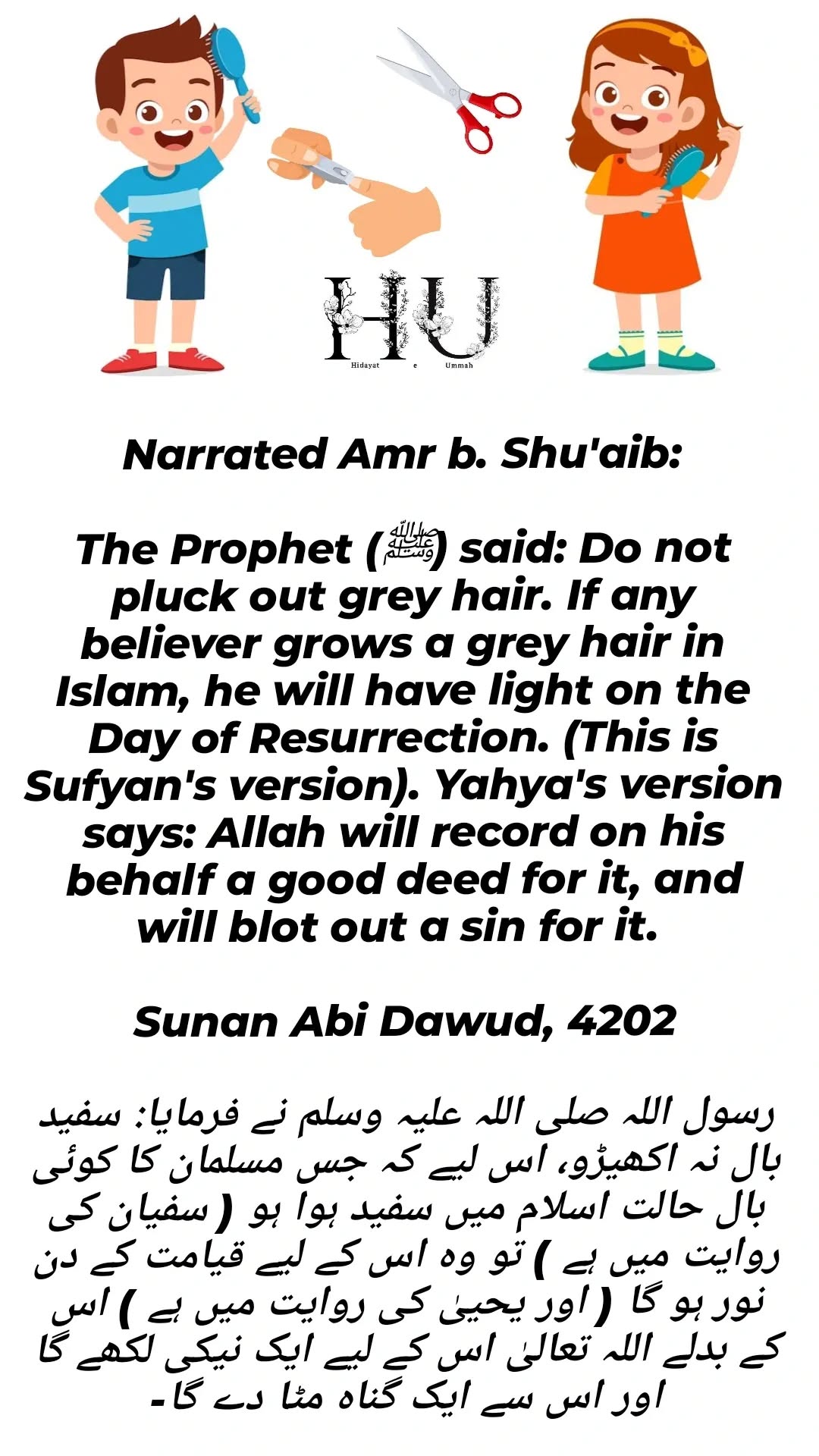
Narrated Amr b. Shu'aib:
**Hadith Explanation:** This narration emphasizes the value and virtue of grey hair in Islam.
1. **Prohibition Against Plucking Grey Hair:**
- The Prophet ( SAW Peace be upon him) advised against plucking grey hair, indicating that it carries spiritual significance.
2. **Grey Hair as a Source of Light:**
- On the Day of Resurrection, grey hair grown in Islam will serve as a source of light for the believer.
3. **Reward for Grey Hair:**
- According to one version, Allah will record a good deed for each grey hair and remove a sin for it.
4. **Spiritual Significance:**
- This hadith illustrates the concept of aging gracefully and viewing grey hair as a sign of piety and wisdom.
**Lesson:**
- Islam encourages believers to accept natural changes like aging with gratitude and dignity.
- The emphasis is placed on inner character and submission to Allah over outward appearance.
Hadith 14
14 of 18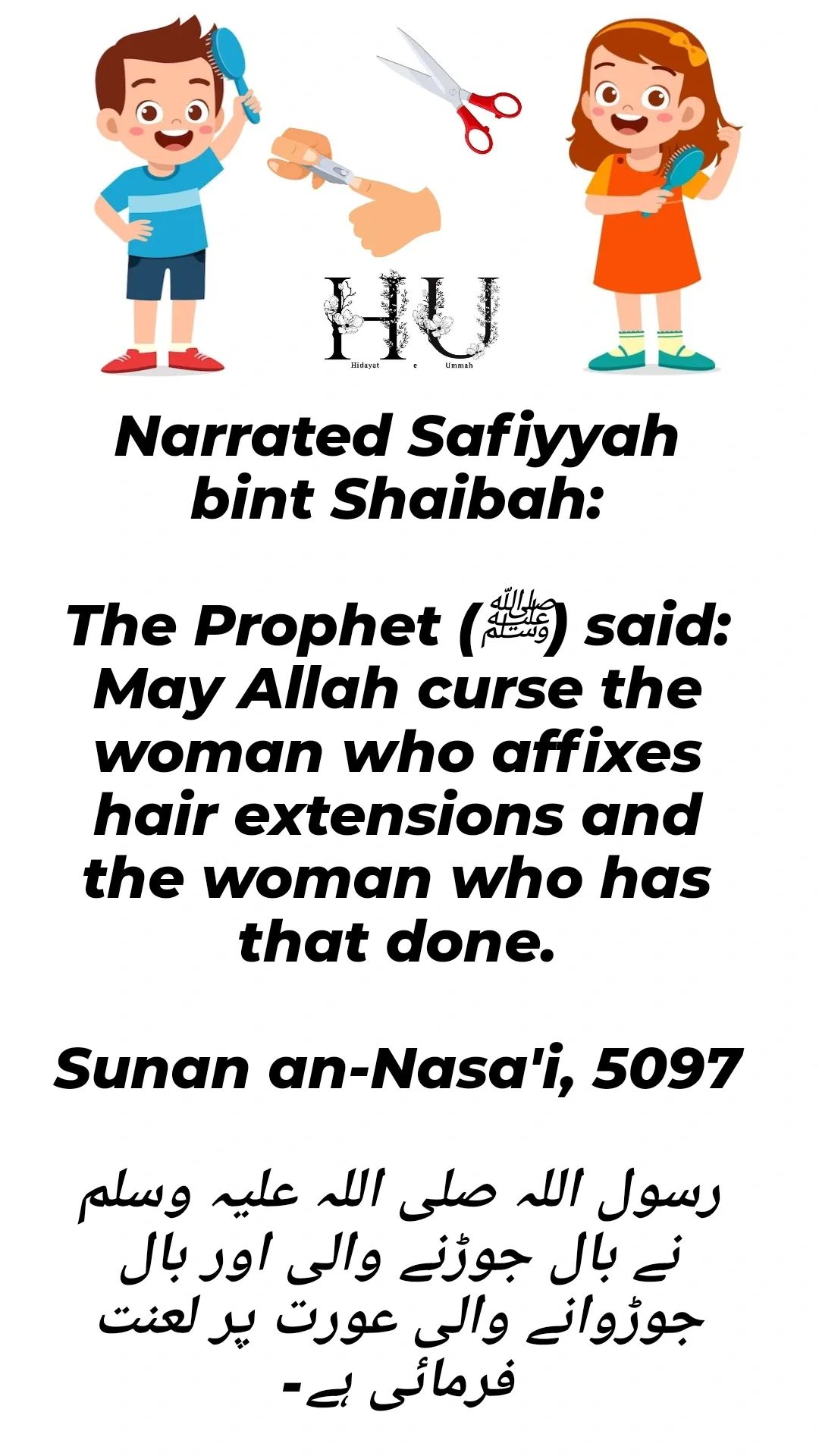
Narrated Safiyyah bint Shaibah:
**Hadith Explanation:**
This hadith highlights an important teaching related to modesty and authenticity in appearance.
1. **Prohibition of Hair Extensions:**
- The Prophet ( SAW Peace be upon him) invoked Allah's curse upon women who add hair extensions and those who facilitate the process.
2. **Reason for Prohibition:**
- Islam encourages natural beauty and authenticity.
- Hair extensions were often associated with deceit or attempts to alter Allah’s creation.
3. **Modesty and Honesty:**
- Islamic teachings place great importance on avoiding deceit in appearance and behavior.
4. **Lesson:**
- This hadith serves as a reminder to maintain sincerity and modesty, refraining from practices that compromise natural integrity.
**Spiritual Insight:**
- Embracing oneself as Allah has created is a form of gratitude and submission.
Hadith 15
15 of 18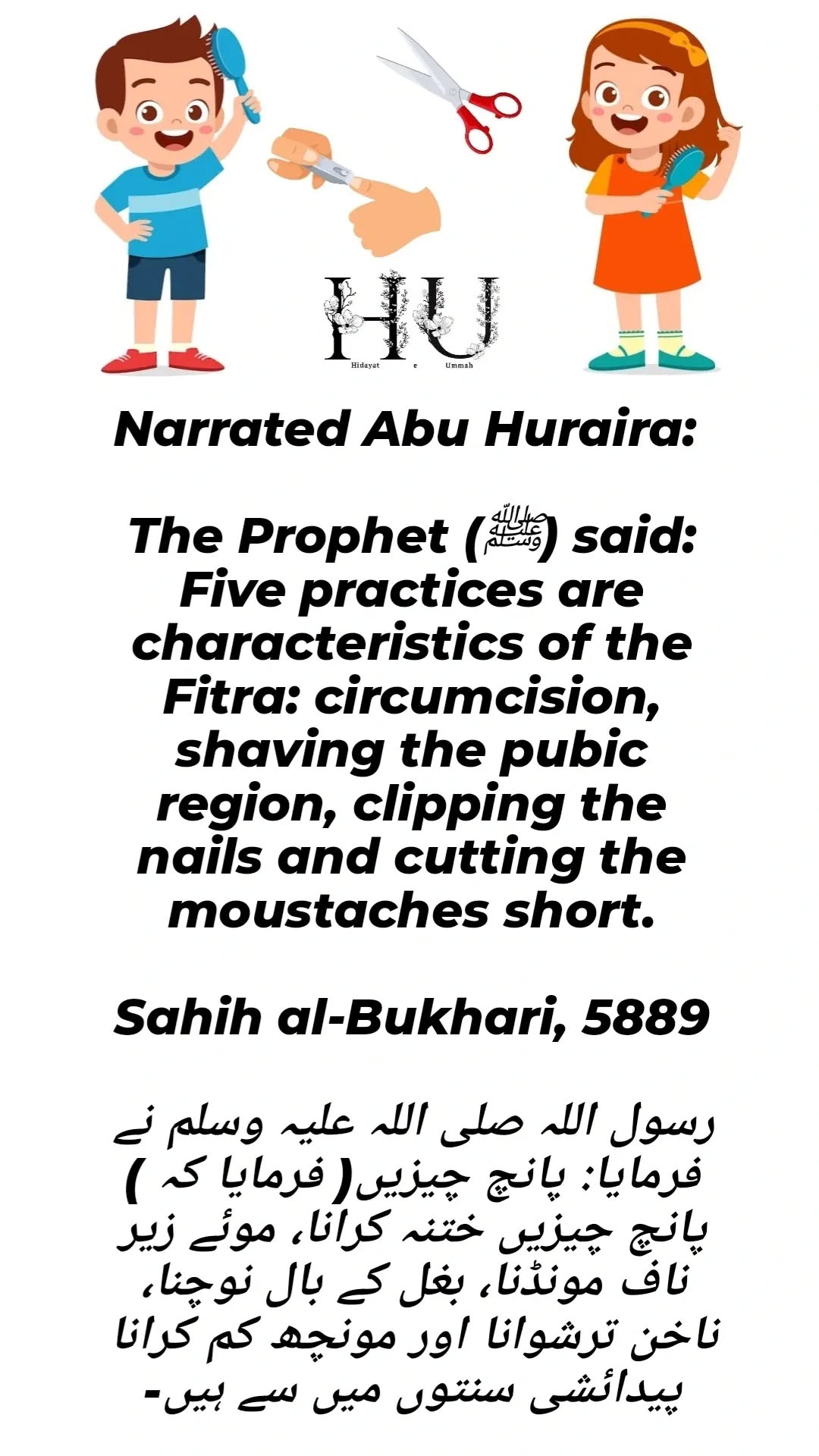
Narrated Abu Huraira:
**Hadith Explanation:**
This hadith outlines five essential natural practices, known as the characteristics of *Fitra* (innate human disposition).
1. **Circumcision:**
- Symbolizes cleanliness and purity.
- It is a Sunnah and an important practice in Islam.
2. **Shaving the Pubic Region:**
- Ensures personal hygiene and prevents impurity.
3. **Clipping the Nails:**
- Maintains cleanliness and prevents the accumulation of dirt.
4. **Plucking the Underarm Hair:**
- Another practice that promotes hygiene.
5. **Trimming the Moustache:**
- Ensures a neat appearance and aligns with the Sunnah of maintaining distinction from other communities.
**Spiritual Insight:**
These practices not only promote physical cleanliness but also embody the values of refinement and discipline in a Muslim's daily life.
Hadith 16
16 of 18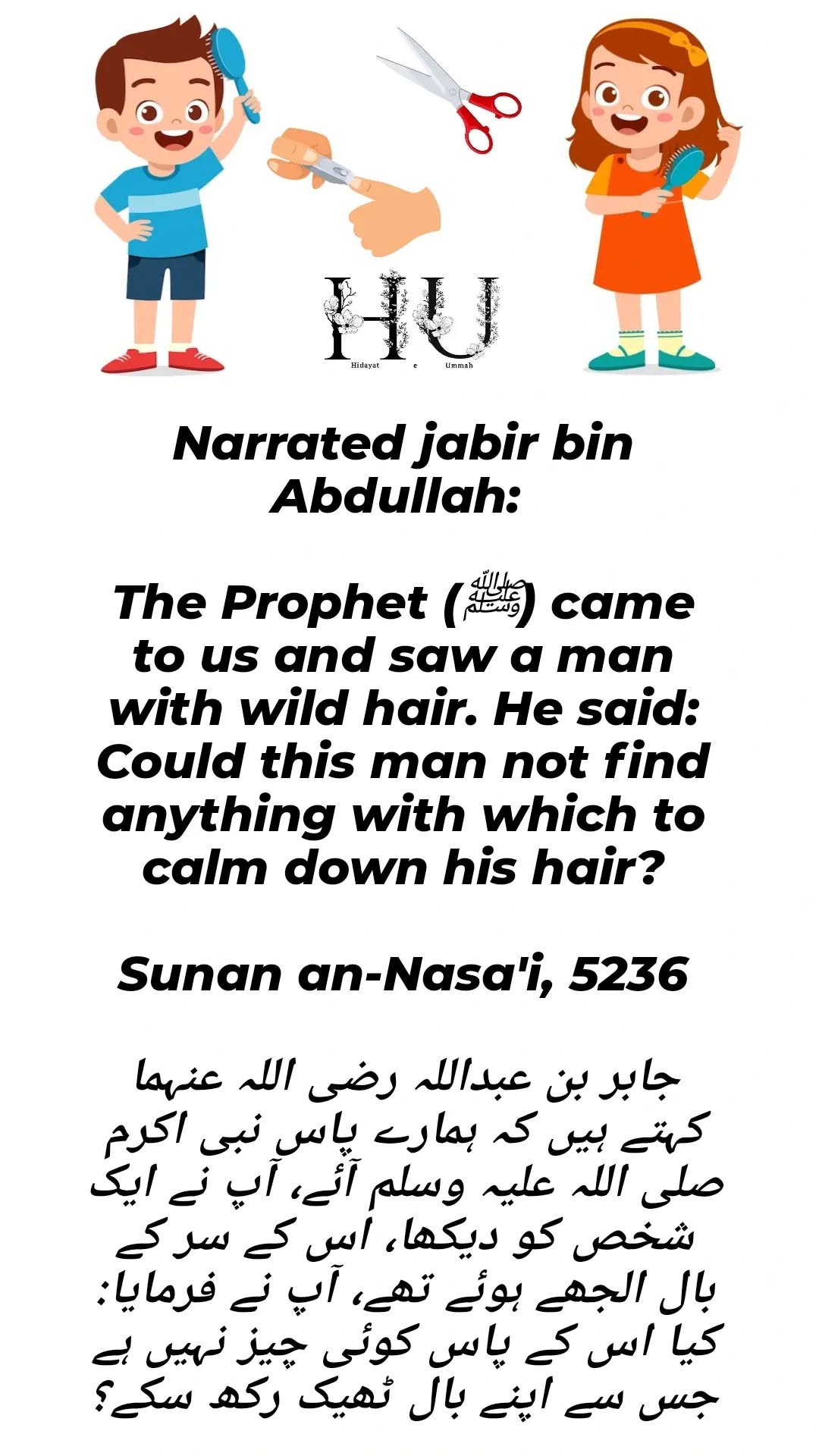
Narrated Jabir bin Abdullah:
**Hadith Explanation:**
In this hadith, the Prophet Muhammad ( SAW Peace be upon him) observed a man with untamed, wild hair and remarked, *'Could this man not find anything with which to calm down his hair?'* This simple yet profound statement highlights the importance of personal grooming and presentation in Islam.
**Key Lessons:**
1. **Encouragement of Cleanliness:**
- Islam places great emphasis on personal hygiene and maintaining a clean, neat appearance.
2. **Dignity and Respect:**
- Proper grooming reflects self-respect and consideration for how one presents themselves to others.
3. **Sunnah of Self-Care:**
- The Prophet ( SAW Peace be upon him) frequently encouraged both men and women to take care of their physical appearance, including combing and oiling the hair when needed.
**Practical Application:**
This hadith reminds us to maintain a polished and well-groomed look as part of good manners and adherence to Islamic teachings.
Hadith 17
17 of 18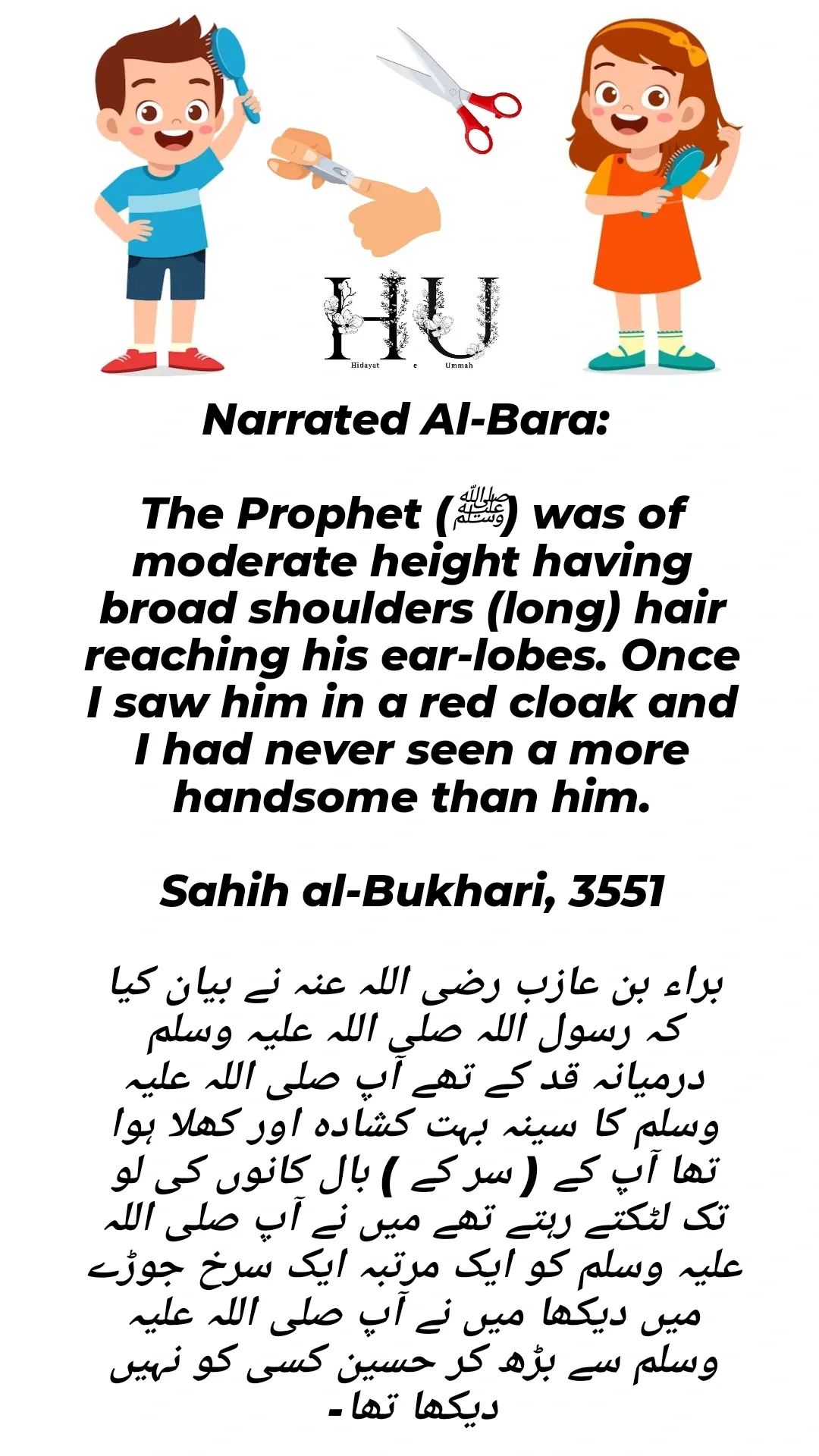
Narrated Al-Bara:
**Hadith Explanation:**
In this hadith, Al-Bara describes the appearance of the Prophet Muhammad ( SAW Peace be upon him). He mentions that the Prophet ( SAW Peace be upon him) was of moderate height, had broad shoulders, and his hair reached his ear lobes. On one occasion, Al-Bara saw the Prophet ( SAW Peace be upon him) wearing a red cloak and remarked that he had never seen anyone more handsome.
**Key Lessons:**
1. **Physical Description of the Prophet ( SAW Peace be upon him):**
- The Prophet's appearance was characterized by balance and dignity, reflecting his noble personality.
2. **Beauty and Composure:**
- The admiration expressed by Al-Bara highlights how the Prophet's physical presence naturally commanded respect and admiration.
3. **Simplicity in Clothing:**
- The mention of a red cloak signifies the Prophet's simple yet graceful attire, which was neither extravagant nor neglected.
**Practical Application:**
This hadith reminds us of the importance of maintaining a presentable appearance and appreciating beauty in simplicity. It also invites us to admire and learn from the balanced and dignified character of the Prophet Muhammad ( SAW Peace be upon him).
Hadith 18
18 of 18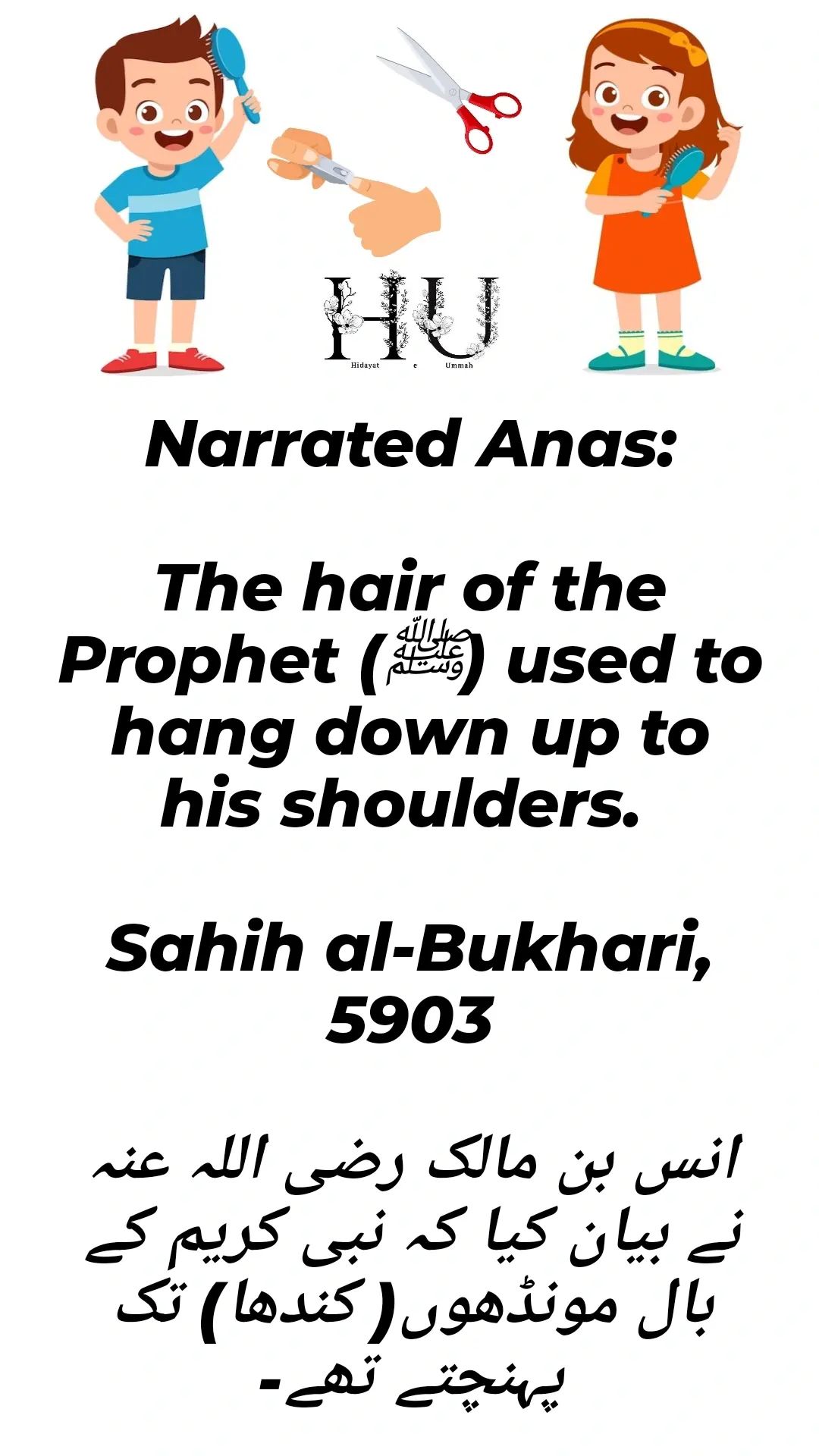
Narrated Anas:
Hadith Explanation:
In this hadith, Anas ibn Malik describes the length of the hair of Prophet Muhammad ( SAW Peace be upon him), stating that it used to hang down to his shoulders. This provides insight into the Prophet’s personal grooming and appearance, reflecting his simplicity and the natural beauty of his outward form.
Key Lessons:
1. Simplicity in Appearance:
- The Prophet's hairstyle, hanging down to his shoulders, was modest and simple, reflecting his overall humility and his focus on inner qualities rather than outward extravagance.
2. Attention to Personal Grooming:
- While the Prophet ( SAW Peace be upon him) maintained a modest appearance, this hadith shows the importance of personal grooming and cleanliness, something he emphasized for his followers.
3. Modesty in Physical Appearance:
- The moderate length of the Prophet's hair indicates his balanced approach to personal care—neither overly meticulous nor neglectful. It serves as a reminder that moderation and balance should be applied in all aspects of life.
Practical Application:
This hadith encourages us to take care of our personal hygiene and appearance without falling into vanity or neglect. It highlights the importance of balance and moderation in how we present ourselves, much like the Prophet Muhammad ( SAW Peace be upon him) did.