
Beard
Hadith Collection
10 Hadiths
Hadith 1
1 of 10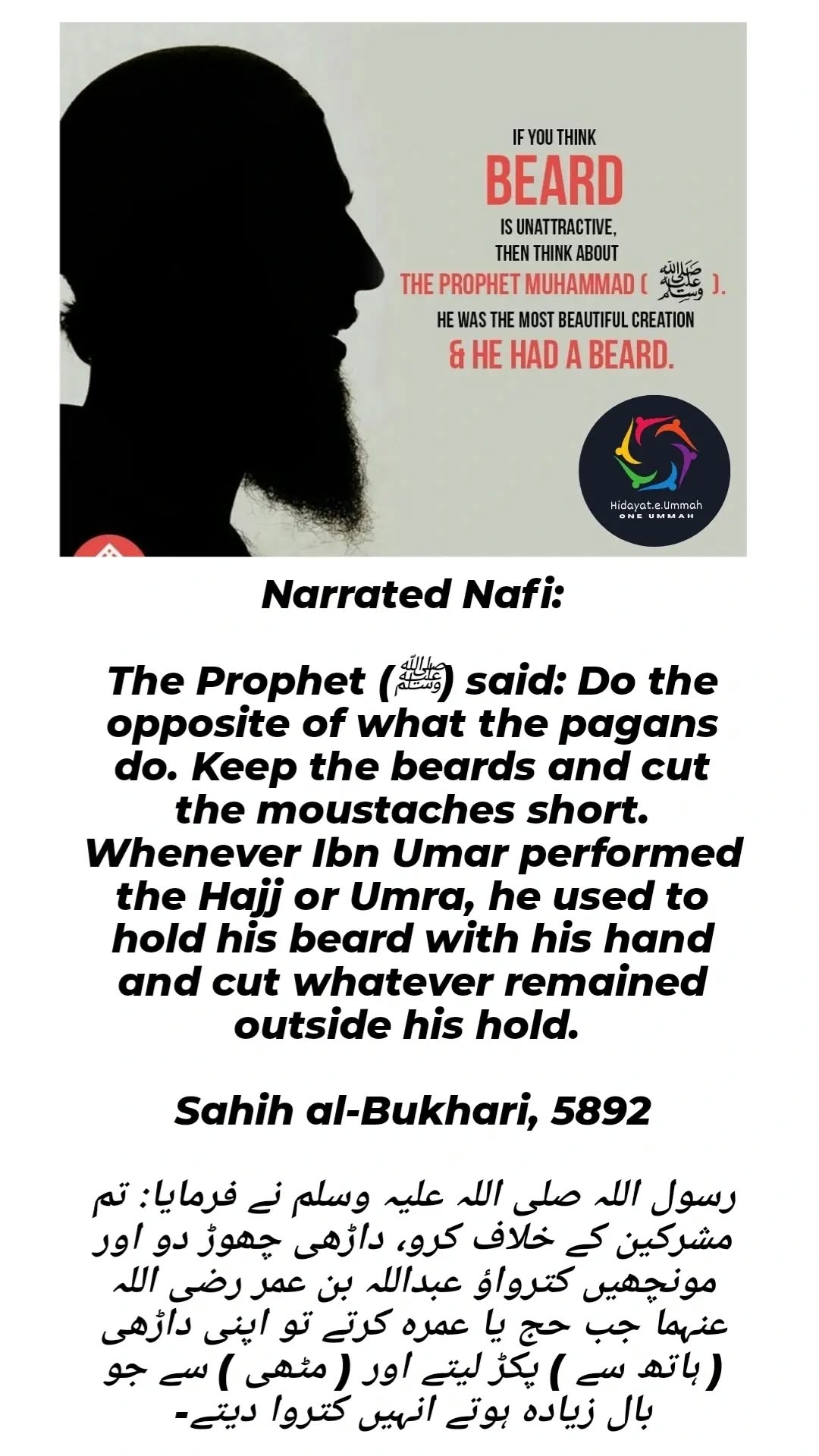
This hadith, narrated by Nafi, conveys a simple instruction from the Prophet Muhammad (peace be upon him) regarding personal grooming:
1. **The Importance of Differentiating from Pagans:**
- The Prophet (peace be upon him) instructed his followers to do the opposite of what the pagans or non-believers do in certain practices. In this case, the Prophet emphasized the importance of growing beards and trimming the moustaches, which was a way to distinguish Muslims from the pagans who typically shaved their beards and let their moustaches grow long.
- By following this practice, Muslims were encouraged to uphold their distinct identity and religious practices.
2. **How Ibn Umar Practiced This:**
- Ibn Umar, a companion of the Prophet, is mentioned in the hadith as someone who closely followed this guidance. When performing Hajj or Umrah (Islamic pilgrimages), he would hold his beard with his hand and trim any excess hair that extended beyond his grasp.
- This shows the importance of following the Prophet’s guidance in personal grooming and religious practices.
**Lesson:**
- This hadith teaches the value of maintaining personal grooming in accordance with the teachings of Islam, as well as the importance of distinguishing Muslims from others in practices that are part of their identity. It also highlights the meticulousness of the companions in following the Prophet's example.
Hadith 2
2 of 10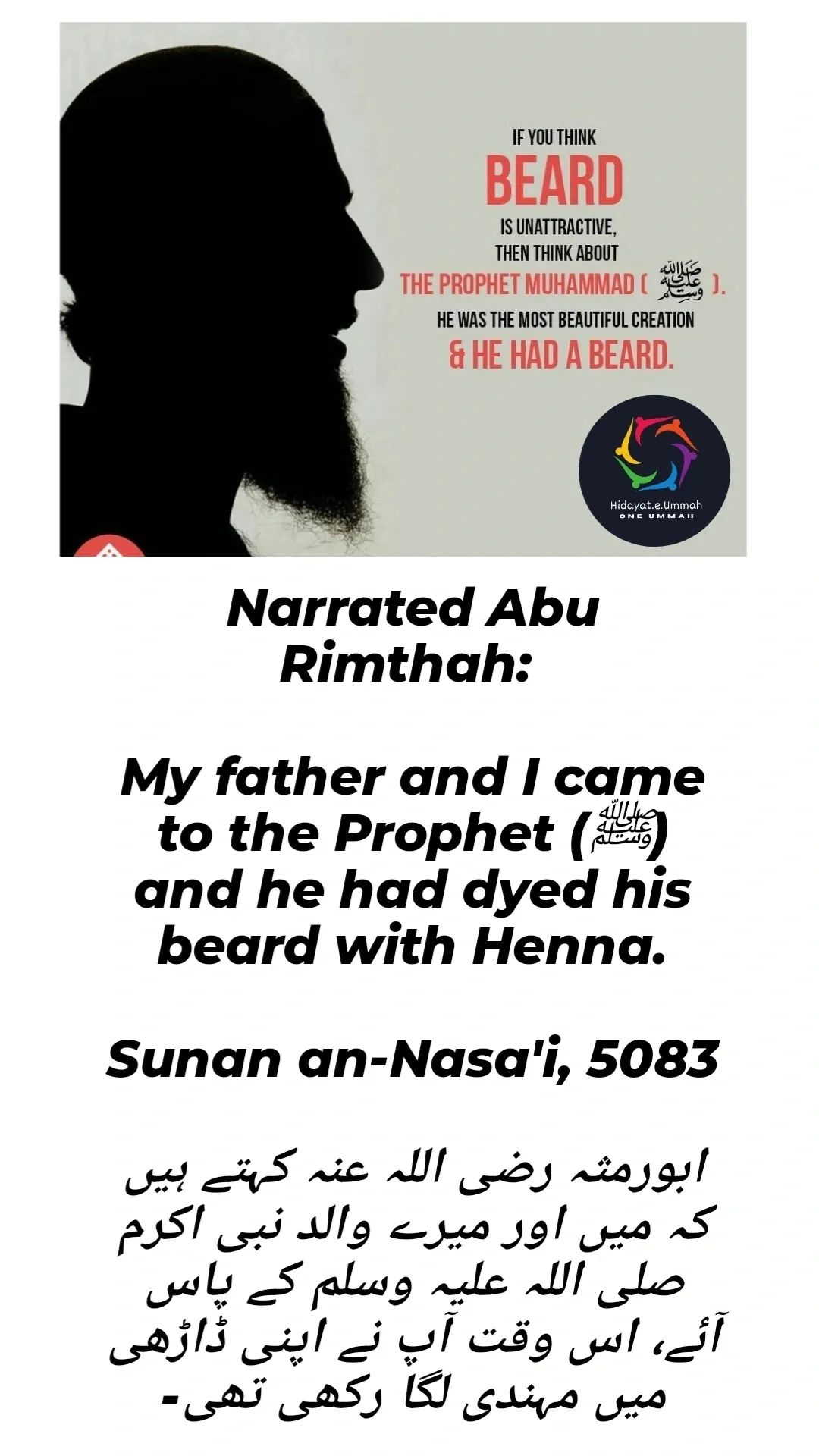
This hadith, narrated by Abu Rimthah, describes an occasion when the Prophet Muhammad (peace be upon him) was seen with his beard dyed using henna:
1. **The Prophet's Grooming Practice:**
- The Prophet Muhammad (peace be upon him) used to dye his beard with henna, which is a natural dye commonly used in Islamic culture. This practice was a way to maintain the appearance and keep the beard looking neat.
- Henna was a popular choice for dyeing because it was natural and had cultural significance, being associated with beauty, care, and cleanliness.
2. **The Significance of Grooming:**
- The fact that the Prophet (peace be upon him) dyed his beard with henna shows that personal grooming and maintaining a good appearance were important in Islam. This was a way to set a good example for others and to ensure one’s appearance is tidy and well-kept.
**Lesson:**
- This hadith highlights the importance of grooming and personal care in Islam. It also shows that the Prophet Muhammad (peace be upon him) followed practices that were culturally accepted and contributed to an individual’s neat and respectful appearance.
Hadith 3
3 of 10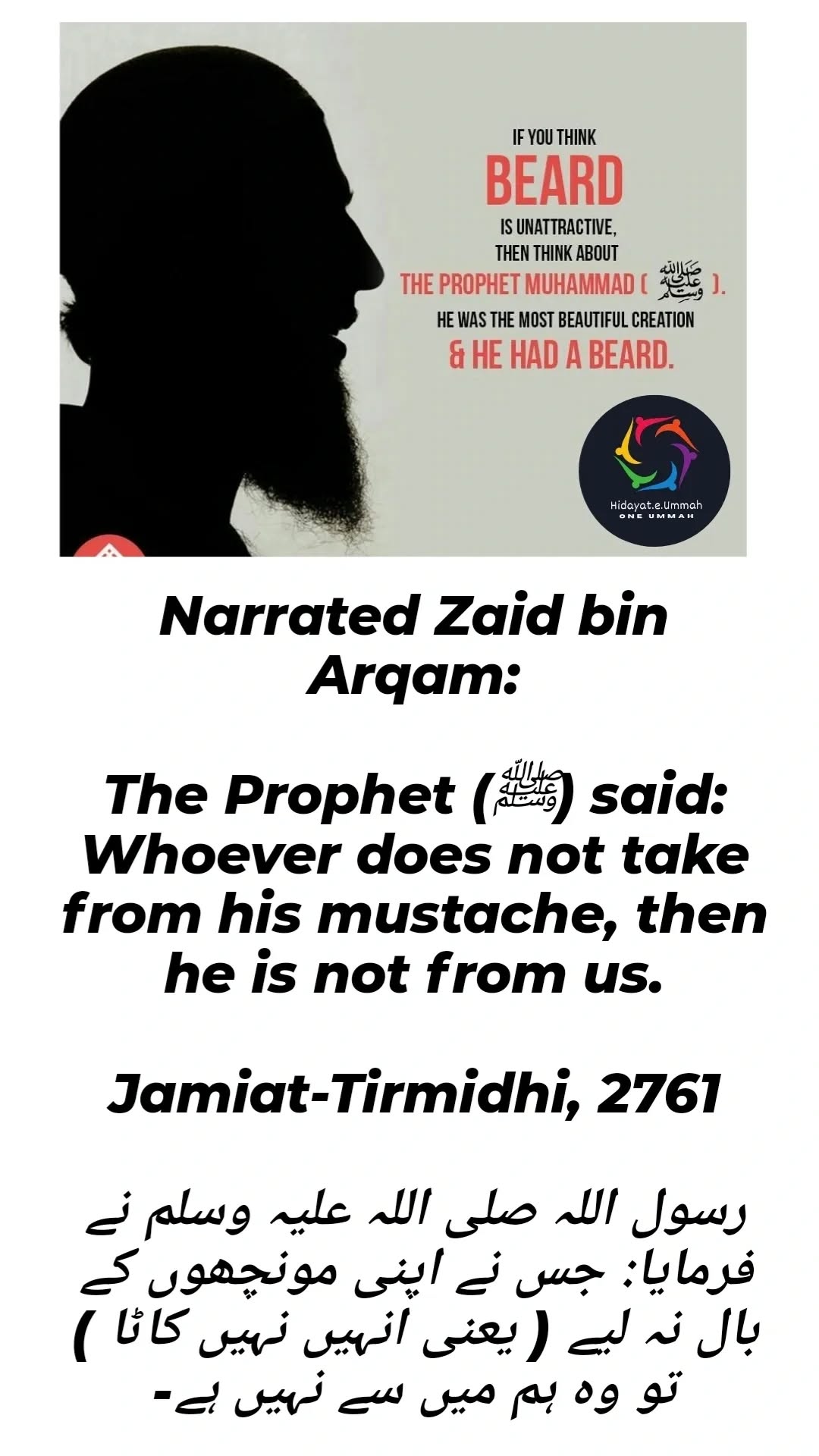
This hadith, narrated by Zaid bin Arqam, emphasizes the importance of trimming the mustache in Islam. The Prophet Muhammad (peace be upon him) stated that anyone who does not trim their mustache is not following his example.
**Lesson:**
- Trimming the mustache is a practice encouraged in Islam as part of personal grooming and following the Sunnah of the Prophet (peace be upon him). It reflects cleanliness and discipline.
Hadith 4
4 of 10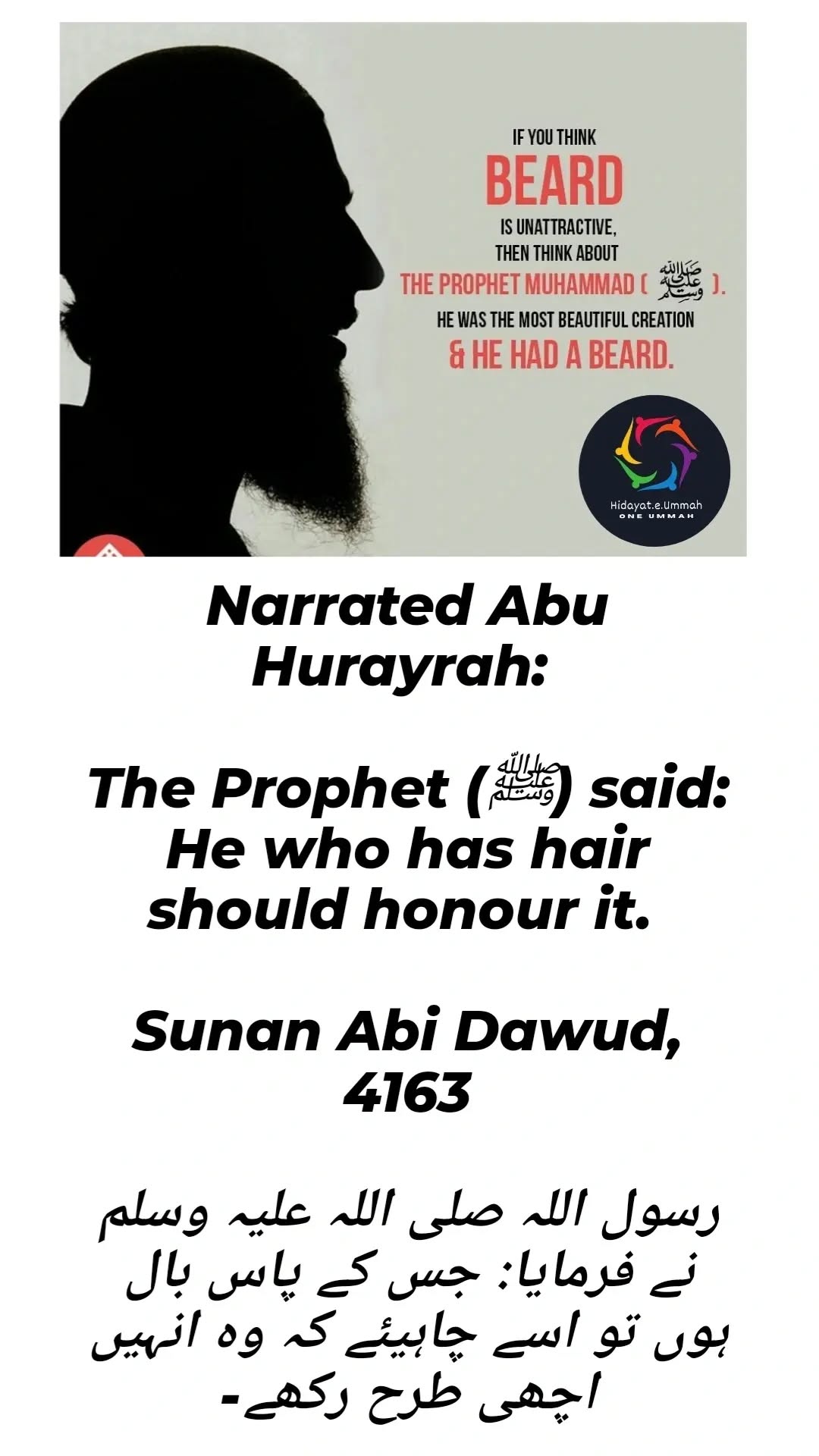
This hadith, narrated by Abu Hurayrah, encourages individuals to take care of their hair. The Prophet Muhammad (peace be upon him) advised that anyone with hair should treat it with respect and maintain it properly.
**Lesson:**
- Personal hygiene and grooming, including caring for one’s hair, are important in Islam as part of honoring oneself and maintaining cleanliness.
Hadith 5
5 of 10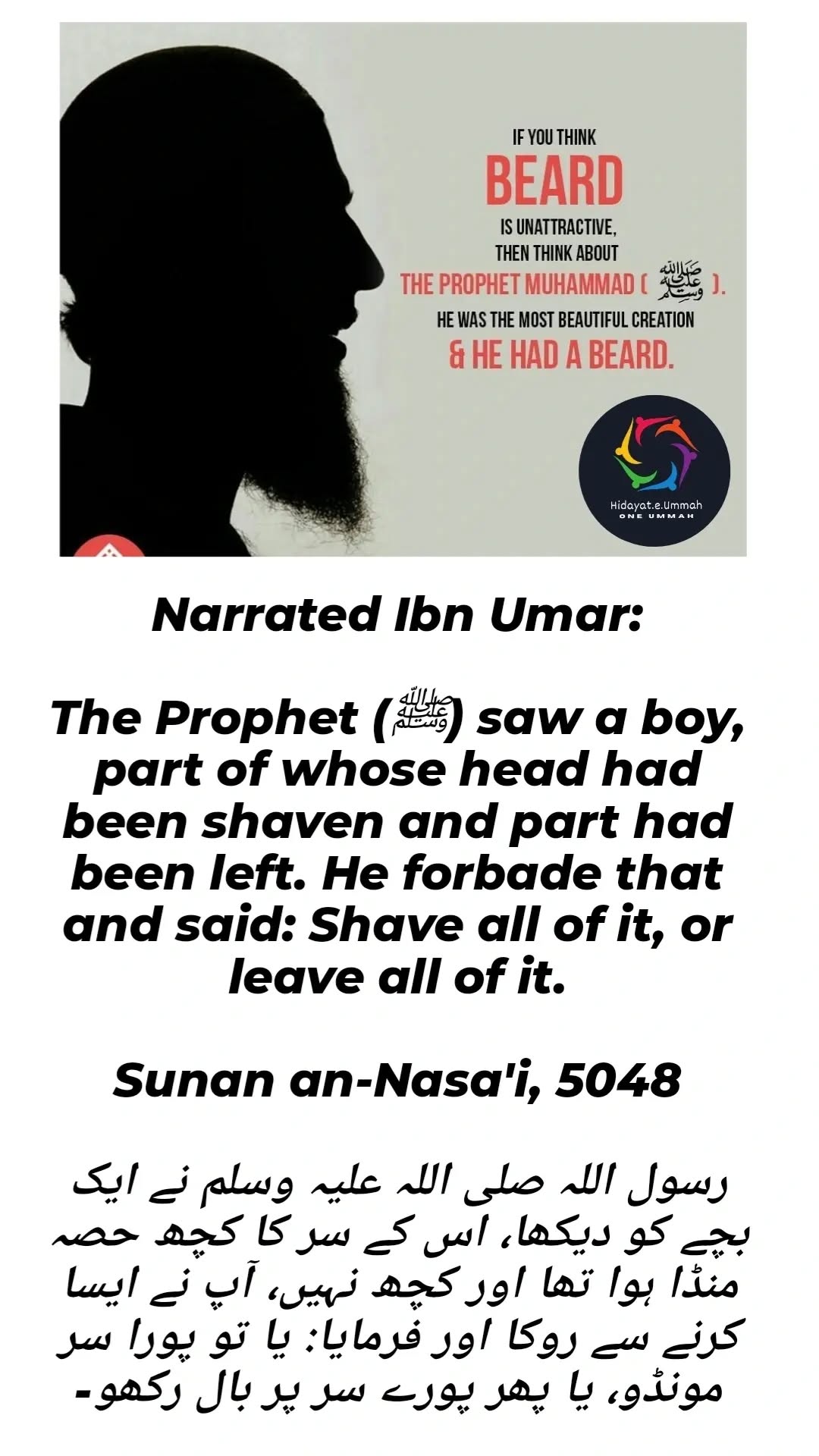
This hadith, narrated by Ibn Umar, relates an incident where the Prophet Muhammad (peace be upon him) saw a boy with part of his head shaved and part left unshaved. The Prophet forbade this practice and instructed that either the entire head should be shaved or none at all.
**Lesson:**
- This teaches us that we should avoid imitating harmful or mixed practices, and instead follow clear guidance in maintaining cleanliness and grooming.
Hadith 6
6 of 10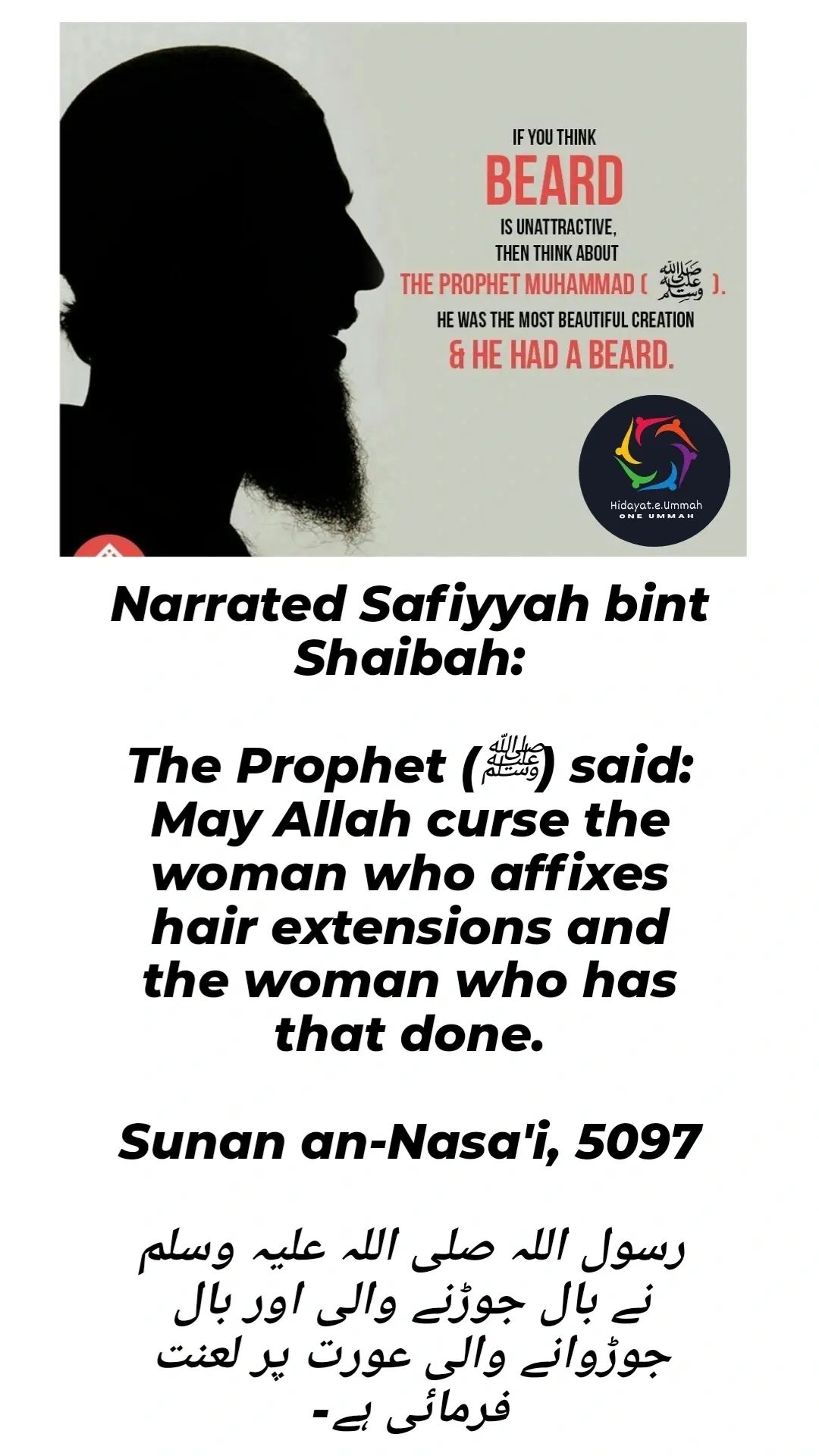
This hadith, narrated by Safiyyah bint Shaibah, mentions the Prophet Muhammad (peace be upon him) cursing women who use hair extensions and those who have them applied. The Prophet disapproved of such practices as they are seen as altering the natural appearance in a way that is not in line with modesty and authenticity.
**Lesson:**
- This teaches us to avoid artificial alterations to our bodies, encouraging authenticity and contentment with how Allah has created us.
Hadith 7
7 of 10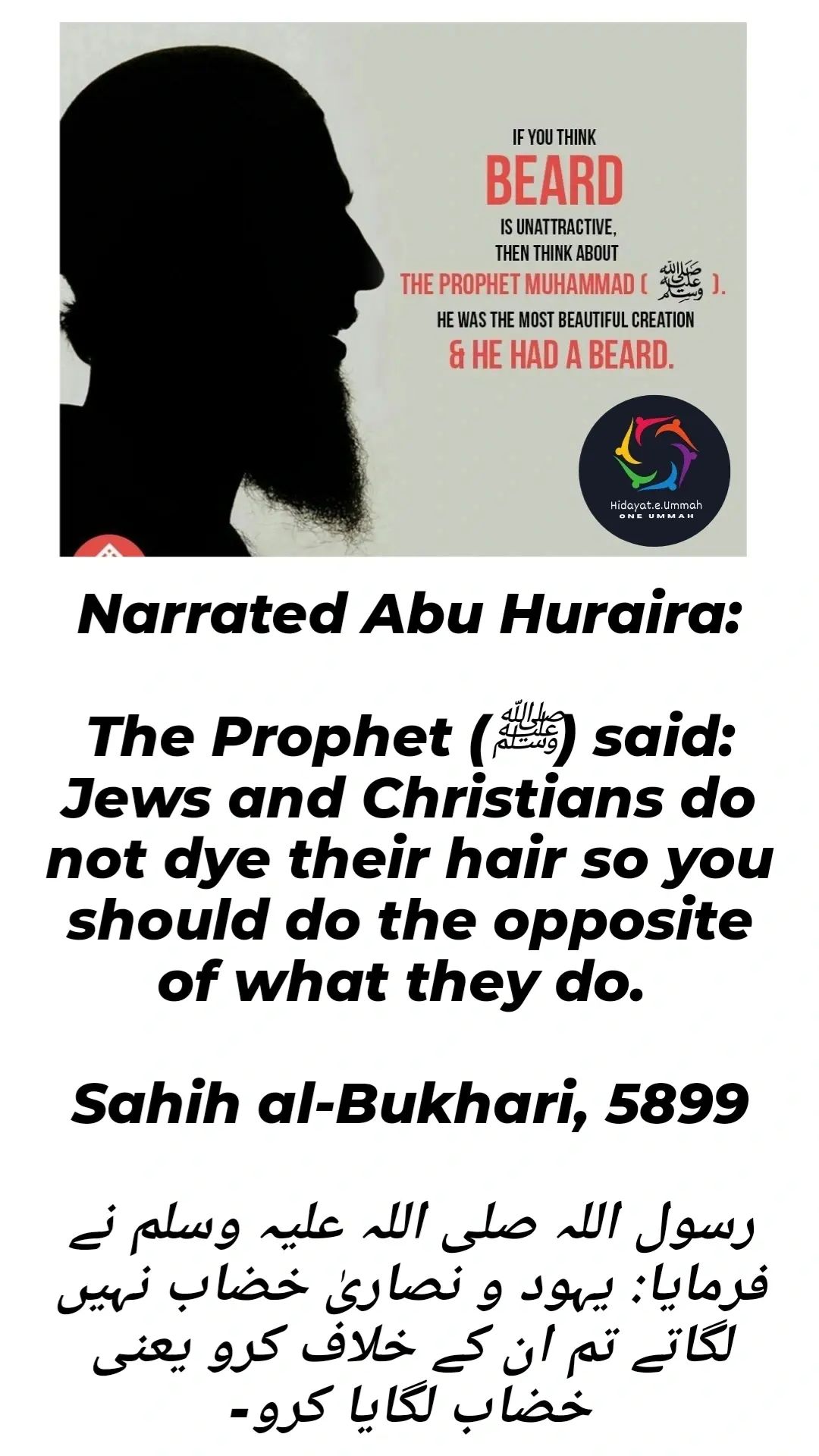
This hadith, narrated by Abu Huraira, advises Muslims to dye their hair, in contrast to Jews and Christians who, at that time, did not commonly do so. The Prophet Muhammad (peace be upon him) encouraged following a distinct practice from those who were not following Islam, in order to maintain a unique identity.
**Lesson:**
- This teaches the importance of distinguishing ourselves from non-Muslim practices when it comes to personal grooming and appearances, and it highlights the significance of following the Prophet's guidance in even small matters.
Hadith 8
8 of 10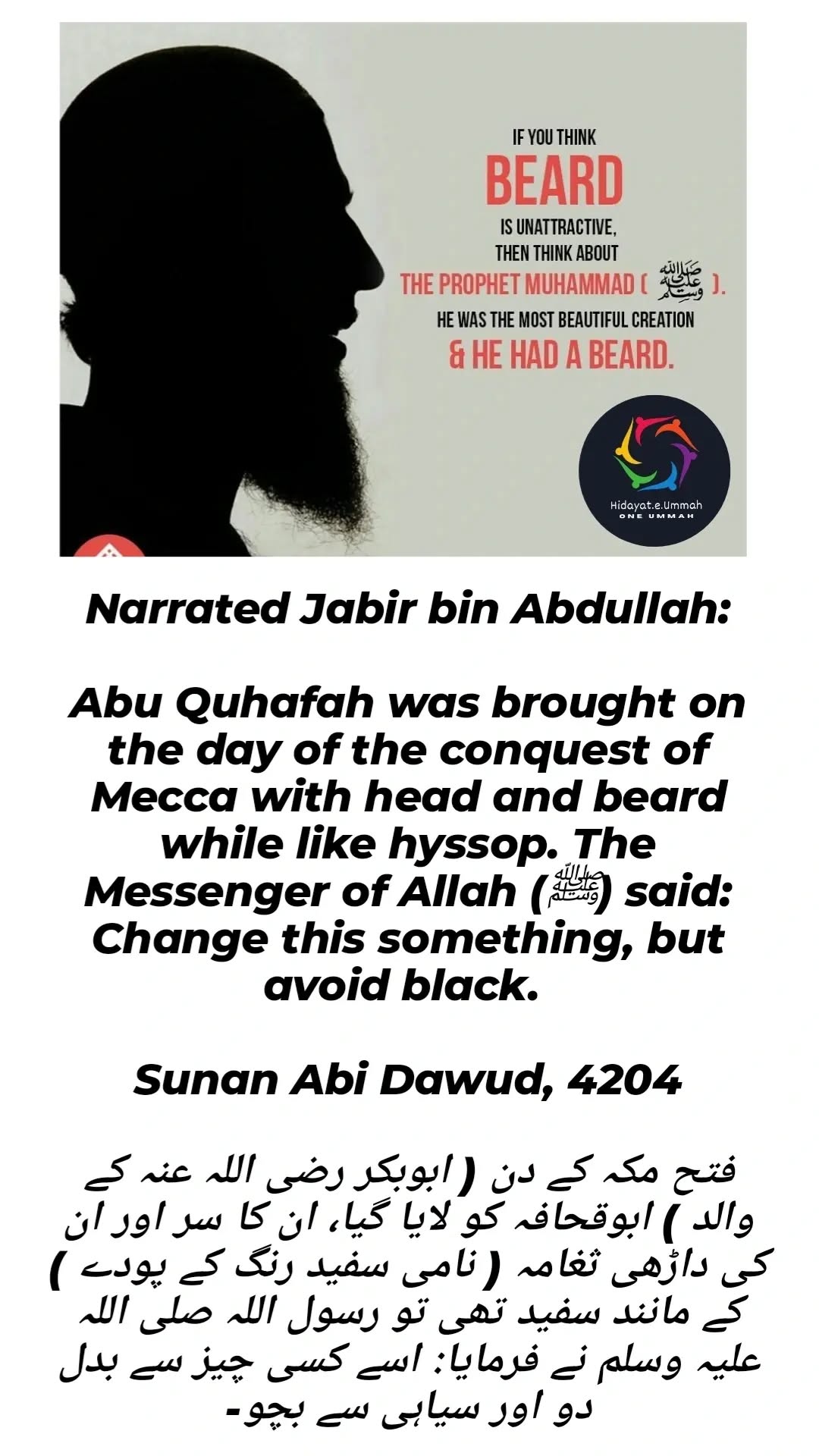
This hadith, narrated by Jabir bin Abdullah, describes an incident during the conquest of Mecca when Abu Quhafah, the father of Abu Bakr, was brought to the Prophet Muhammad (peace be upon him). His head and beard were completely grey. The Prophet advised that his hair should be changed, but he cautioned against dyeing it black. This shows the Prophet's guidance on maintaining a dignified appearance and how to deal with grey hair.
**Lesson:**
- It is encouraged to change the color of grey hair to a different color, but black should be avoided, possibly to prevent appearing deceptive or to maintain distinction between the youth and the elderly. The focus is on modesty and practicality in grooming.
Hadith 9
9 of 10
This hadith, narrated by Amr bin Shu'aib, emphasizes the value of grey hair in Islam. The Prophet Muhammad (peace be upon him) advised against plucking out grey hairs. According to the narration, a believer who grows grey hair will be rewarded by Allah. In one version of the hadith, Allah will record a good deed for each grey hair and forgive a sin for it. This highlights the spiritual significance of ageing and the rewards of embracing the natural process of growing older.
**Lesson:**
- Growing grey hair is a sign of wisdom and age, and in Islam, it is considered a source of reward. Rather than removing grey hairs, believers are encouraged to accept them as part of the process of ageing, with Allah granting blessings for this natural sign of maturity.
Hadith 10
10 of 10
This hadith, narrated by Ibn Abbas, warns about people who will dye their hair black in a way that resembles the dark color of pigeons' breasts, a practice that is frowned upon. The Prophet Muhammad (peace be upon him) mentions that such people will not even come close to the fragrance of Paradise. This metaphorical warning points to those who engage in actions that show an outward appearance of youth or beauty, yet do so in a way that goes against the natural order or is done for vanity.
**Lesson:**
- The hadith encourages believers to maintain sincerity in their actions and not focus on superficial appearances for the sake of vanity. The ultimate focus should be on righteousness and sincerity, as actions done for worldly reasons, like excessive concern for physical appearance, may lead to spiritual consequences.