Hajj & Umrah
Hadith Collection
14 Hadiths
Hadith 1
1 of 14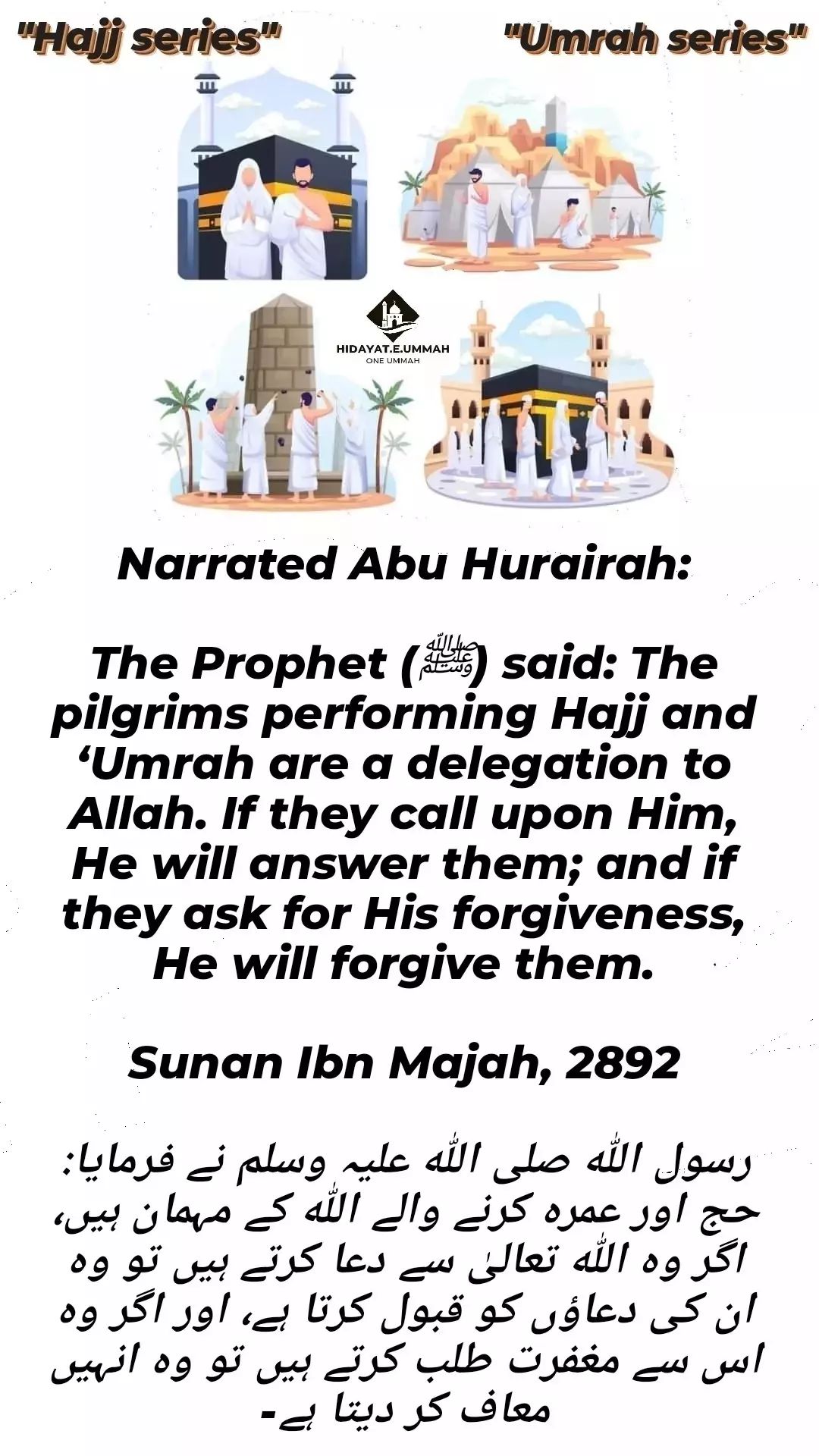
In this hadith, the Prophet Muhammad ( SAW Peace be upon him) describes those performing Hajj (the major pilgrimage) and 'Umrah (the minor pilgrimage) as a special delegation to Allah. He assures that when they call upon Allah, He responds to their prayers, and if they ask for forgiveness, He forgives them. This highlights the immense spiritual value and reward of performing Hajj and 'Umrah.
**Lesson:**
- Pilgrimage is a way to strengthen the connection with Allah.
- It is an opportunity to have prayers accepted and sins forgiven.
- Pilgrims are honored guests of Allah, which emphasizes the importance of sincerity and devotion during the pilgrimage.
Hadith 2
2 of 14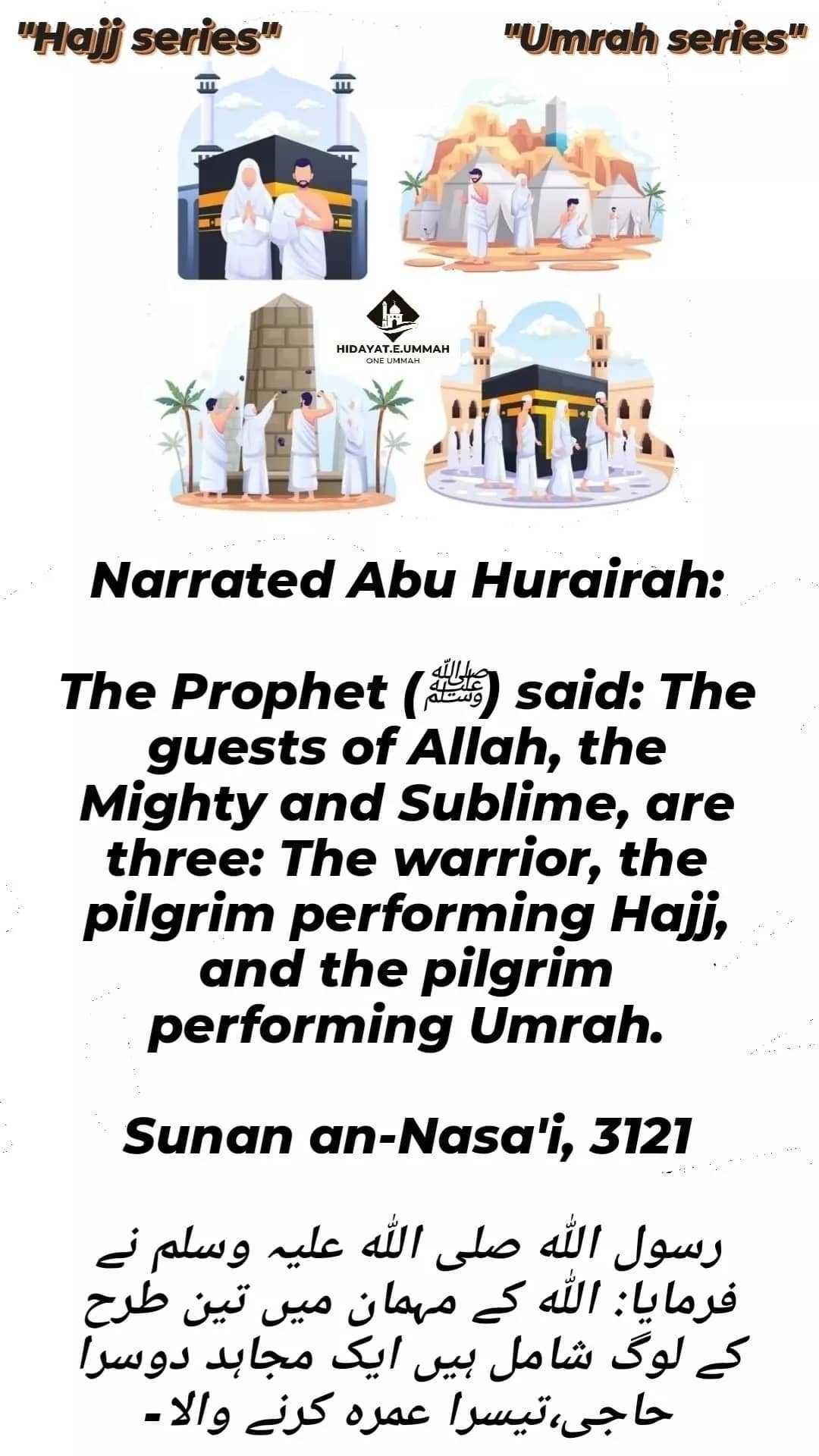
In this hadith, the Prophet Muhammad ( SAW Peace be upon him) explains that there are three categories of people who are considered the honored guests of Allah: those who strive in His cause (warriors), those performing Hajj (the major pilgrimage), and those performing 'Umrah (the minor pilgrimage). Being called 'guests of Allah' signifies their special status and the honor Allah bestows upon them.
**Lesson:**
- Performing acts of worship like Hajj, 'Umrah, and striving in Allah's cause are highly virtuous.
- Allah values and honors those who dedicate their efforts sincerely for His sake.
- This hadith encourages believers to prioritize these forms of worship to attain nearness to Allah.
Hadith 3
3 of 14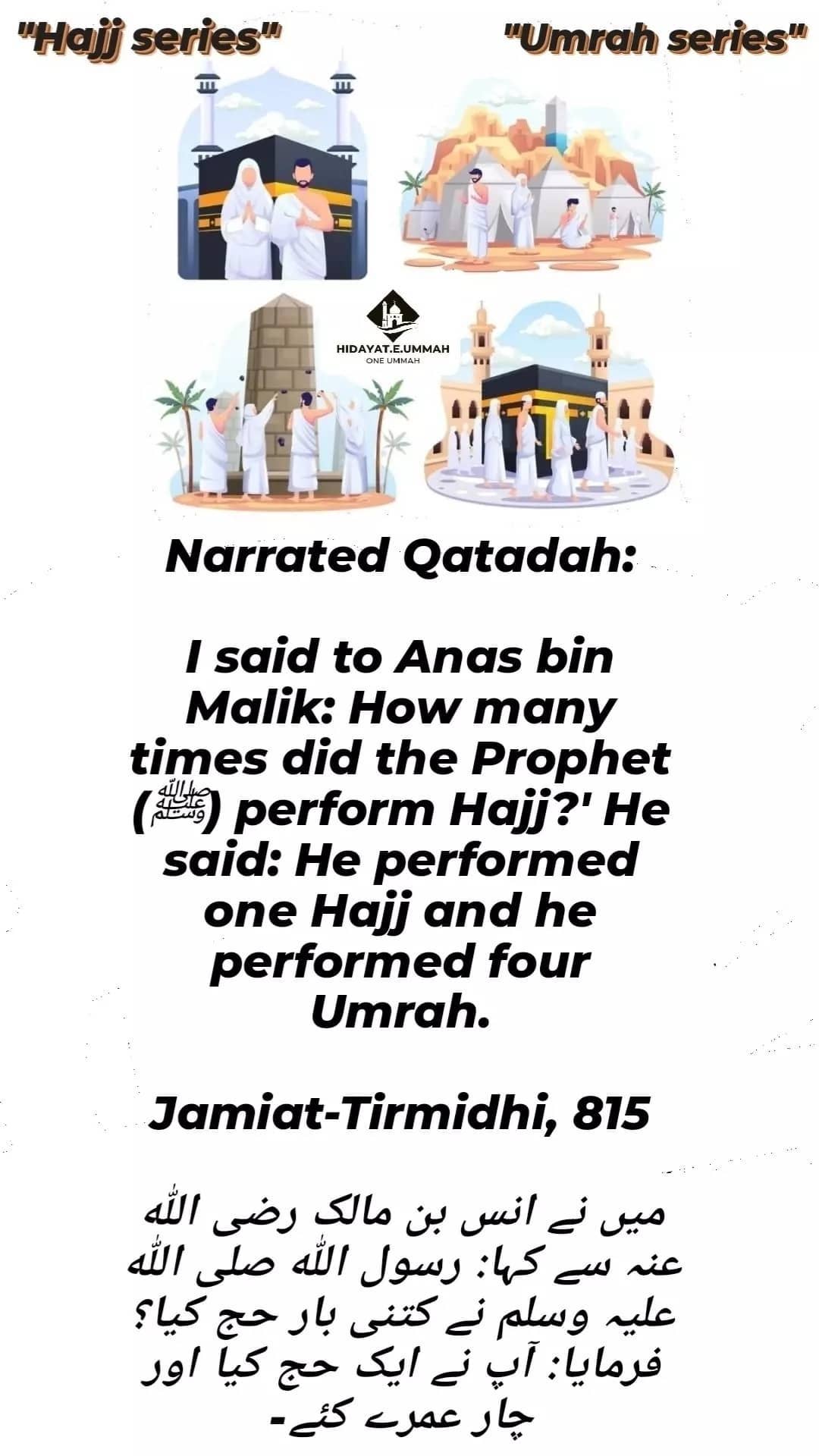
This hadith records a conversation between Qatadah and Anas bin Malik, a companion of the Prophet Muhammad ( SAW Peace be upon him). Anas explains that the Prophet performed one Hajj (the major pilgrimage) and four 'Umrah (the minor pilgrimages) during his lifetime.
**Lesson:**
- The Prophet's actions serve as a guide for Muslims in performing Hajj and 'Umrah.
- This hadith highlights the importance of these acts of worship and their role in strengthening one’s connection with Allah.
Hadith 4
4 of 14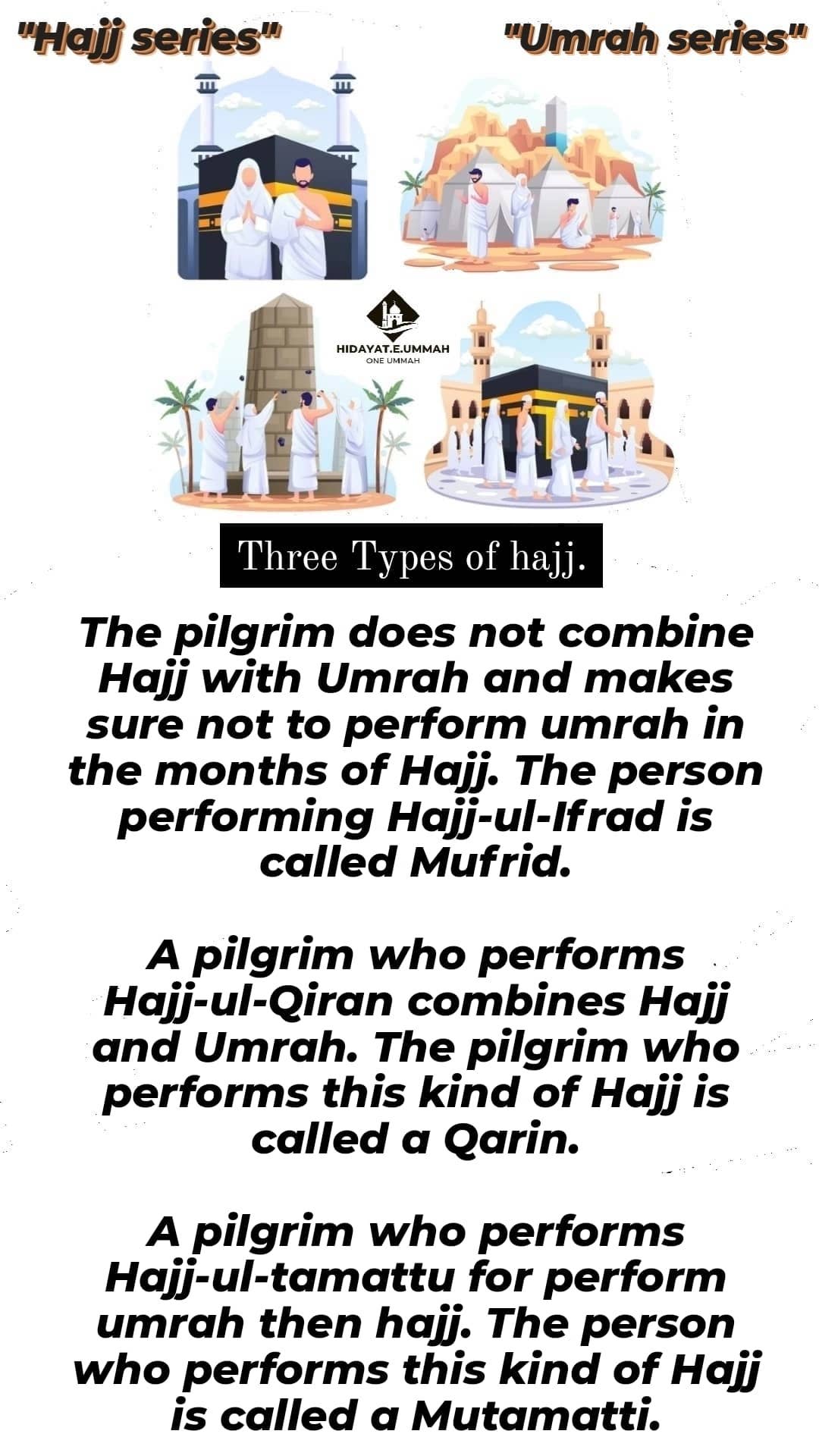
This explanation outlines the three types of Hajj that a Muslim can perform:
1. **Hajj-ul-Ifrad**: The pilgrim performs only Hajj without combining it with 'Umrah and avoids performing 'Umrah during the months of Hajj. Such a pilgrim is called a **Mufrid**.
2. **Hajj-ul-Qiran**: The pilgrim combines Hajj and 'Umrah into one journey, performing both acts together. Such a pilgrim is called a **Qarin**.
3. **Hajj-ul-Tamattu**: The pilgrim performs 'Umrah first and then Hajj during the same season. Such a pilgrim is called a **Mutamatti**.
**Lesson:**
These types of Hajj offer flexibility to Muslims based on their circumstances and intentions, and each has its own requirements and rewards.
Hadith 5
5 of 14
The strong man is not the one who wrestles others, but the one who controls himself when angry. – Prophet Muhammad (peace be upon him)
Hadith 6
6 of 14
This hadith narrates that the Prophet Muhammad ( SAW Peace be upon him) performed Hajj and 'Umrah together, which is known as **Hajj-ul-Qiran**. In this type of Hajj, the pilgrim combines both acts of worship into a single journey and performs them together. This demonstrates that it is permissible and a valid way to fulfill the obligation of Hajj and 'Umrah for those who choose this method.
Hadith 7
7 of 14
In this hadith, the Prophet Muhammad ( SAW Peace be upon him) encourages Muslims to perform Hajj and Umrah consecutively. He explains that doing so helps remove poverty and sins, just as a blacksmith's bellows removes impurities from iron. This emphasizes the spiritual and worldly benefits of these acts of worship, including purification of the soul and blessings in provision.
Hadith 8
8 of 14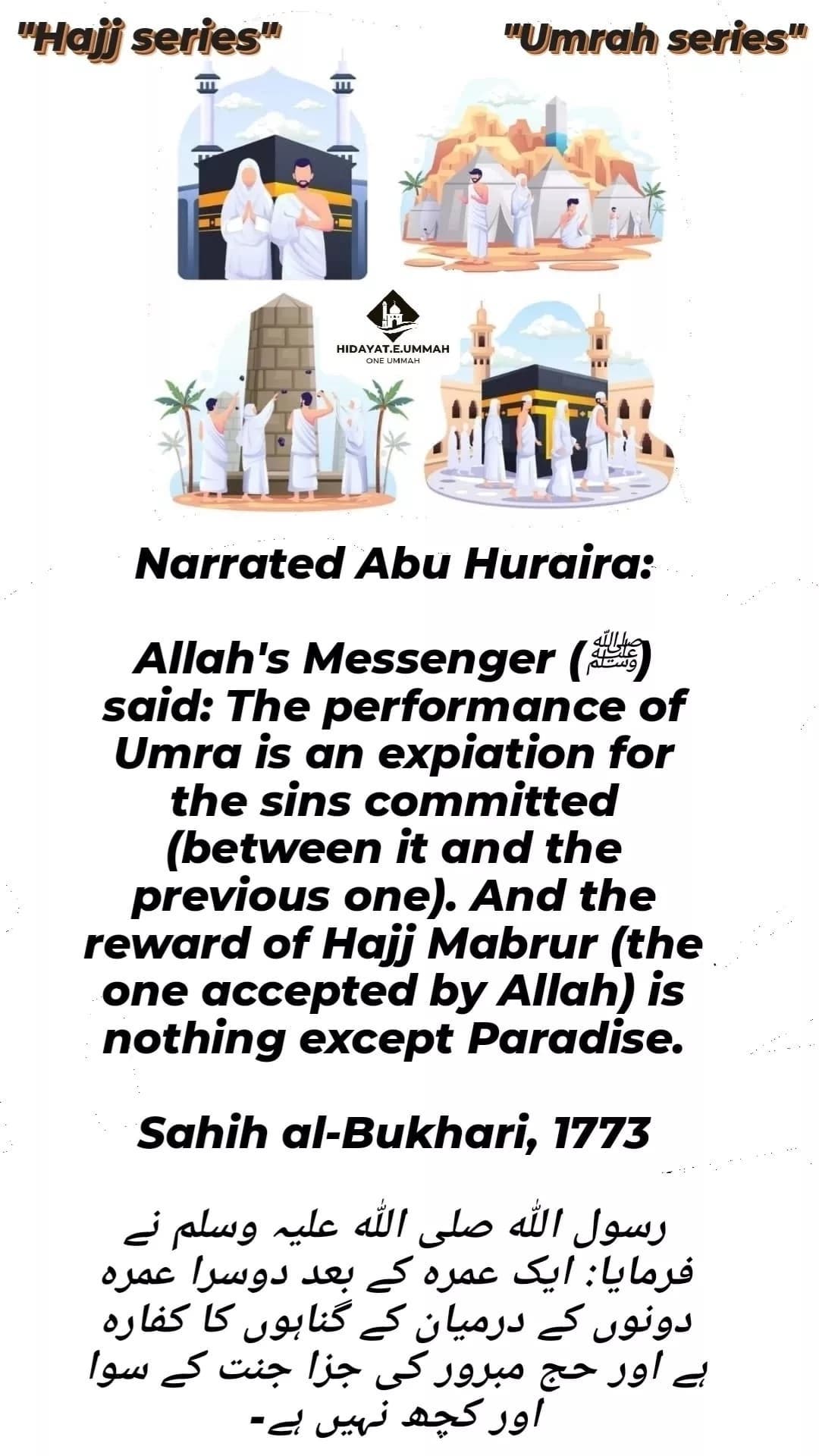
This hadith highlights the great virtues of performing Umrah and Hajj. The Prophet Muhammad ( SAW Peace be upon him) explains that performing Umrah serves as a means to erase sins committed between two Umrahs. Additionally, an accepted Hajj (Hajj Mabrur) is rewarded with nothing less than Paradise, emphasizing the spiritual significance and immense blessings of these acts of worship.
Hadith 9
9 of 14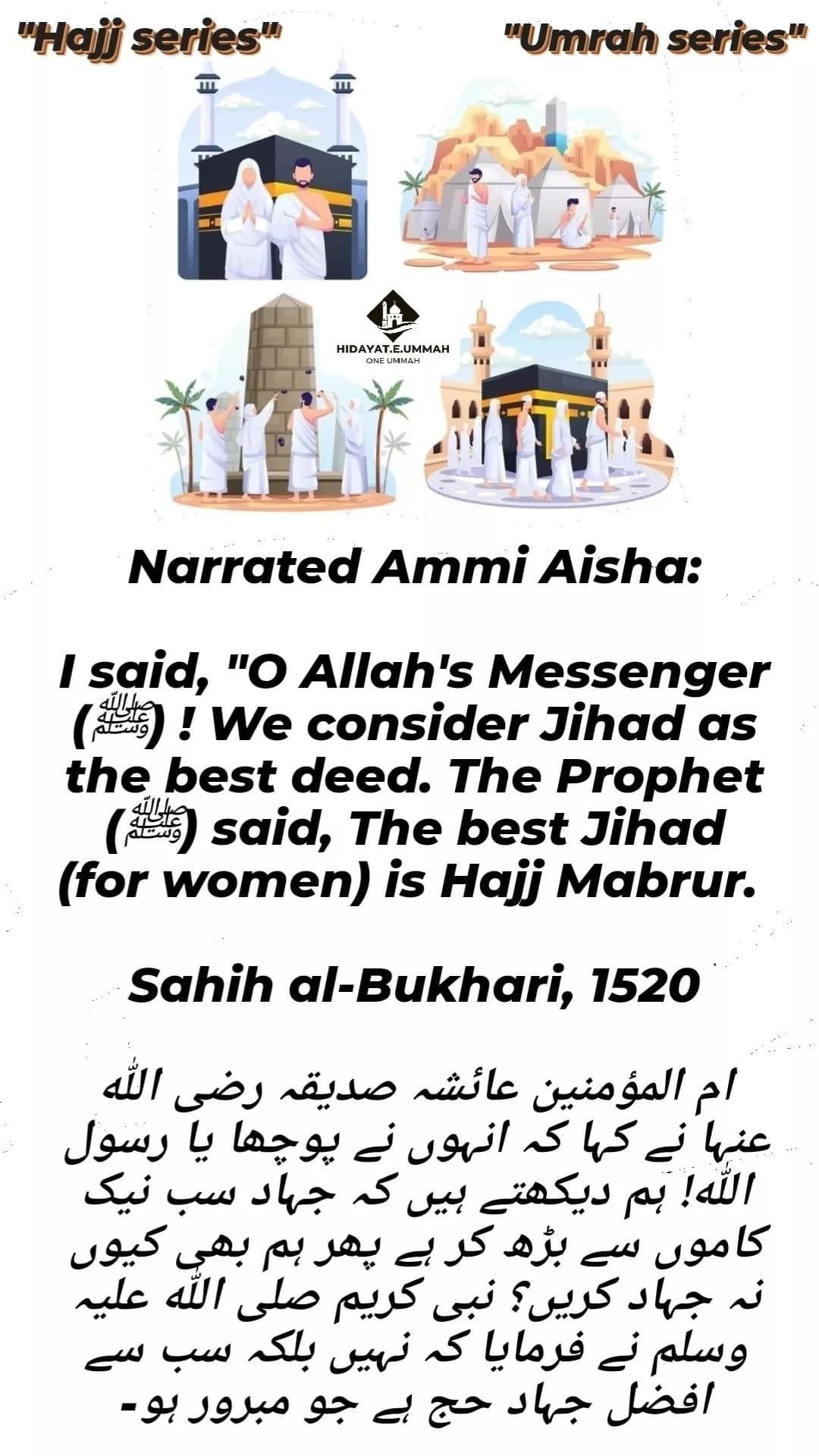
In this hadith, Aisha (RA) asked the Prophet Muhammad ( SAW Peace be upon him) about the best deed, comparing it to Jihad. The Prophet ( SAW Peace be upon him) responded by teaching that for women, the best form of Jihad is performing an accepted Hajj (Hajj Mabrur). This highlights that Hajj is a significant act of worship for women, equating its reward and importance to Jihad for men in Islam.
Hadith 10
10 of 14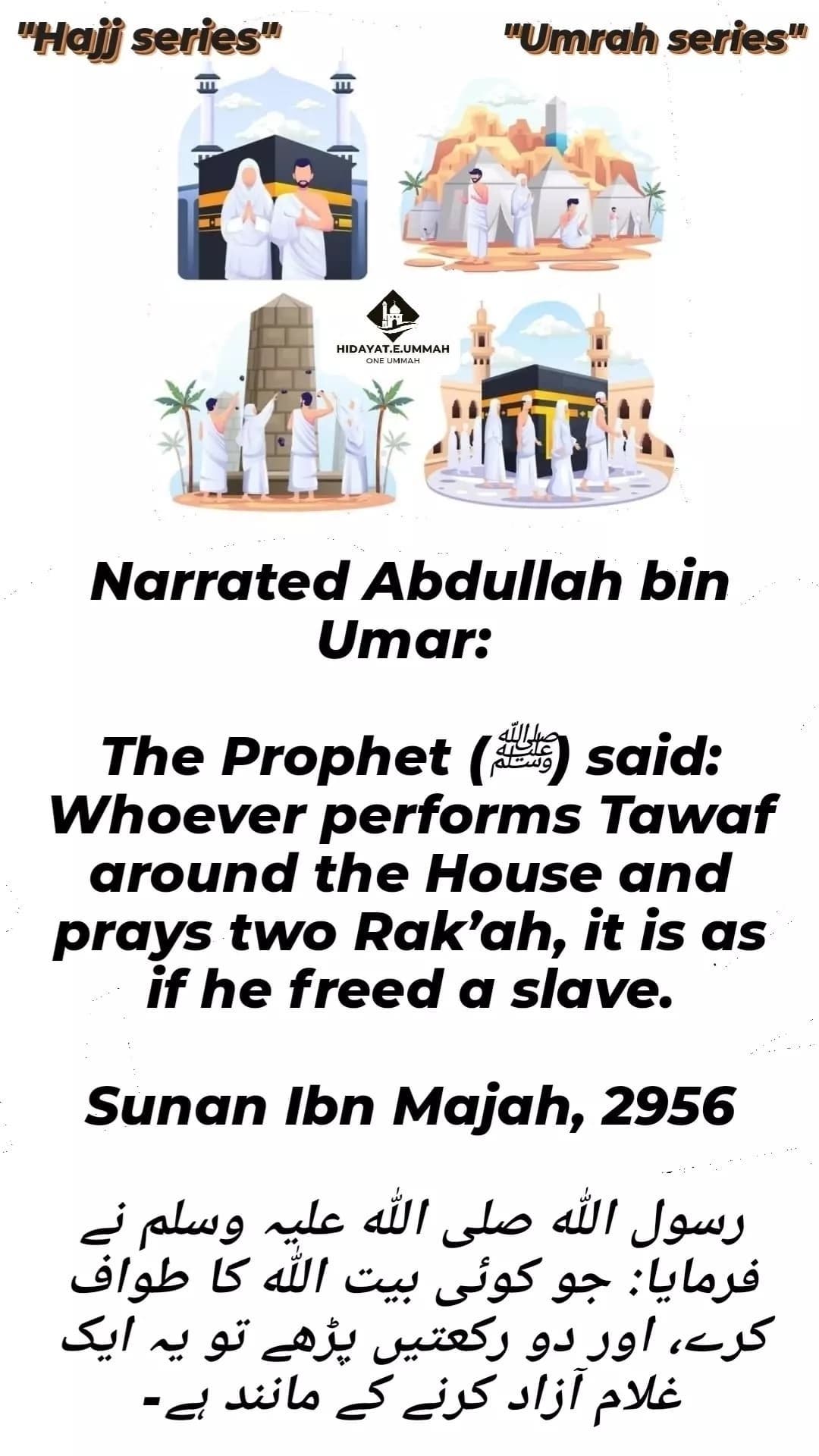
In this hadith, the Prophet Muhammad ( SAW Peace be upon him) emphasizes the immense reward of performing Tawaf (circumambulating the Ka'bah). He mentions that completing the Tawaf and offering two Rak'ah of prayer afterward carries a reward equivalent to freeing a slave. This highlights the significance of Tawaf as an act of worship and its great blessings in Islam.
Hadith 11
11 of 14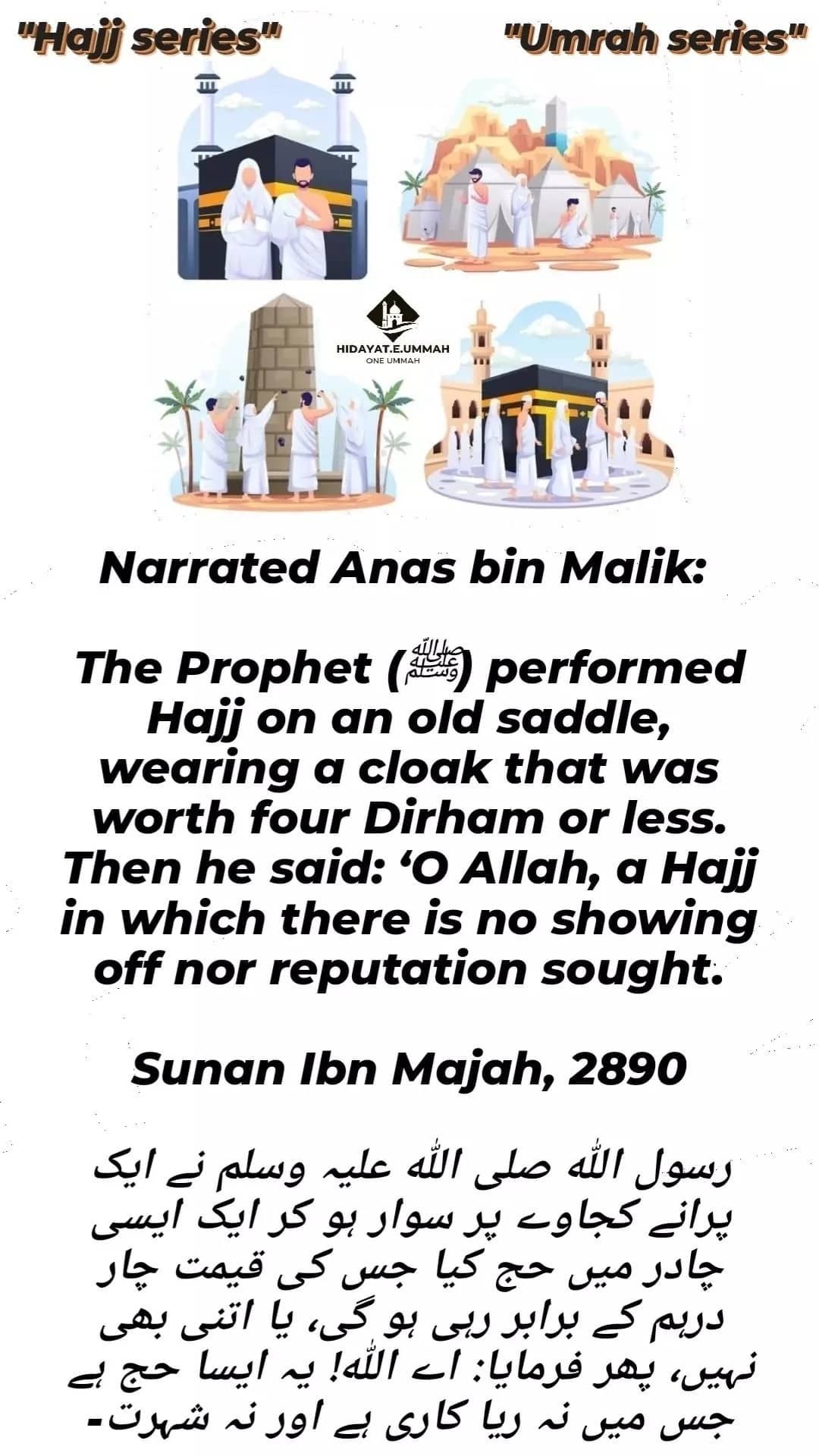
This hadith shows the humility of the Prophet Muhammad ( SAW Peace be upon him) during his pilgrimage. He performed Hajj using simple belongings—a worn saddle and a modest cloak. He made a dua (prayer) asking Allah for a Hajj free of showing off or seeking fame. This emphasizes that sincerity and humility are essential in worship and that Hajj should be performed solely for Allah’s pleasure.
Hadith 12
12 of 14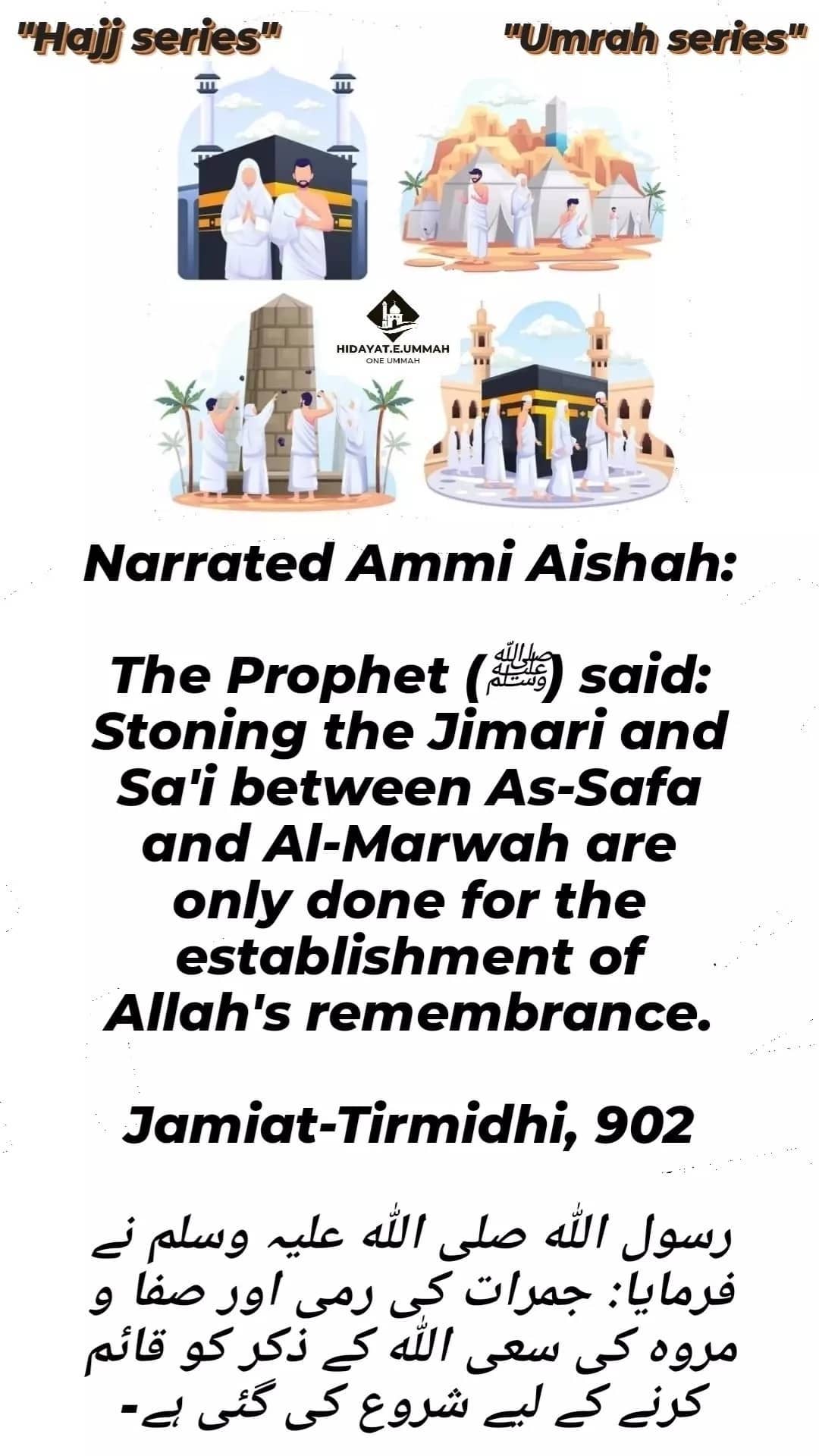
This hadith highlights that the rituals of stoning the Jamarat (during Hajj) and performing Sa'i (walking between Safa and Marwah) are acts of worship meant to remember and glorify Allah. These actions are not mere traditions but hold spiritual significance, reminding believers to stay focused on their devotion to Allah.
Hadith 13
13 of 14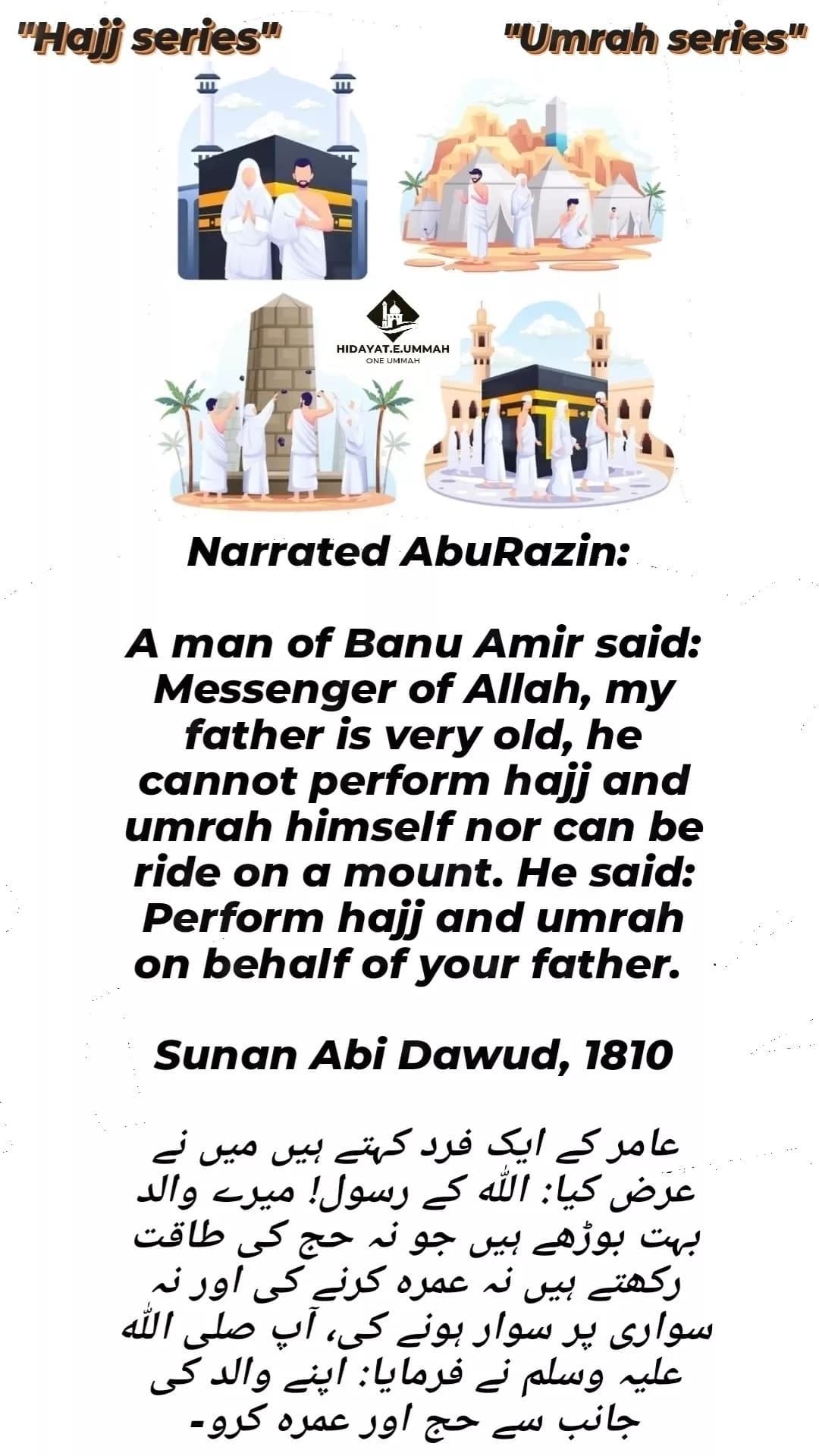
This hadith teaches that if someone is unable to perform Hajj or Umrah due to old age or physical limitations, their family members can perform these acts of worship on their behalf. It emphasizes kindness and fulfilling religious obligations for loved ones who cannot do so themselves.
Hadith 14
14 of 14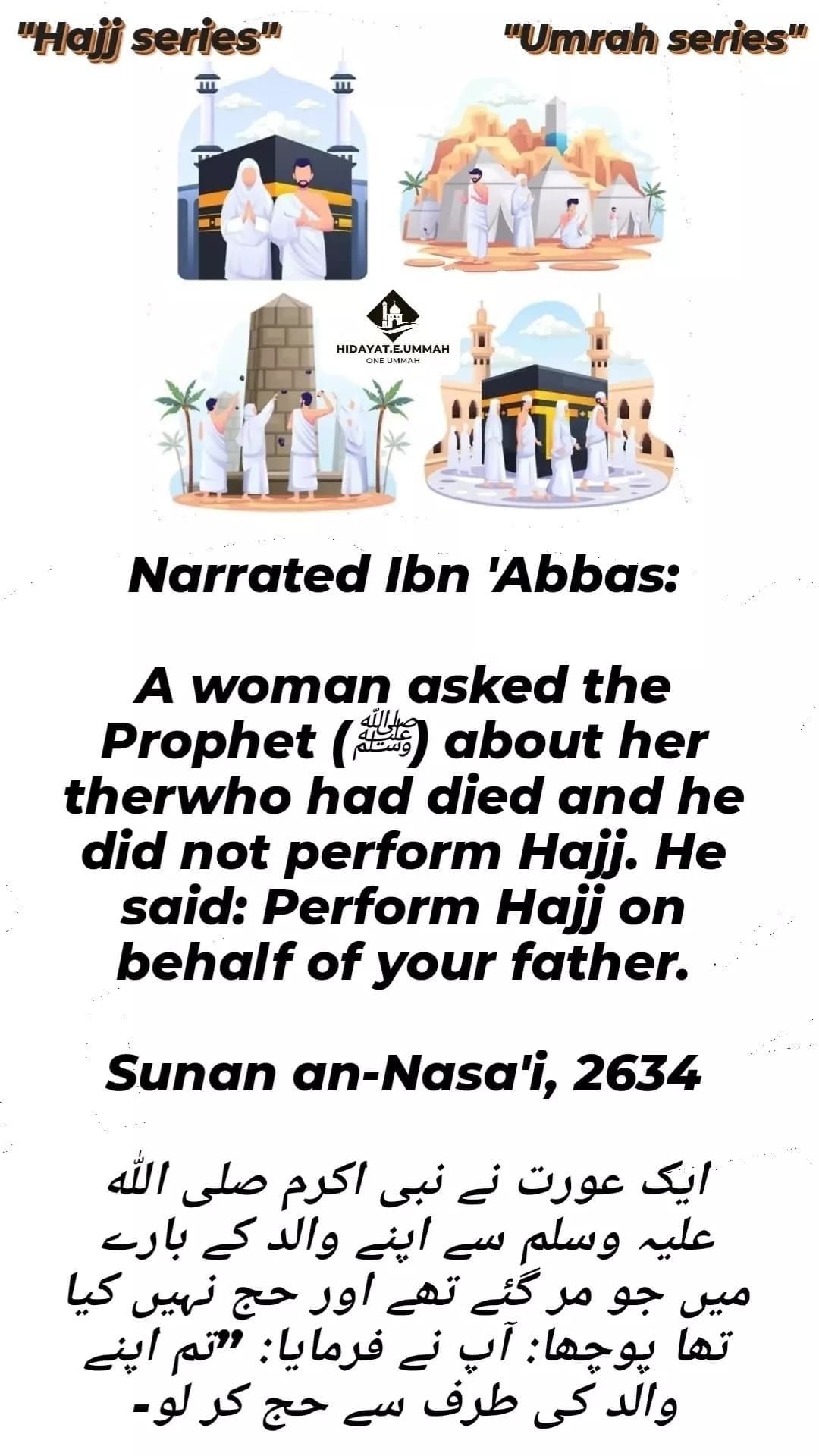
This hadith highlights that if a person passes away without performing Hajj, their family members can fulfill this obligation on their behalf. It shows the importance of completing religious duties for those who were unable to do so during their lifetime.