
Jihad
Hadith Collection
16 Hadiths
Hadith 1
1 of 16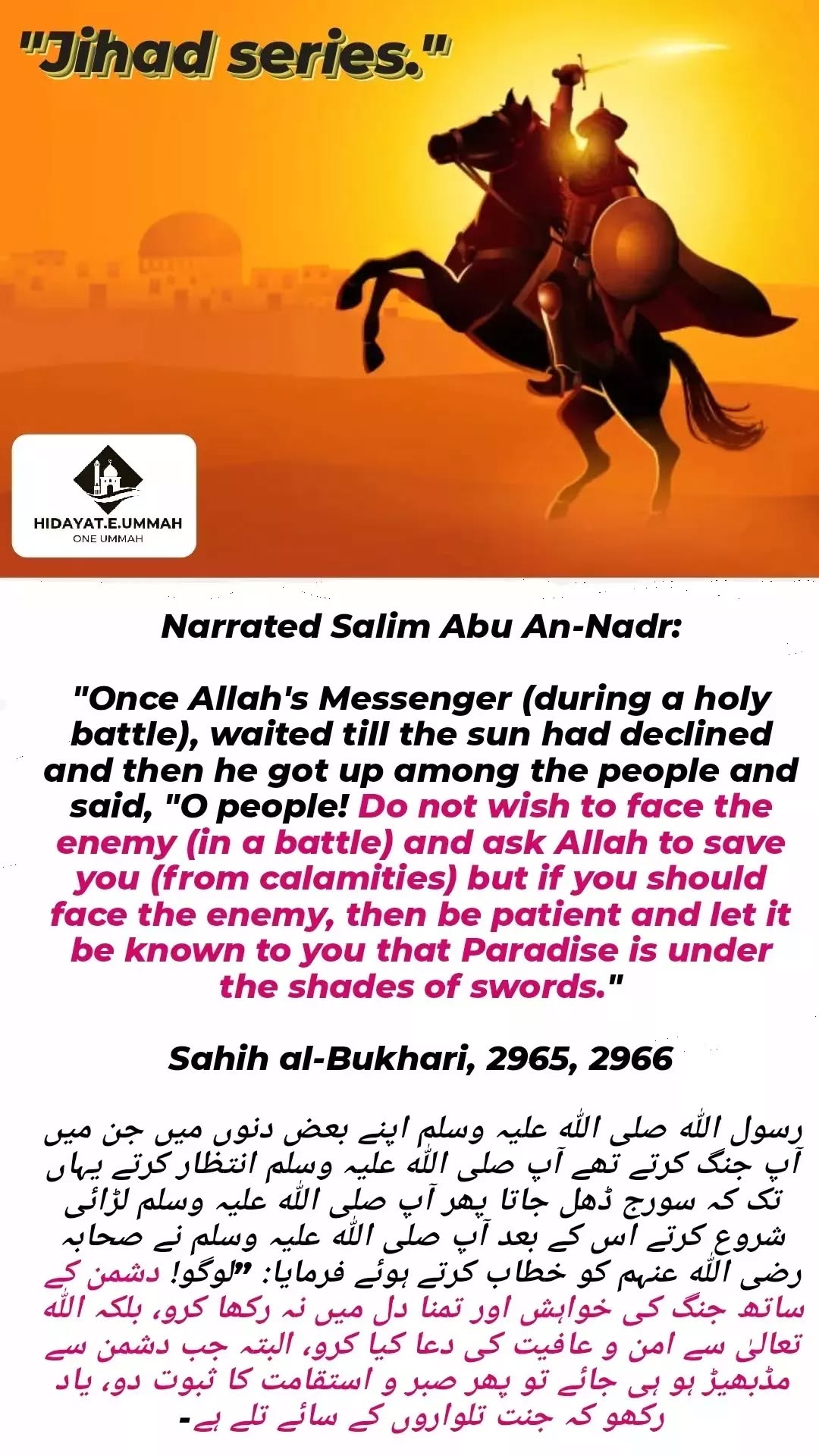
1. This hadith is narrated by Salim Abu An-Nadr, where the Prophet Muhammad (peace be upon him) provides guidance to his companions during a holy battle.
2. The Prophet advises the people not to wish for confrontation with the enemy, as war and battles bring hardships and should not be sought willingly.
3. He encourages them to ask Allah for protection and safety from calamities, showing the importance of seeking peace and avoiding unnecessary conflict.
4. However, if they are faced with the enemy and cannot avoid the battle, he urges them to remain patient and steadfast in their struggle.
5. The Prophet reminds them of the ultimate reward for their efforts, saying that Paradise is under the shades of swords, meaning that those who fight courageously in a righteous cause may attain great rewards in the Hereafter.
6. This hadith teaches Muslims to value patience, courage, and reliance on Allah, while also emphasizing the preference for peace over conflict whenever possible.
Hadith 2
2 of 16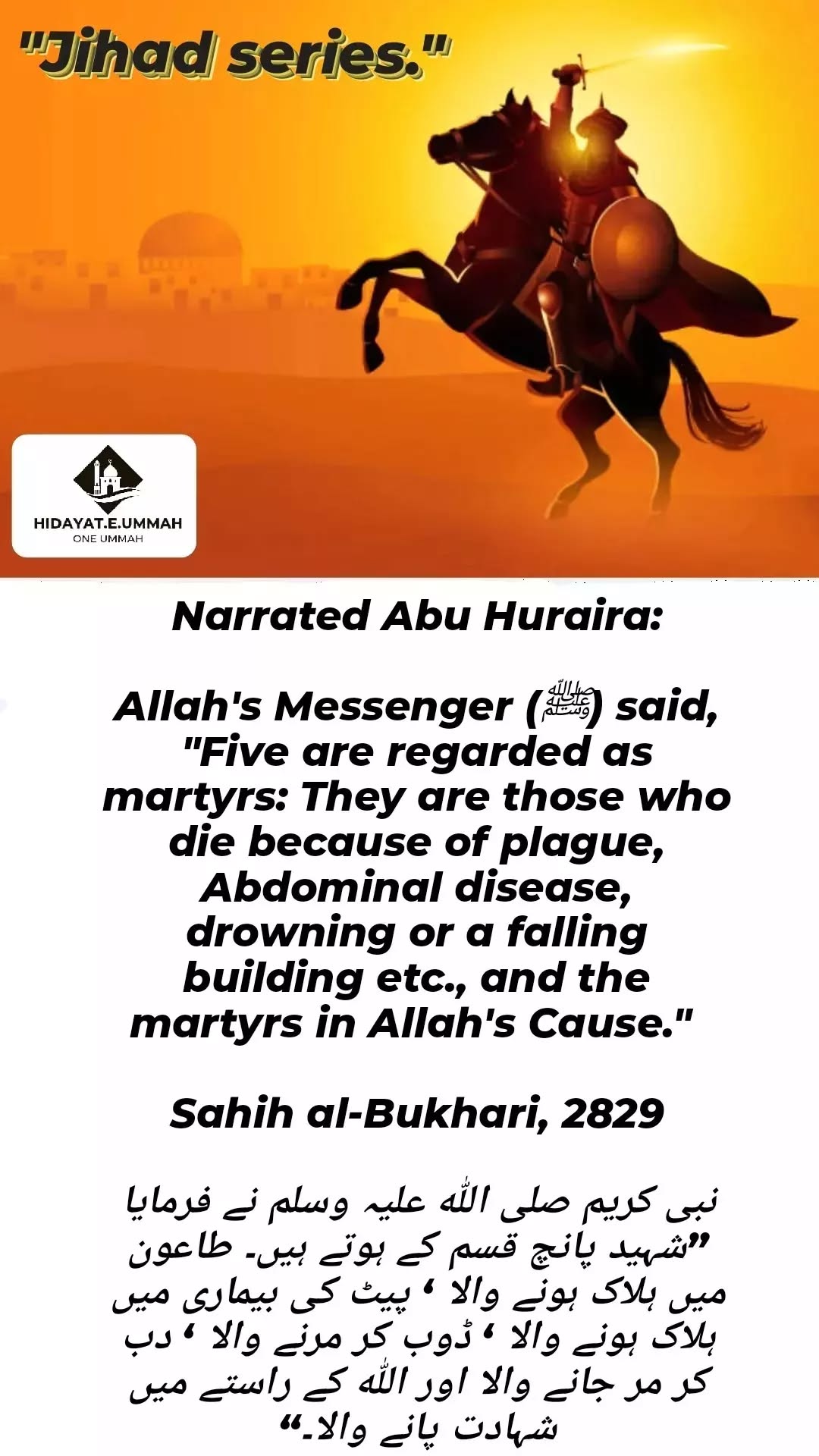
1. This hadith is narrated by Abu Huraira, where the Prophet Muhammad (peace be upon him) defines five categories of people who are regarded as martyrs in Islam.
2. The first category includes those who die due to a plague, showing that enduring such an illness with patience and faith grants the reward of martyrdom.
3. The second category is those who die because of an abdominal disease, recognizing the suffering and patience endured during such illnesses.
4. The third category includes those who drown, highlighting the hardships faced in such a tragic and sudden death.
5. The fourth category is those who die due to a falling building or similar accidents, acknowledging the unexpected and devastating nature of such deaths.
6. The fifth category is those who are martyred in Allah’s cause, meaning those who sacrifice their lives in a righteous struggle for the sake of Allah.
7. This hadith provides comfort and hope, showing that Allah rewards individuals for their trials and sacrifices, and reminds Muslims to face difficulties with patience and faith.
Hadith 3
3 of 16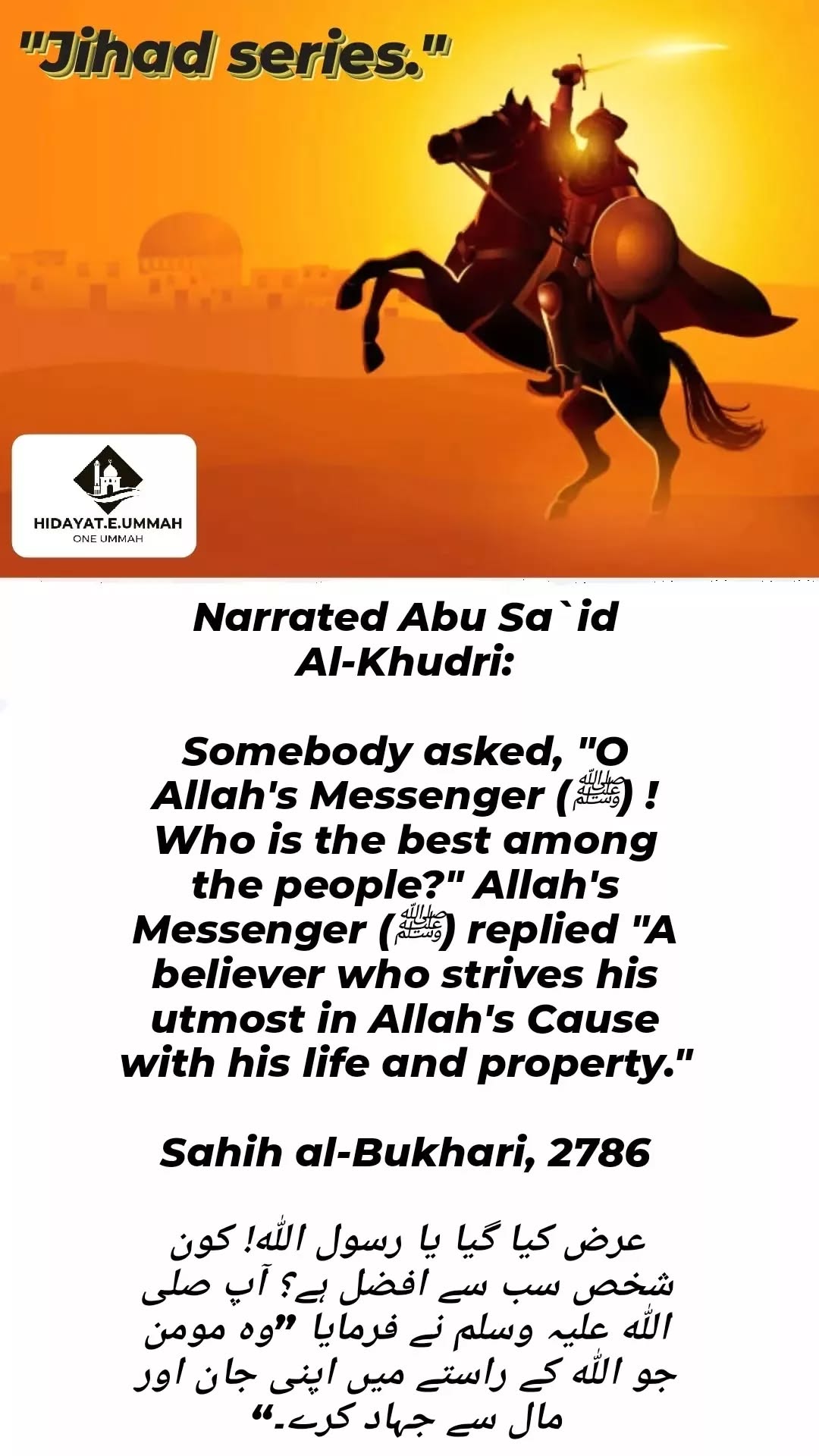
1. This hadith is narrated by Abu Sa'id Al-Khudri, where someone asked the Prophet Muhammad (peace be upon him) about the best among people.
2. The Prophet replied that the best person is a believer who dedicates himself fully to striving in Allah's cause.
3. Striving in Allah's cause refers to using one's efforts, time, and resources to serve and uphold the principles of Islam and righteousness.
4. The believer strives with both his life and property, meaning he is willing to sacrifice his time, energy, and wealth for the sake of Allah.
5. This hadith emphasizes the value of active commitment, selflessness, and dedication to a greater purpose in life.
6. It serves as motivation for Muslims to use their abilities and blessings to contribute positively to their faith and society.
Hadith 4
4 of 16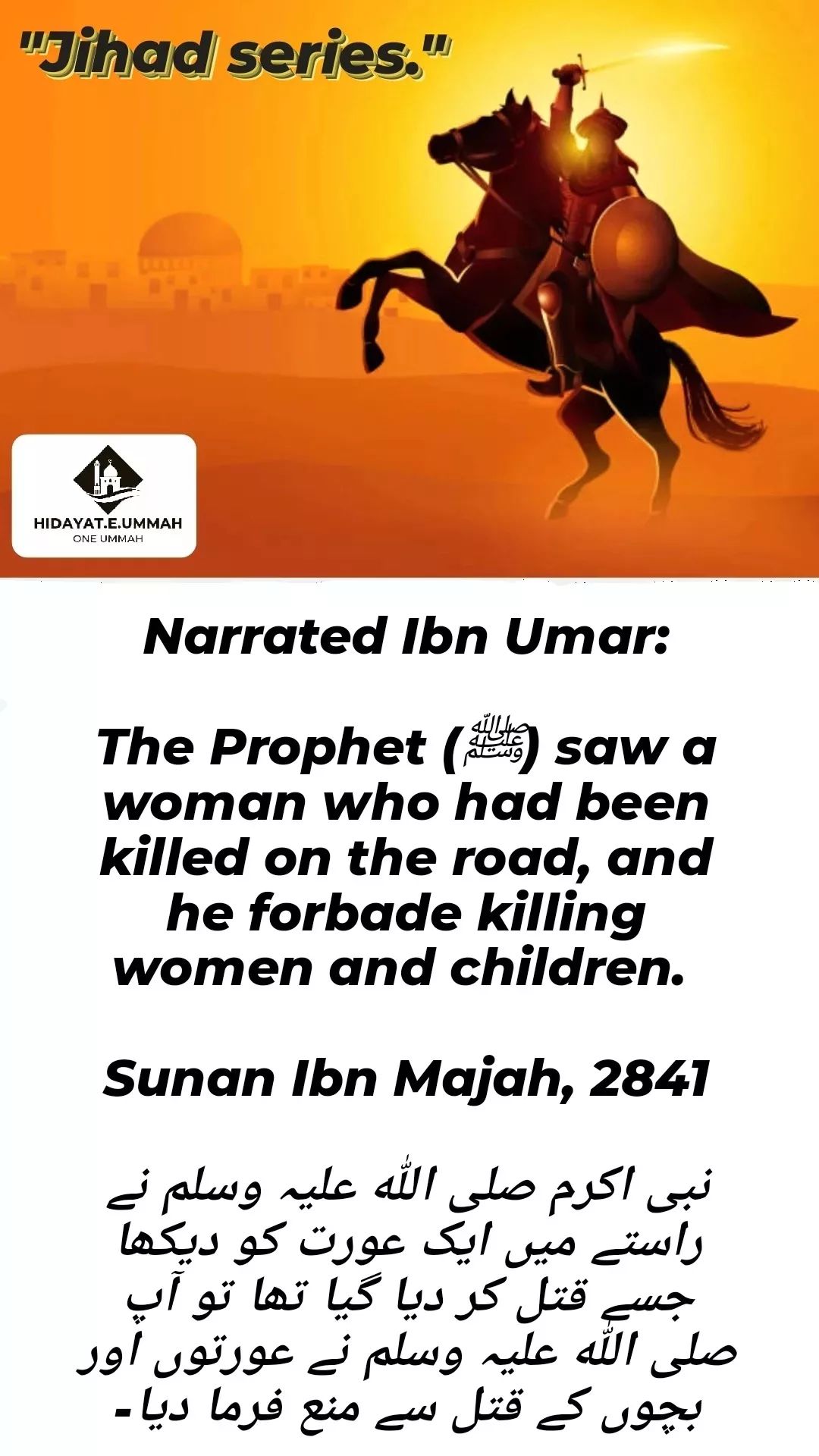
1. This hadith is narrated by Ibn Umar, where the Prophet Muhammad (peace be upon him) came across the body of a woman who had been killed on a road.
2. Upon seeing this, the Prophet forbade the killing of women and children during times of war or conflict.
3. This prohibition reflects the mercy and justice of Islam, emphasizing the protection of innocent lives even in times of warfare.
4. It highlights that Islam promotes ethical conduct and limits in warfare, ensuring that non-combatants, including women and children, are safeguarded.
5. The hadith serves as a reminder of the importance of compassion, humanity, and adherence to moral principles in all circumstances.
6. It teaches Muslims to uphold justice and avoid harming those who are not directly involved in conflict.
Hadith 5
5 of 16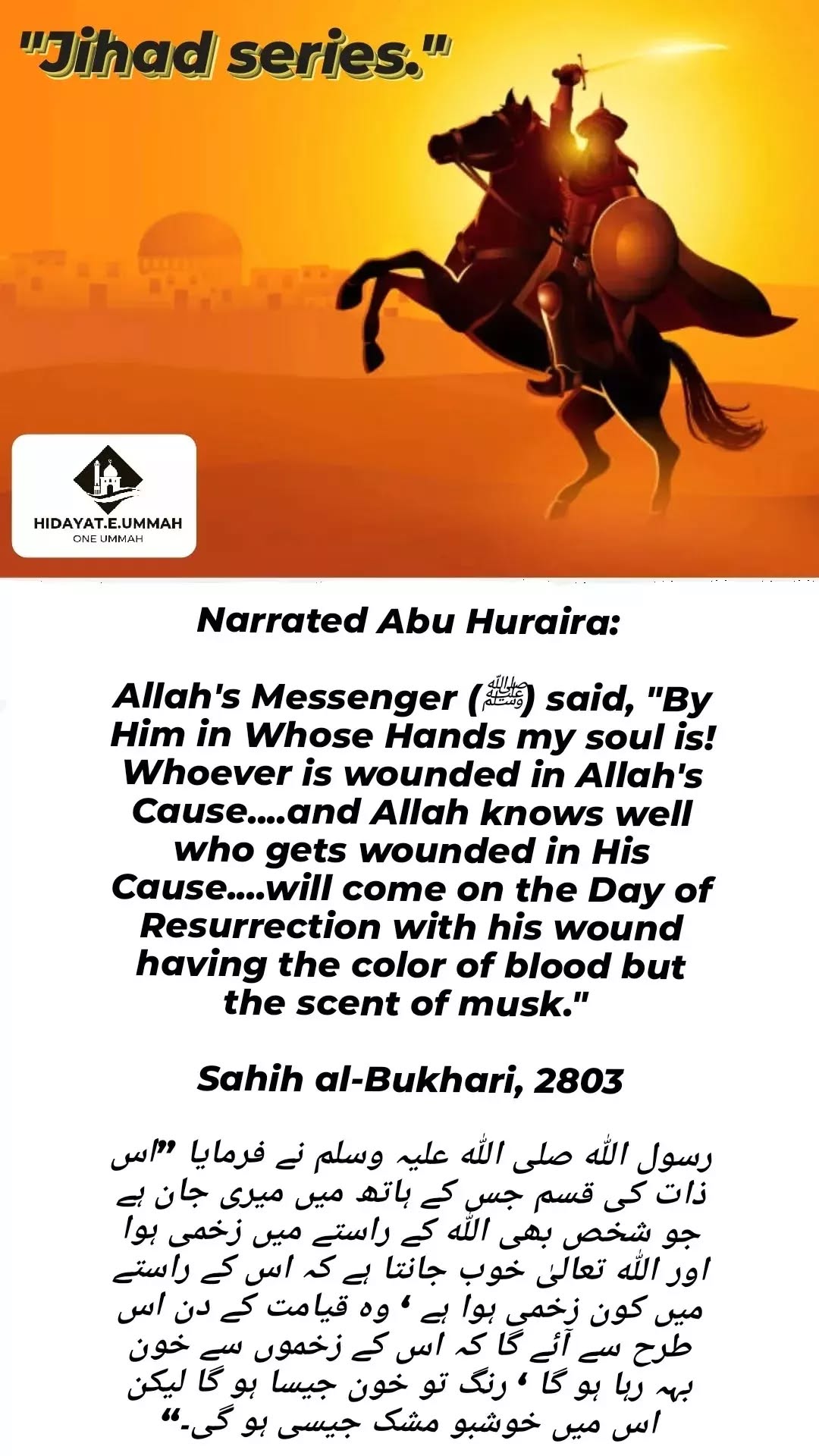
1. This hadith is narrated by Abu Huraira, where the Prophet Muhammad (peace be upon him) describes the honor and reward for those wounded in Allah’s cause.
2. The Prophet begins by swearing by Allah, emphasizing the truth and importance of his statement.
3. He explains that whoever is injured while striving sincerely in Allah’s cause will be rewarded uniquely on the Day of Resurrection.
4. The wound will retain the color of blood, symbolizing the sacrifice made, but it will have the scent of musk, representing purity and honor.
5. This hadith highlights the high status of those who sacrifice for righteous causes and the acknowledgment of their efforts by Allah.
6. It serves as a motivation for Muslims to be sincere and steadfast in their efforts to uphold truth and justice, trusting in Allah’s recognition and reward.
Hadith 6
6 of 16
1. This hadith is narrated by Ibn Umar, where the Prophet Muhammad (peace be upon him) provides guidance on obedience to rulers.
2. The Prophet emphasizes that it is a duty for Muslims to listen to and obey the orders of their rulers or leaders.
3. However, this obedience is conditional and applies only as long as the orders do not involve disobedience to Allah.
4. If a ruler commands something that goes against Allah's laws or teachings, a Muslim should not obey those specific commands.
5. This hadith establishes a balance between maintaining order in society and prioritizing faith and righteousness.
6. It reminds Muslims to always evaluate actions based on their alignment with Islamic principles while respecting authority.
Hadith 7
7 of 16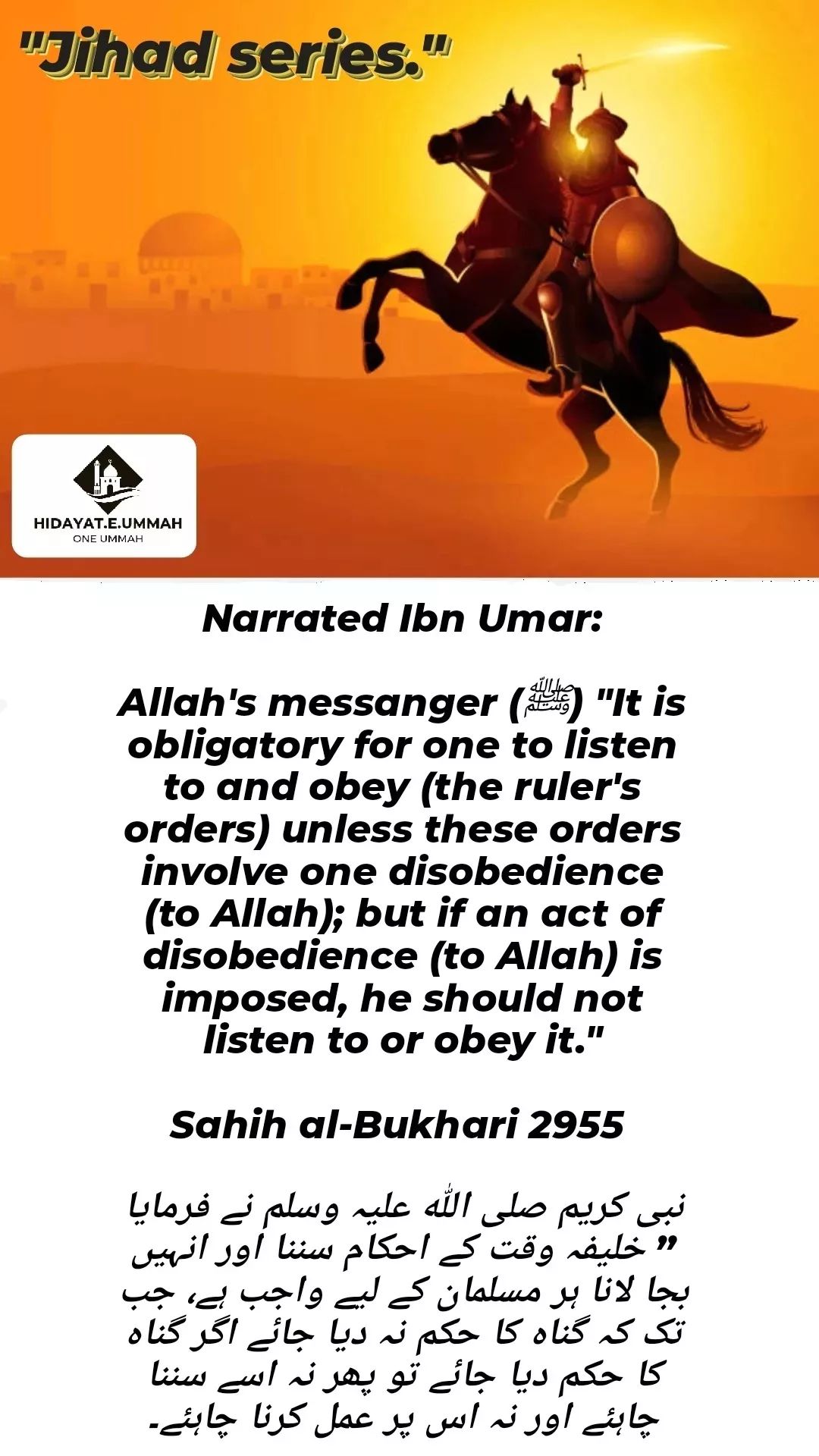
1. This hadith is narrated by Ibn Umar, where the Prophet Muhammad (peace be upon him) emphasizes the importance of obeying the orders of rulers.
2. It is considered obligatory for Muslims to listen to and follow the commands of their leaders to maintain order and unity in society.
3. However, this obedience is not absolute and is subject to the condition that the ruler's orders do not involve disobedience to Allah.
4. If a ruler commands something that contradicts Allah's laws or teachings, Muslims are not required to comply with such orders.
5. The hadith highlights the principle that obedience to Allah takes precedence over obedience to any human authority.
6. It serves as a guideline for Muslims to balance respect for authority with unwavering adherence to Islamic principles.
Hadith 8
8 of 16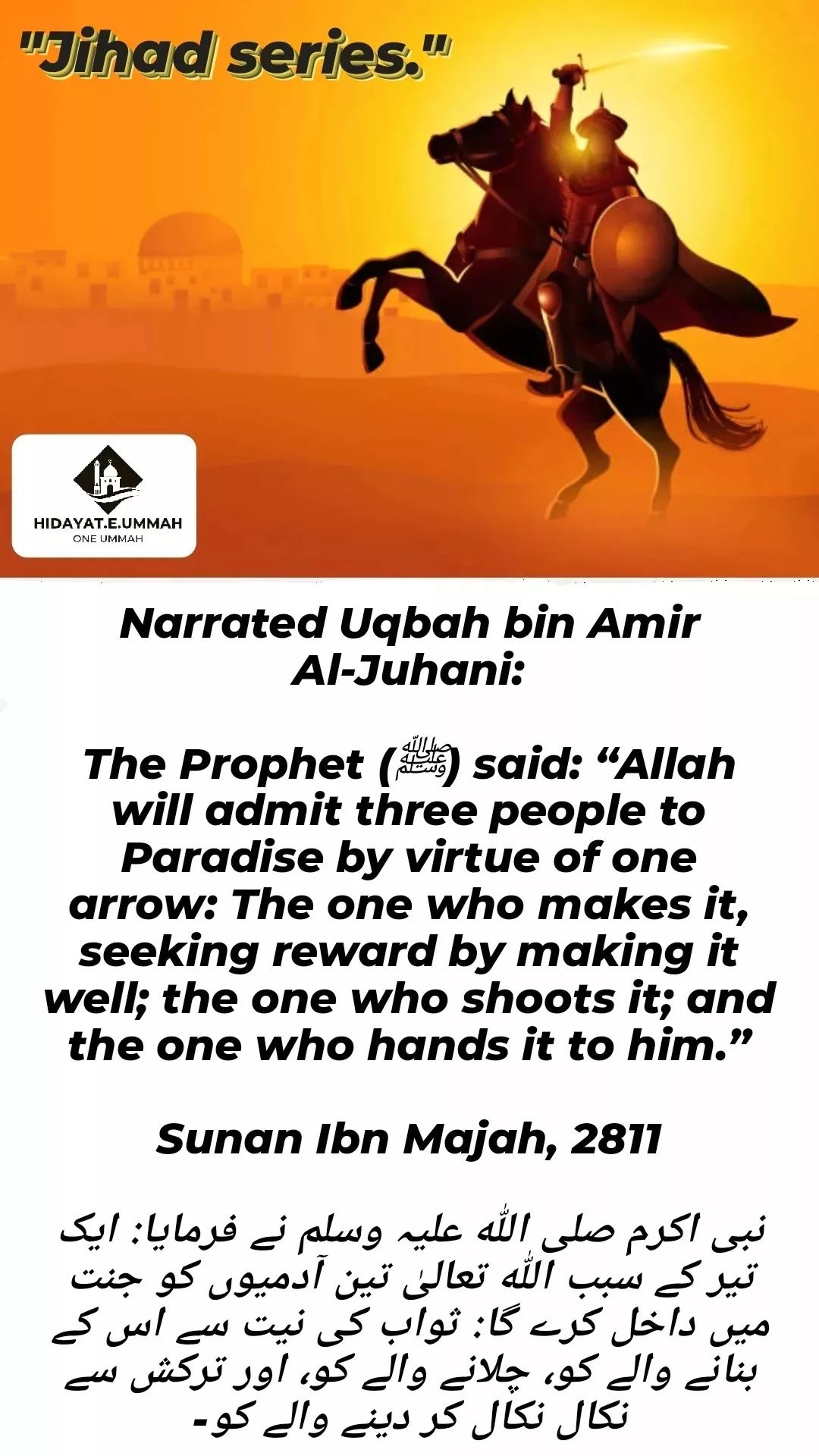
1. This hadith, narrated by Uqbah bin Amir Al-Juhani, highlights the significance of collective effort in righteous actions.
2. The Prophet Muhammad (peace be upon him) mentions that Allah will admit three people to Paradise due to their involvement with a single arrow.
3. The first is the person who makes the arrow, ensuring it is crafted well and seeking Allah's reward for their effort.
4. The second is the one who uses the arrow, such as in defense or a just cause, aligning their action with the will of Allah.
5. The third is the person who assists by handing the arrow, contributing to the success of the action through support.
6. This hadith emphasizes the value of teamwork, where every role, big or small, is rewarded when done with sincerity and good intention.
7. It teaches Muslims that all righteous contributions, whether direct or indirect, are recognized and rewarded by Allah.
Hadith 9
9 of 16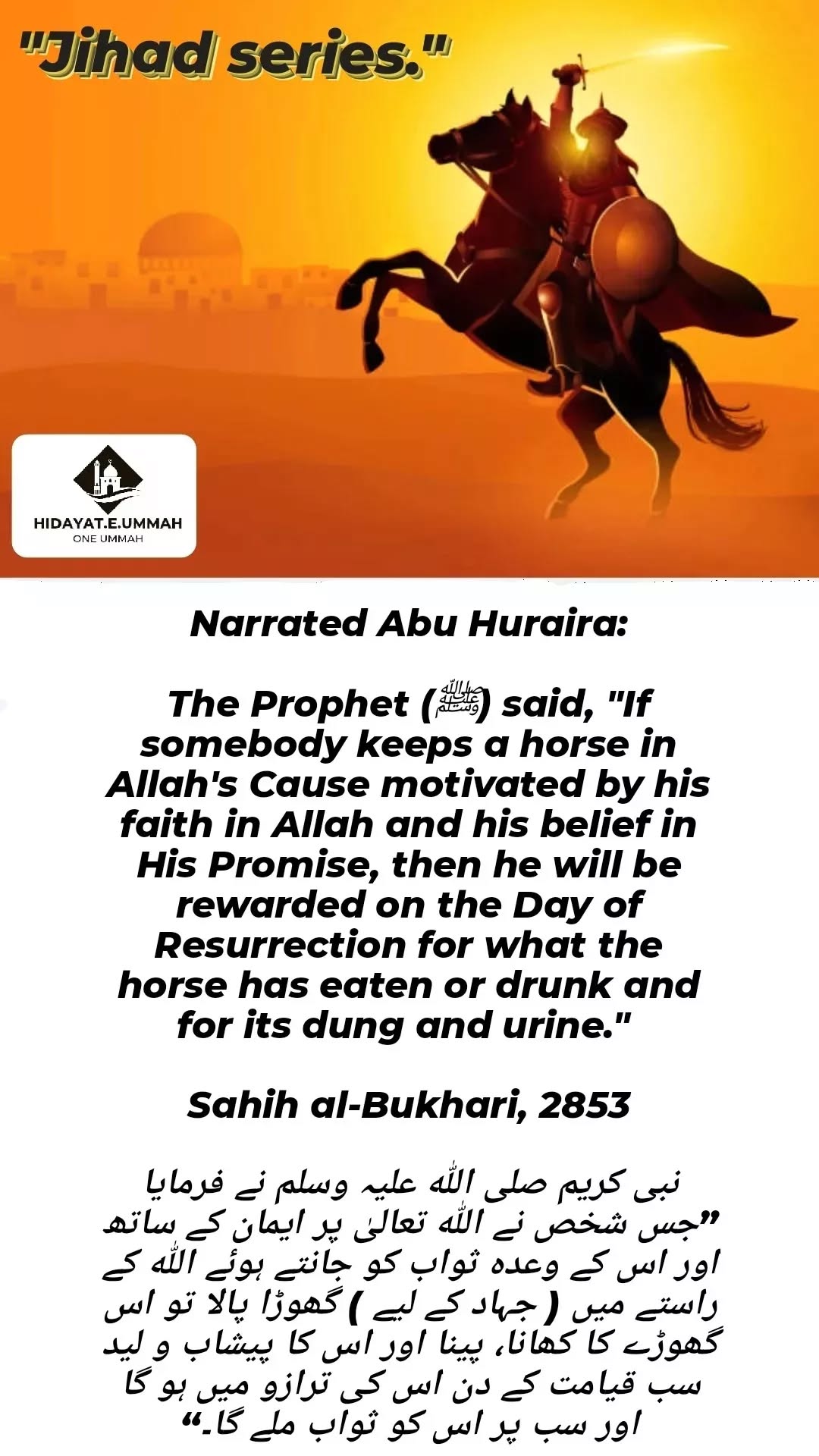
1. This hadith, narrated by Abu Huraira, emphasizes the rewards of contributing to Allah's Cause with sincerity and faith.
2. The Prophet Muhammad (peace be upon him) mentions that even keeping a horse for Allah's Cause brings immense rewards.
3. The owner of the horse, motivated by faith in Allah and belief in His promises, is rewarded for everything the horse consumes or produces.
4. This includes the food and water the horse consumes as well as its dung and urine, highlighting that all aspects of maintaining the horse are counted as good deeds.
5. The hadith encourages Muslims to dedicate resources for noble causes, showing that Allah appreciates and rewards such efforts.
6. It teaches that sincere intentions and actions, even in seemingly small or mundane matters, are recognized and rewarded by Allah.
7. This also reflects the importance of supporting just causes with whatever means a person can offer, whether directly or indirectly.
Hadith 10
10 of 16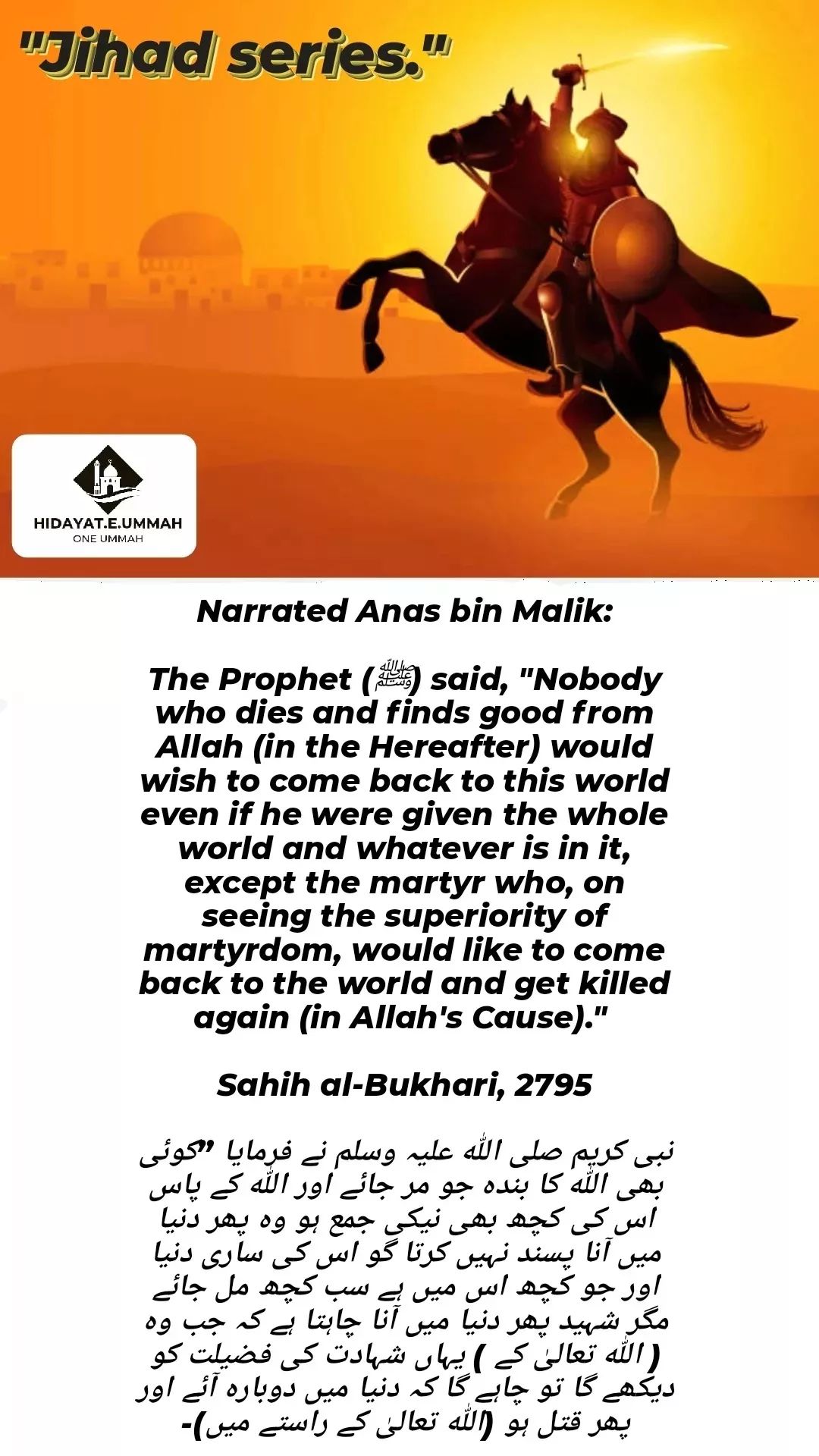
1. This hadith, narrated by Anas bin Malik, highlights the immense blessings and rewards granted by Allah in the Hereafter.
2. The Prophet Muhammad (peace be upon him) mentions that no one who dies and experiences the goodness of the Hereafter would wish to return to this world.
3. Even if offered the entire world and all its treasures, a person who has reached the Hereafter's bliss would not desire to come back.
4. The only exception is the martyr, who would wish to return to the world to experience martyrdom again.
5. This is because the martyr sees the unique and elevated rewards of giving one's life in Allah's Cause.
6. It reflects the high status of martyrdom in Islam and the honor it brings in the sight of Allah.
7. This hadith encourages believers to strive sincerely for Allah's Cause, showing the unparalleled rewards for sacrifices made with true faith.
Hadith 11
11 of 16
1. This hadith, narrated by Abu Huraira, emphasizes Allah's mercy and forgiveness even in situations where the act of killing takes place.
2. The Prophet Muhammad (peace be upon him) mentions that there are two men whom Allah welcomes with a smile.
3. One man kills the other, yet both of them are ultimately granted entry to Paradise.
4. One of the men fought in Allah's Cause and was killed, achieving martyrdom.
5. The other man, who killed him, also repents and is forgiven by Allah, and then he too is martyred in Allah's Cause.
6. The hadith highlights the importance of repentance and Allah's boundless mercy.
7. Even though one man killed the other, both are granted forgiveness and Paradise due to their faith and sacrifice for Allah's Cause.
8. This narration shows the immense grace of Allah in accepting those who fight sincerely for His Cause and the possibility of redemption for those who repent.
Hadith 12
12 of 16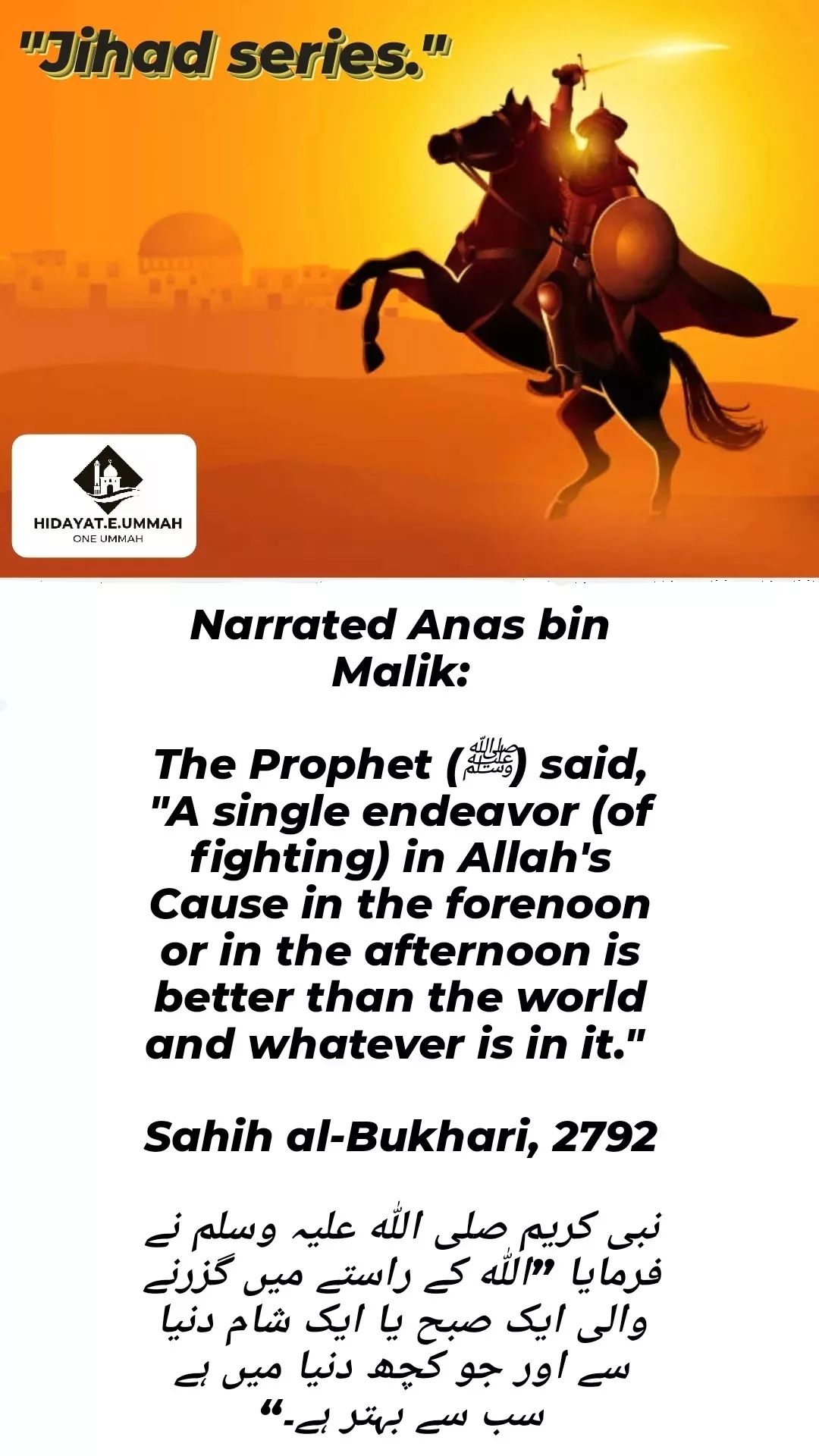
1. In this hadith, narrated by Anas bin Malik, the Prophet Muhammad (peace be upon him) emphasizes the immense value of striving in Allah's Cause.
2. The Prophet mentions that even a single effort of fighting for Allah's Cause, whether in the morning (forenoon) or in the afternoon, holds more value than the entire world and everything in it.
3. This statement highlights the superiority of actions performed in the service of Allah, especially those related to Jihad (struggle or striving in Allah’s Cause).
4. The reward for such endeavors is far greater than any material wealth or worldly possessions.
5. It encourages Muslims to understand the worth of sacrifice and dedication for the sake of Allah, regardless of the time or place.
6. The hadith teaches that the rewards for righteous acts in Allah's Cause are eternal and far more precious than anything in this world.
Hadith 13
13 of 16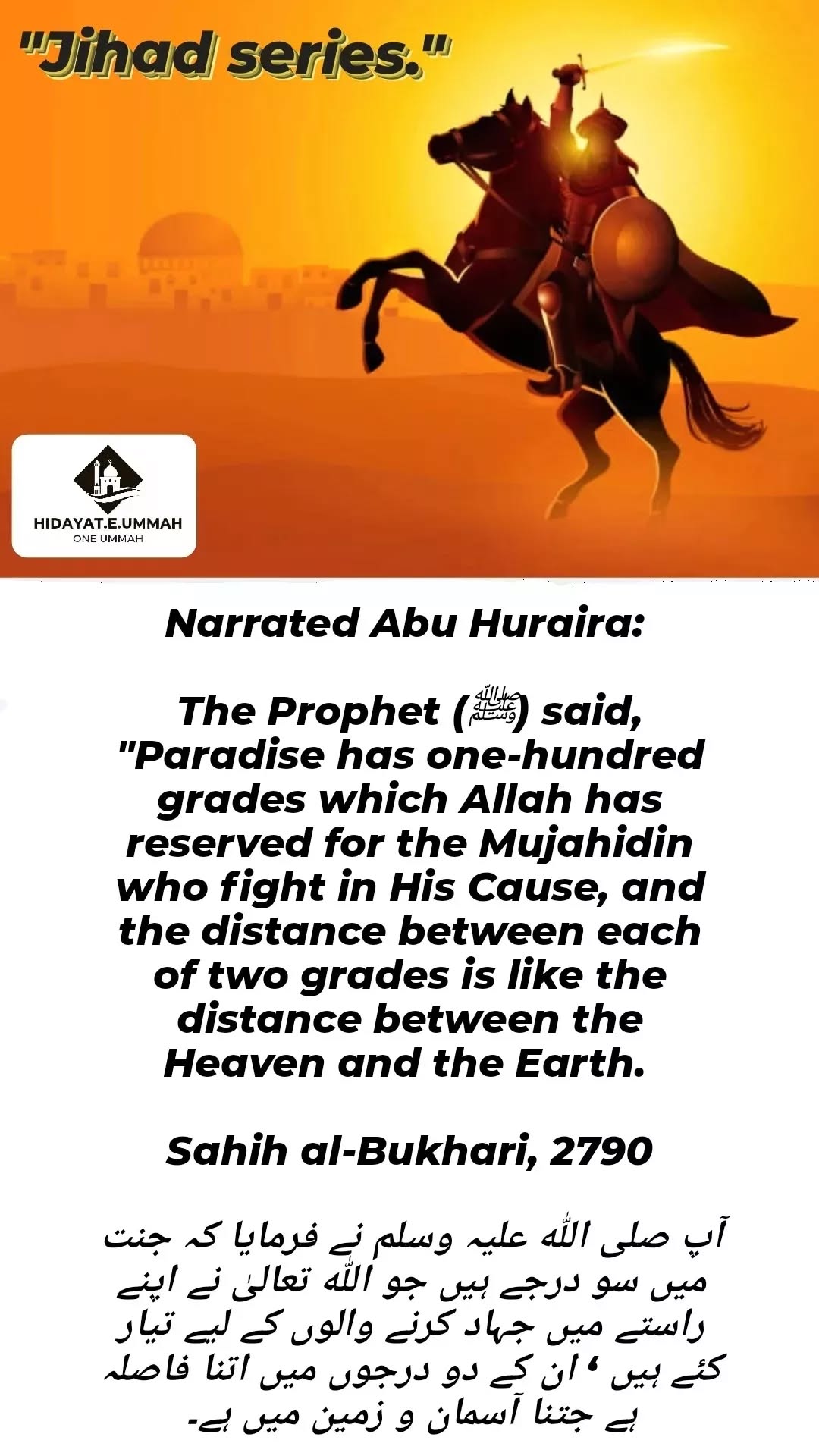
1. This hadith, narrated by Abu Huraira, speaks about the incredible reward for those who strive in Allah's Cause (the Mujahidin).
2. The Prophet Muhammad (peace be upon him) mentions that Paradise has 100 grades, each one being reserved specifically for those who fight for the sake of Allah.
3. The reward for the Mujahidin is immense, as the distance between each grade in Paradise is as vast as the distance between the Heaven and the Earth.
4. This teaches that those who engage in Jihad (striving or fighting in Allah's Cause) are granted special honor in the Hereafter.
5. The hadith emphasizes the value and significance of selfless sacrifice for Allah’s Cause and highlights the unmatched rewards of such efforts.
6. The hadith encourages Muslims to strive in Allah's path with the hope of attaining the highest place in Paradise, knowing that the rewards are beyond comprehension.
Hadith 14
14 of 16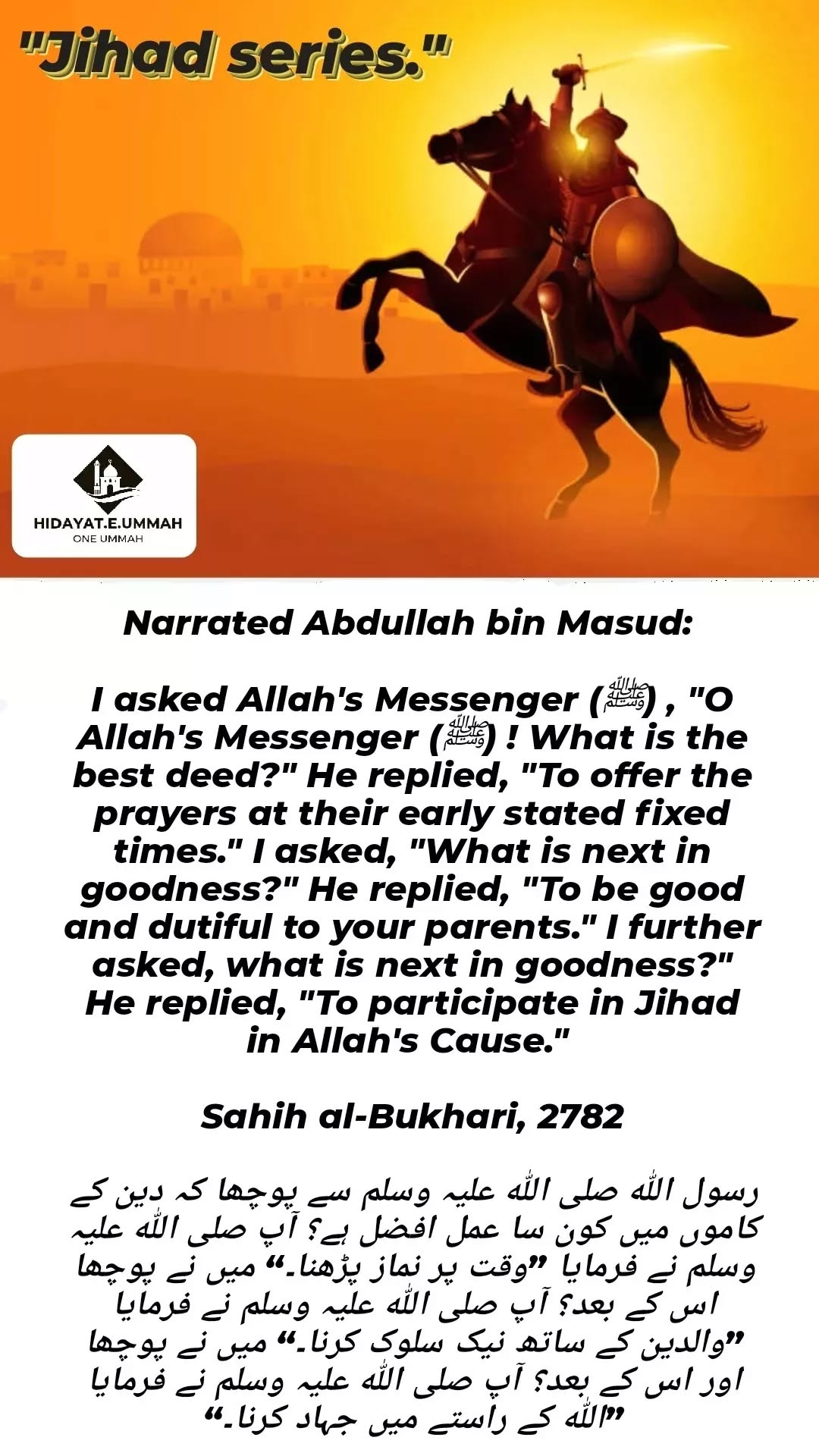
1. This hadith, narrated by Abdullah bin Masud, shows a conversation between him and the Prophet Muhammad (peace be upon him) about the best deeds.
2. The Prophet Muhammad (peace be upon him) said that the best deed is offering prayers (Salah) at their early fixed times, meaning performing the five daily prayers on time.
3. The next best deed, according to the Prophet, is being good and dutiful to one's parents, showing respect, care, and love for them.
4. After these, the Prophet mentioned that participating in Jihad (striving in Allah's Cause, which includes both physical and spiritual struggle) is the next most important act of goodness.
5. This hadith highlights the importance of prayer, the respect for parents, and the significance of striving for the sake of Allah.
6. It emphasizes that these acts, starting with prayer, are the highest priorities in Islam and lead to immense rewards.
Hadith 15
15 of 16
1. In this hadith, narrated by Sahl, the Prophet Muhammad (peace be upon him) talks about the reward for those who sincerely ask Allah for martyrdom.
2. Martyrdom refers to those who sacrifice their lives in Allah's Cause, such as during battle or other acts of dedication in Islam.
3. The Prophet (peace be upon him) explains that if someone sincerely asks Allah, the Mighty and Sublime, for martyrdom—meaning they genuinely wish to die for the sake of Allah—Allah will grant them the reward and status of a martyr.
4. Even if the person does not die in battle, and instead dies peacefully in their bed, they will still receive the same reward as someone who has died in the way of Allah.
5. This highlights Allah's mercy and the importance of sincere intention in Islam. If a person’s desire for martyrdom is sincere, Allah grants them the reward regardless of how they pass away.
Hadith 16
16 of 16
1. In this hadith, narrated by Al-Miqdam bin Ma'diykarib, the Prophet Muhammad (peace be upon him) speaks about the great rewards Allah has prepared for martyrs.
2. The first reward is that the martyr is forgiven with the first drop of blood they shed.
3. Secondly, the martyr is shown their place in Paradise, meaning they are given a glimpse of the eternal reward that awaits them.
4. The martyr is also protected from the punishment of the grave, which is a terrifying trial that all will face after death.
5. The martyr is saved from the greatest terror, referring to the Day of Judgment when everyone will be afraid, but the martyr will be protected.
6. Allah places a crown of dignity on the martyr's head, and its gems are more valuable than all the riches in the world.
7. The martyr is married to seventy-two virgins from the Huril-'Ayn in Paradise, who are described as being incredibly beautiful.
8. The martyr is also granted the ability to intercede for seventy of their close relatives, helping them gain forgiveness and enter Paradise.
9. This hadith highlights the immense rewards for those who sacrifice their lives for the sake of Allah and emphasizes the importance of sincerity and devotion in striving for Allah's pleasure.