
Martyr
Hadith Collection
15 Hadiths
Hadith 1
1 of 15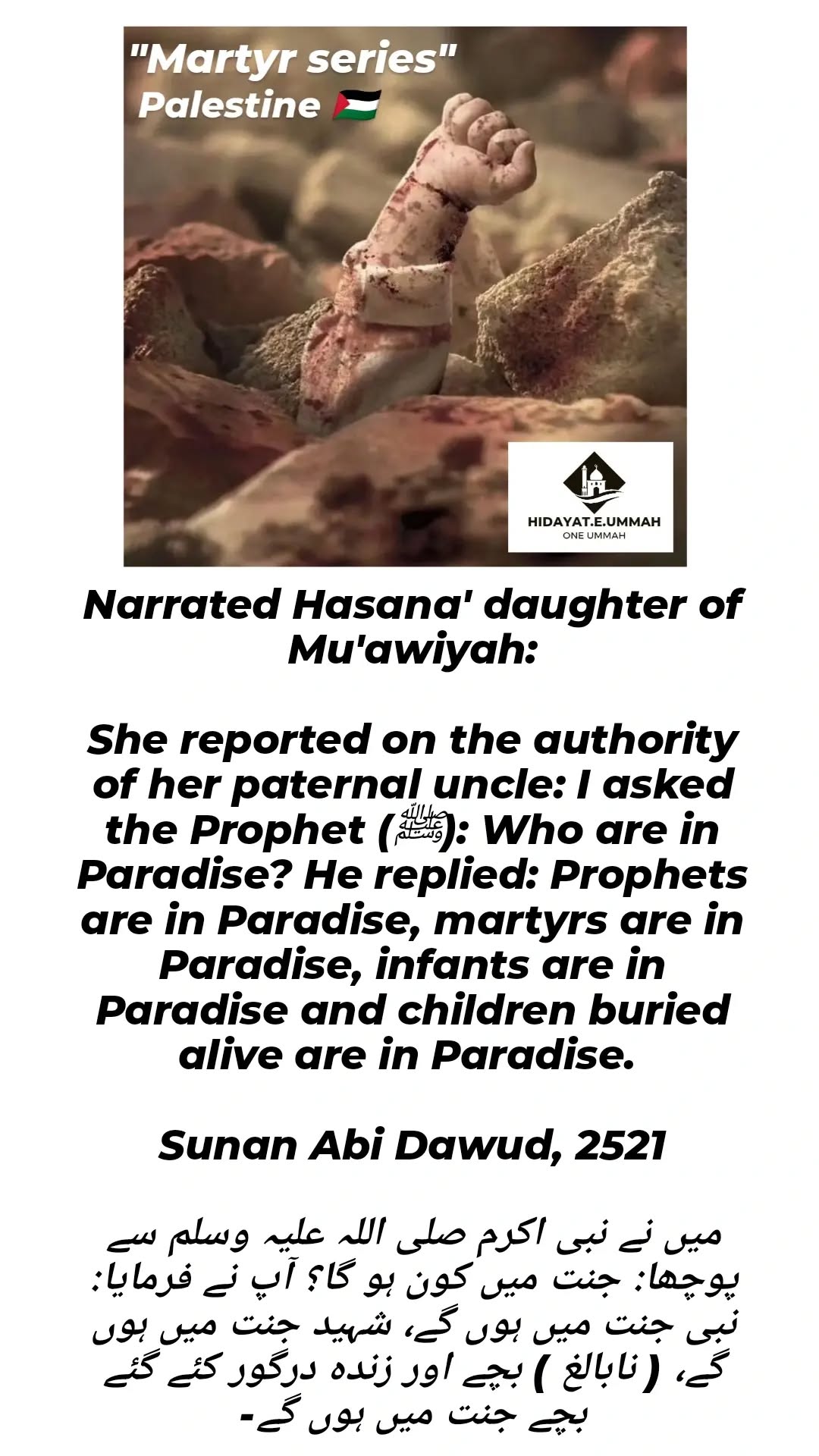
1. This hadith highlights the categories of individuals who are guaranteed a place in Paradise, as stated by the Prophet Muhammad (peace be upon him).
2. Prophets are in Paradise due to their divine mission and unwavering dedication to guiding humanity towards Allah's path.
3. Martyrs are in Paradise because they sacrificed their lives for the sake of Allah, standing firm in faith and righteousness.
4. Infants are in Paradise as they are pure and sinless, having not reached the age of accountability.
5. Children who were buried alive, as practiced in pre-Islamic times, are in Paradise, showing Allah's mercy and justice towards innocent lives.
6. This hadith serves as a reassurance of Allah's compassion and mercy for the innocent and those who dedicate their lives to faith and righteousness.
Hadith 2
2 of 15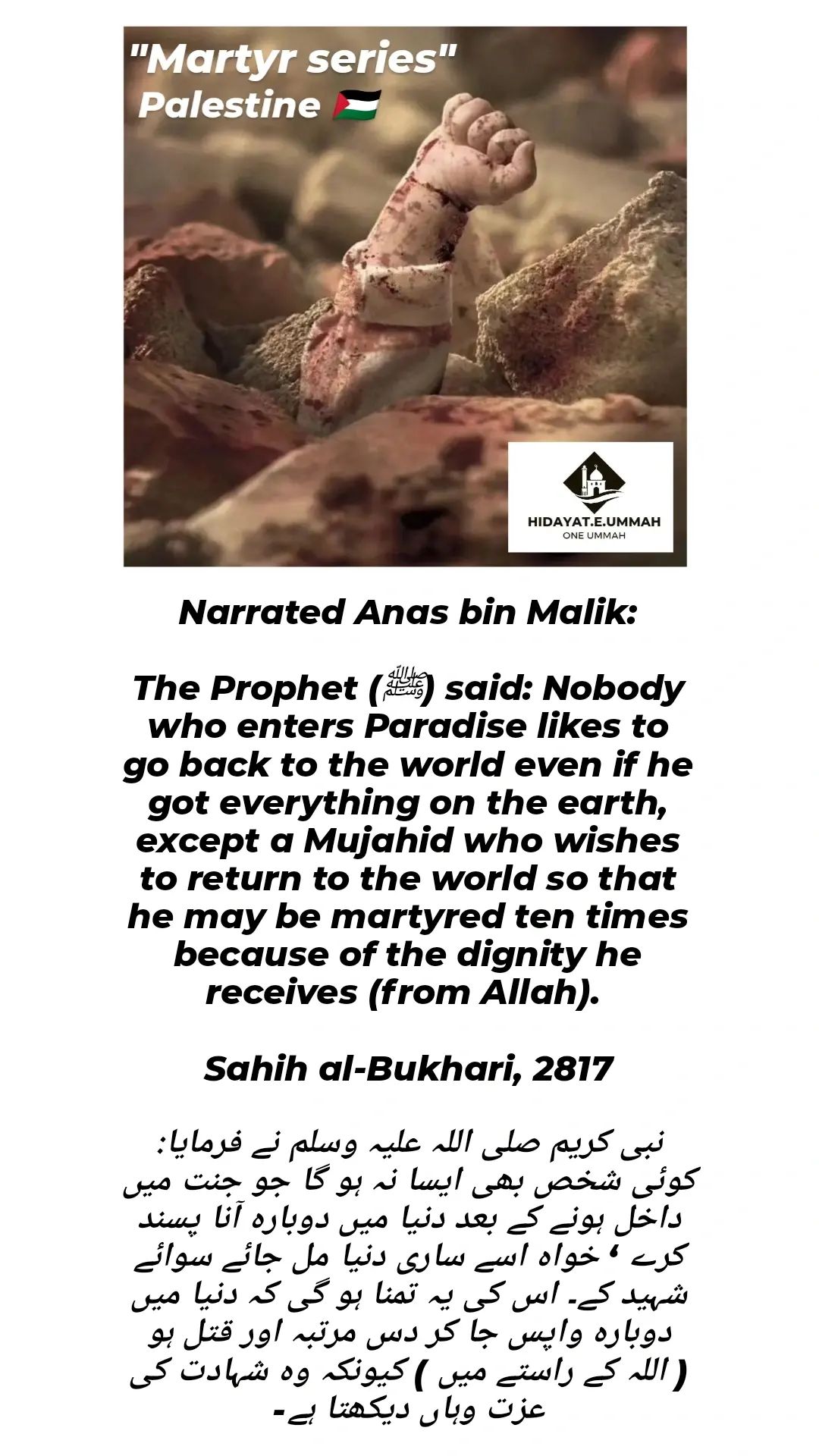
1. This hadith explains the immense blessings and satisfaction of those who enter Paradise, as no one who has entered it desires to return to the worldly life.
2. The exception is a Mujahid (one who fights in the way of Allah) because of the immense honor, rewards, and dignity they receive from Allah for their sacrifice.
3. A Mujahid may wish to return to the world, not for worldly possessions or gains, but to be martyred multiple times, emphasizing their love for Allah and desire for greater rewards.
4. This shows the high status of martyrdom in Islam and its unparalleled rewards in the Hereafter.
5. The hadith also highlights the concept of Paradise being far superior to anything in this world, making the rewards of the Hereafter the ultimate goal for believers.
Hadith 3
3 of 15
1. This hadith highlights the special status of a Shahid (martyr) in Islam, as all their sins are forgiven due to their ultimate sacrifice in the way of Allah.
2. However, there is an important exception: debts owed to others are not automatically forgiven.
3. This teaches the significance of fulfilling financial obligations and the responsibility towards others, even in matters as sacred as martyrdom.
4. The hadith emphasizes the importance of settling debts during one’s lifetime or ensuring they are taken care of, as they remain a responsibility even after death.
5. It also serves as a reminder of the balance in Islam between acts of worship and fulfilling one’s duties towards other people.
Hadith 4
4 of 15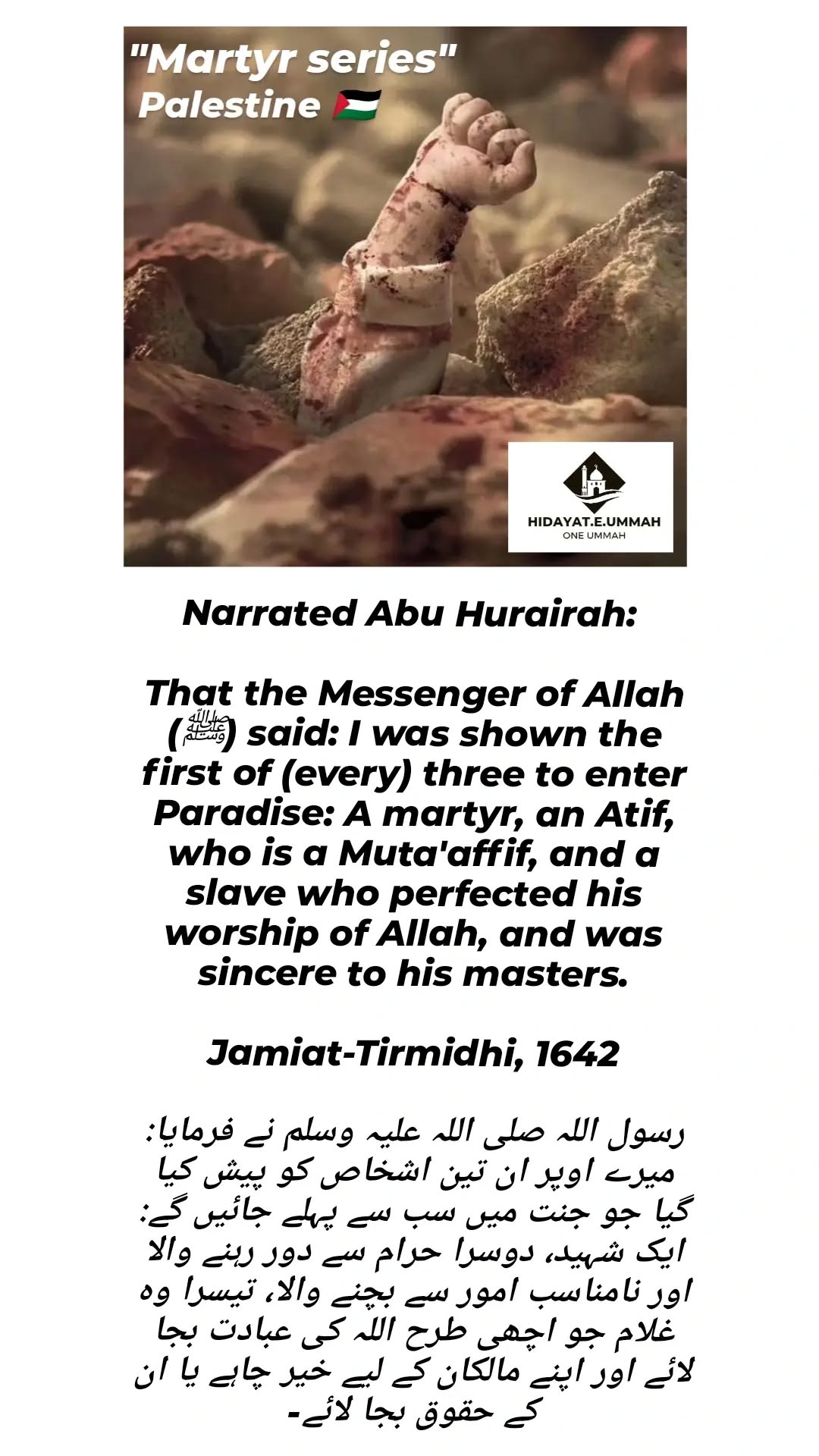
1. This hadith emphasizes the high status of a Shahid (martyr) in Islam, as all their sins are forgiven due to their sacrifice for the sake of Allah.
2. However, it highlights an important exception: debts owed to others are not automatically forgiven, even for a martyr.
3. This teaches that while acts of worship and sacrifice hold great merit, fulfilling financial and personal responsibilities is also a critical aspect of a Muslim's life.
4. It reminds Muslims to prioritize settling debts and obligations during their lifetime, as these remain outstanding even after death.
5. The hadith underscores the balance in Islam between devotion to Allah and responsibility towards fellow humans, showing that both are essential for a complete and righteous life.
Hadith 5
5 of 15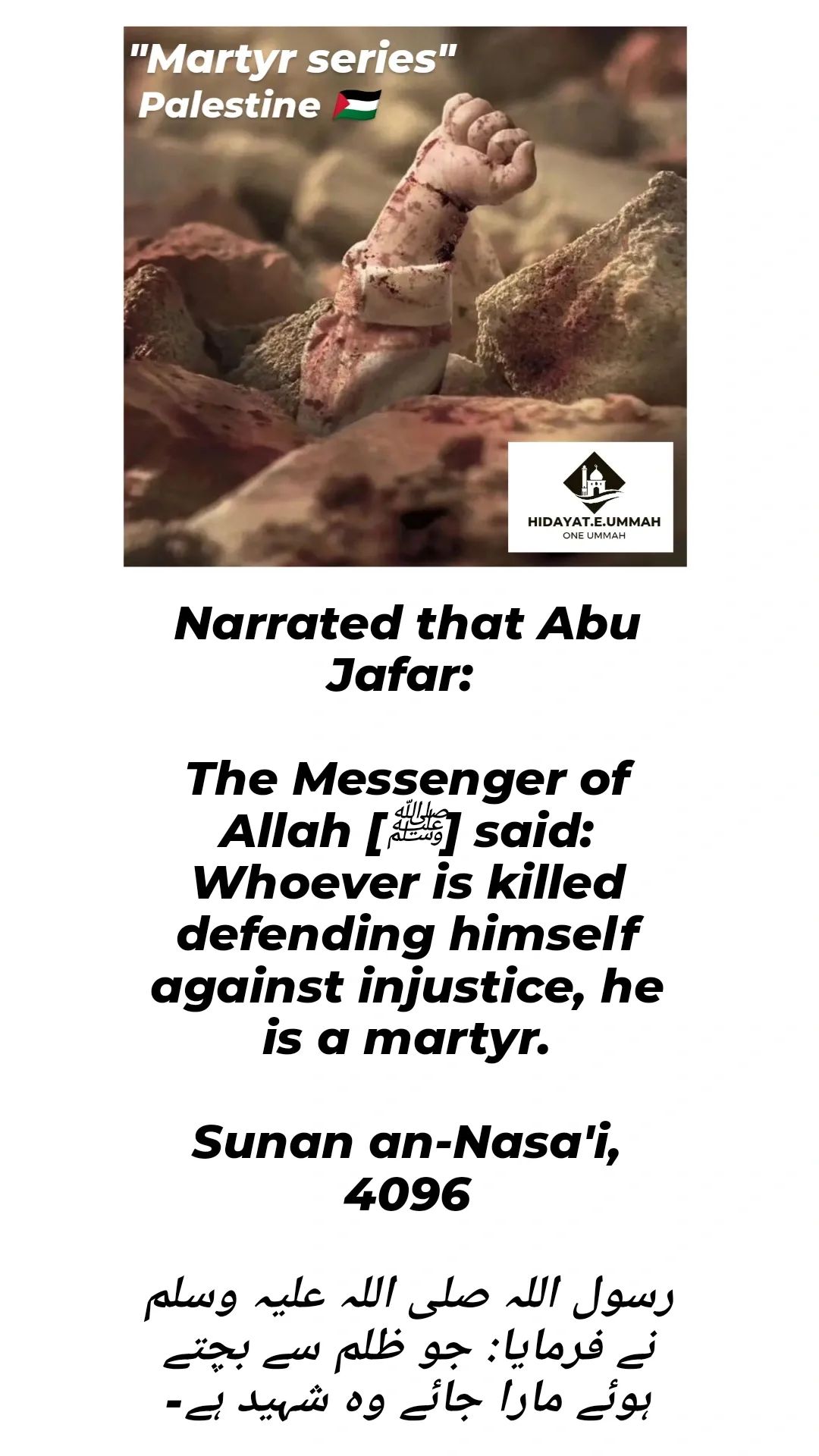
1. This hadith mentions three categories of people who will be among the first to enter Paradise, showing the diversity of paths to attain Allah's pleasure.
2. The first is the martyr (Shahid), who sacrifices their life in the cause of Allah, earning a high rank due to their ultimate devotion and sacrifice.
3. The second is an Atif who is Muta'affif, referring to a person who is compassionate and practices self-restraint, maintaining dignity and avoiding begging despite hardships.
4. The third is a slave who performs their worship of Allah perfectly and sincerely fulfills their duties toward their masters, exemplifying faithfulness and dedication in all aspects of life.
5. This hadith emphasizes that sincerity, sacrifice, and fulfilling responsibilities—whether in wealth, hardships, or servitude—are all qualities that lead to Allah's pleasure and Paradise.
Hadith 6
6 of 15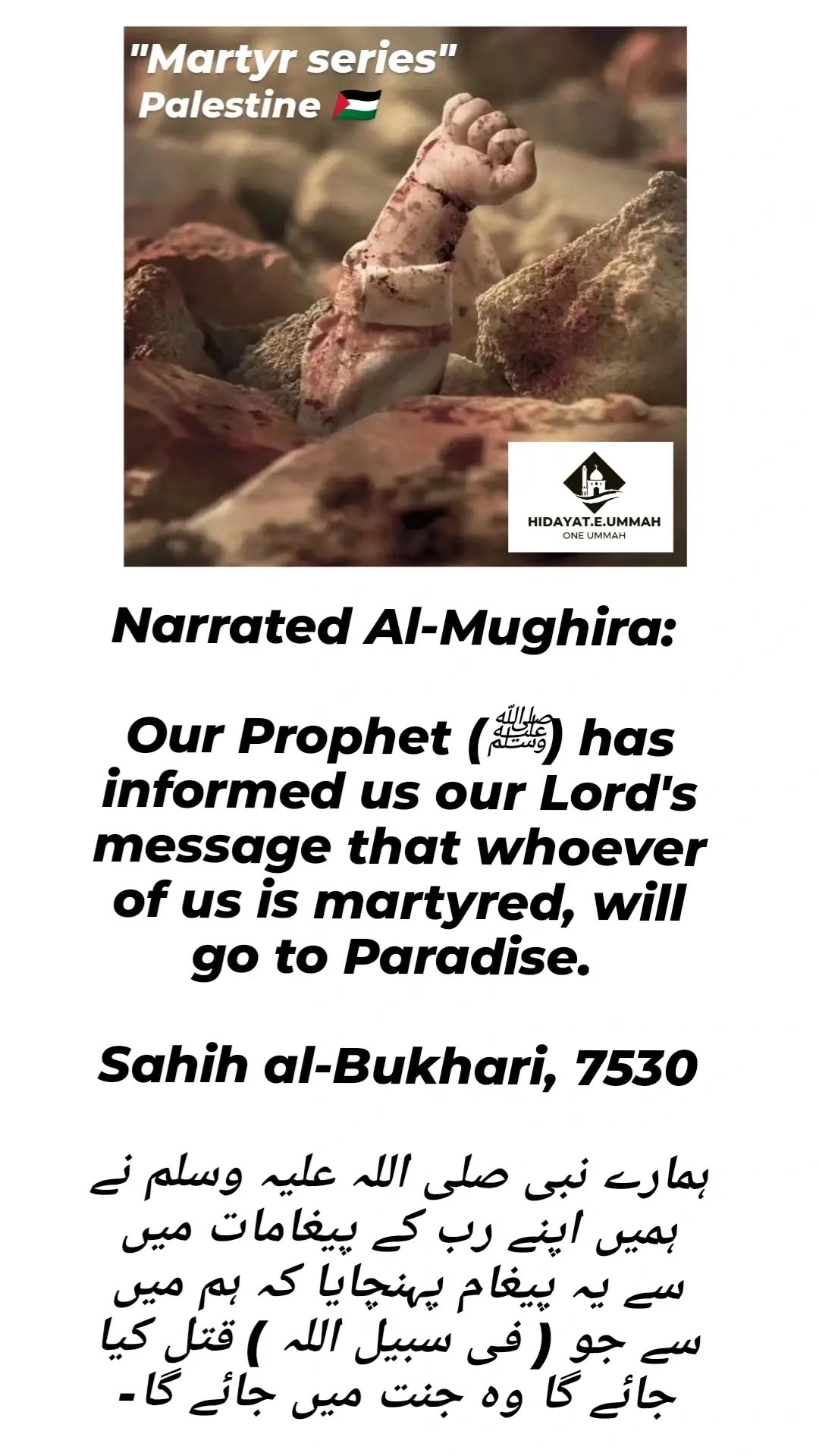
1. This hadith highlights that anyone who dies while defending themselves against oppression or injustice is granted the status of a martyr (shahid).
2. A martyr holds a special and honored position in Islam due to their sacrifice in standing up for what is right and just.
3. Defending oneself against harm or injustice is seen as an act of courage and faith, reflecting a commitment to fairness and protection of one's rights.
4. This hadith encourages Muslims to stand firm against wrongdoing and assures them of immense reward if they lose their lives in the process of defending themselves.
Hadith 7
7 of 15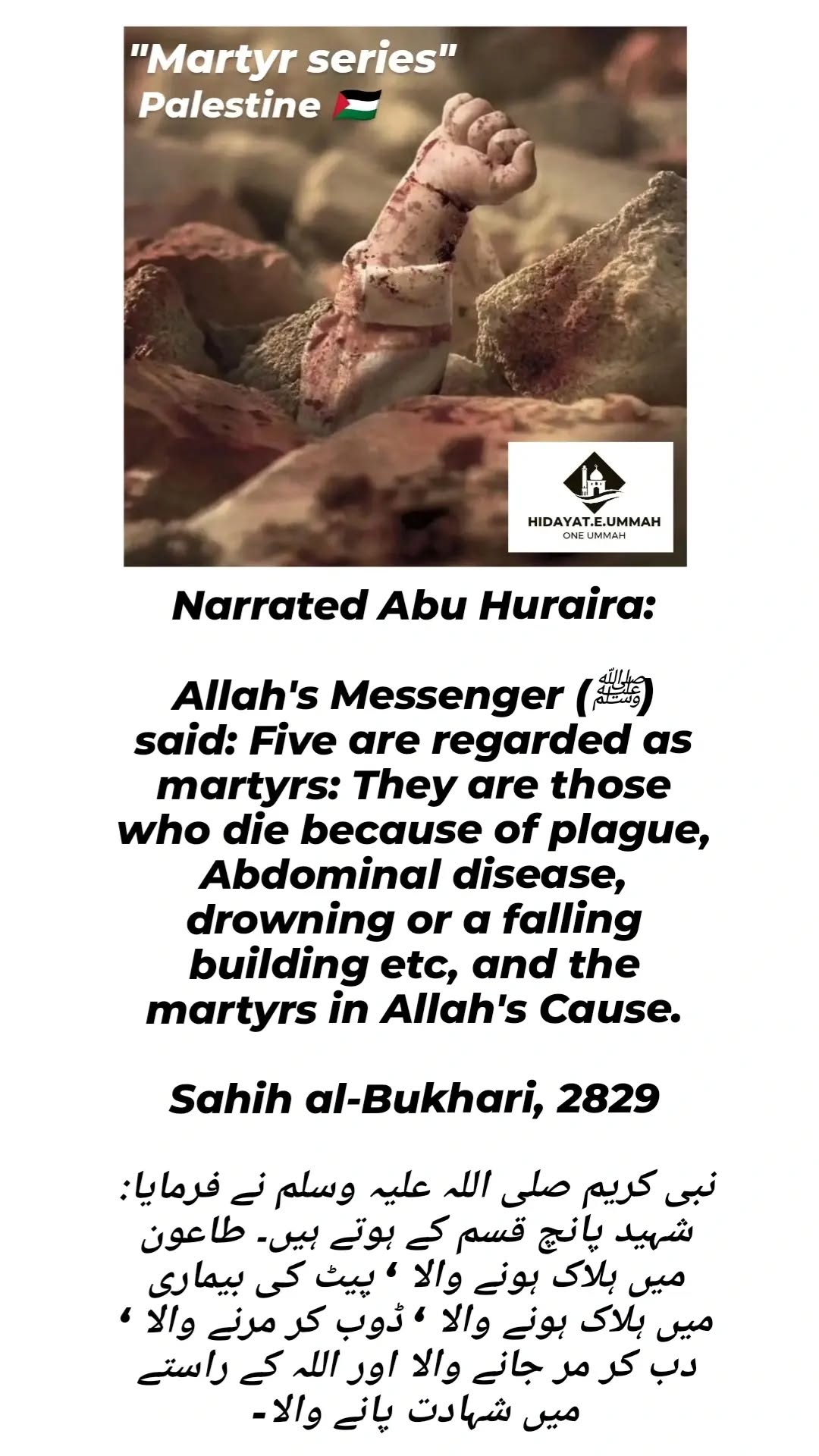
1. This hadith conveys a message from the Prophet Muhammad (peace be upon him) that those who are martyred in the path of Allah are promised Paradise as a reward.
2. Martyrdom (shahada) in Islam is considered a noble and high-ranking act, symbolizing ultimate sacrifice for the sake of faith and justice.
3. The assurance of Paradise for martyrs emphasizes the honor and dignity granted to those who give their lives in defense of Islam and truth.
4. This hadith serves as an encouragement for believers to remain steadfast in their faith and to strive for righteousness, even in the face of challenges.
Hadith 8
8 of 15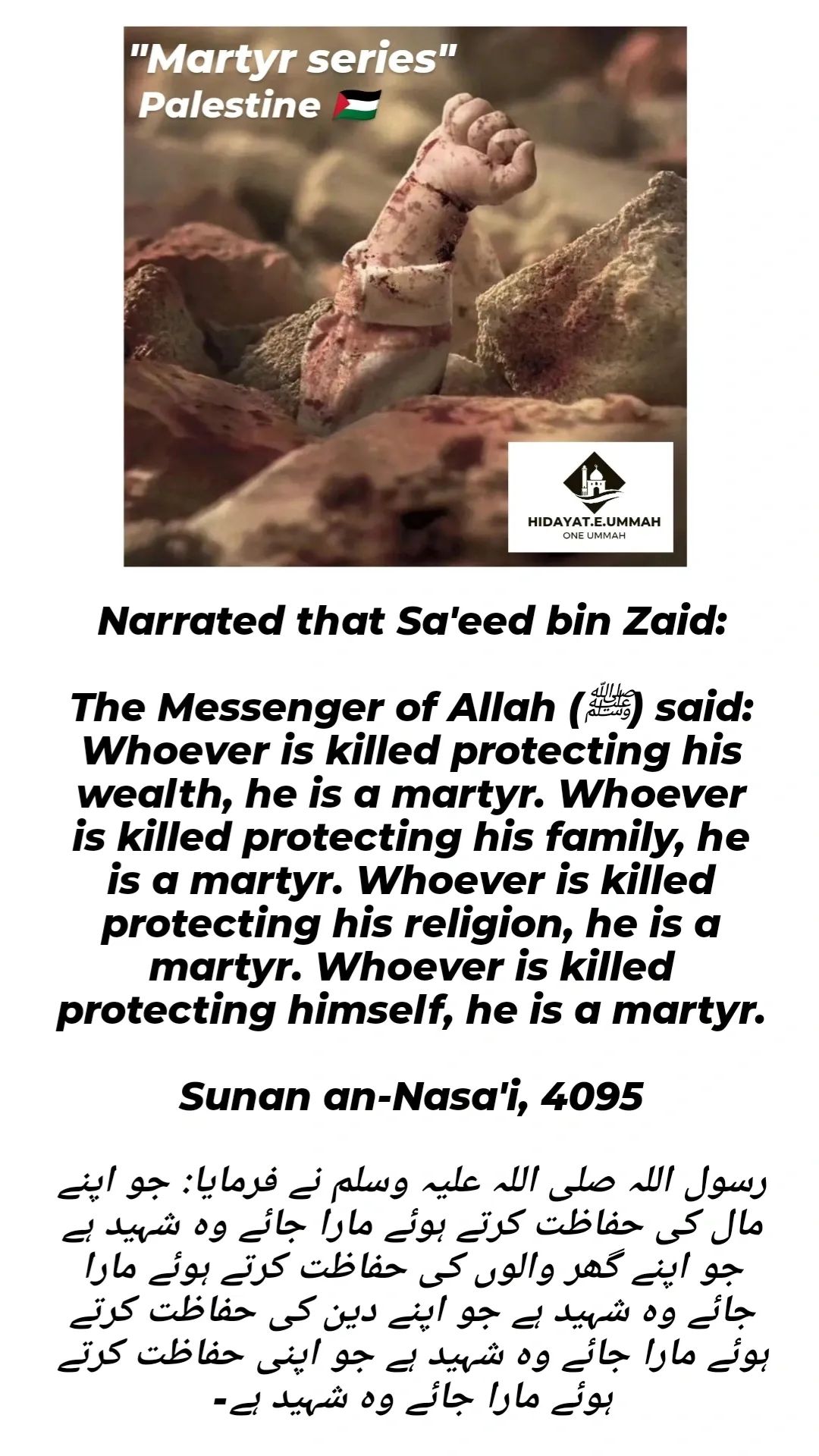
1. In this hadith, the Prophet Muhammad (peace be upon him) defines five categories of people who are considered martyrs in Islam, even if they do not die on the battlefield.
2. The five types of martyrs mentioned are:
- Those who die due to a plague.
- Those who die due to an abdominal disease (such as severe illness affecting the stomach or intestines).
- Those who drown.
- Those who die due to a falling building or similar disaster.
- Those who are martyred in the path of Allah (directly in His cause).
3. This hadith highlights Allah's mercy and how various forms of hardship and suffering endured in this life can lead to the status of martyrdom if borne with patience and faith.
4. It serves as a reminder that martyrdom is not limited to battle but includes many scenarios where believers endure challenges with perseverance and reliance on Allah.
Hadith 9
9 of 15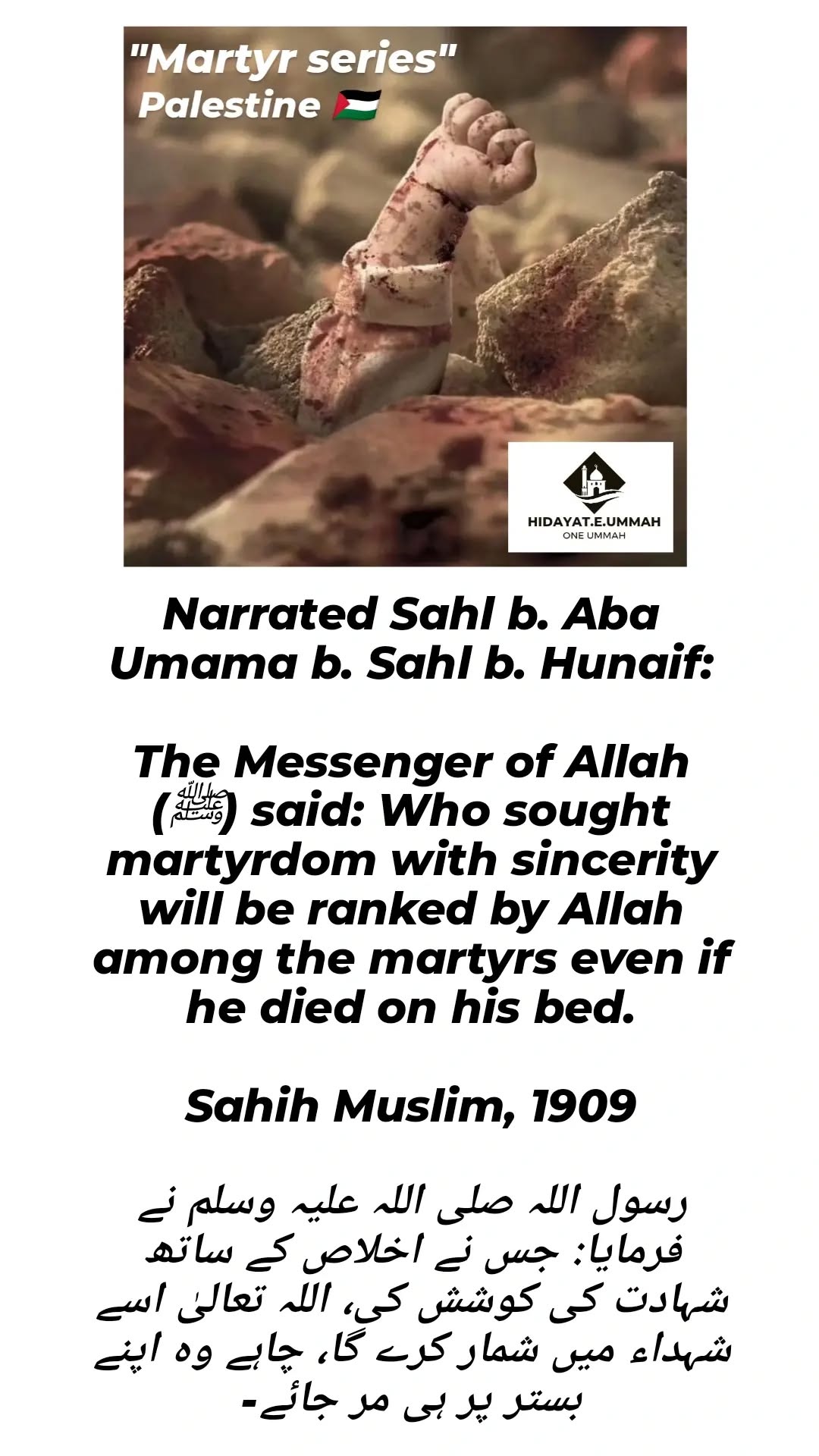
1. This hadith teaches that the intention behind one's actions holds great significance in Islam.
2. The Prophet Muhammad (peace be upon him) stated that a person who sincerely desires martyrdom (dying in the cause of Allah) and strives with that pure intention will be granted the reward and status of a martyr, even if they pass away naturally, such as dying in their bed.
3. It highlights that Allah values sincere intentions, and a believer's inner commitment can elevate their status in the Hereafter.
4. This hadith encourages Muslims to maintain sincerity in their intentions, as it is not solely the physical action but also the heart's genuine desire to please Allah that counts.
Hadith 10
10 of 15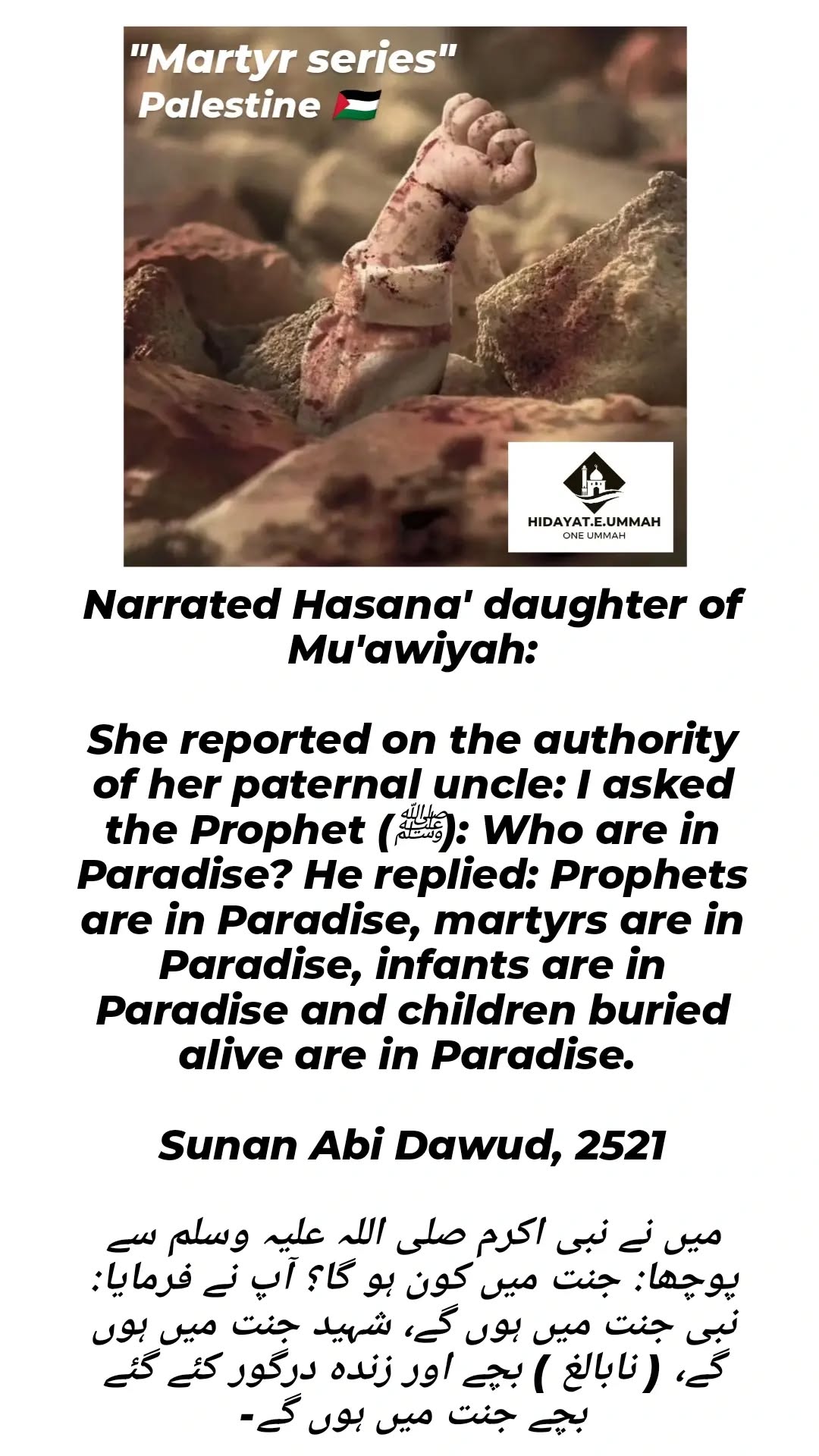
1. This hadith emphasizes the groups of people who are guaranteed entry into Paradise by Allah's mercy and justice.
2. The Prophet Muhammad (peace be upon him) mentioned that Prophets, who are the most righteous and guided individuals, will be in Paradise due to their unwavering obedience to Allah and their role as His messengers.
3. Martyrs, who sacrifice their lives for the cause of Allah, are also promised Paradise as a reward for their ultimate devotion and bravery.
4. Infants and young children who pass away are mentioned as being in Paradise, signifying Allah's mercy upon those who are innocent and sinless.
5. The hadith specifically mentions children who were buried alive (a reference to pre-Islamic practices of infanticide) as being in Paradise. This highlights Allah's justice and compassion, protecting those who were wronged and ensuring their eternal reward.
6. This hadith provides hope and comfort to believers, reassuring them of Allah's mercy and the eternal happiness awaiting the righteous and innocent.
Hadith 11
11 of 15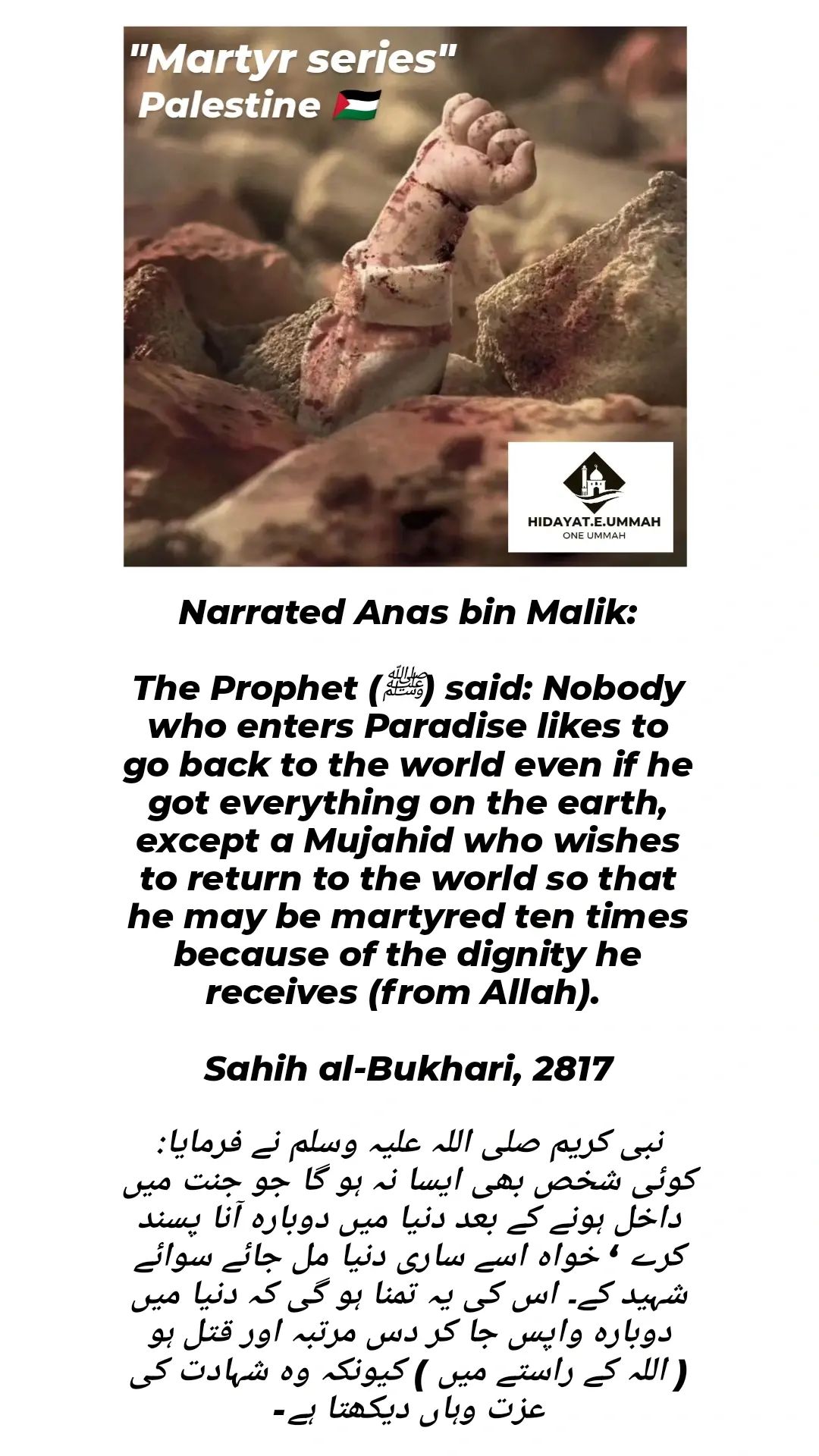
1. This hadith emphasizes the immense honor and dignity granted by Allah to those who strive in His cause (Mujahideen).
2. It explains that those who enter Paradise are so pleased with its blessings that they would never wish to return to the worldly life, even if they were offered everything on earth.
3. An exception to this is the Mujahid, who may wish to return to the world to be martyred multiple times because of the extraordinary rewards and high status Allah grants to martyrs.
4. The hadith serves as a motivation for Muslims to strive sincerely in the path of Allah and highlights the special rewards reserved for those who sacrifice their lives for His cause.
Hadith 12
12 of 15
1. This hadith highlights the special status of a Shahid (martyr) in Islam, emphasizing that their sins are forgiven as a reward for their ultimate sacrifice.
2. However, the exception mentioned is debt. Even for a martyr, debts owed to others remain a responsibility that must be settled.
3. This indicates the importance Islam places on fulfilling financial obligations and being mindful of the rights of others.
4. The hadith serves as a reminder for Muslims to avoid unnecessary debt and prioritize paying off their obligations during their lifetime.
Hadith 13
13 of 15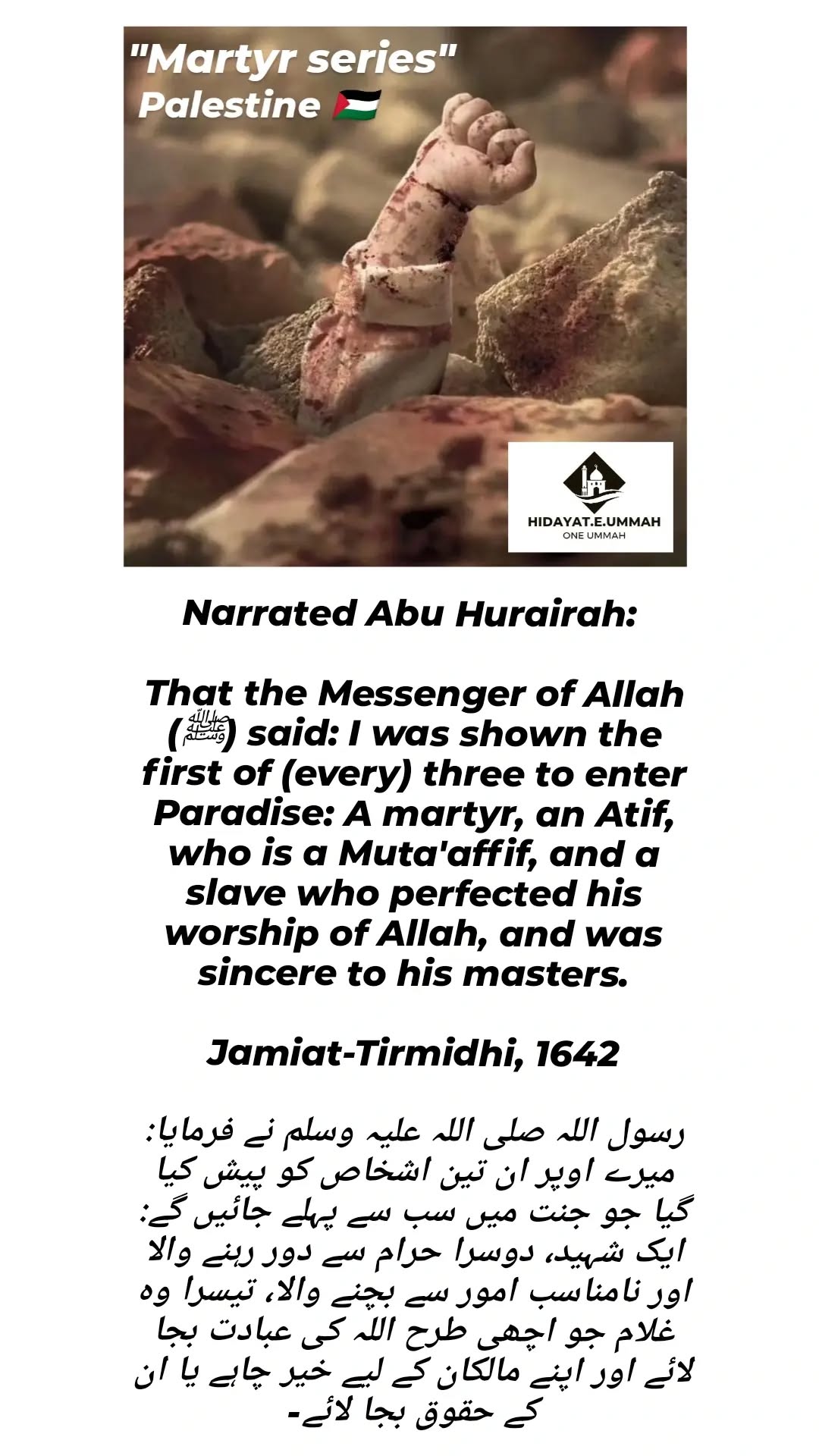
1. This hadith identifies three categories of people who will be among the first to enter Paradise due to their exceptional qualities and deeds.
2. The first is a martyr, someone who sacrifices their life in the path of Allah for a noble and just cause. Their selflessness and courage earn them a high rank.
3. The second is an Atif, meaning a person who shows generosity and self-restraint (Muta'affif), even when they themselves may be in need. This reflects their trust in Allah and their ability to prioritize others.
4. The third is a slave who worships Allah sincerely and fulfills their duties toward their masters with honesty and dedication, despite the challenges they may face.
5. This hadith emphasizes the importance of sincerity, selflessness, and steadfastness in earning Allah’s pleasure and attaining Paradise.
Hadith 14
14 of 15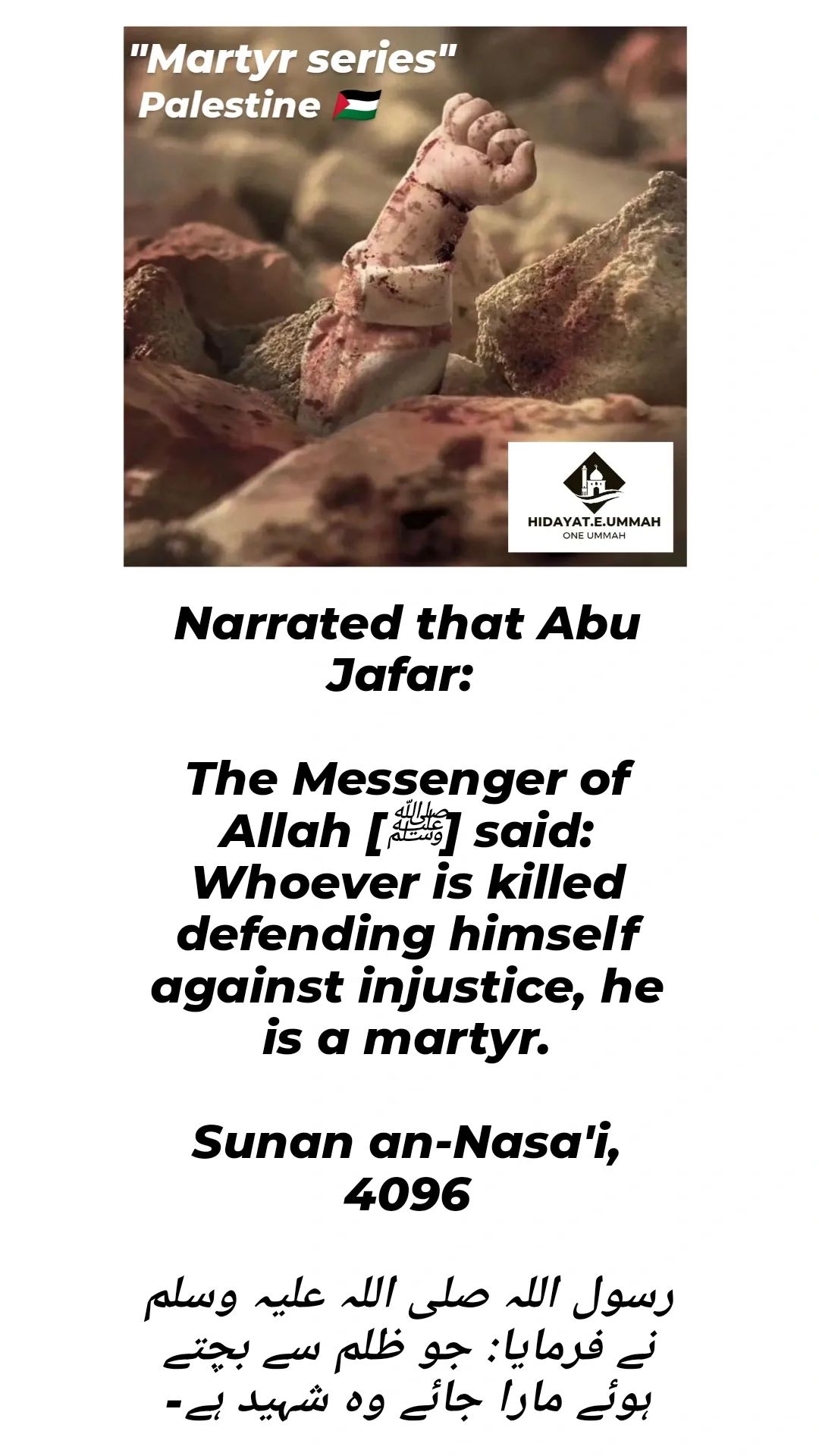
1. This hadith highlights the virtue and status of someone who loses their life while defending themselves against oppression or injustice.
2. The Prophet (peace be upon him) assures that such a person is granted the rank of a martyr, which signifies great honor and reward in the Hereafter.
3. Defending oneself against harm or injustice is not only a right but is also encouraged within the bounds of fairness in Islam.
4. This teaching promotes justice and self-respect while discouraging passive acceptance of wrongdoing.
5. It reminds believers of the importance of standing firm against oppression while maintaining a sense of trust in Allah’s ultimate justice and mercy.
Hadith 15
15 of 15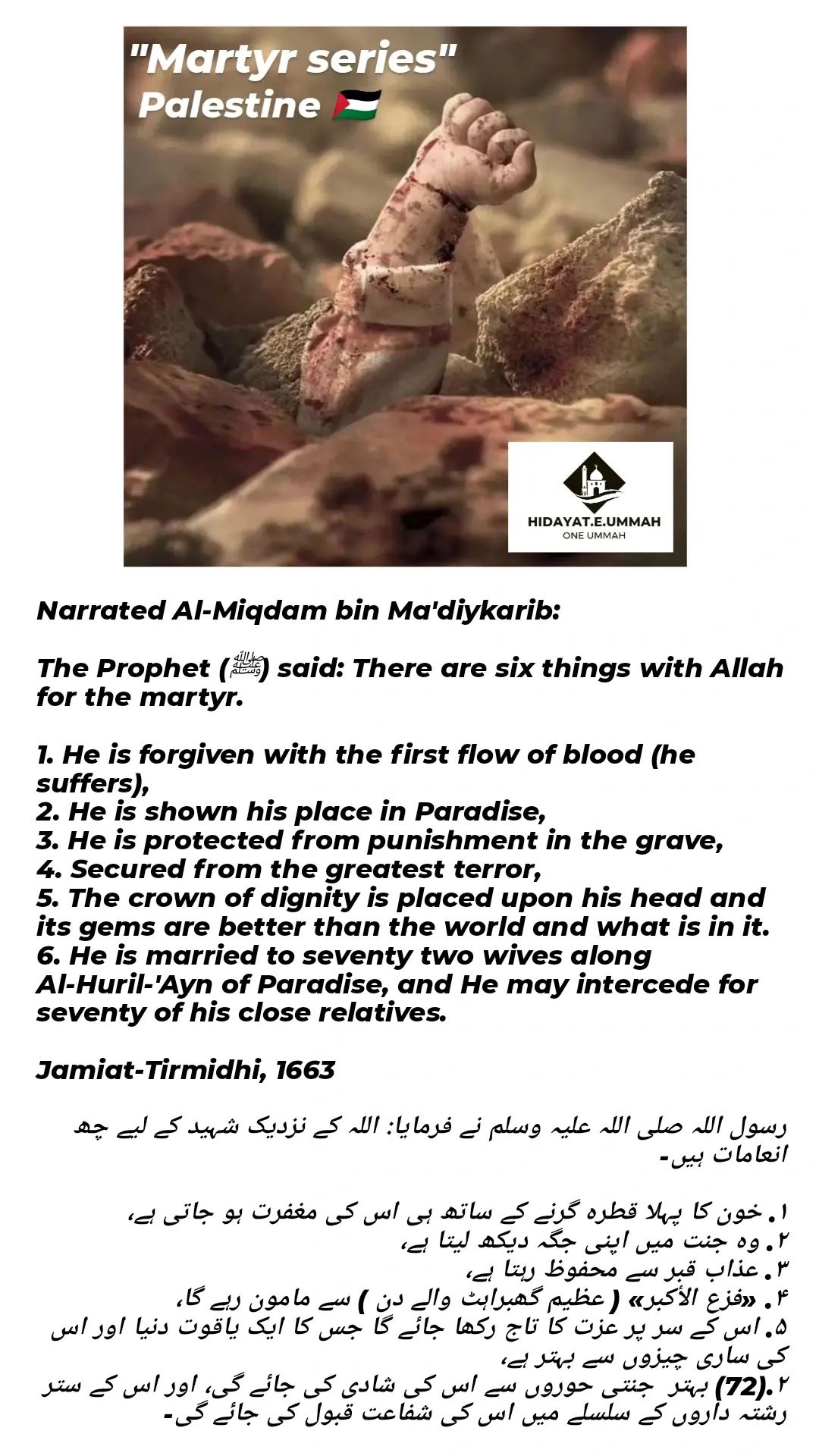
1. This hadith highlights the immense rewards and honor that Allah bestows upon a martyr who sacrifices their life in His cause.
2. The first blessing is forgiveness for the martyr’s sins at the moment their blood is shed, symbolizing Allah's immediate mercy.
3. The martyr is granted a vision of their place in Paradise, bringing them peace and assurance.
4. They are protected from punishment in the grave, signifying special care and dignity from Allah.
5. On the Day of Judgment, they are secured from the greatest terror, which refers to the fear and hardships of that day.
6. A crown of dignity, more precious than the entire world, is placed on their head, symbolizing their high status and honor in Paradise.
7. The martyr is given seventy-two heavenly spouses (Al-Hur Al-‘Ayn) as a part of their reward, reflecting the joy and blessings they will experience in Paradise.
8. The martyr is granted the ability to intercede on behalf of seventy close relatives, demonstrating the broader impact of their sacrifice in benefiting their loved ones.
9. This hadith emphasizes the spiritual and eternal rewards for those who dedicate their lives for Allah's cause, motivating believers to strive for sincerity and devotion.