
Menstruation
Hadith Collection
10 Hadiths
Hadith 1
1 of 10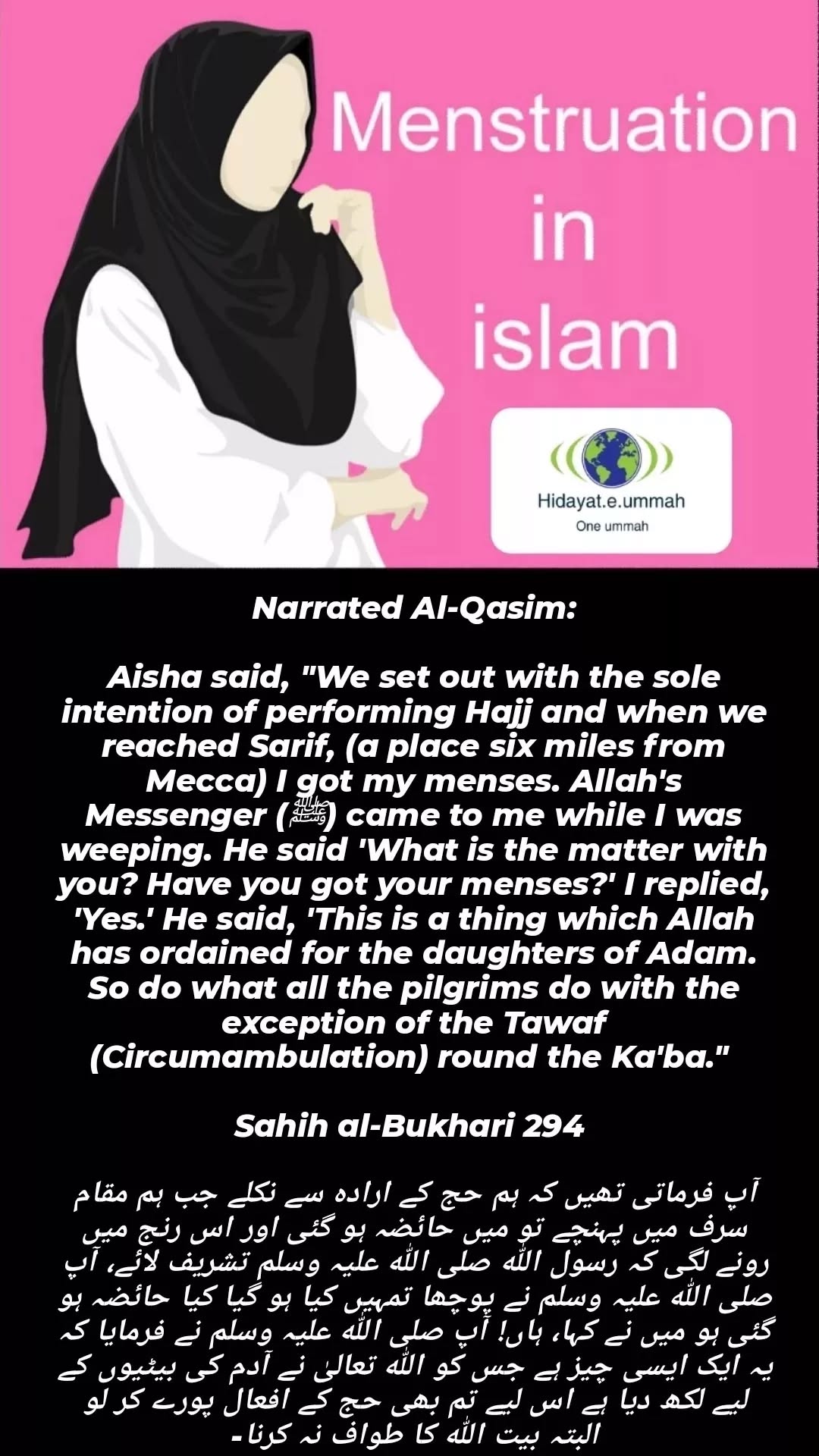
1. This hadith narrates an incident involving Aisha (may Allah be pleased with her) during her journey for Hajj.
2. She experienced menstruation at a place called Sarif, near Mecca, and felt upset because she thought it might prevent her from completing the pilgrimage.
3. The Prophet Muhammad (peace be upon him) comforted her by explaining that menstruation is a natural process decreed by Allah for the daughters of Adam (all women).
4. He instructed her to participate in all the rituals of Hajj, such as staying in Mina, Arafat, and Muzdalifah, except for performing Tawaf (circumambulating the Ka'ba), which should only be done when she is in a state of purity.
5. This hadith highlights the inclusivity of Islamic practices and provides guidance for women on managing specific rituals during menstruation.
Hadith 2
2 of 10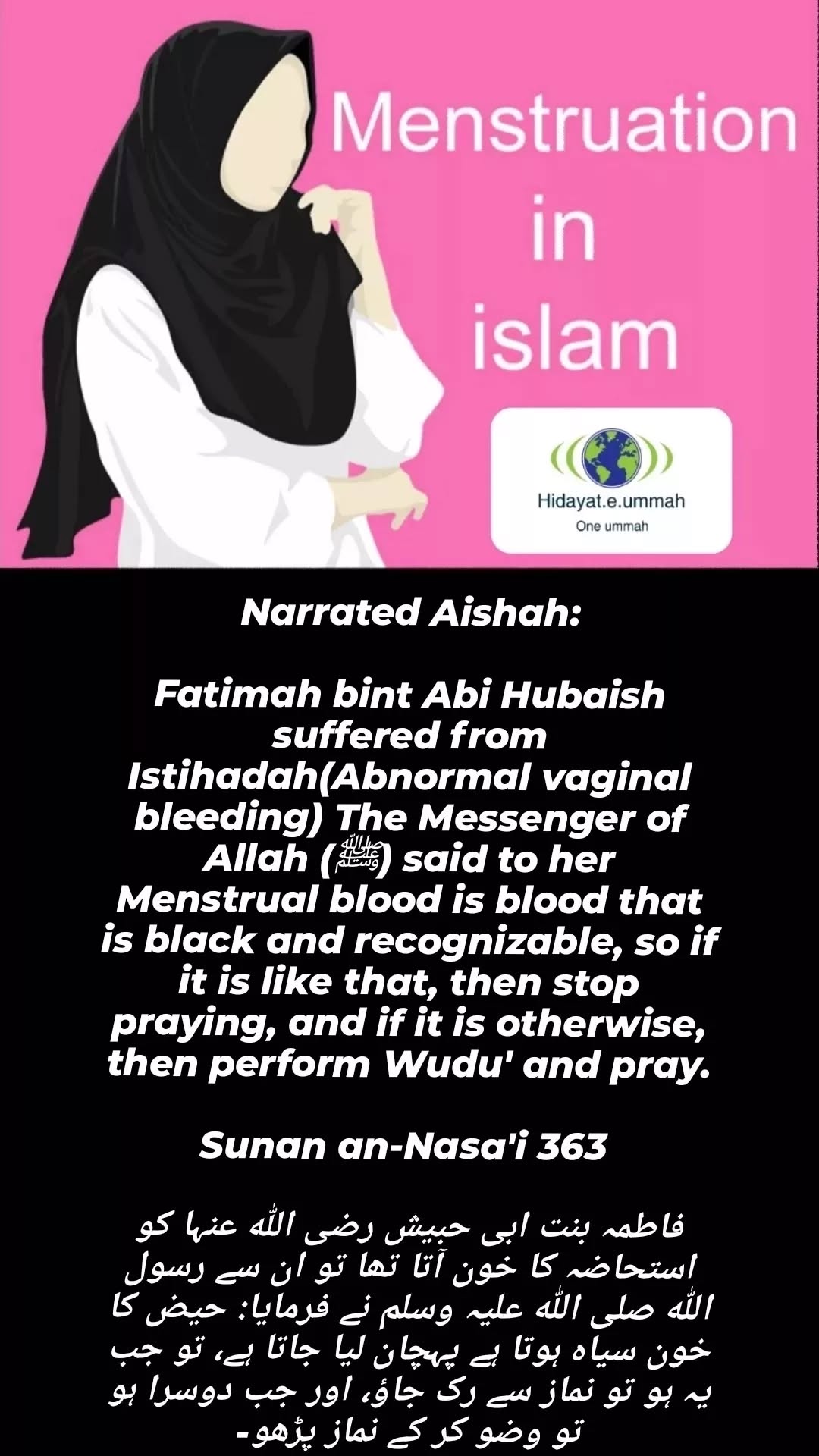
1. This hadith discusses the issue of *Istihadah*, which refers to abnormal or non-menstrual vaginal bleeding that some women experience.
2. Fatimah bint Abi Hubaish, who suffered from *Istihadah*, sought guidance from the Prophet Muhammad (peace be upon him) regarding her prayers.
3. The Prophet clarified that menstrual blood is distinct in color and texture, being dark and recognizable.
4. He instructed that when a woman observes menstrual blood, she should refrain from praying. However, if the blood is not like menstrual blood (indicating *Istihadah*), she should perform *Wudu'* (ablution) for each prayer and continue to pray.
5. This hadith provides practical guidance for women dealing with abnormal bleeding, emphasizing the importance of distinguishing between menstrual and non-menstrual blood and continuing acts of worship accordingly.
Hadith 3
3 of 10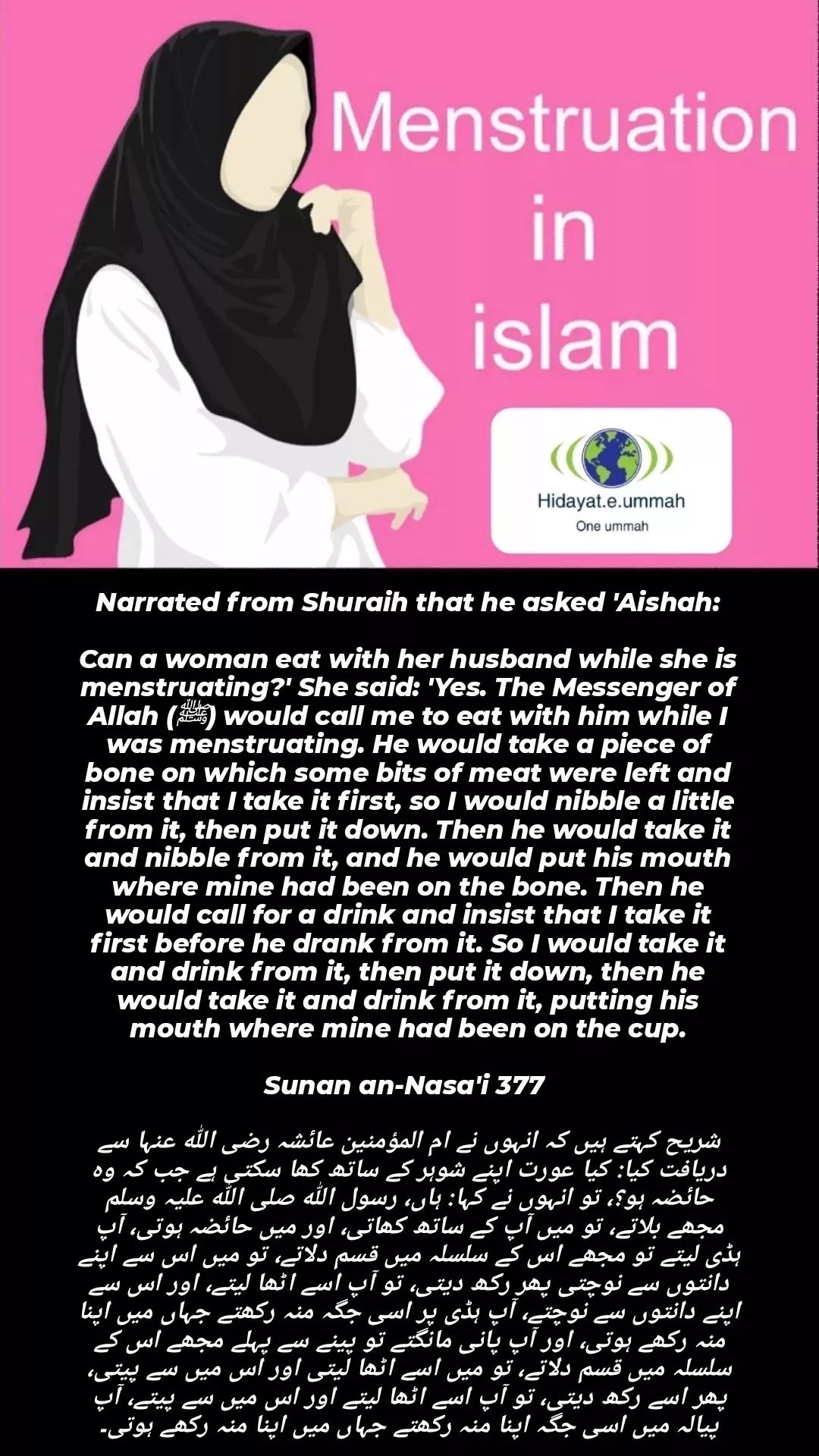
1. This hadith highlights the affectionate and considerate behavior of the Prophet Muhammad (peace be upon him) towards his wife, Aishah, even when she was menstruating.
2. Shuraih asked Aishah if a woman could eat with her husband while menstruating, and she confirmed that it was permissible.
3. Aishah narrated that the Prophet would invite her to eat with him, even during her menstruation.
4. He would take a piece of food or drink from the same spot where she had eaten or drunk, showing love and care.
5. This hadith demonstrates that menstruation does not diminish a woman's dignity or her ability to participate in daily life and intimate moments with her husband.
6. The Prophet's actions emphasize kindness, mutual respect, and breaking cultural taboos surrounding menstruation.
Hadith 4
4 of 10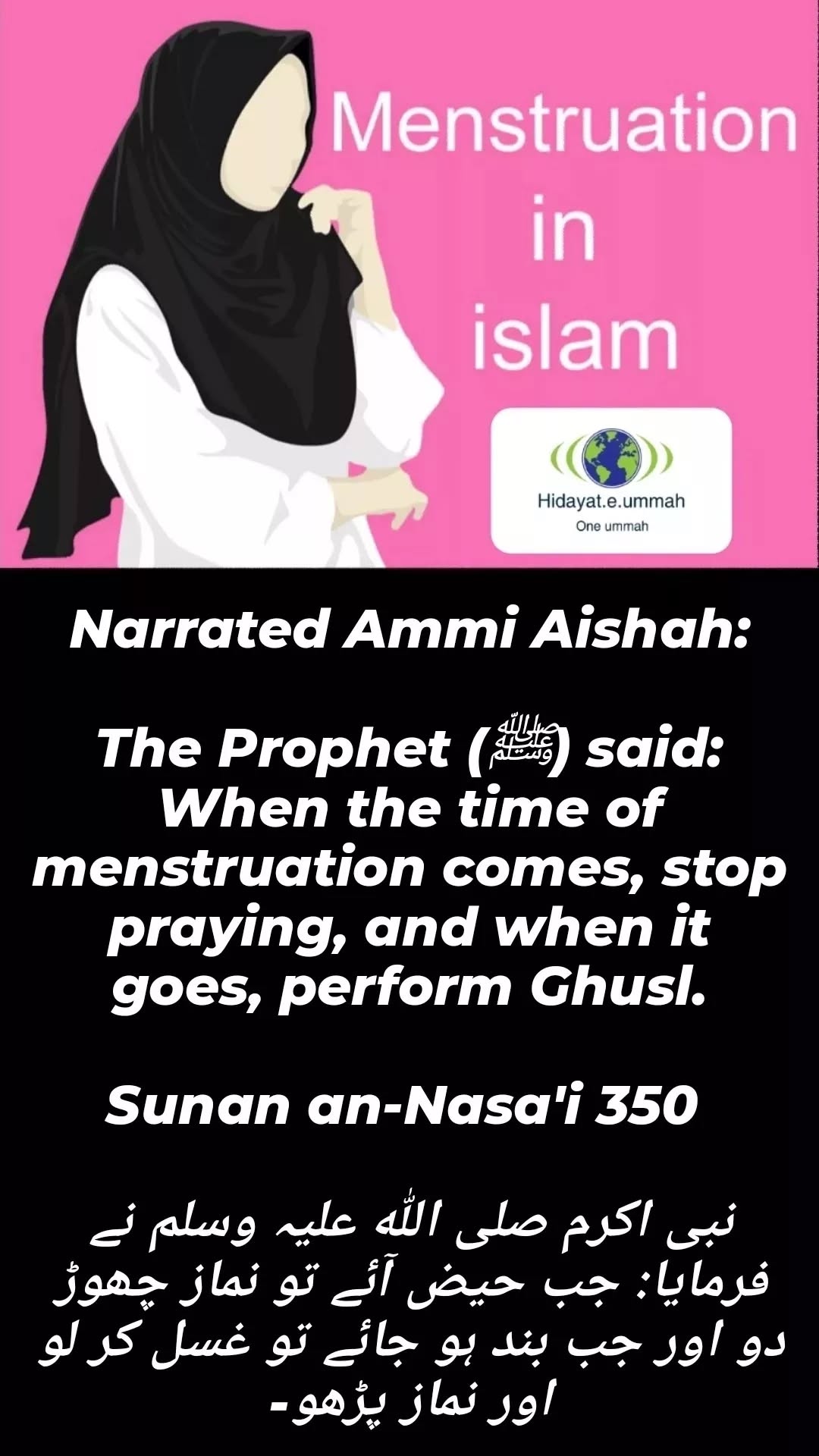
1. This hadith explains the rulings related to menstruation and prayer in Islam.
2. A woman is instructed to stop performing prayers during her menstrual period because prayer is not obligatory in this state.
3. Once the menstruation ends, the woman is required to perform Ghusl (a full-body ritual purification) to purify herself.
4. After performing Ghusl, she can resume her prayers and other acts of worship.
5. This ruling emphasizes cleanliness and spiritual readiness for worship, which is an essential aspect of Islamic practices.
Hadith 5
5 of 10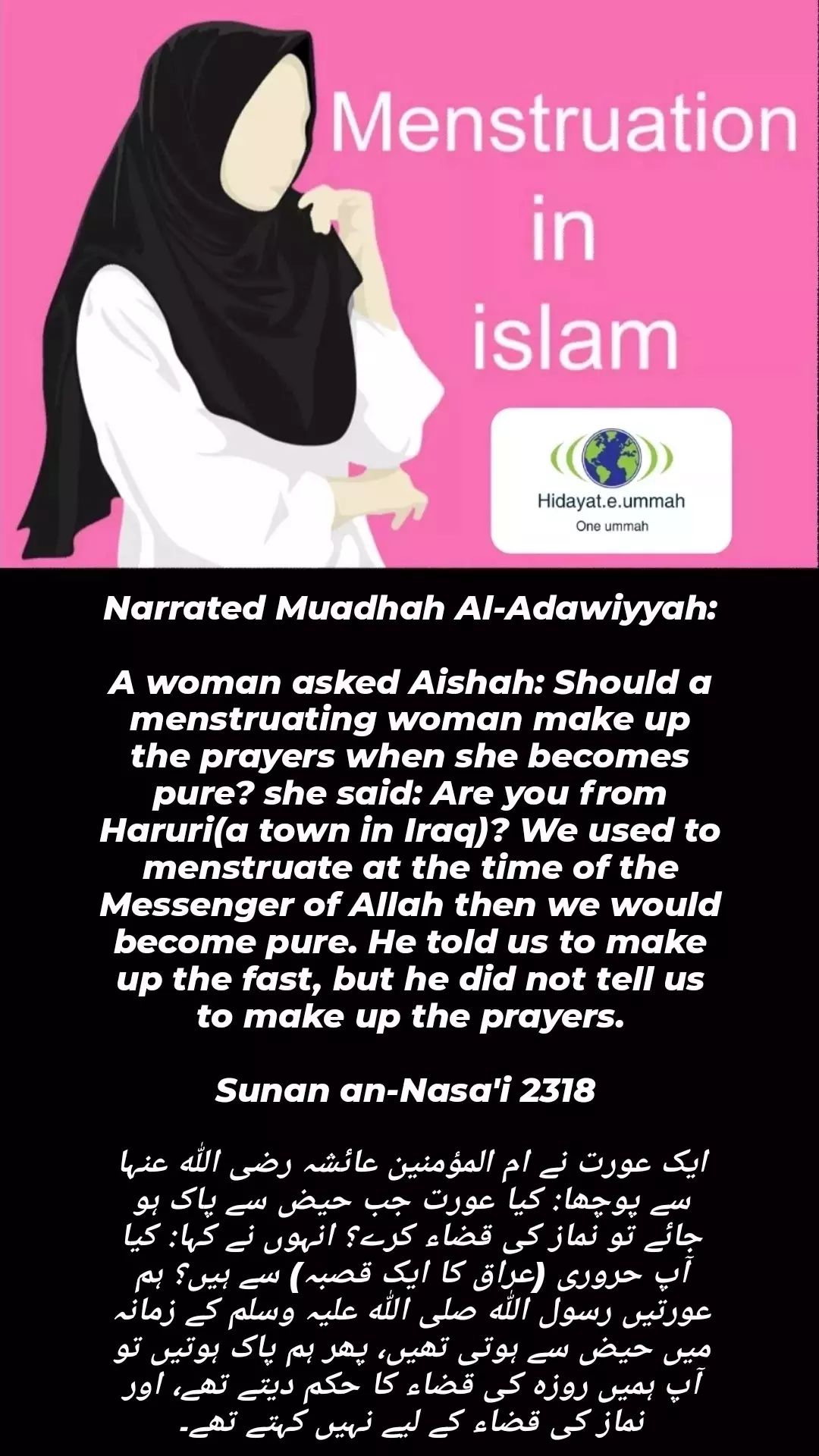
1. This hadith addresses whether women need to make up missed prayers after menstruation.
2. A woman asked Aishah (may Allah be pleased with her) if a menstruating woman should make up for the prayers she missed during her menstrual period.
3. Aishah responded by recalling the practice during the time of the Prophet (peace be upon him), where women would not make up missed prayers after menstruation but would make up missed fasts.
4. This distinction is because prayer is performed multiple times daily, making it burdensome to make up, while fasting is less frequent and can be compensated for later.
5. The response emphasizes that the ruling is a directive from the Prophet (peace be upon him), reflecting ease and practicality in Islamic teachings for menstruating women.
Hadith 6
6 of 10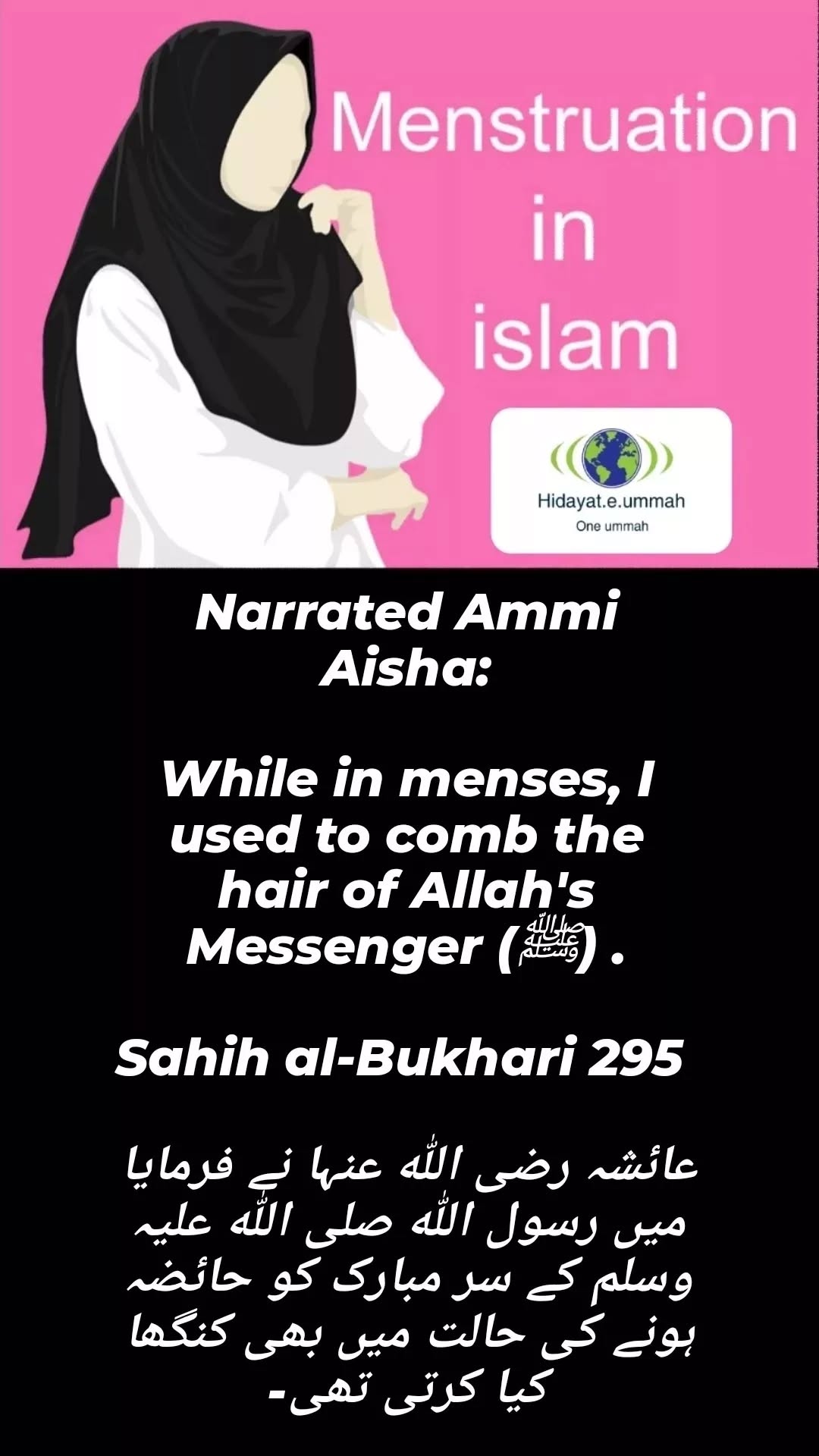
1. This hadith highlights an incident narrated by Aishah (may Allah be pleased with her) about her interaction with the Prophet (peace be upon him) during her menstruation.
2. Aishah mentioned that even while she was menstruating, she would comb the hair of the Prophet (peace be upon him).
3. This demonstrates that physical closeness and acts of care between a husband and wife are permissible during menstruation.
4. It emphasizes that menstruation does not create a barrier to everyday affectionate and supportive interactions between spouses.
5. The hadith reflects the kind and respectful relationship the Prophet (peace be upon him) had with his wives, serving as an example for all.
Hadith 7
7 of 10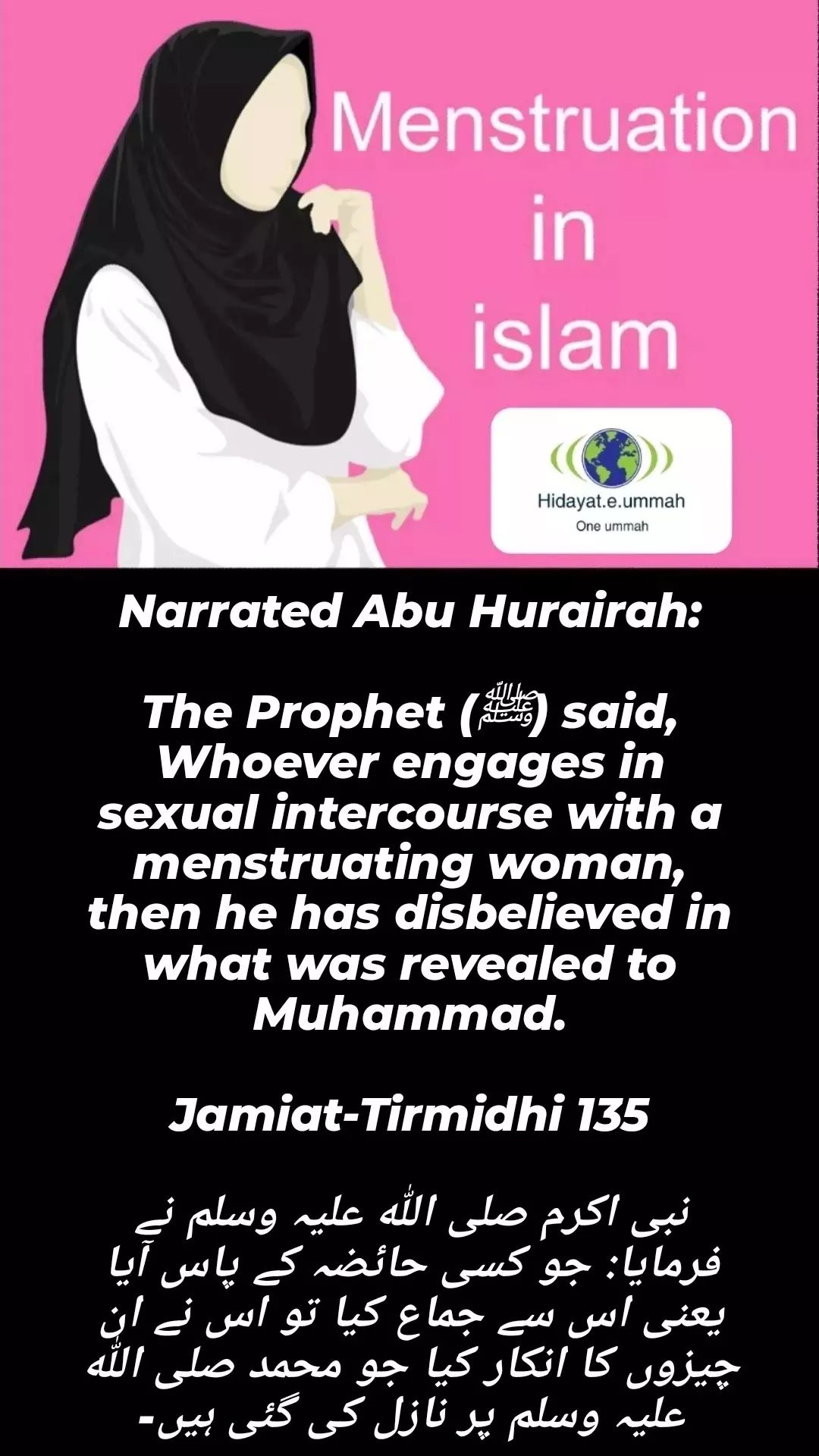
1. This hadith warns against the act of engaging in sexual intercourse with a woman during her menstruation.
2. The term 'disbelieved in what was revealed to Muhammad' emphasizes the severity of this act, as it goes against the teachings of the Qur'an and the Sunnah.
3. In Islam, it is clearly prohibited to have sexual intercourse during menstruation due to the physical and spiritual considerations associated with this period.
4. The prohibition reflects the wisdom in preserving the health and well-being of both partners and respecting the natural cycle ordained by Allah.
5. The hadith serves as a reminder to adhere to Islamic guidelines in matters of intimacy and maintain respect for Allah's commands.
Hadith 8
8 of 10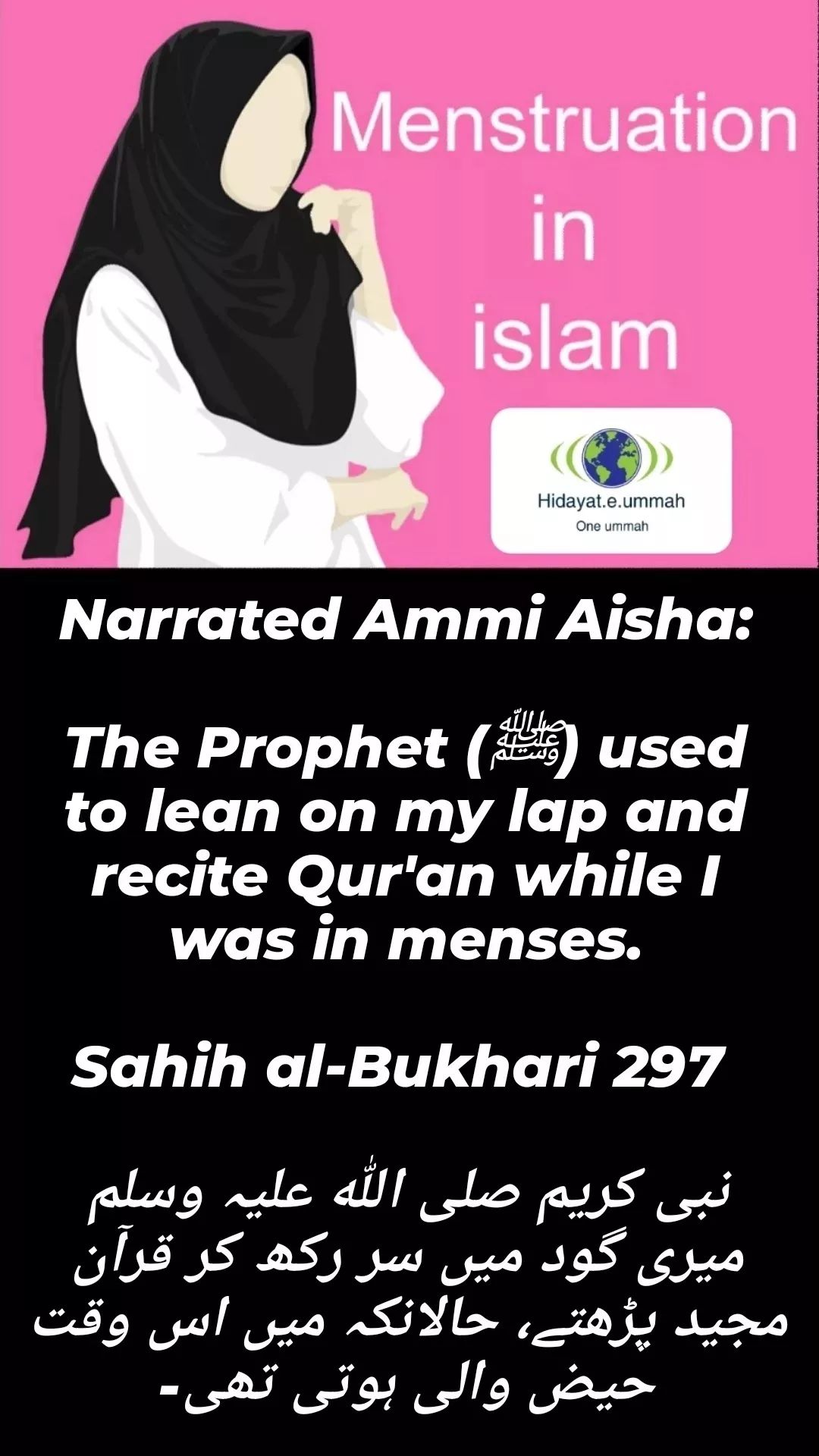
1. This hadith highlights the permissibility of closeness and affection between a husband and wife even when the wife is in her menstrual period.
2. The Prophet Muhammad (peace be upon him) leaned on Aisha's lap while she was menstruating, showing that menstruation does not diminish a woman's dignity or her ability to participate in daily life.
3. Reciting the Qur'an in close proximity to someone who is menstruating is allowed, as the Prophet (peace be upon him) did so without hesitation.
4. The hadith emphasizes that menstruation does not make a woman impure in a way that would prevent normal interactions, love, or affection.
5. This teaches Muslims to maintain a balanced and compassionate approach toward natural processes like menstruation, avoiding any superstitions or negative attitudes.
Hadith 9
9 of 10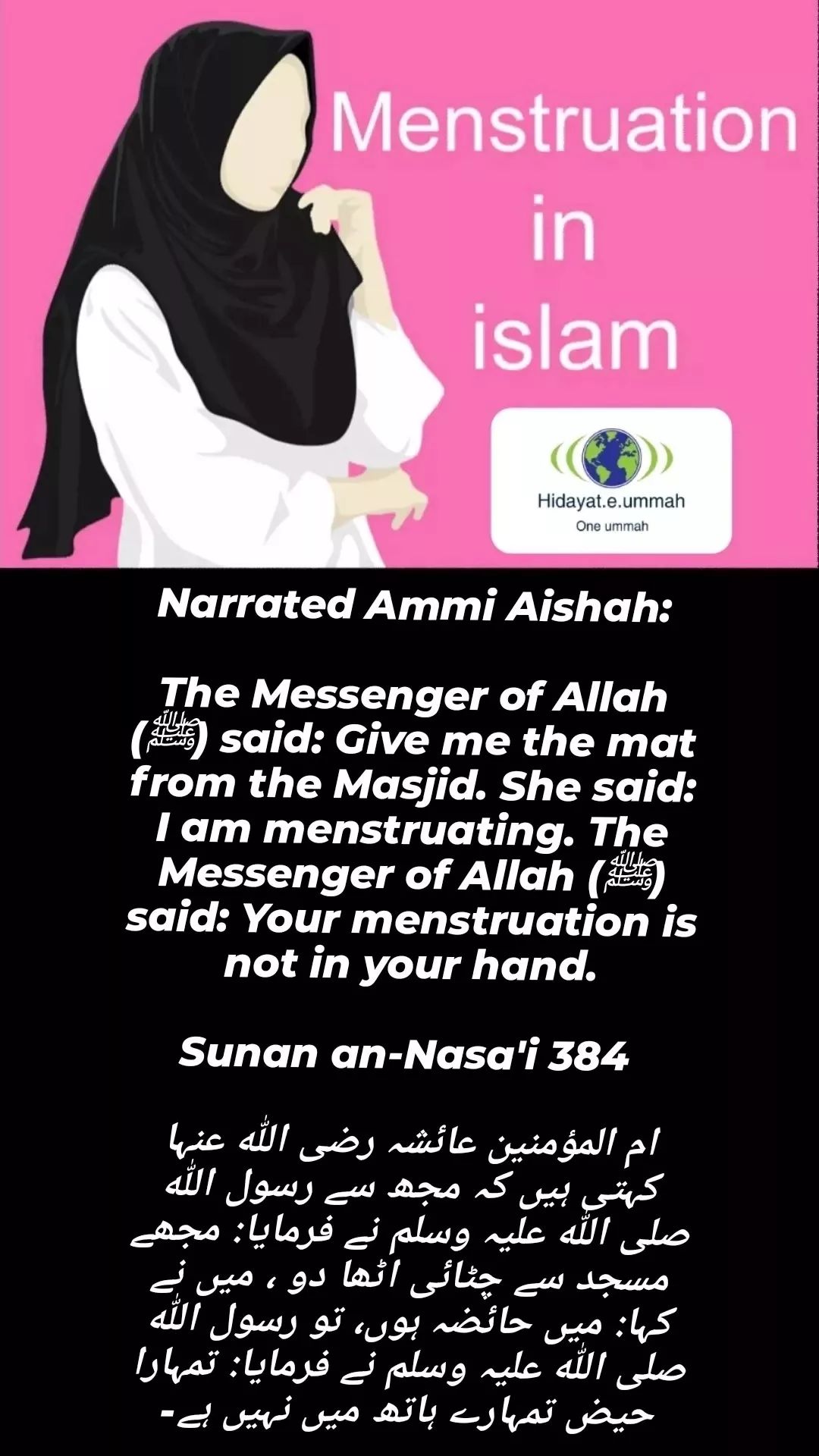
1. This hadith demonstrates the permissibility of a menstruating woman handling or touching clean objects, such as a prayer mat, without any restriction.
2. When Aisha expressed hesitation due to her menstruation, the Prophet Muhammad (peace be upon him) reassured her that menstruation does not affect her ability to carry out ordinary tasks, as it does not involve impurity in her hands or body.
3. The Prophet's response, 'Your menstruation is not in your hand,' clarifies that menstruation is a natural and uncontrollable process, and it should not prevent a woman from participating in daily life.
4. This hadith teaches Muslims not to associate menstruation with physical impurity beyond its specific rulings, such as refraining from prayers or fasting during this time.
5. It emphasizes kindness, understanding, and breaking misconceptions about menstruation, encouraging practical and respectful attitudes toward women during this period.
Hadith 10
10 of 10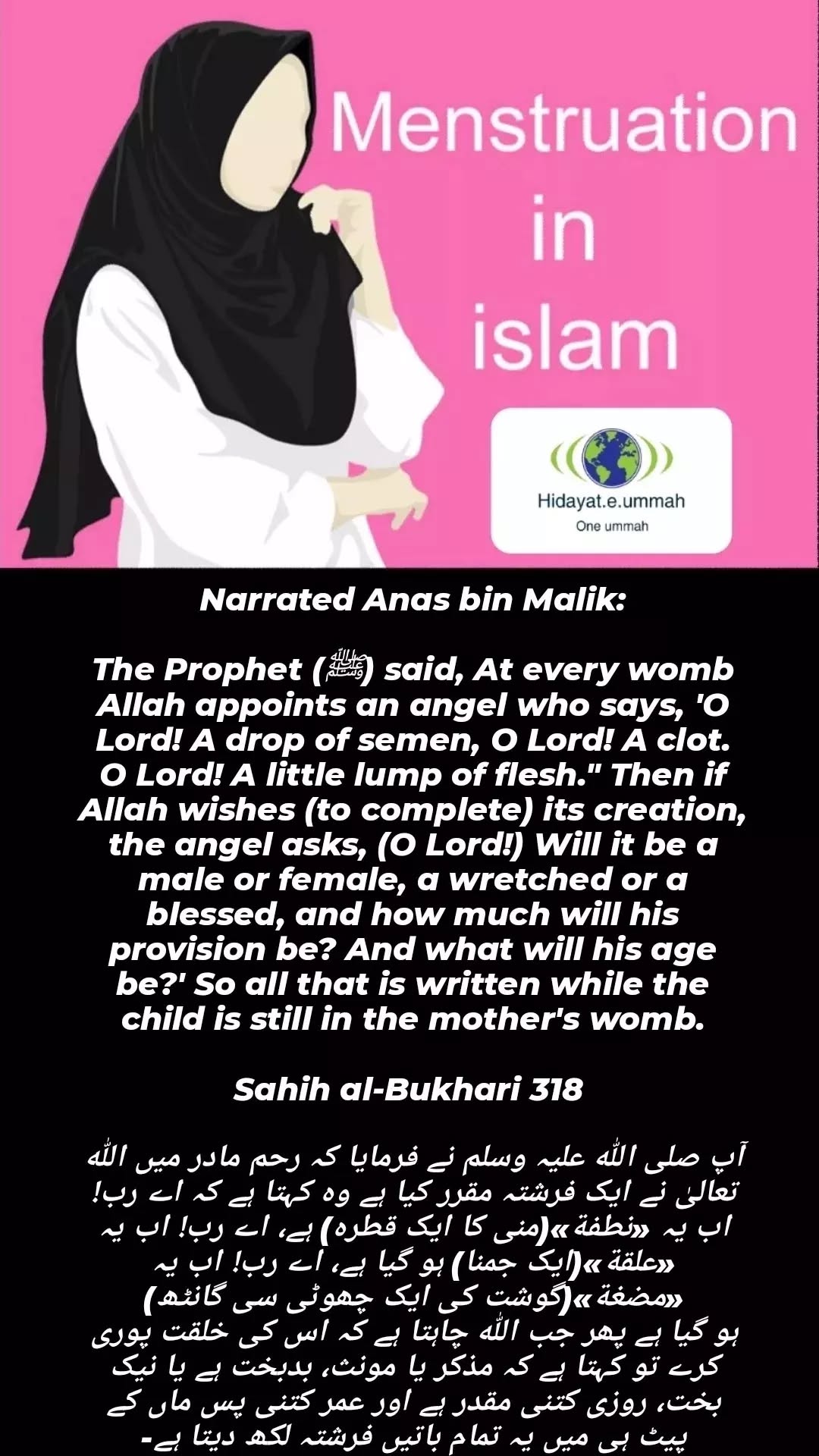
1. This hadith describes the process of creation in the womb, where Allah has appointed an angel to oversee the development of the fetus.
2. The angel begins by asking for the creation of the child at different stages, such as the drop of semen, the clot, and the lump of flesh.
3. Once the creation is nearing completion, the angel asks Allah several important questions, including the child's gender (male or female), whether the child will be fortunate (blessed) or unfortunate (wretched), the child’s sustenance (provision), and the child's lifespan.
4. This hadith teaches that everything about a person’s life, including their gender, fate, provision, and lifespan, is decreed by Allah even before they are born.
5. It highlights the significance of divine predestination and the belief that Allah has complete control over every aspect of creation and destiny.
6. This narration encourages humility and reflection on the power and knowledge of Allah, and it serves as a reminder of His ultimate control over all matters.