
Muharram
Hadith Collection
14 Hadiths
Hadith 1
1 of 14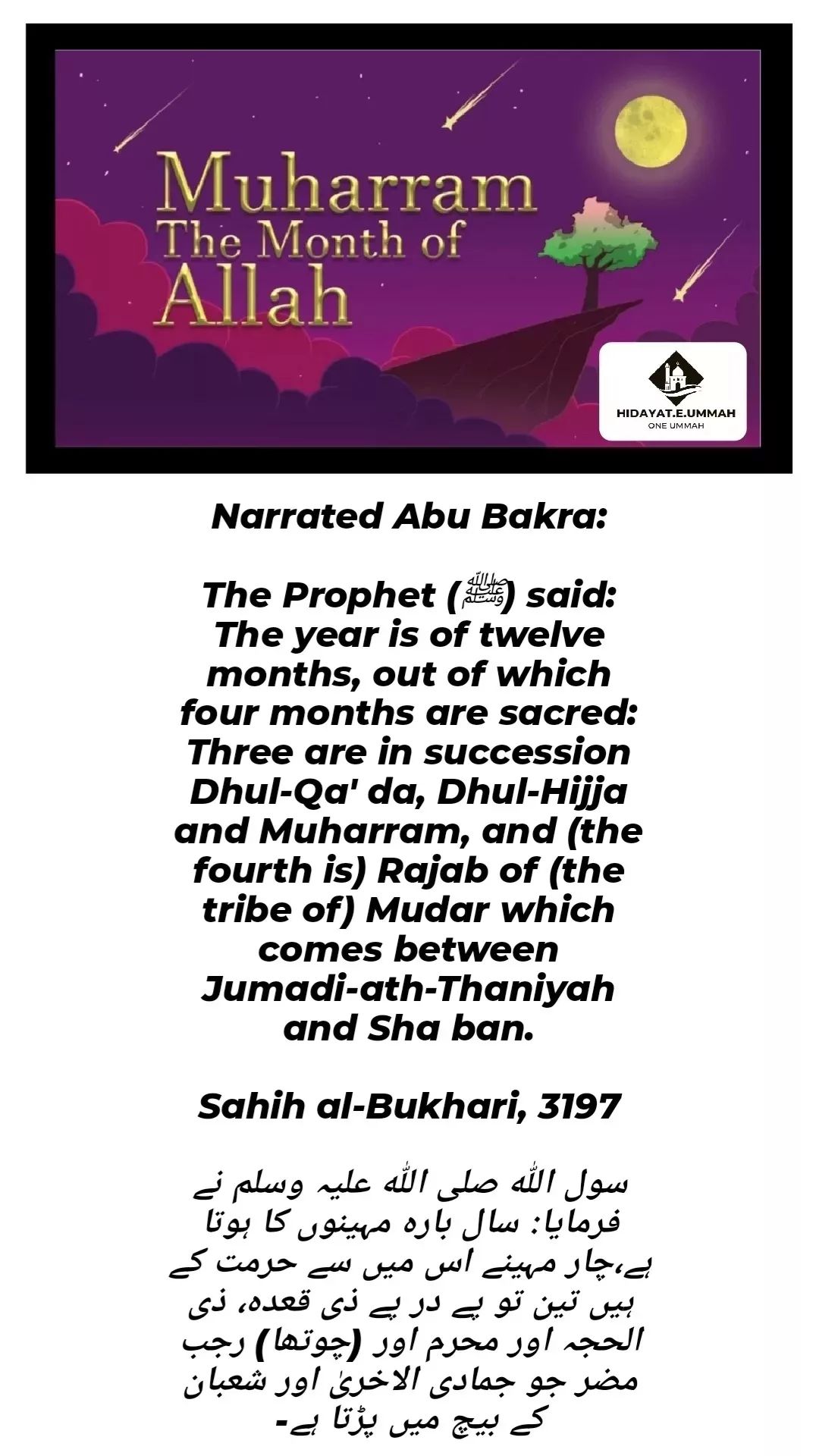
1. In this hadith, the Prophet ( SAW Peace be upon him) is explaining the Islamic lunar calendar.
2. The year in Islam consists of twelve months, and among these months, four are considered sacred.
3. The sacred months are: Dhul-Qa'dah, Dhul-Hijjah, Muharram, and Rajab.
4. Three of these sacred months (Dhul-Qa'dah, Dhul-Hijjah, and Muharram) are in succession, meaning they come one after the other.
5. The fourth sacred month is Rajab, which is specific to the tribe of Mudar. It falls between the months of Jumadi-ath-Thaniyah and Sha'ban.
6. These sacred months are significant in Islam because they are times when warfare and conflict were traditionally prohibited, and Muslims are encouraged to engage in acts of worship and good deeds during these months.
7. The importance of these months lies in their spiritual significance and the opportunity they provide for Muslims to reflect, repent, and draw closer to Allah.
Hadith 2
2 of 14
1. In this hadith, the Prophet ( SAW Peace be upon him) is highlighting the importance of fasting in the month of Al-Muharram.
2. He states that the best fasting after the obligatory fasting of Ramadan is the fasting done in the month of Al-Muharram.
3. Al-Muharram is the first month of the Islamic lunar calendar and is one of the four sacred months mentioned in other hadiths.
4. The Prophet ( SAW Peace be upon him) is encouraging Muslims to fast during this month because of its significance and reward.
5. Fasting during Al-Muharram is highly recommended, and particularly the 10th day of this month, known as 'Ashura', has special merit.
6. The hadith emphasizes that fasting outside of Ramadan is also highly rewarded, with the month of Al-Muharram being the best month to fast after Ramadan.
Hadith 3
3 of 14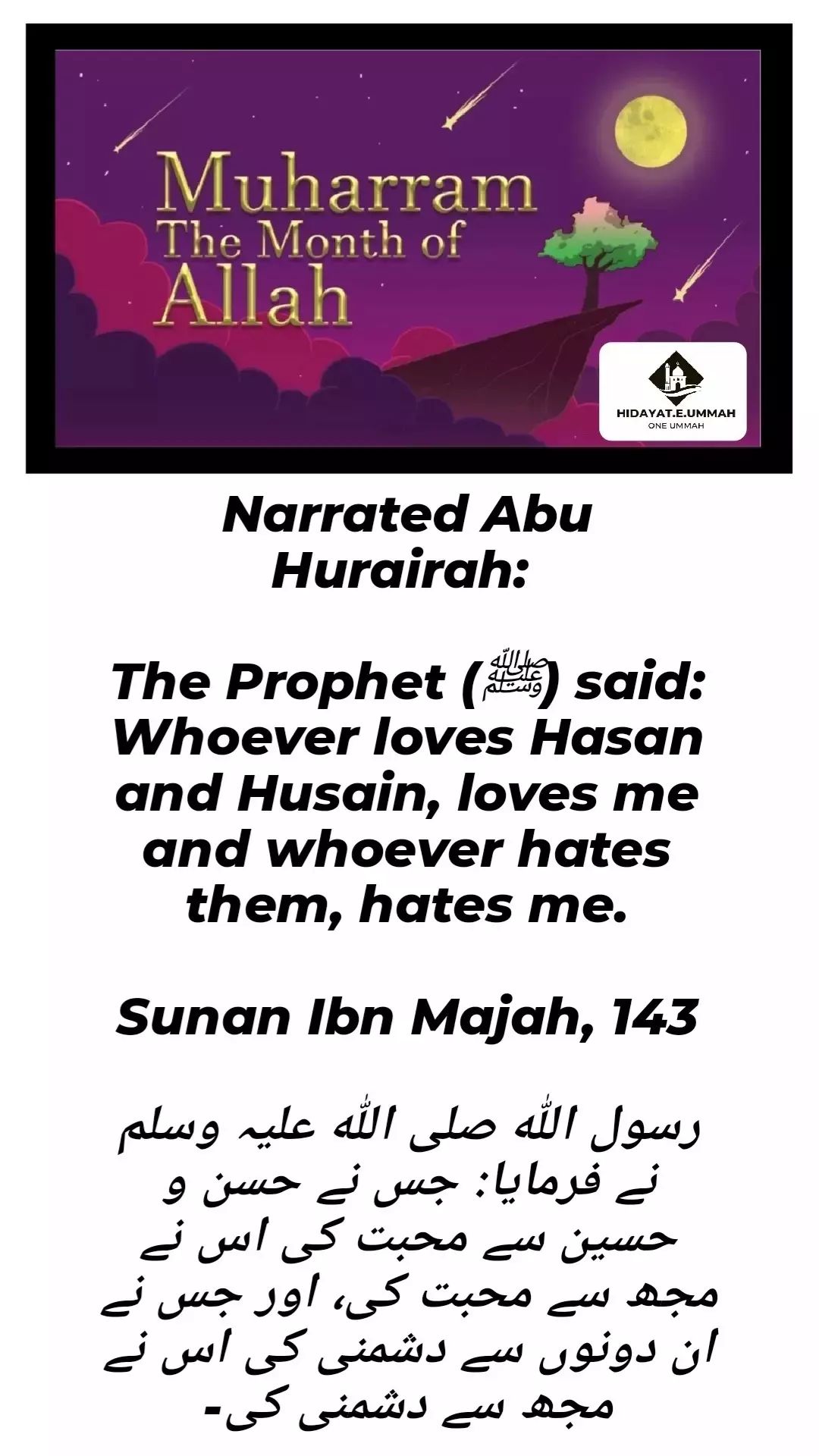
1. In this hadith, the Prophet ( SAW Peace be upon him) is expressing the strong connection between his love for his grandchildren, Hasan and Husain, and his own love.
2. He makes it clear that anyone who loves Hasan and Husain is also showing love for him (the Prophet), as they are his beloved family members.
3. Conversely, anyone who hates or holds animosity towards Hasan and Husain is, in effect, showing hatred towards the Prophet himself.
4. The hadith highlights the importance of respecting and loving the Prophet's family, as they hold a special status in Islam.
5. It teaches that love for the Prophet extends to his family, and mistreatment or dislike for them is considered a rejection of his teachings.
Hadith 4
4 of 14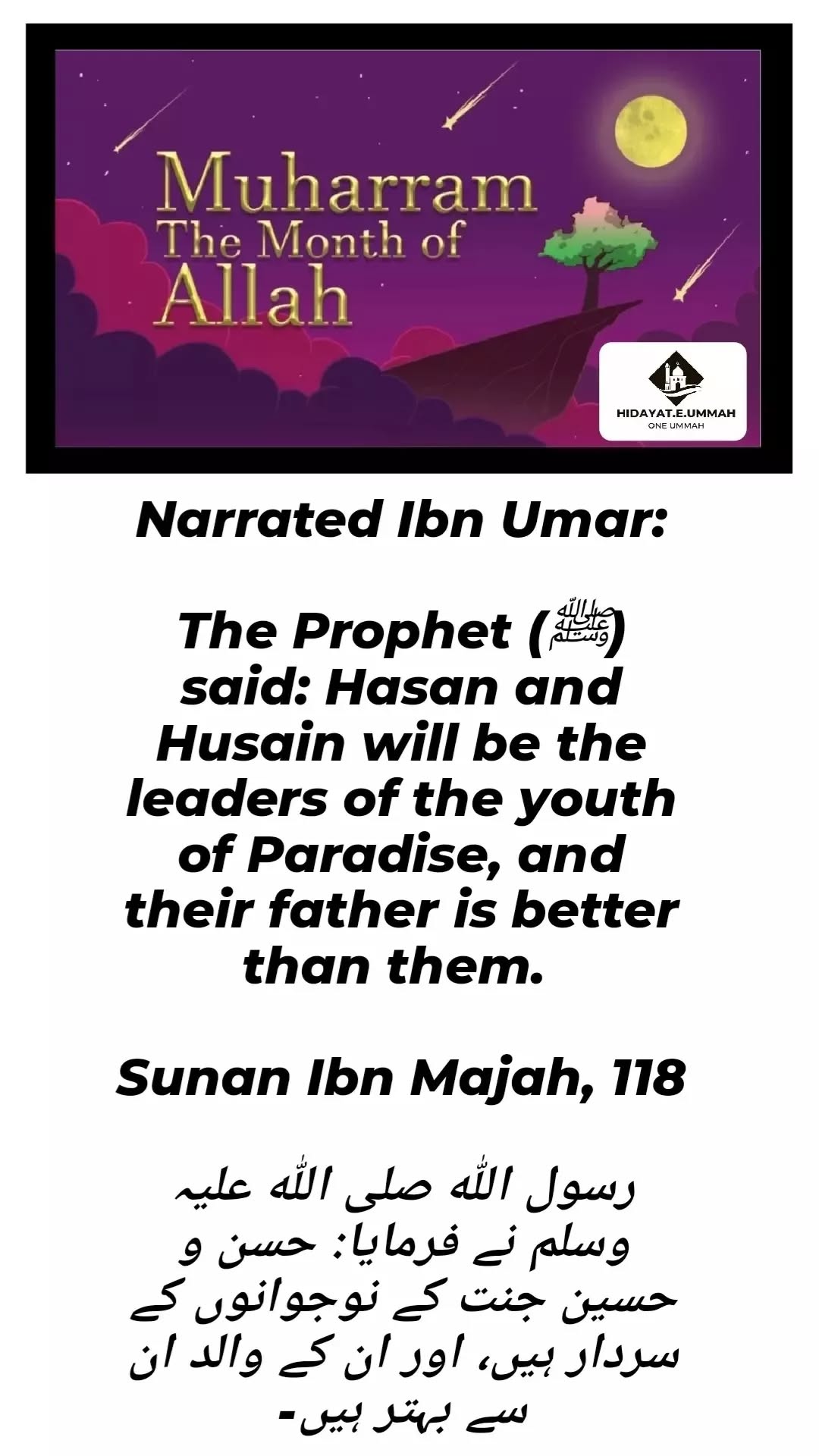
1. In this hadith, the Prophet ( SAW Peace be upon him) mentions that Hasan and Husain, his grandsons, will be the leaders of the youth in Paradise.
2. This emphasizes the high status and honor of Hasan and Husain in the afterlife, where they will be among the most respected individuals in Paradise.
3. However, the Prophet ( SAW Peace be upon him) also clarifies that while Hasan and Husain hold this great position, their father, Ali (the Prophet's cousin and son-in-law), is better than them.
4. The hadith highlights the special status of the Prophet's family (Ahlul Bayt) and the importance of recognizing their virtues and significance in Islam.
Hadith 5
5 of 14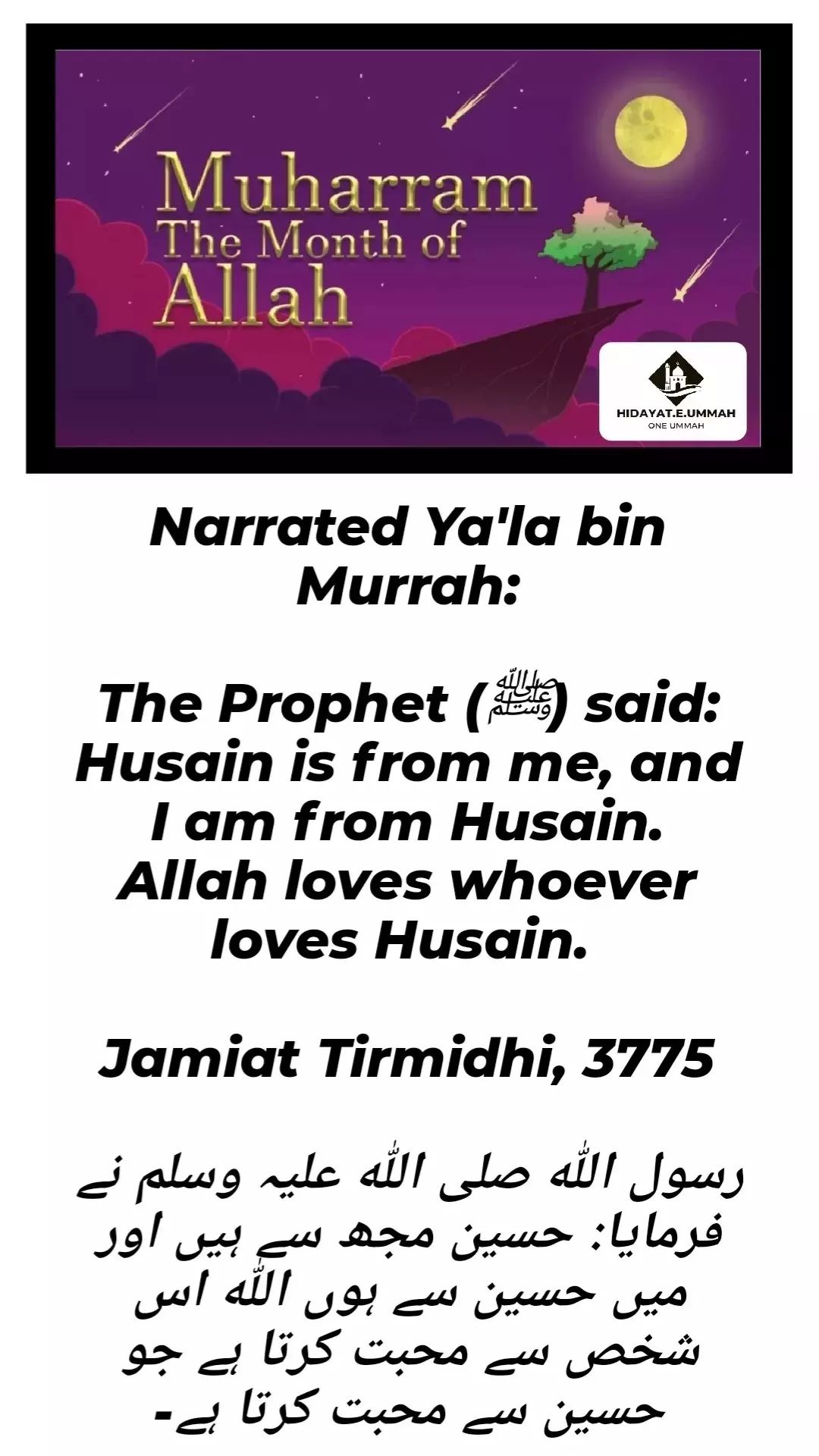
1. In this hadith, the Prophet ( SAW Peace be upon him) declares a close and special relationship between himself and his grandson, Husain.
2. The Prophet ( SAW Peace be upon him) says that Husain is from him, meaning Husain is his direct descendant and part of his family, and the Prophet ( SAW Peace be upon him) is also from Husain, indicating the strong bond between them.
3. The hadith also mentions that Allah loves those who love Husain. This signifies the importance of showing love and respect for Husain, as he holds a special place in Islam.
4. This statement reflects the elevated status of Husain and his family, and encourages the Muslim community to love and honor them.
Hadith 6
6 of 14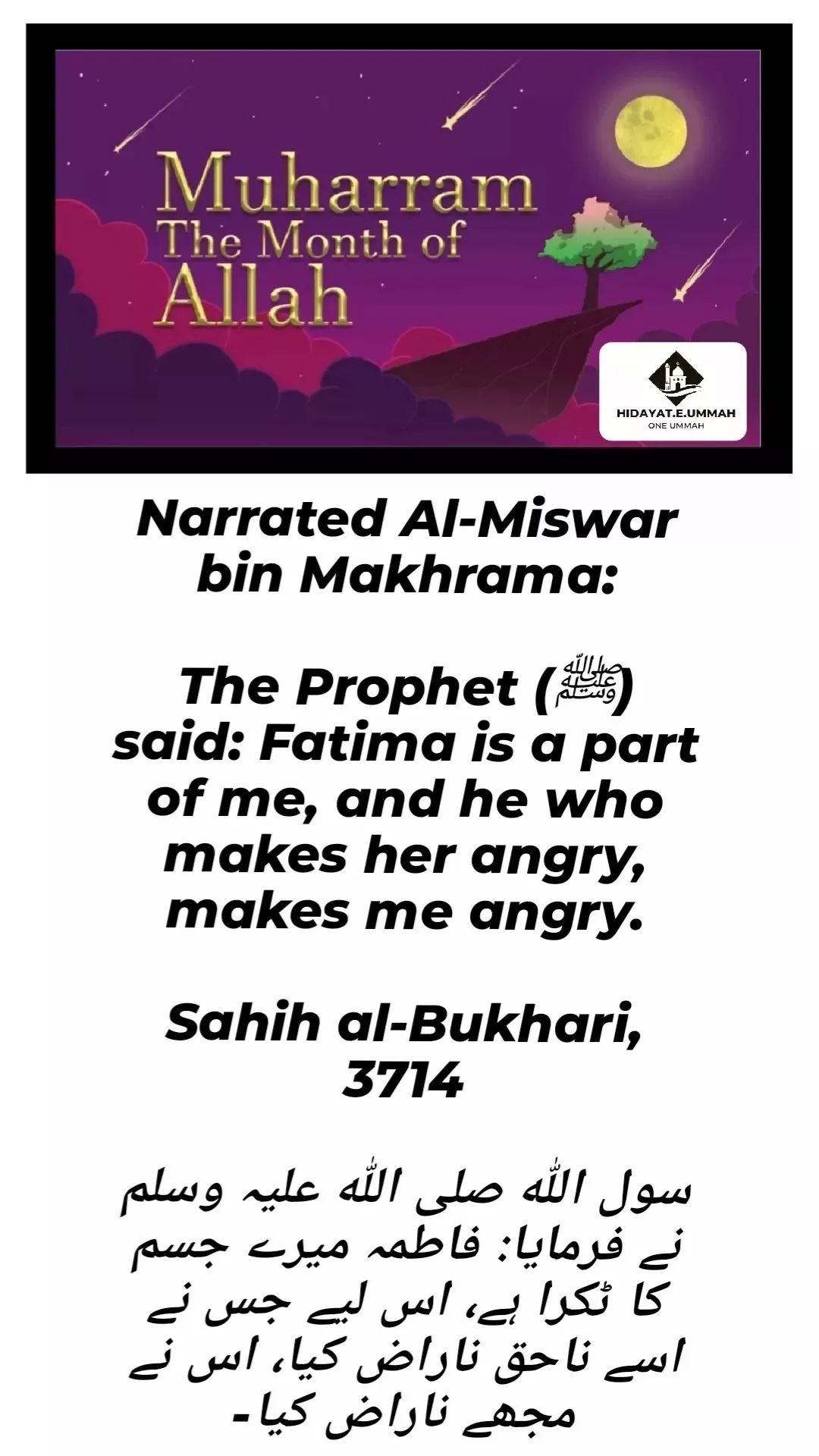
1. In this hadith, the Prophet ( SAW Peace be upon him) emphasizes the close and integral relationship he has with his daughter, Fatima.
2. The Prophet ( SAW Peace be upon him) says that Fatima is a part of him, signifying her importance and closeness to him, both emotionally and spiritually.
3. The hadith further explains that anyone who makes Fatima angry will also make the Prophet ( SAW Peace be upon him) angry, highlighting the deep connection between them.
4. This teaches Muslims the importance of respecting and honoring Fatima, as her actions and well-being are closely tied to the Prophet ( SAW Peace be upon him)'s own honor and approval.
Hadith 7
7 of 14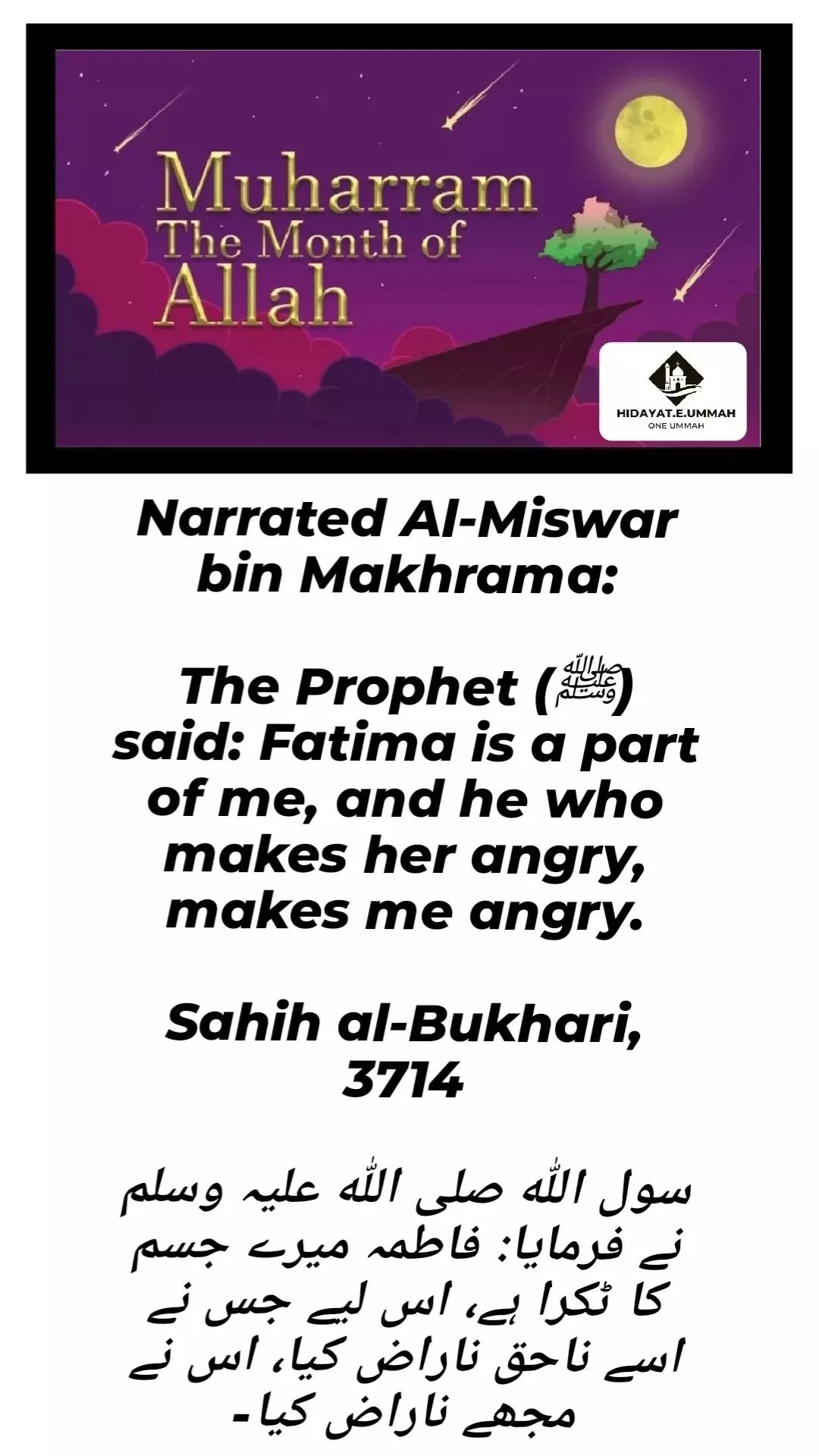
1. In this hadith, the Prophet ( SAW Peace be upon him) emphasizes the close and integral relationship he has with his daughter, Fatima.
2. The Prophet ( SAW Peace be upon him) says that Fatima is a part of him, signifying her importance and closeness to him, both emotionally and spiritually.
3. The hadith further explains that anyone who makes Fatima angry will also make the Prophet ( SAW Peace be upon him) angry, highlighting the deep connection between them.
4. This teaches Muslims the importance of respecting and honoring Fatima, as her actions and well-being are closely tied to the Prophet ( SAW Peace be upon him)'s own honor and approval.
Hadith 8
8 of 14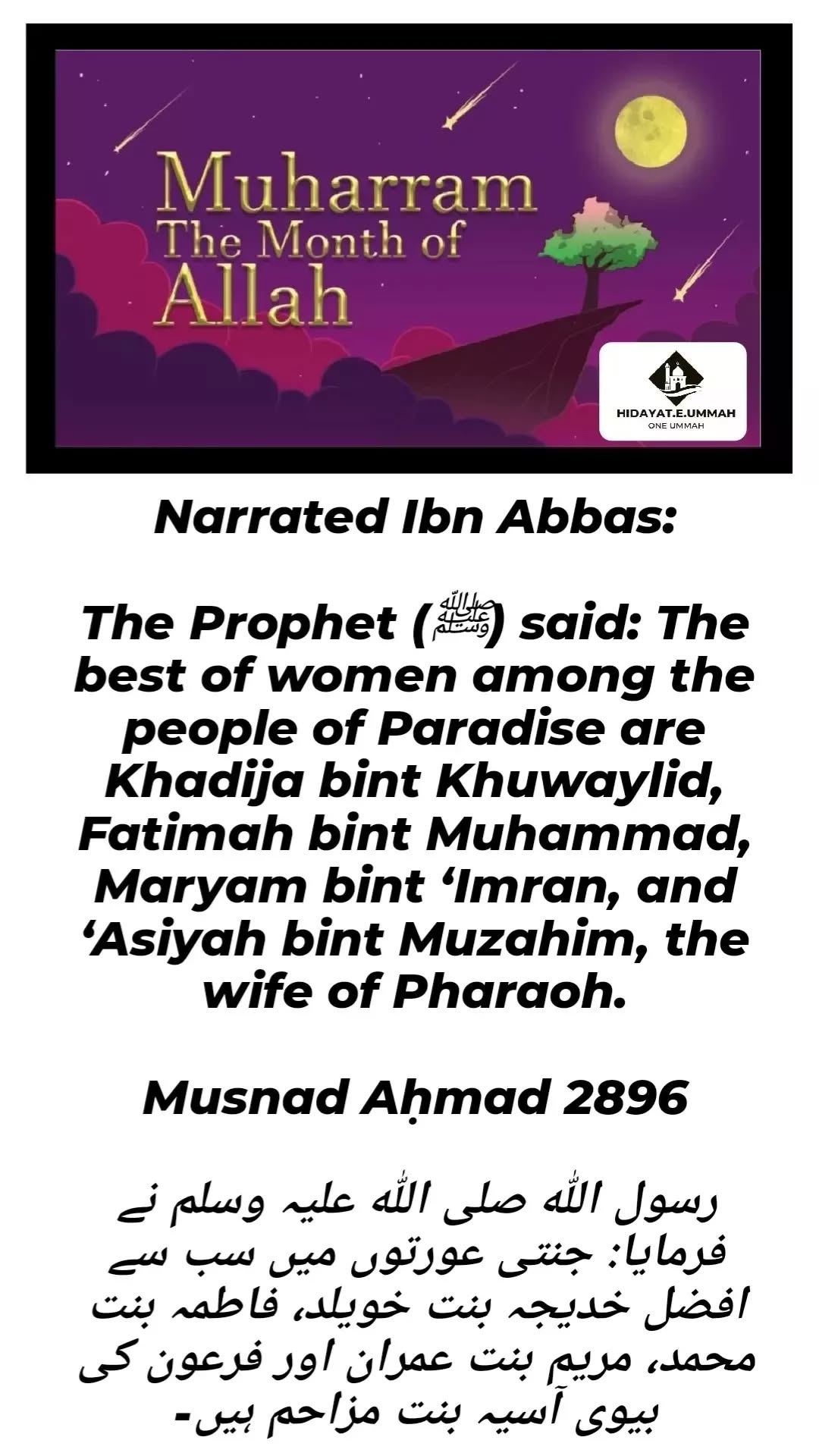
1. This hadith mentions four women who are considered the best among all women in Paradise.
2. The first woman is Khadija bint Khuwaylid, the Prophet Muhammad's ( SAW Peace be upon him) first wife, known for her strong faith, loyalty, and support of the Prophet during the early years of Islam.
3. The second woman is Fatimah bint Muhammad, the beloved daughter of the Prophet ( SAW Peace be upon him), who is honored for her piety, patience, and dedication to Allah.
4. The third woman is Maryam bint 'Imran, the mother of Prophet 'Isa (Jesus), revered for her purity, devotion, and unwavering trust in Allah.
5. The fourth woman is 'Asiyah bint Muzahim, the wife of Pharaoh, who is praised for her unwavering faith in Allah despite the oppression she faced in the tyrannical household of Pharaoh.
6. These four women serve as exemplary role models for their devotion to Allah, showing strength, patience, and unwavering faith even in the most challenging circumstances.
Hadith 9
9 of 14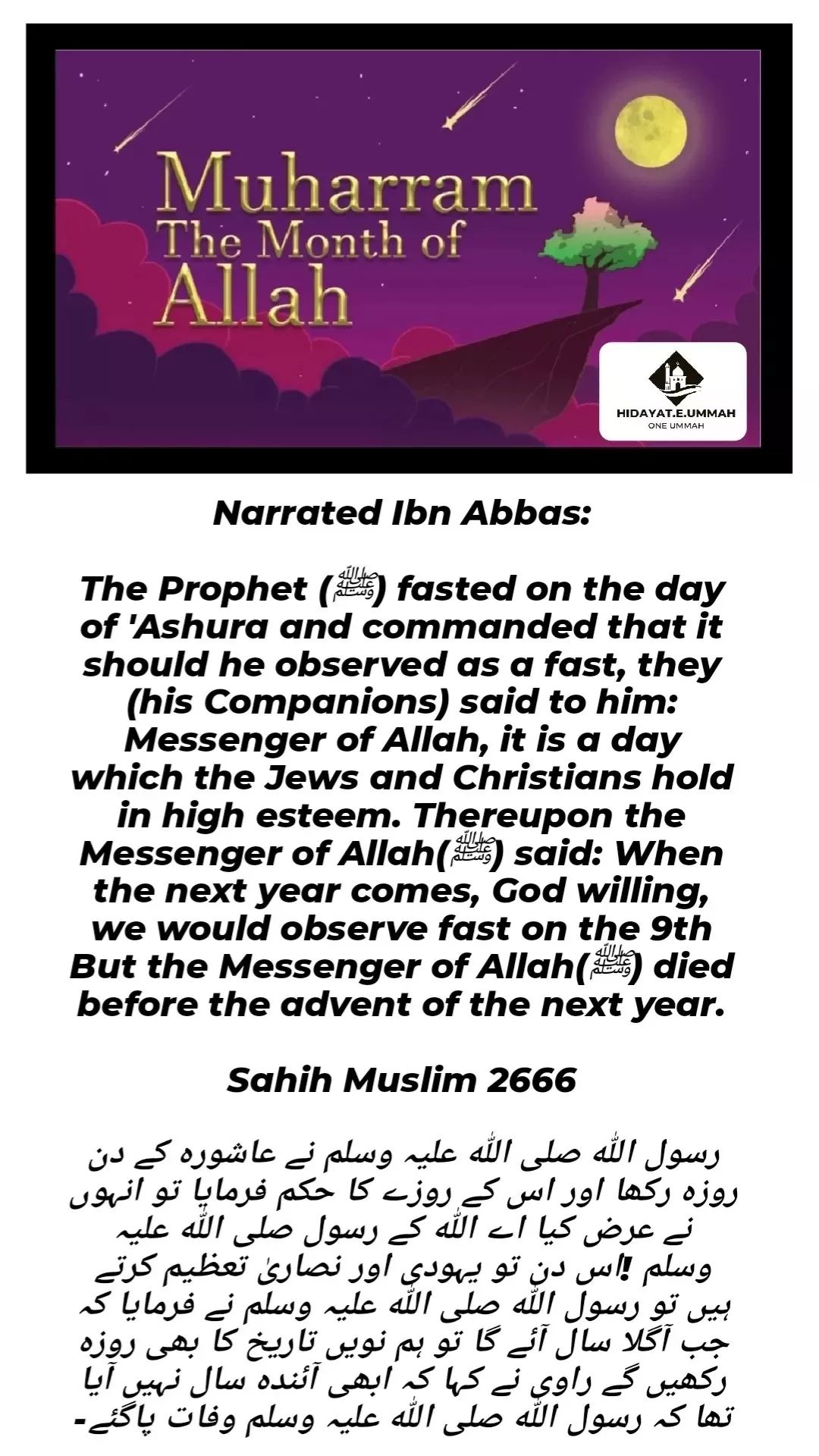
1. This hadith talks about the Prophet Muhammad ( SAW Peace be upon him) fasting on the day of 'Ashura, which is the 10th day of Muharram, and commanding the Muslims to fast on that day as well.
2. The Companions of the Prophet ( SAW Peace be upon him) pointed out that the Jews and Christians also hold this day in high regard.
3. In response, the Prophet ( SAW Peace be upon him) said that in the following year, they would fast on both the 9th and 10th of Muharram, as a way to distinguish their practice from that of the Jews and Christians.
4. Unfortunately, the Prophet ( SAW Peace be upon him) passed away before the next year came, so this change was never implemented.
5. The hadith reflects the Prophet's intention to emphasize the uniqueness of the Muslim fasting practice while still acknowledging the significance of 'Ashura.
Hadith 10
10 of 14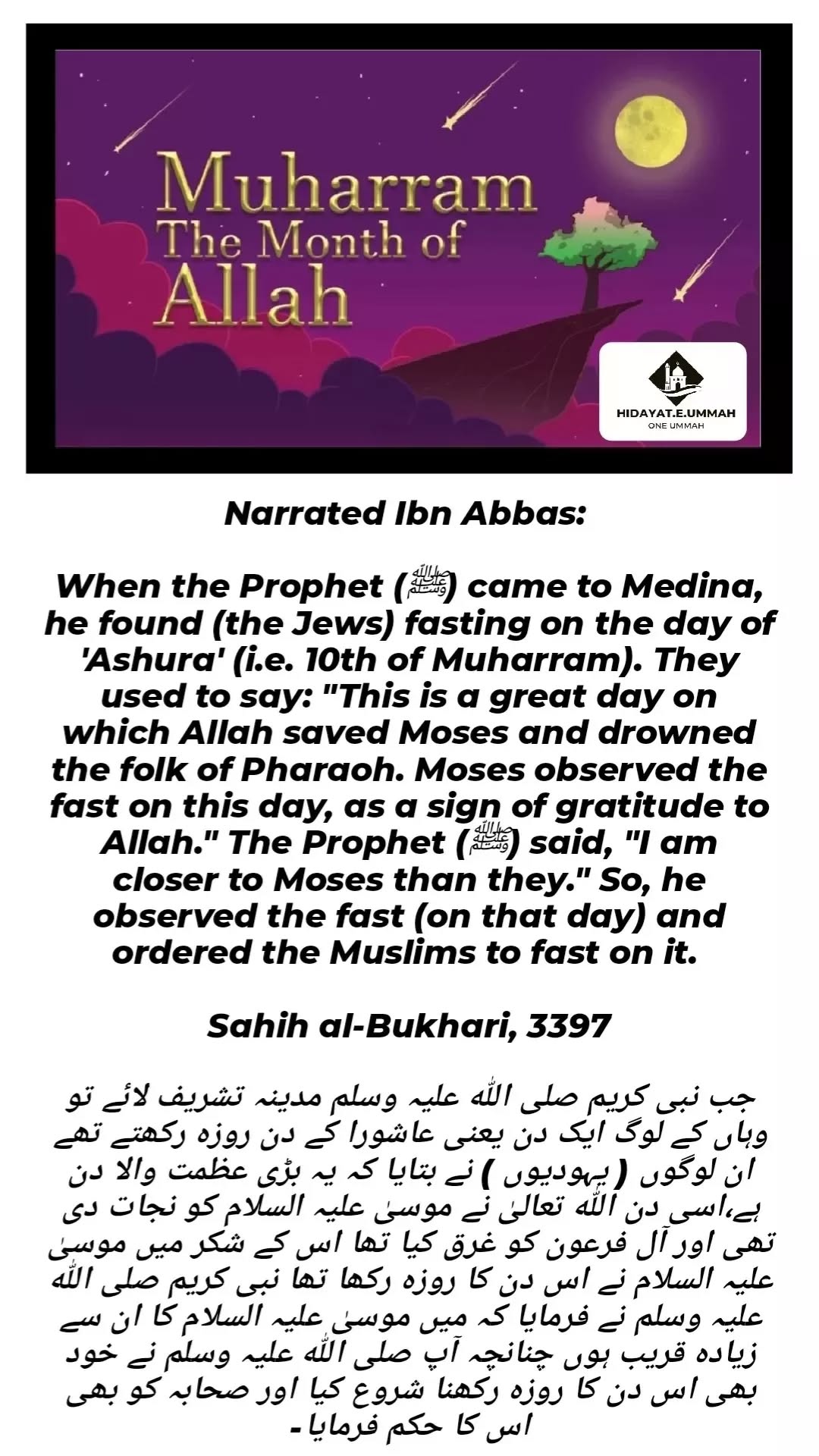
1. This hadith describes an event that took place when the Prophet Muhammad ( SAW Peace be upon him) arrived in Medina and noticed that the Jews were fasting on the day of 'Ashura' (the 10th day of Muharram).
2. The Jews fasted on this day to commemorate the day when Allah saved Prophet Moses (Musa) and his followers, while drowning the people of Pharaoh. They fasted as a sign of gratitude for this great event.
3. The Prophet Muhammad ( SAW Peace be upon him) responded by saying, 'I am closer to Moses than they,' meaning that Muslims are more deserving of honoring Moses and his story.
4. As a result, the Prophet ( SAW Peace be upon him) fasted on this day himself and also ordered the Muslims to fast on it as well, linking it to the gratitude and remembrance of the divine favor shown to Moses and his followers.
Hadith 11
11 of 14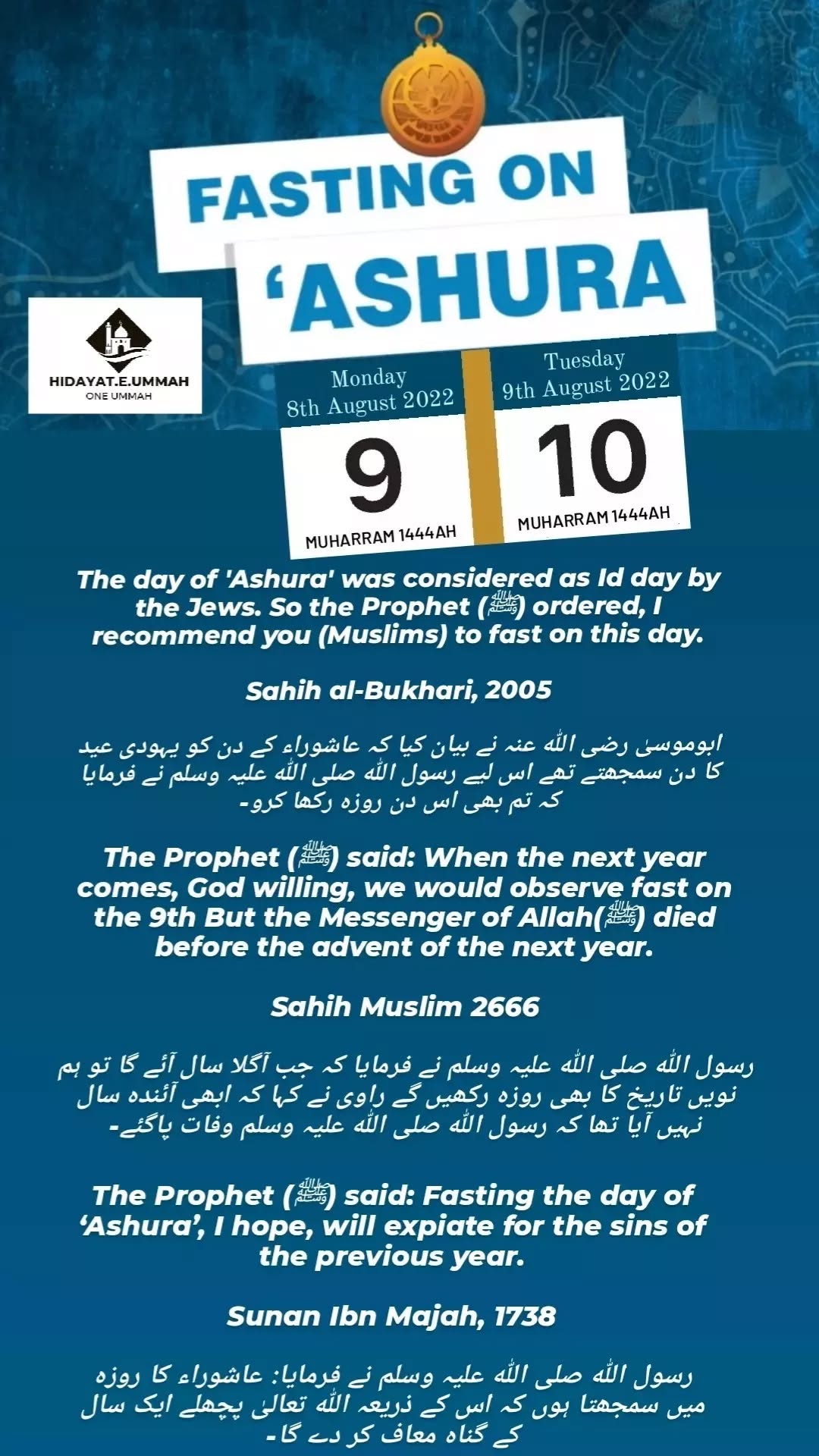
The strong man is not the one who wrestles others, but the one who controls himself when angry. – Prophet Muhammad (peace be upon him)
Hadith 12
12 of 14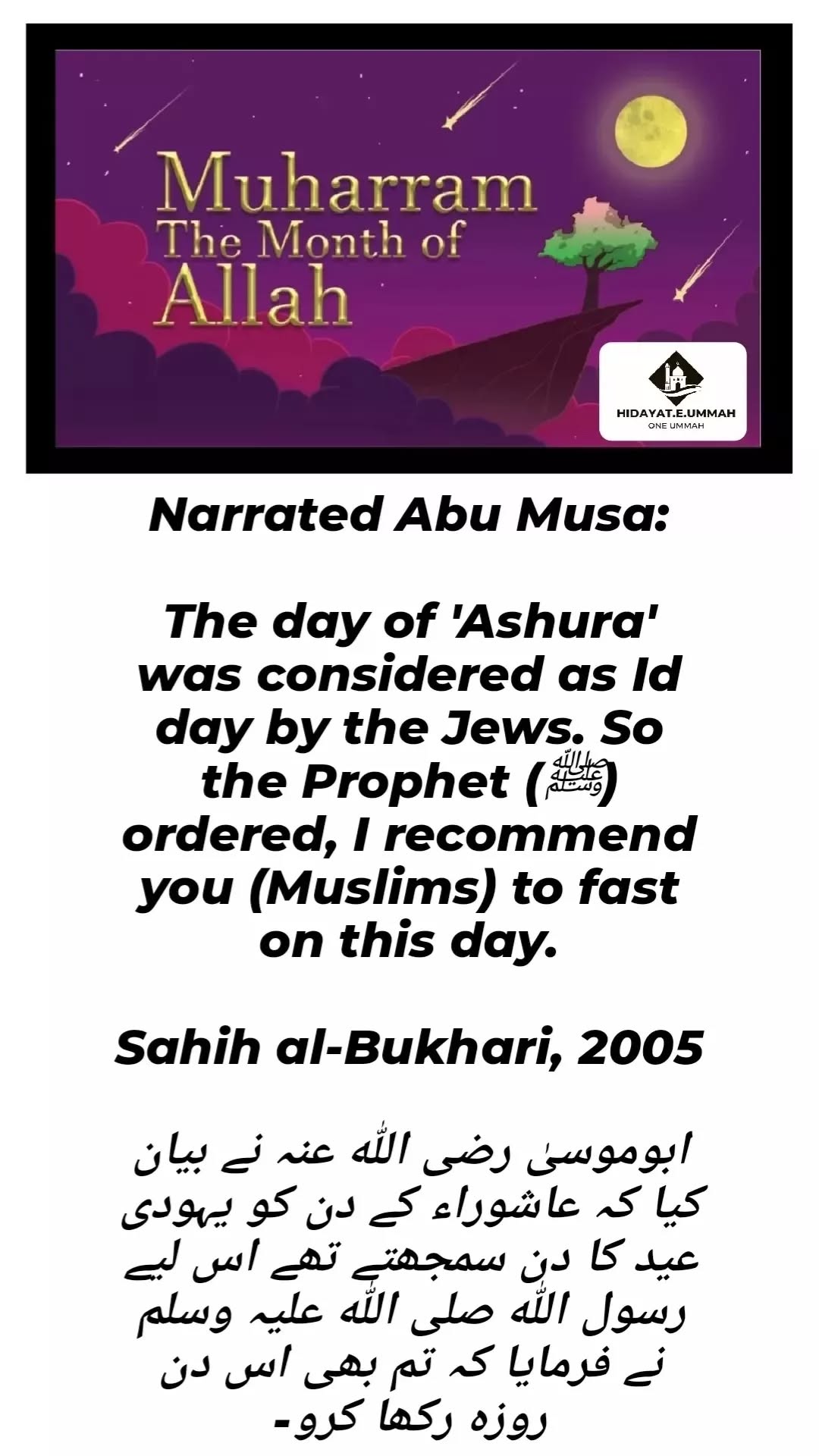
1. In this hadith, Abu Musa reports that the Jews used to consider the day of 'Ashura' as a day of celebration, similar to how Muslims celebrate Eid.
2. The Prophet Muhammad ( SAW Peace be upon him) recommended that Muslims fast on this day, showing that it holds special significance.
3. While the Jews celebrated 'Ashura', the Prophet ( SAW Peace be upon him) guided Muslims to fast on this day to mark its importance, and fasting on 'Ashura' became a significant practice in Islam, with the Prophet encouraging Muslims to observe it as a means of gaining rewards and forgiveness.
Hadith 13
13 of 14
1. In this hadith, Abu Qatadah reports that the Prophet Muhammad ( SAW Peace be upon him) mentioned that fasting on the day of 'Ashura' carries a great reward.
2. The Prophet ( SAW Peace be upon him) said that fasting on this day would expiate or forgive the sins of the previous year. This means that fasting on 'Ashura' is a way to seek forgiveness from Allah for the mistakes and sins committed in the past year.
3. 'Ashura is the 10th day of the Islamic month of Muharram, and fasting on this day holds great significance in Islam as a means of purification and seeking Allah's mercy.
Hadith 14
14 of 14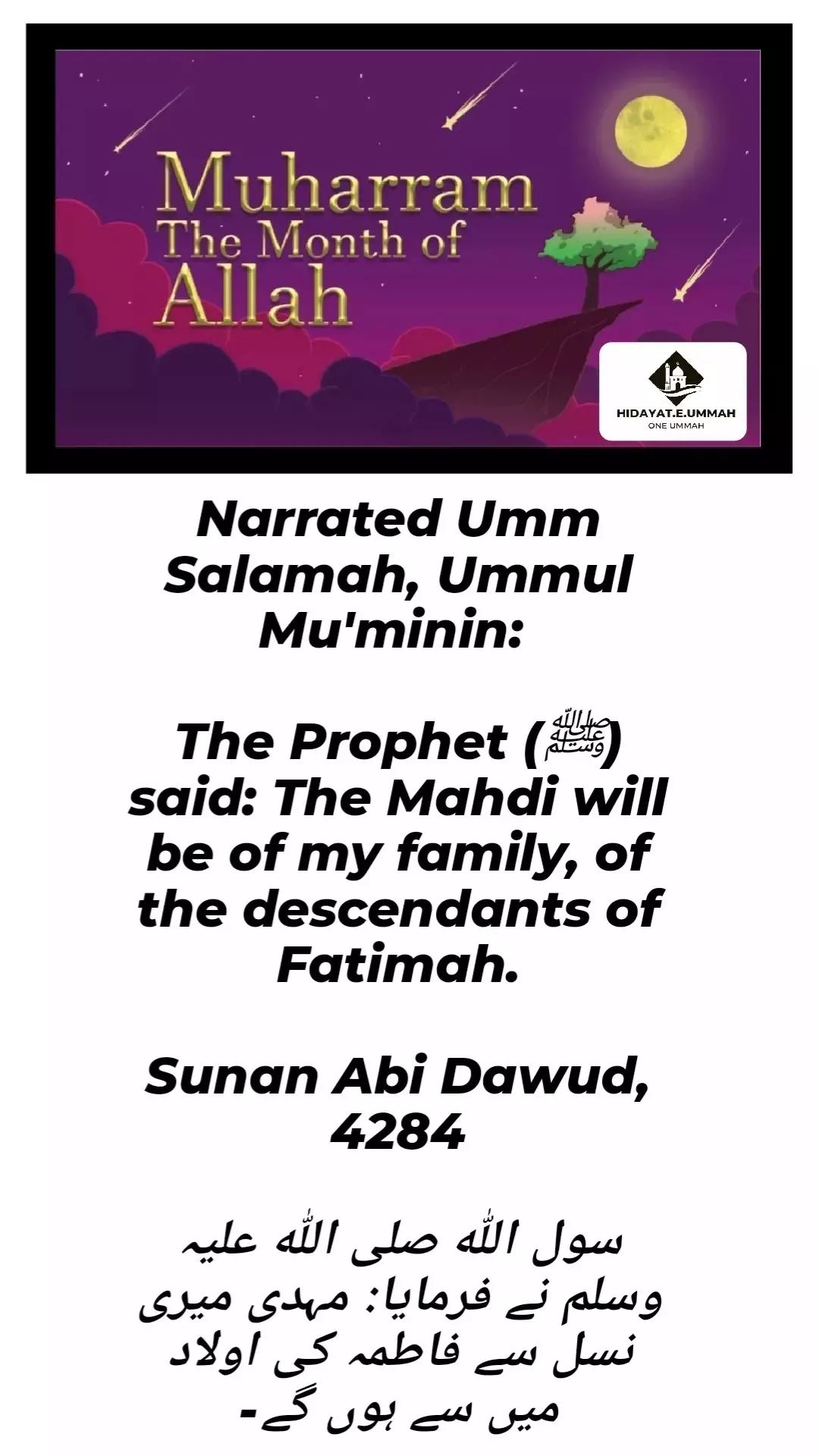
1. In this hadith, Umm Salamah, one of the wives of the Prophet Muhammad ( SAW Peace be upon him), reports that the Prophet ( SAW Peace be upon him) said that the Mahdi will be from his family, specifically from the descendants of his daughter, Fatimah.
2. The Mahdi is a significant figure in Islamic eschatology, believed to be a righteous leader who will appear in the future to restore justice, equity, and peace, and to guide the Muslims before the Day of Judgment.
3. The hadith emphasizes that the Mahdi will come from the lineage of the Prophet Muhammad ( SAW Peace be upon him), through his daughter Fatimah, thus signifying his noble and direct connection to the Prophet's family.