
Riba
Hadith Collection
6 Hadiths
Hadith 1
1 of 6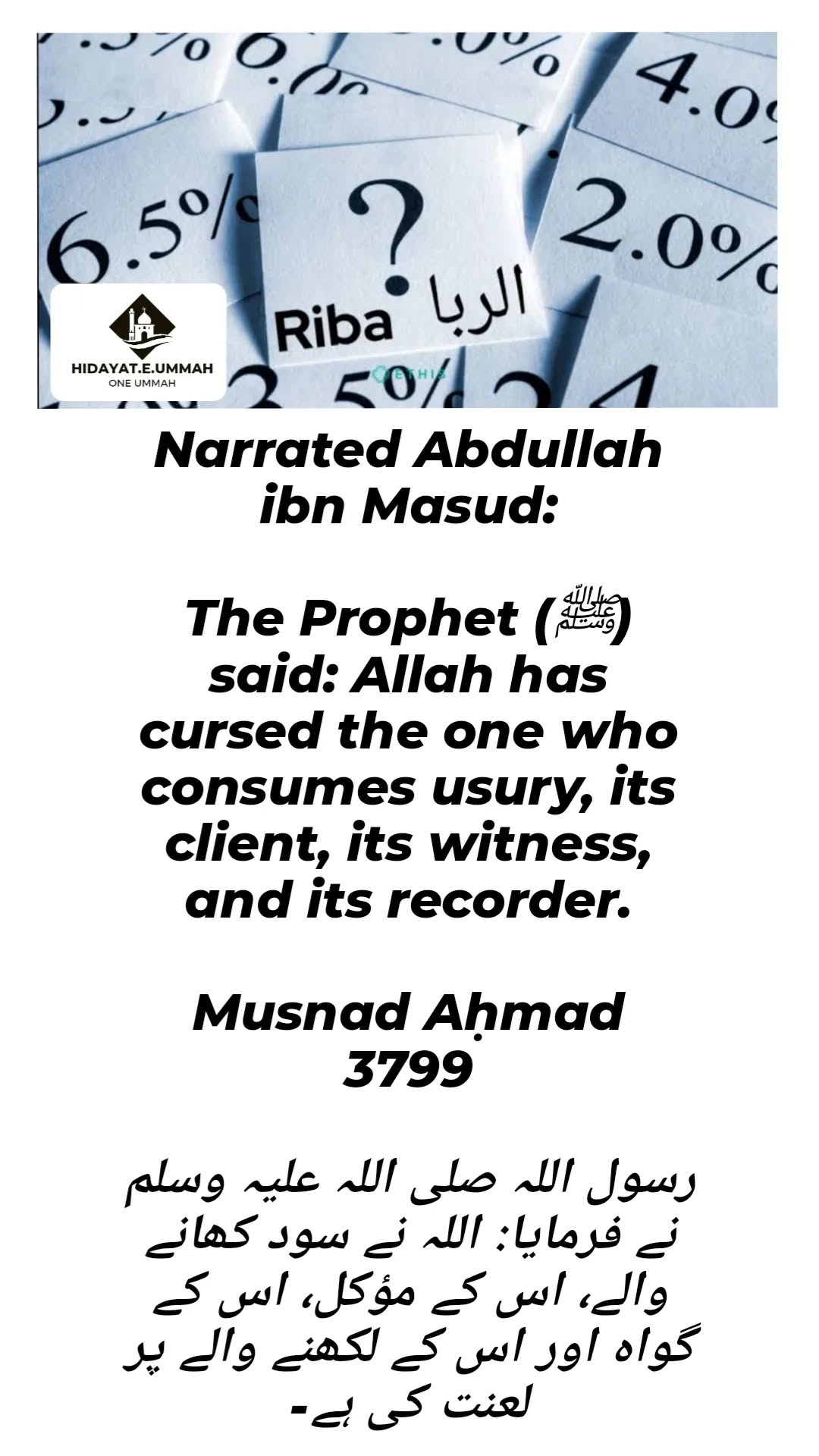
This hadith, narrated by Abdullah ibn Masud (may Allah be pleased with him), warns against the grave sin of engaging in usury (Riba) in any form.
1. **Curse on Usury:**
- The Prophet Muhammad (peace be upon him) declared that Allah has cursed all those involved in the transaction of usury, including the one who consumes it, the one who participates in the deal, the witness, and the recorder.
2. **Grave Consequences:**
- The curse signifies the severity of engaging in usury, which is prohibited in Islam due to its exploitative nature.
**Lesson:**
- Muslims are strongly advised to avoid any involvement with usury, whether directly or indirectly, as it leads to severe spiritual consequences.
Hadith 2
2 of 6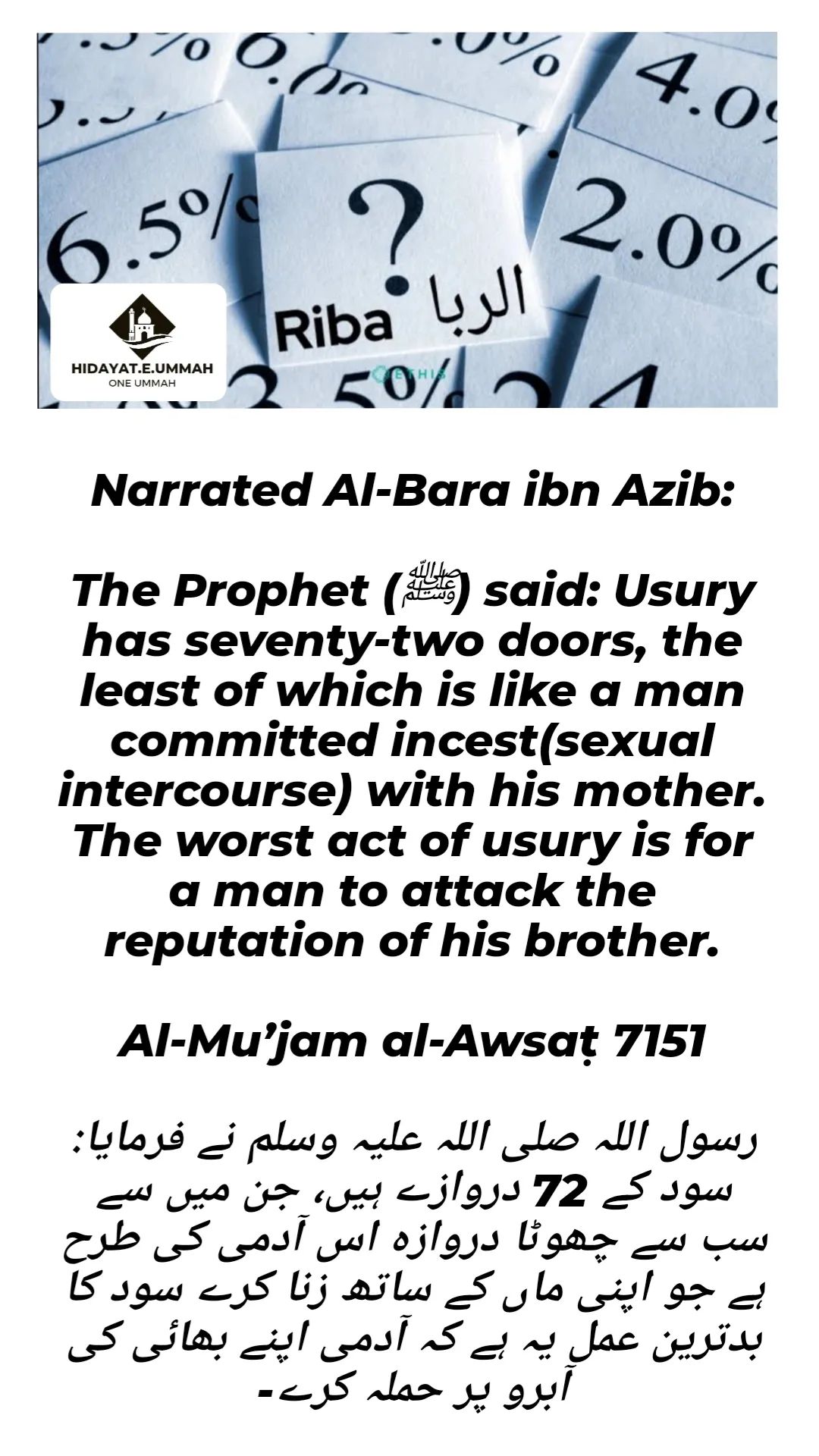
This hadith, narrated by Al-Bara ibn Azib (may Allah be pleased with him), describes the severity and multiple forms of usury (Riba) and highlights the worst form of it.
1. **Severity of Usury:**
- The Prophet Muhammad (peace be upon him) stated that usury has seventy-two doors, and the least severe form of it is as sinful as a man committing incest with his own mother, illustrating the enormity of the sin.
2. **Attacking Reputation:**
- The worst form of usury is harming the reputation of one's brother (a fellow Muslim), which includes spreading false rumors, gossip, or slander.
**Lesson:**
- This hadith serves as a stern warning against both financial exploitation through usury and damaging others' reputations. Muslims are advised to avoid such sins, as they have serious moral and spiritual consequences.
Hadith 3
3 of 6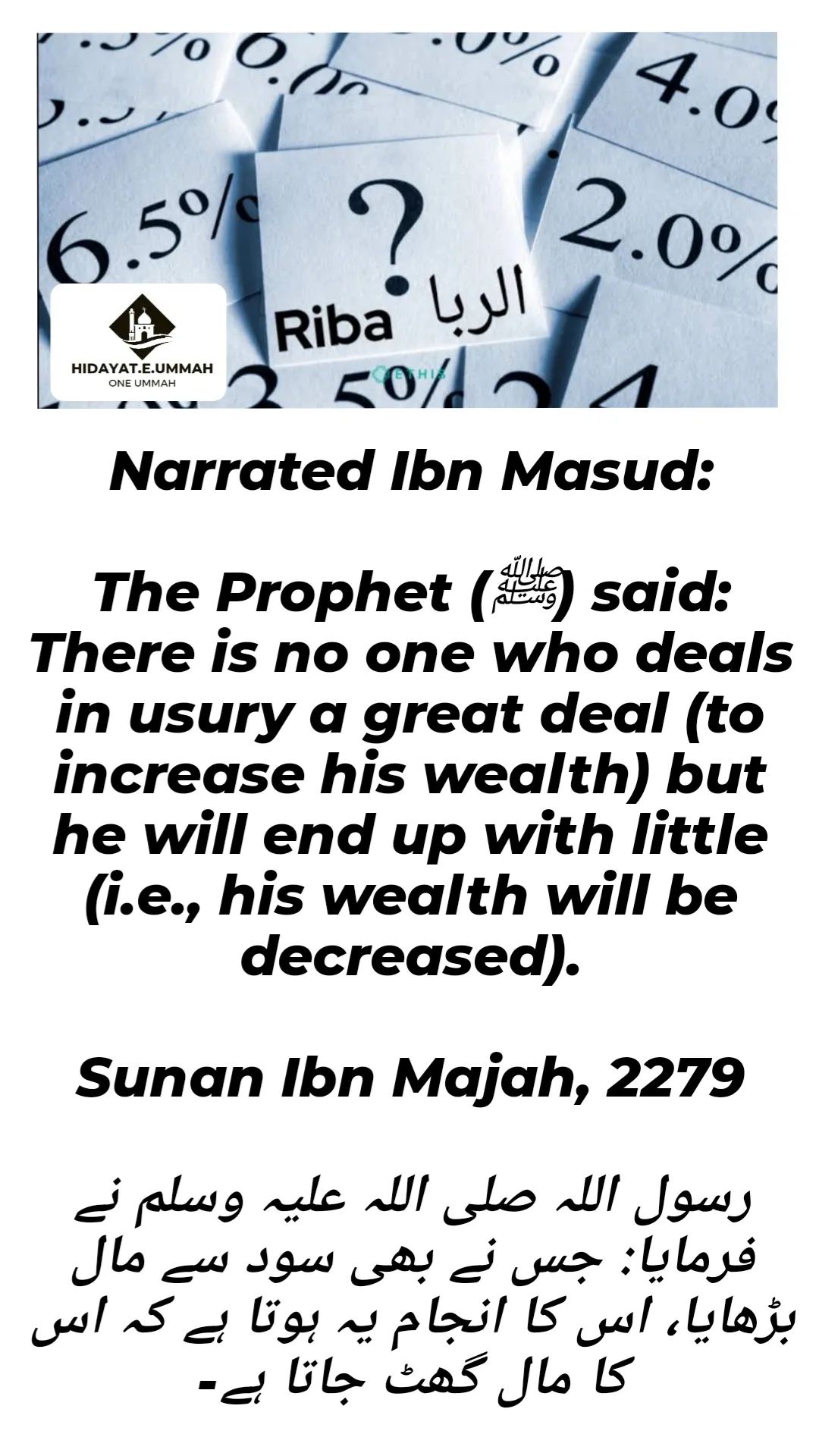
This hadith, narrated by Ibn Masud (may Allah be pleased with him), warns against engaging in usury (Riba) for the purpose of increasing one's wealth.
1. **False Illusion of Wealth:**
- The Prophet Muhammad (peace be upon him) explained that even though usury may seem to increase wealth in the short term, it will ultimately lead to a decrease in wealth over time, as it is a sinful practice that brings no real blessing.
2. **Negative Consequences:**
- The reliance on usury for financial gain is spiritually harmful and leads to a loss, as it is contrary to the principles of justice and fairness in Islam.
**Lesson:**
- Muslims are cautioned against the pursuit of wealth through unethical means like usury, as it ultimately leads to loss, both spiritually and financially.
Hadith 4
4 of 6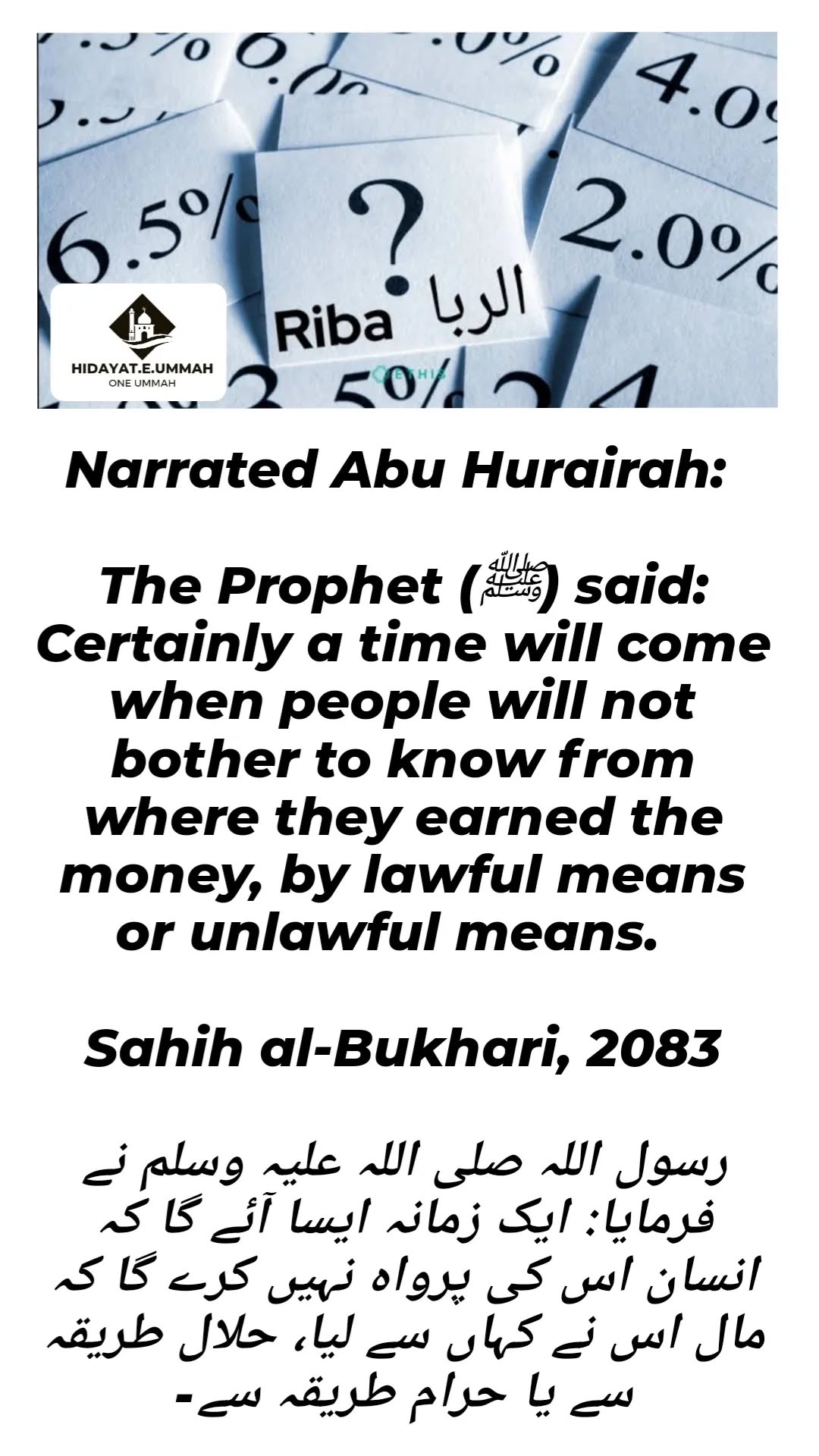
This hadith, narrated by Abu Hurairah (may Allah be pleased with him), warns about a future time when people will disregard the lawful or unlawful sources of their income.
1. **Disregard for Lawful Earnings:**
- The Prophet Muhammad (peace be upon him) predicted a time when people will not care whether their wealth comes from lawful (Halal) or unlawful (Haram) sources, highlighting a decline in moral and ethical standards.
2. **Focus on Wealth Over Ethics:**
- This reflects a shift in societal values, where the pursuit of wealth takes precedence over the means by which it is earned, leading to corruption and a lack of accountability.
**Lesson:**
- Muslims are reminded to be vigilant about the sources of their income, ensuring they follow ethical and lawful means in all aspects of life, as wealth gained from unlawful means is harmful both spiritually and morally.
Hadith 5
5 of 6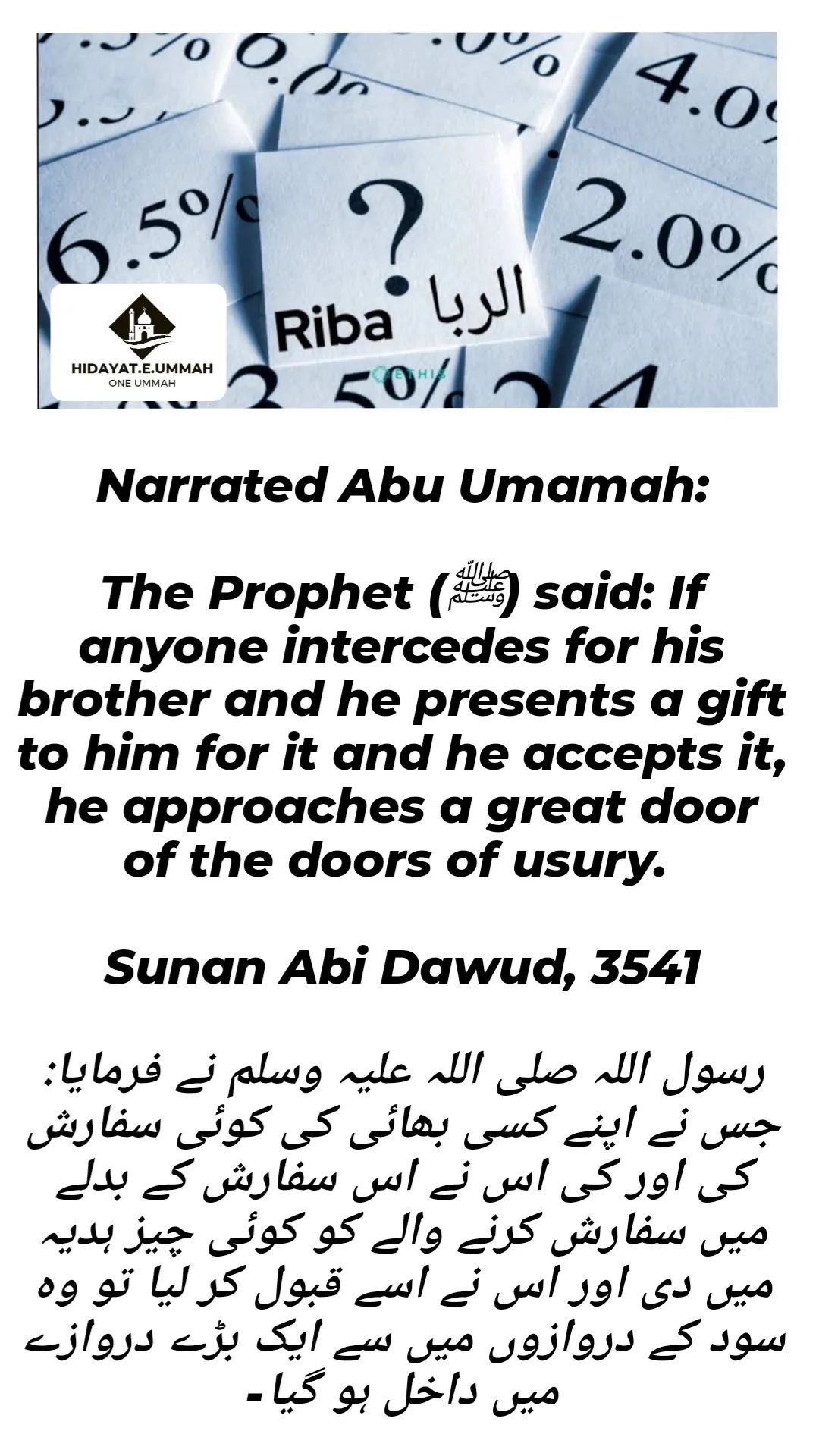
This hadith, narrated by Abu Umamah (may Allah be pleased with him), warns against accepting gifts or rewards in exchange for interceding for someone in a manner that could resemble or lead to usury (Riba).
1. **Intercession and Gifts:**
- The Prophet Muhammad (peace be upon him) explained that if someone intercedes for their brother and accepts a gift in return, they are approaching a great sin, comparable to usury.
2. **Avoiding Corruption in Intentions:**
- The acceptance of such gifts may lead to corrupting the intention behind intercession, turning an act of helping into a transactional exchange rather than a sincere act of kindness.
**Lesson:**
- Muslims are advised to maintain sincerity and avoid materialistic motives when offering help or intercession, ensuring that their actions are free from any form of exploitation or unethical gain.
Hadith 6
6 of 6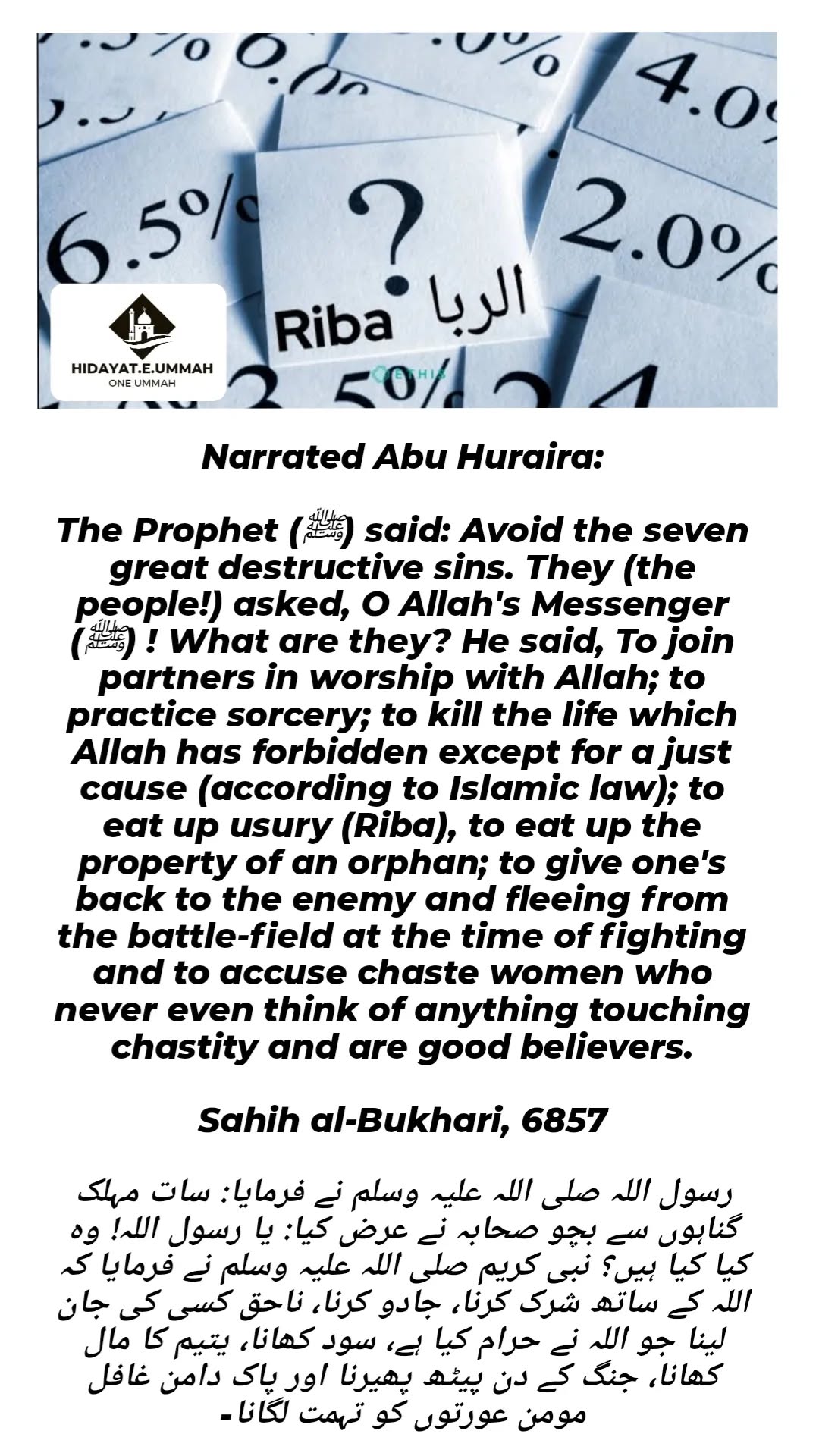
This hadith, narrated by Abu Huraira (may Allah be pleased with him), highlights seven major sins that lead to destruction and severe consequences.
1. **Shirk (Associating Partners with Allah):**
- The greatest sin is to associate partners with Allah, which undermines the fundamental principle of monotheism in Islam.
2. **Practicing Sorcery:**
- Engaging in magic or witchcraft is strictly prohibited, as it leads to harm and strays from the path of righteousness.
3. **Murdering an Innocent Life:**
- Taking the life of someone unjustly is a grave sin, with the only exception being when it is done in self-defense or in accordance with Islamic law.
4. **Consuming Usury (Riba):**
- Engaging in usurious transactions is severely condemned in Islam due to its exploitative nature.
5. **Consuming the Property of Orphans:**
- Stealing or misusing the property of orphans is a great injustice, and the rights of orphans must be protected.
6. **Fleeing from the Battlefield:**
- Abandoning fellow Muslims in the battlefield during a legitimate war is a cowardly act and is considered a major sin.
7. **Accusing Chaste Women:**
- False accusations against women who are chaste and pious are considered a severe sin in Islam, leading to harm and injustice.
**Lesson:**
- Muslims must avoid these severe sins and uphold justice, righteousness, and integrity in all aspects of life, as they are crucial to maintaining both personal morality and societal harmony.