
Sacrifice
Hadith Collection
10 Hadiths
Hadith 1
1 of 10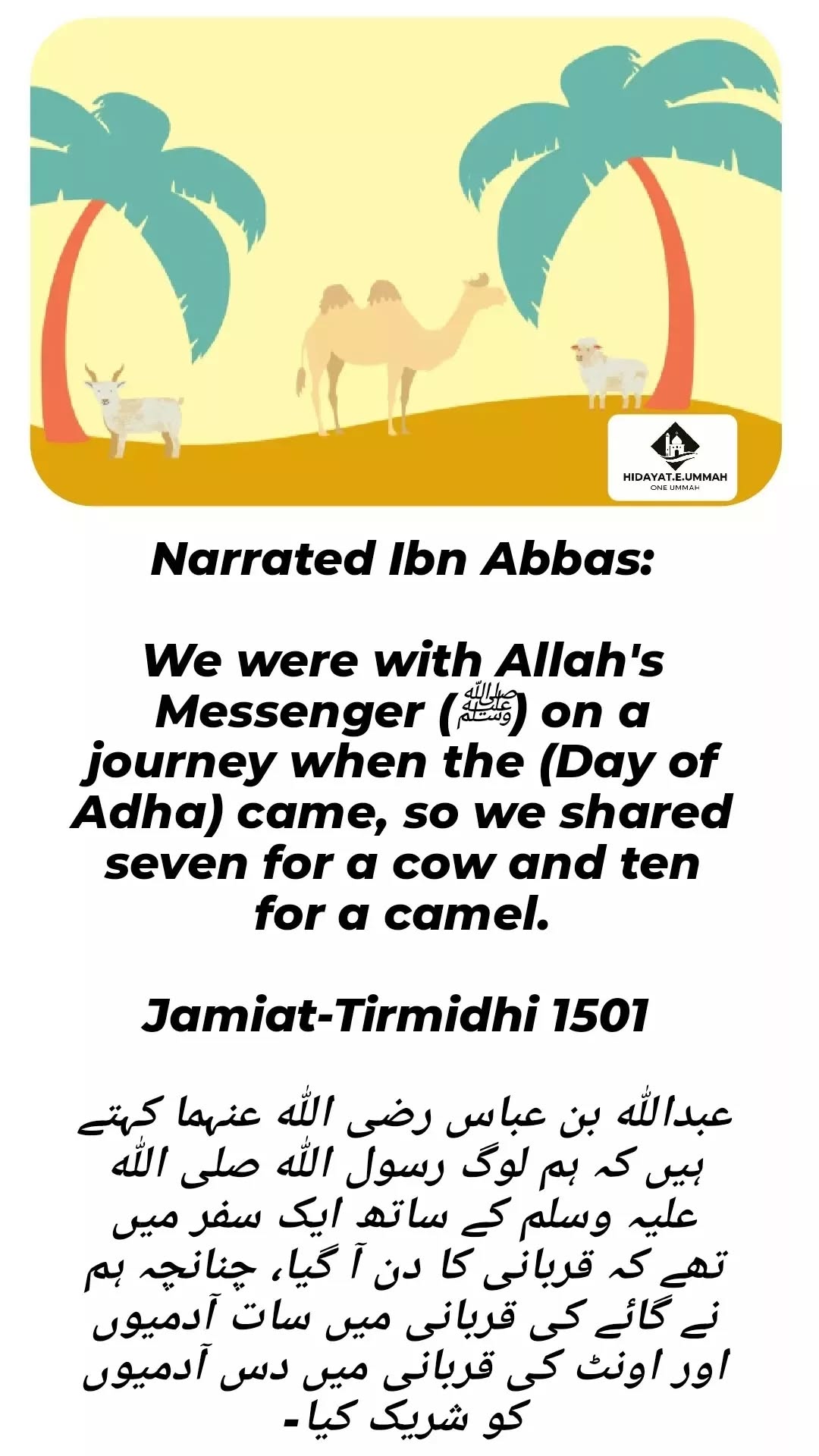
1. This hadith is narrated by Ibn Abbas, where he mentions being on a journey with the Prophet Muhammad (peace be upon him) during the Day of Adha, which is one of the Islamic festivals of sacrifice.
2. On this day, Muslims traditionally offer a sacrifice of an animal, like a cow or a camel, as an act of worship.
3. Ibn Abbas explains that the companions shared the sacrifice, and they divided the cow among seven people, meaning each person contributed to the cost of one-seventh of the cow.
4. Similarly, when sacrificing a camel, ten people shared the cost, meaning each person contributed to one-tenth of the camel's price.
5. The key point in this hadith is that during the sacrifice on the Day of Adha, the sacrifice can be shared among multiple people, making it more accessible for those who cannot afford to perform the full sacrifice alone.
6. This practice emphasizes the spirit of generosity, cooperation, and community in Islam, where people can share acts of worship and benefit together.
Hadith 2
2 of 10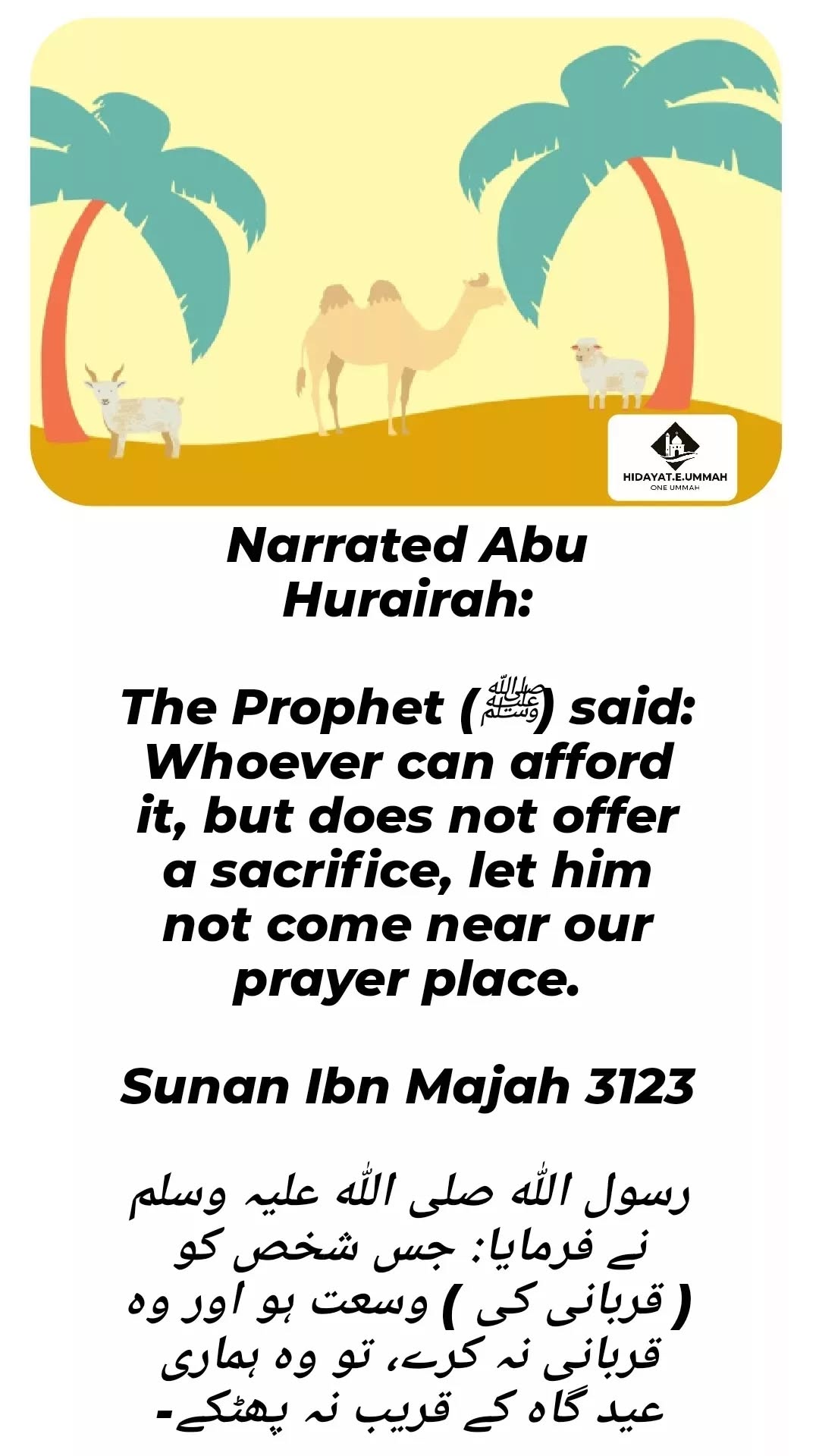
1. This hadith is narrated by Abu Hurairah and tells us about the importance of offering a sacrifice during the Islamic festival of Eid al-Adha.
2. The Prophet Muhammad (peace be upon him) said that if someone has the ability to afford the sacrifice (meaning they have enough resources to perform it), but chooses not to, then they should not come near the prayer place on the Day of Eid.
3. The reason for this is that offering the sacrifice is an important act of worship and gratitude to Allah for the blessings He has provided.
4. The Prophet’s statement emphasizes the seriousness of fulfilling this religious obligation for those who can afford it, and serves as a reminder not to neglect such acts of worship when one has the means to perform them.
5. However, it is important to note that this hadith does not mean someone is condemned for not sacrificing; it simply stresses the importance of fulfilling this act of worship if one is able to do so.
Hadith 3
3 of 10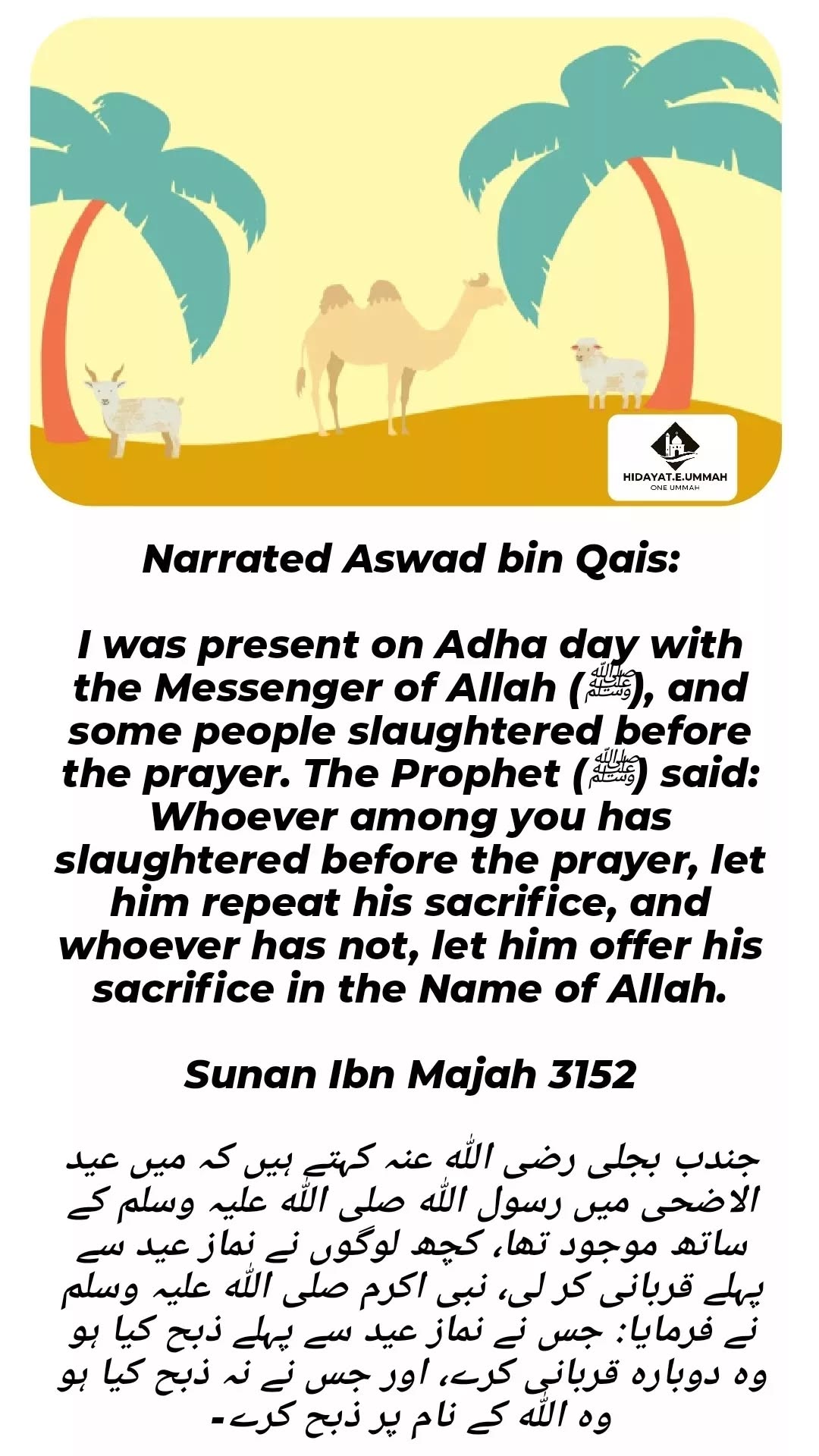
1. This hadith is narrated by Aswad bin Qais and talks about the proper time to slaughter an animal during the Eid al-Adha sacrifice.
2. The Prophet Muhammad (peace be upon him) was with some people on the day of Eid al-Adha when some of them slaughtered their animals before the Eid prayer.
3. The Prophet (peace be upon him) corrected them by saying that anyone who had slaughtered their animal before the prayer should repeat the sacrifice.
4. The reason for this is that the proper time for slaughtering the animal for Eid al-Adha sacrifice is after the Eid prayer, not before.
5. For those who had not yet slaughtered their animal, the Prophet (peace be upon him) instructed them to offer their sacrifice in the Name of Allah at the correct time after the prayer.
6. This hadith highlights the importance of following the prescribed timing for the sacrifice and ensuring that it is done according to the Sunnah of the Prophet (peace be upon him).
Hadith 4
4 of 10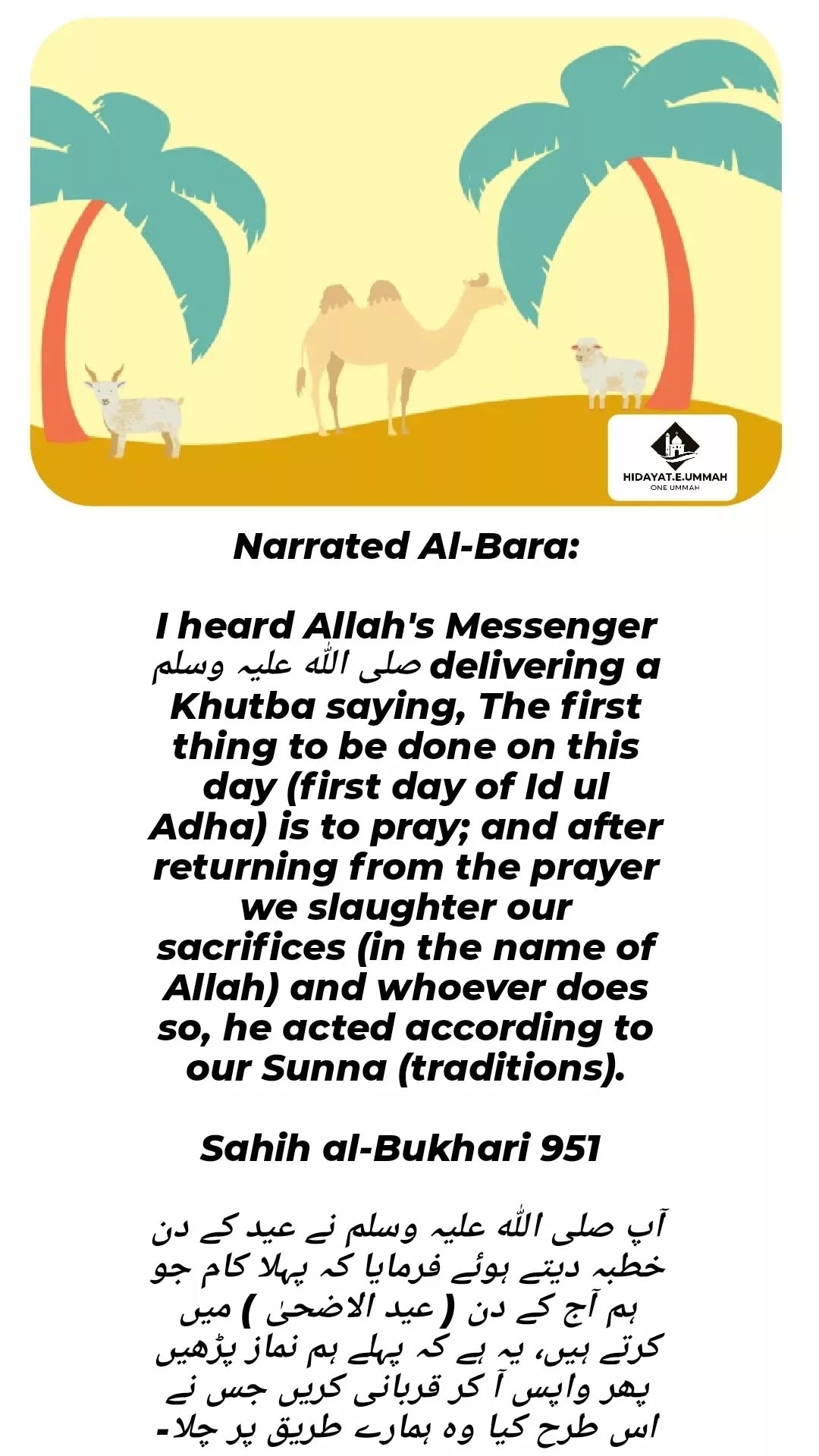
1. This hadith is narrated by Al-Bara and speaks about the proper order of actions during the day of Eid al-Adha.
2. The Prophet Muhammad (peace be upon him) explained that the first thing to do on Eid al-Adha day is to perform the Eid prayer.
3. After completing the prayer, the next important task is to slaughter the sacrifice in the Name of Allah.
4. The Prophet (peace be upon him) emphasized that anyone who follows this order of actions, first praying and then offering the sacrifice, is acting according to the traditions (Sunnah) of the Prophet.
5. This hadith highlights the importance of performing the Eid prayer before the sacrifice and doing so as part of the Sunnah, which is the prescribed way of doing things in Islam.
Hadith 5
5 of 10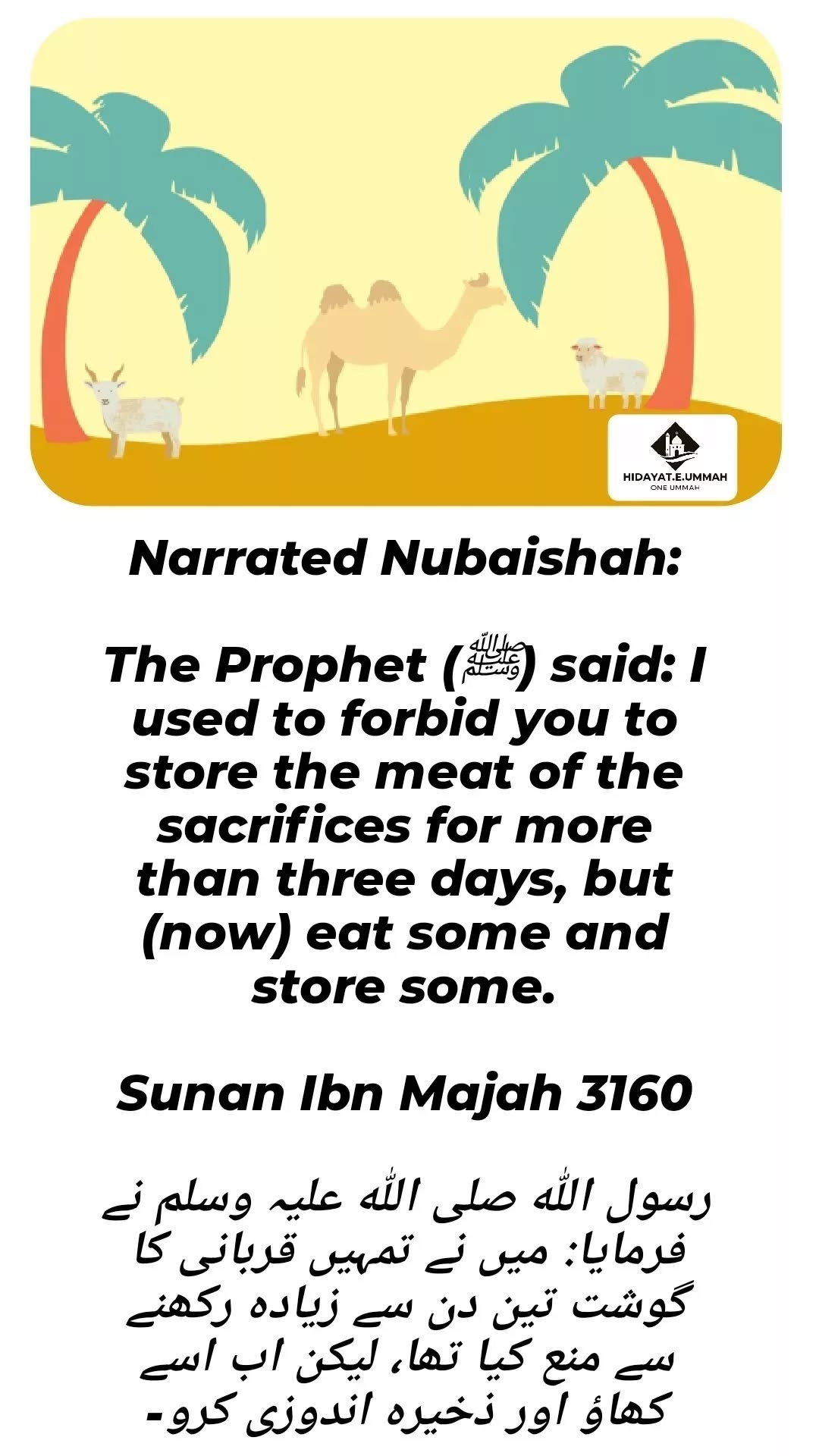
1. This hadith is narrated by Nubaishah and discusses the ruling about storing meat from the sacrifice.
2. The Prophet Muhammad (peace be upon him) previously forbade storing the meat from sacrifices for more than three days.
3. However, in this hadith, the Prophet (peace be upon him) made a change to this ruling.
4. He allowed the people to eat some of the meat and store some for later use.
5. This change shows the flexibility and ease in the Islamic teachings, as the previous restriction was relaxed to accommodate the needs of the people.
Hadith 6
6 of 10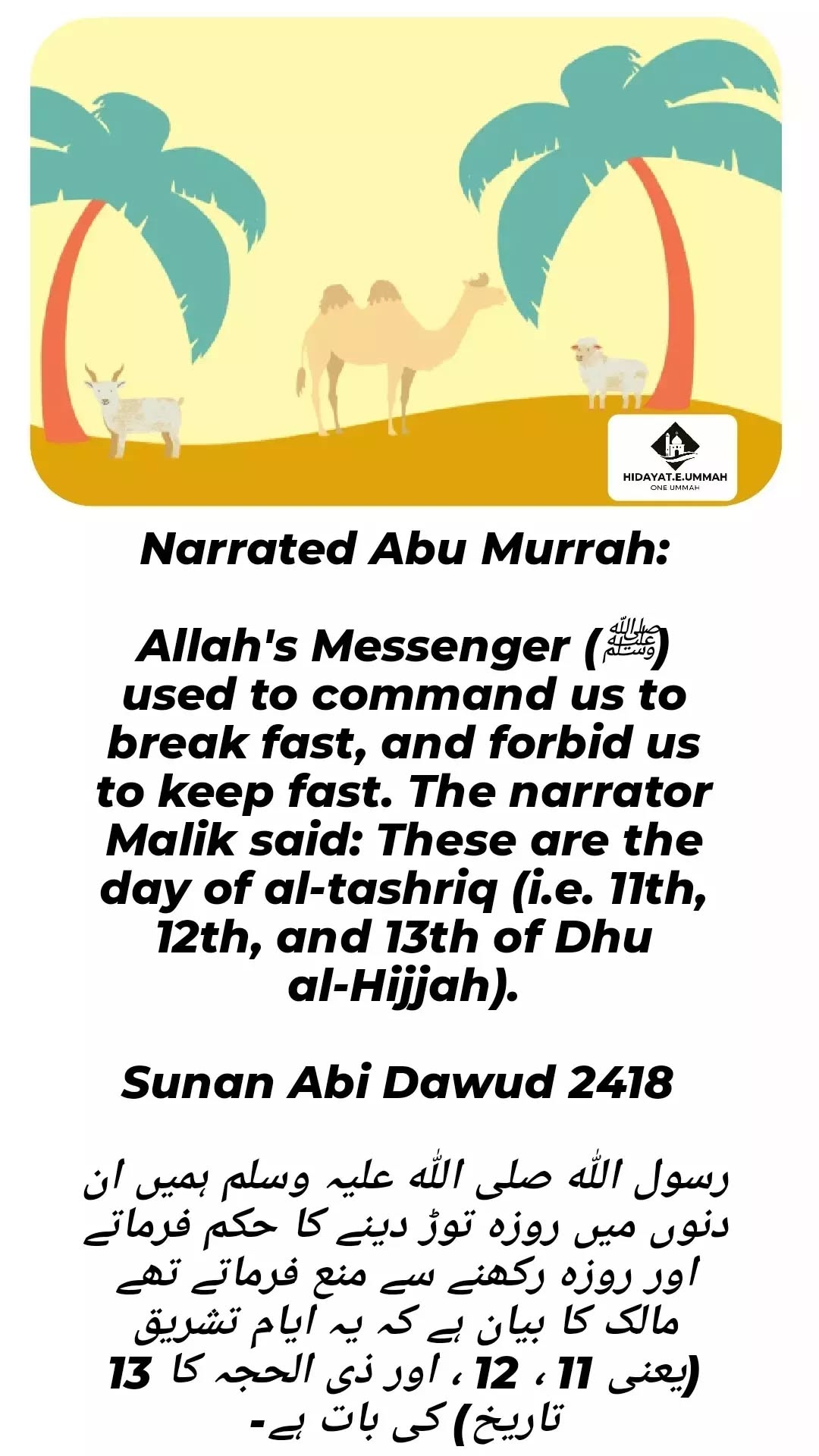
1. This hadith is narrated by Abu Murrah and discusses the Prophet Muhammad's (peace be upon him) guidance regarding fasting during certain days.
2. The Prophet (peace be upon him) used to command his followers to break their fast, meaning to stop fasting.
3. However, he forbade fasting on specific days.
4. The days mentioned here are the days of al-Tashriq, which are the 11th, 12th, and 13th of Dhu al-Hijah, the days following the Day of Eid al-Adha.
5. The prohibition on fasting during these days is because they are considered days of celebration and feasting after the sacrifice of Eid.
Hadith 7
7 of 10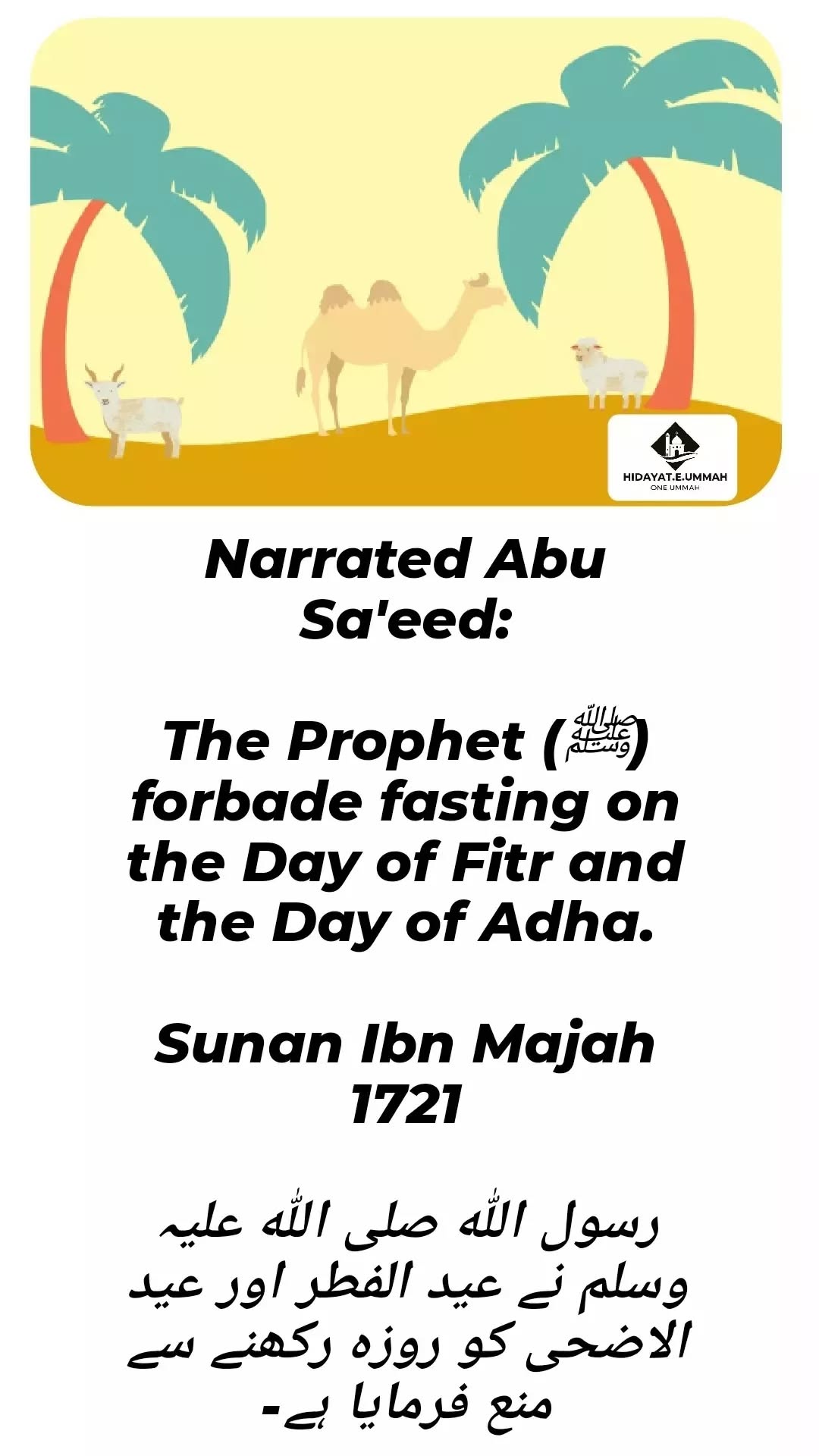
1. This hadith is narrated by Abu Sa'eed and highlights the Prophet Muhammad's (peace be upon him) teachings about fasting on two important Islamic holidays.
2. The Prophet (peace be upon him) forbade fasting on two specific days: the Day of Fitr and the Day of Adha.
3. The Day of Fitr is the first day of Shawwal, marking the end of Ramadan, the month of fasting.
4. The Day of Adha is the 10th day of Dhu al-Hijah, celebrated as part of Eid al-Adha, which commemorates the sacrifice of Prophet Ibrahim.
5. These days are meant to be days of celebration and feasting, not fasting, as they are important occasions in the Islamic calendar.
Hadith 8
8 of 10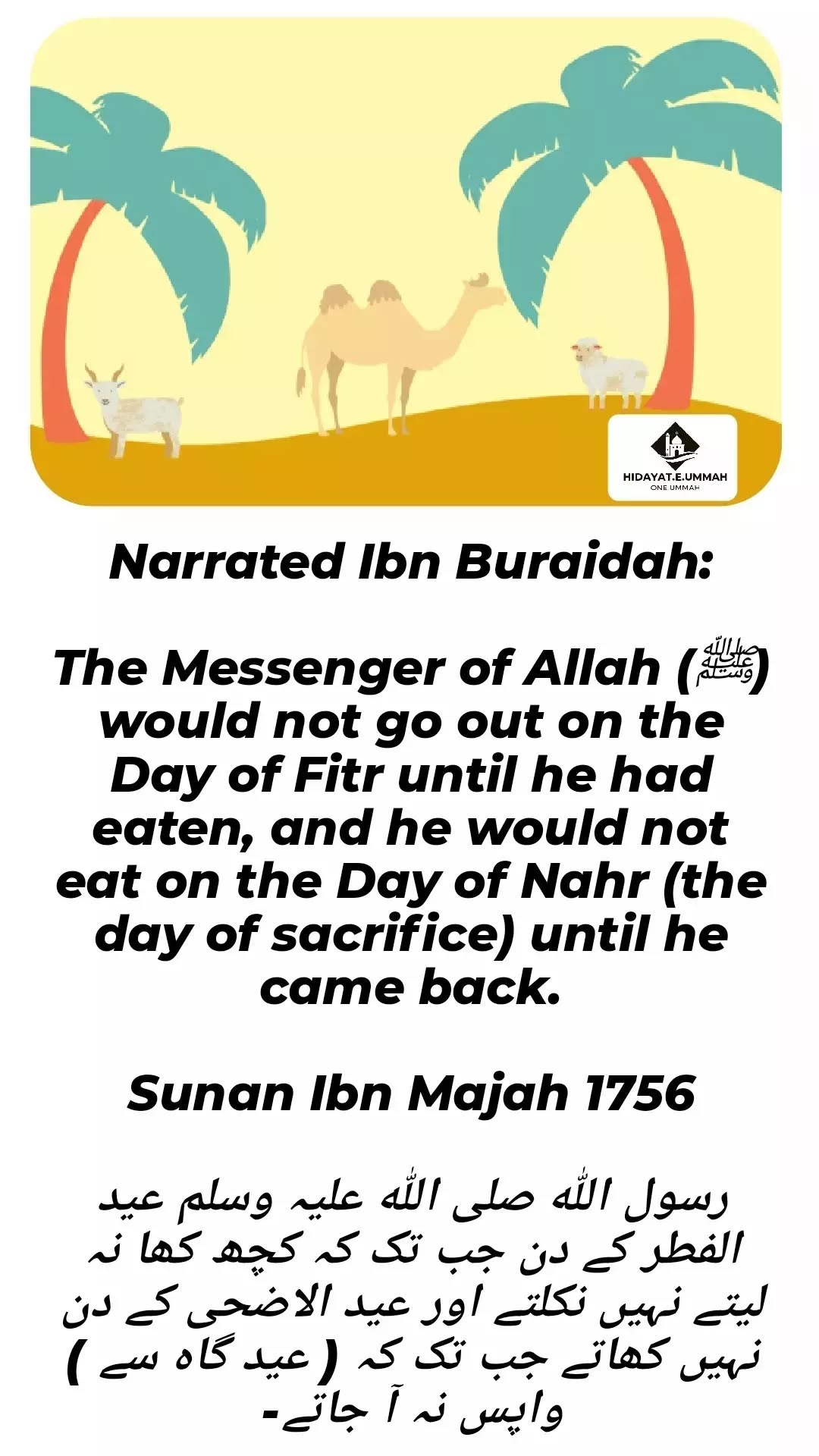
1. This hadith is narrated by Ibn Buraidah and describes the practices of the Prophet Muhammad (peace be upon him) on two significant days: the Day of Fitr and the Day of Nahr (Eid al-Adha).
2. On the Day of Fitr, which is the first day of Shawwal after Ramadan, the Prophet (peace be upon him) would not go out to perform the Eid prayer until after having eaten something.
3. On the Day of Nahr (the day of sacrifice), which is the 10th day of Dhu al-Hijah, the Prophet (peace be upon him) would not eat anything until he had returned from offering the Eid prayer.
4. The eating practices on these days reflect the Sunnah of the Prophet (peace be upon him), emphasizing the importance of following the correct traditions during Eid celebrations.
Hadith 9
9 of 10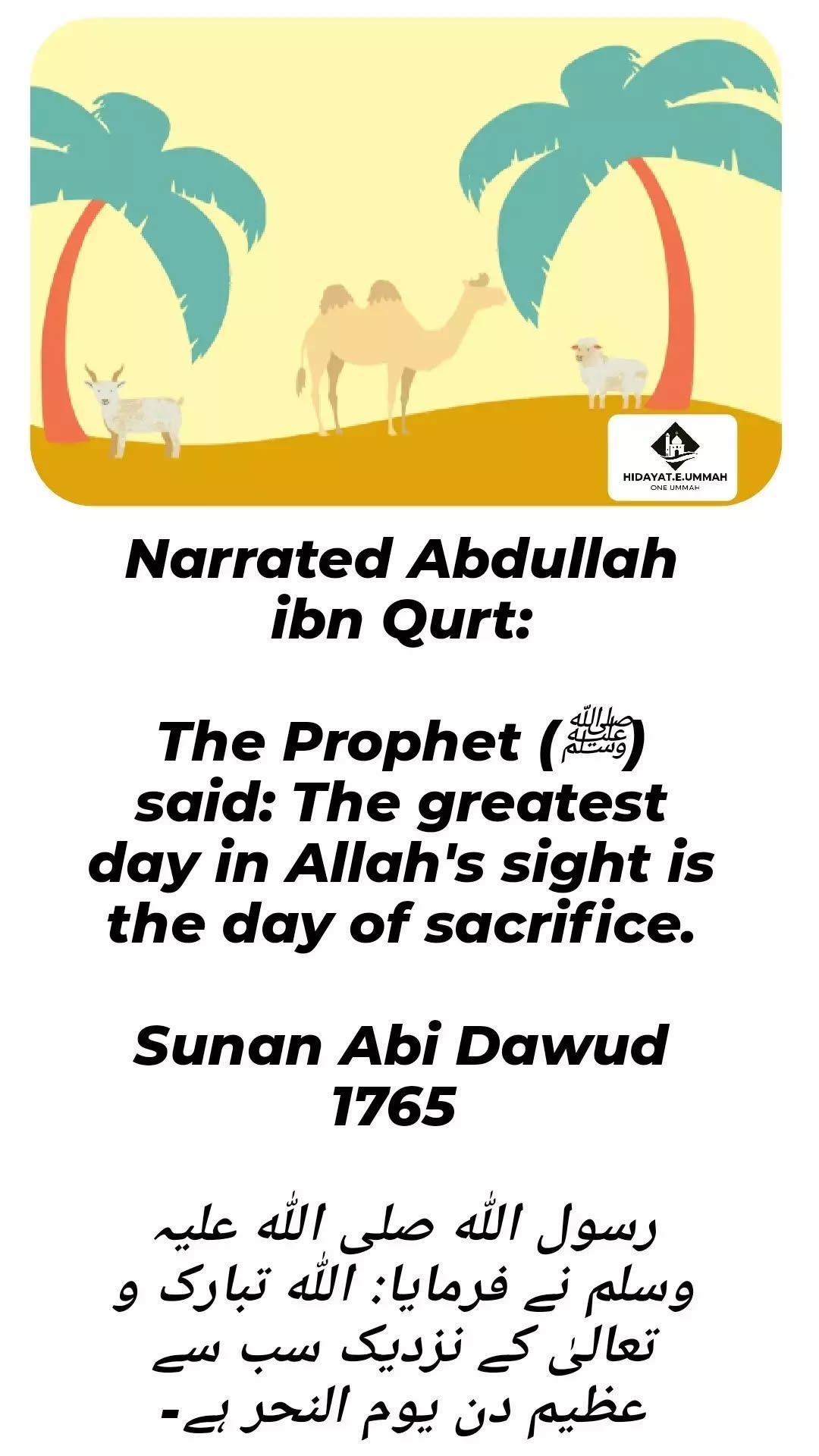
1. This hadith is narrated by Abdullah ibn Qurt and speaks about the significance of the Day of Sacrifice, also known as Eid al-Adha.
2. The Prophet Muhammad (peace be upon him) stated that the greatest day in Allah's sight is the Day of Sacrifice, which is the 10th of Dhu al-Hijah, marking the culmination of Hajj and the beginning of the sacrifice ritual.
3. This day holds a special place in Islam because of the act of sacrifice, which symbolizes the devotion to Allah and the willingness to give up worldly possessions in His path.
4. It is a day of great blessings and rewards for those who perform the sacrifice as a way to honor the Sunnah of Prophet Ibrahim (AS) and the commands of Allah.
Hadith 10
10 of 10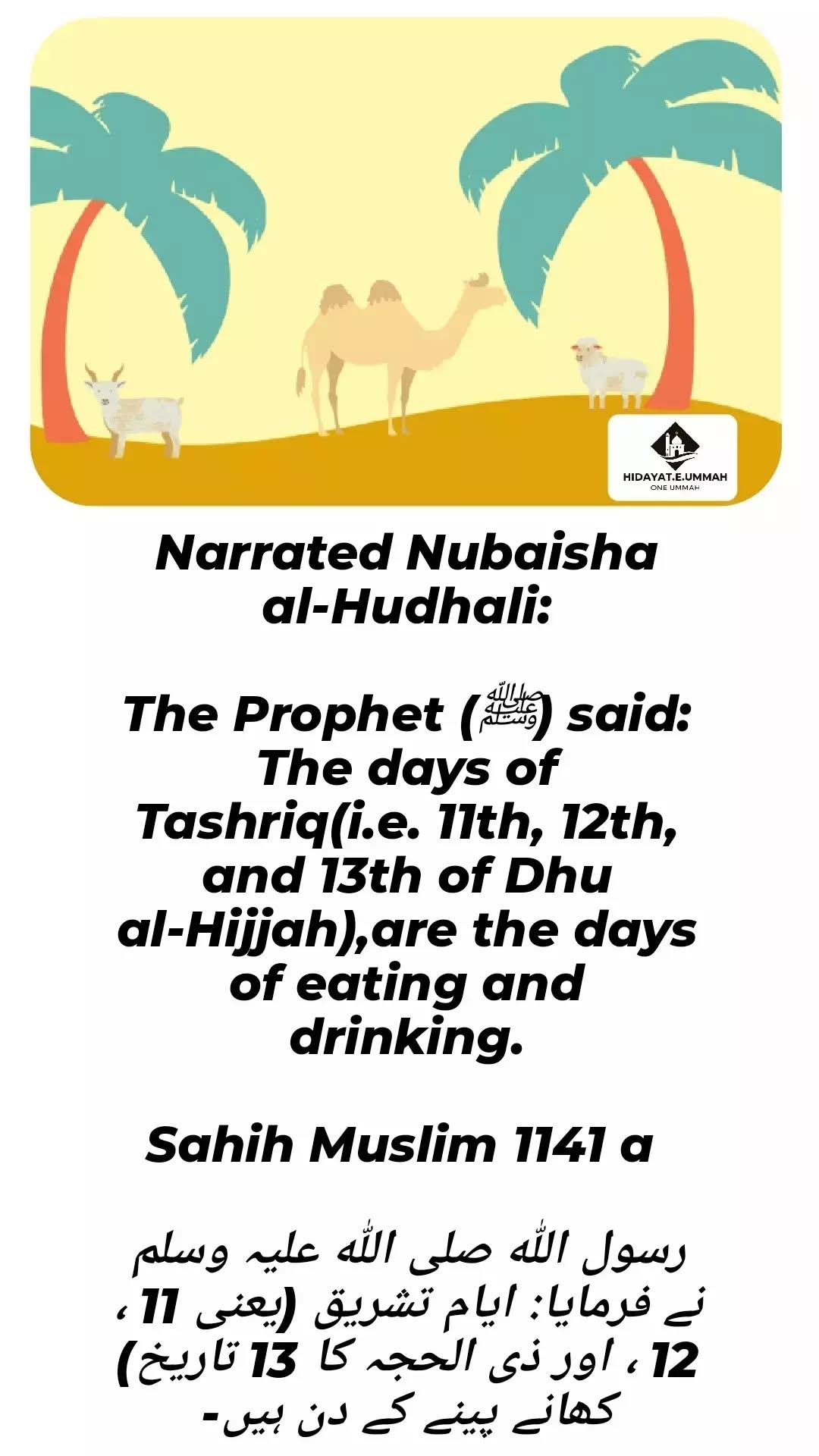
1. This hadith is narrated by Nubaisha al-Hudhali, and it talks about the days of Tashriq, which are the 11th, 12th, and 13th days of Dhu al-Hijah, following the Day of Sacrifice (Eid al-Adha).
2. The Prophet Muhammad (peace be upon him) declared that these days are meant for eating and drinking. This is a special privilege after the fasting during the days of Hajj and Eid.
3. During these days, it is encouraged to enjoy meals and refreshments as a way of celebrating the bounty of Allah and to relax after the rituals of the Hajj pilgrimage.
4. These days are part of the celebrations and the time for people to appreciate the blessings from Allah, enjoy food, and thank Him for the successful completion of the sacrifices.