
Sajda Sahw
Hadith Collection
29 Hadiths
Hadith 1
1 of 29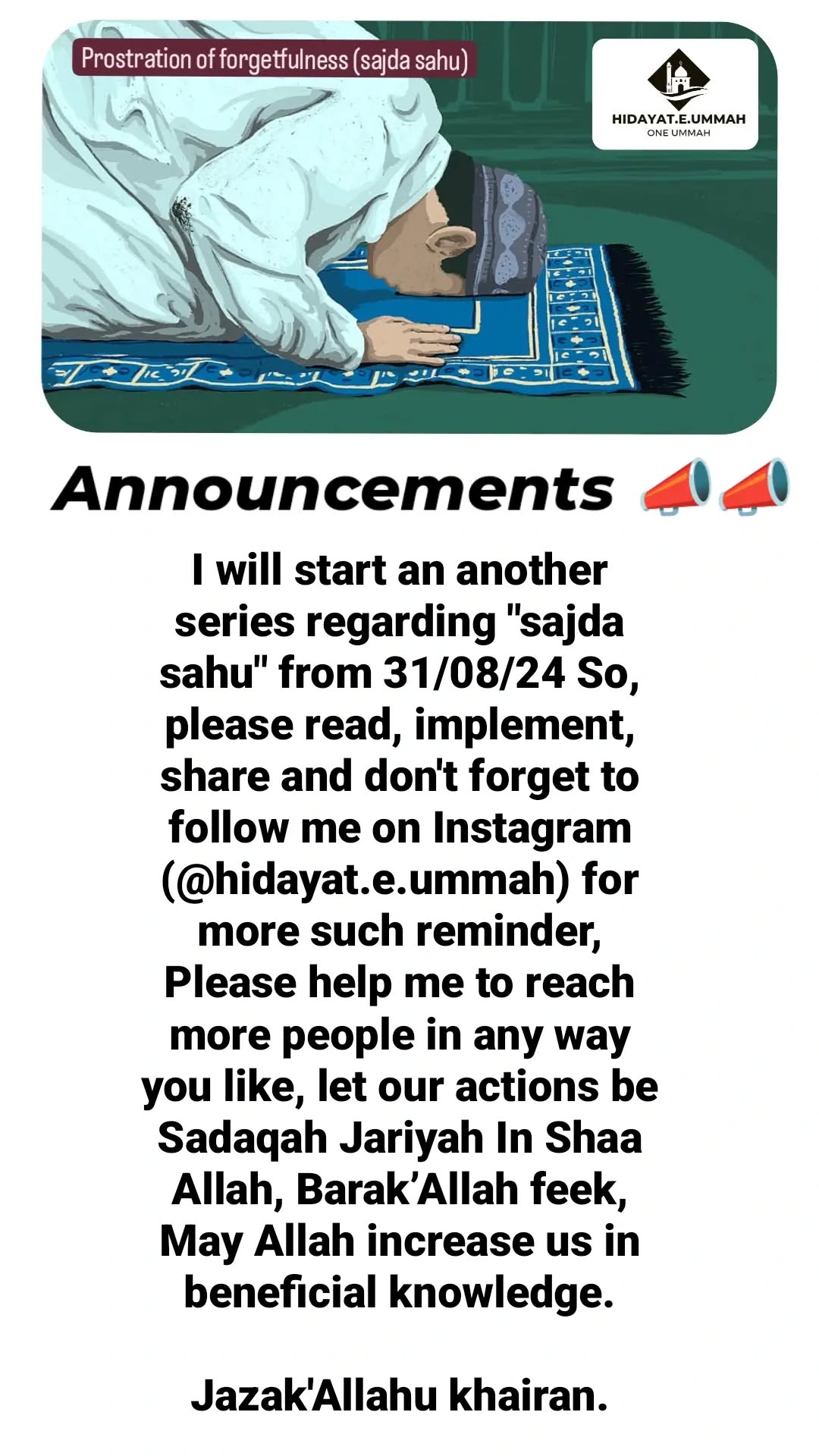
The best among you are those who have the best manners and character. – Prophet Muhammad (peace be upon him)
Hadith 2
2 of 29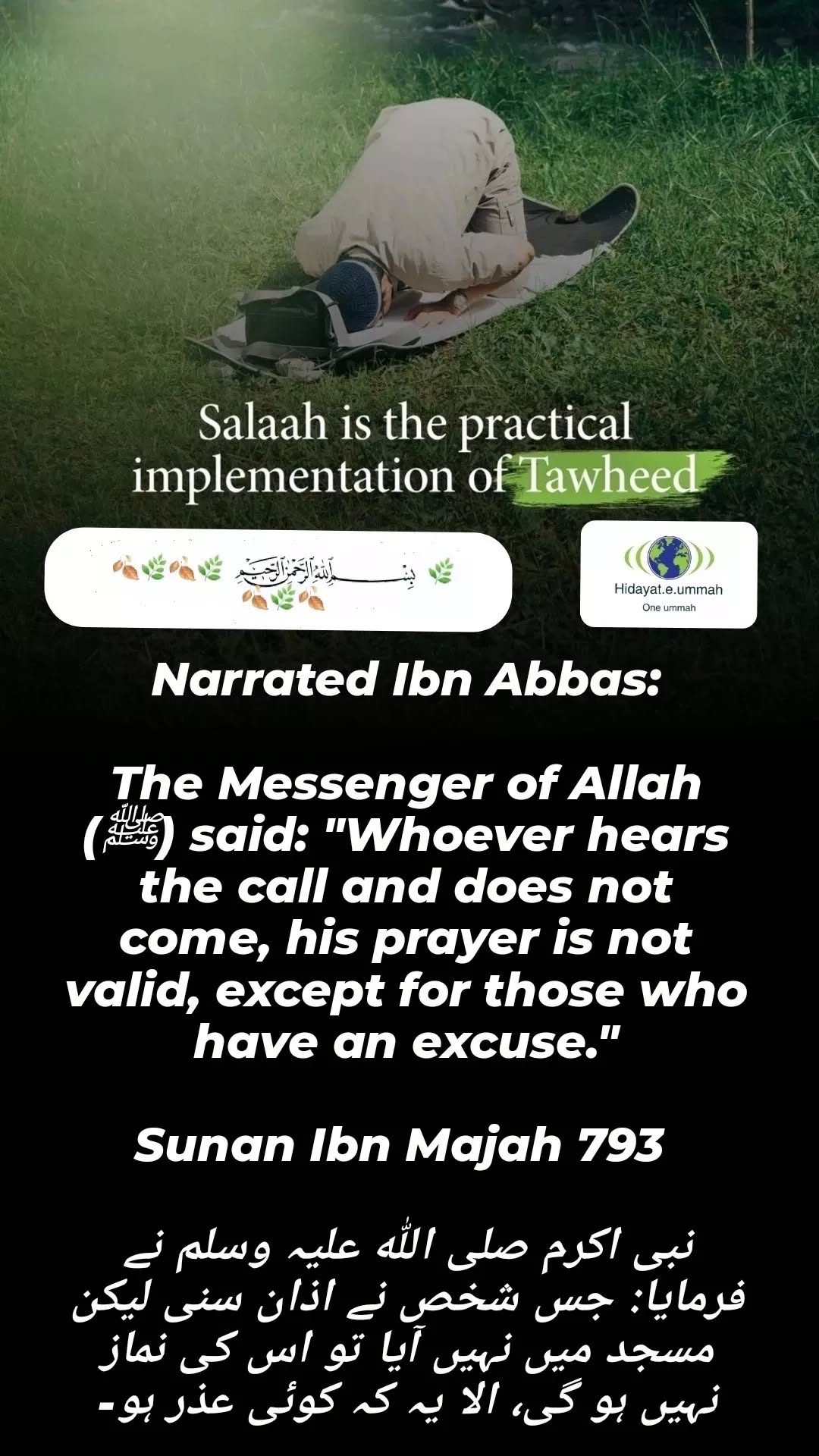
1. This hadith emphasizes the importance of responding to the call for congregational prayer (Adhan) for those who are able to hear it.
2. It highlights that praying in congregation is a significant aspect of Islam and holds great virtue.
3. The phrase 'his prayer is not valid' indicates the strong encouragement for joining the congregation, though scholars differ on whether this invalidates the prayer if prayed alone without a valid excuse.
4. Exceptions are made for those who have legitimate reasons, such as illness, physical incapacity, or other valid hardships, which prevent them from attending the congregational prayer.
5. The hadith serves as a reminder for Muslims to prioritize and value the collective worship experience in the masjid whenever possible.
Hadith 3
3 of 29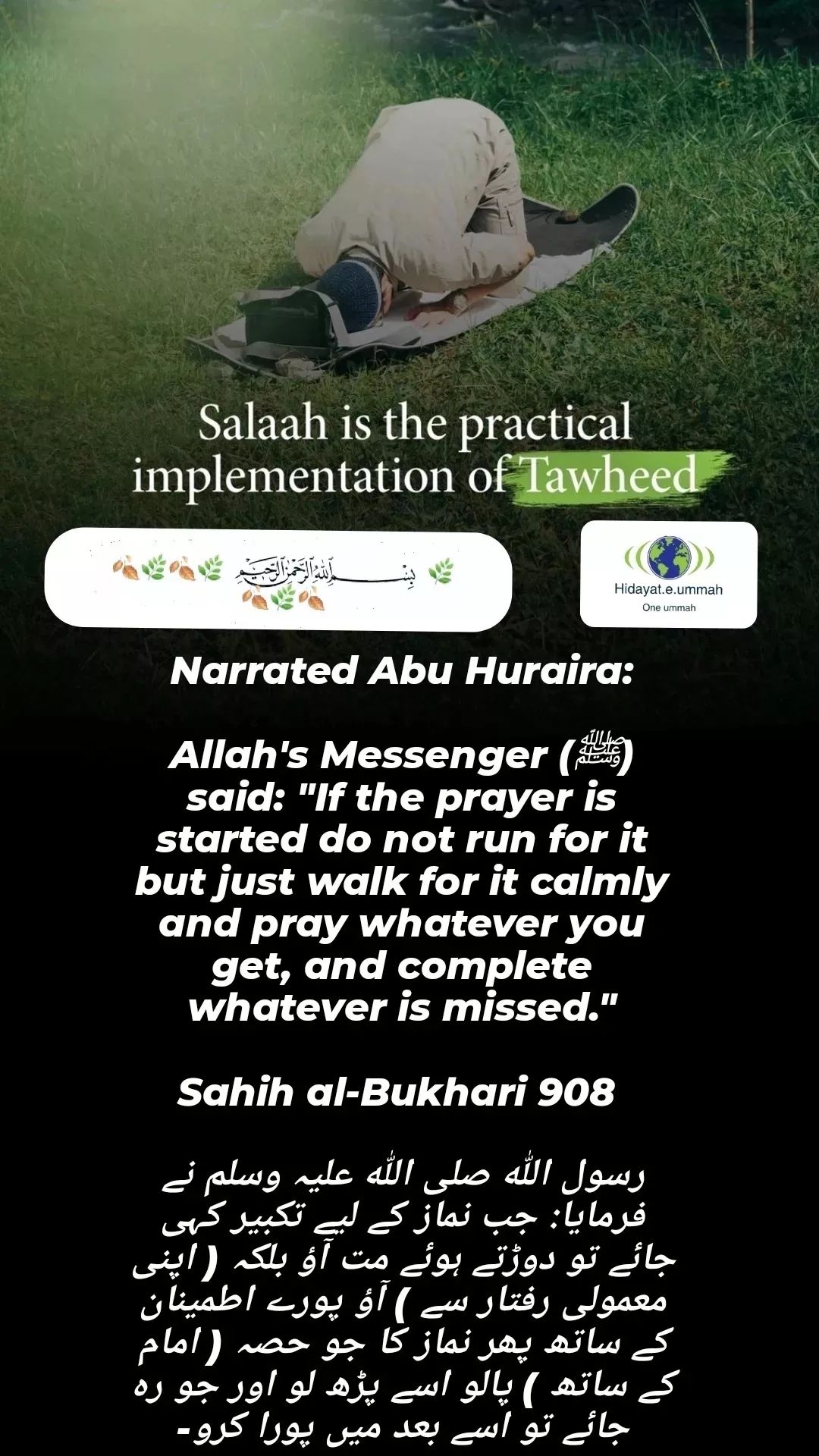
1. This hadith teaches the proper etiquette for joining congregational prayer when it has already started.
2. The Prophet (peace be upon him) instructs that one should not rush or run to join the prayer, as doing so may disturb their calmness and focus.
3. Instead, a person should walk calmly and join the prayer in the state they find the congregation.
4. Whatever portion of the prayer they miss should be completed individually after the congregation finishes.
5. This guidance emphasizes maintaining dignity, calmness, and focus during acts of worship, ensuring the quality of prayer is not compromised.
Hadith 4
4 of 29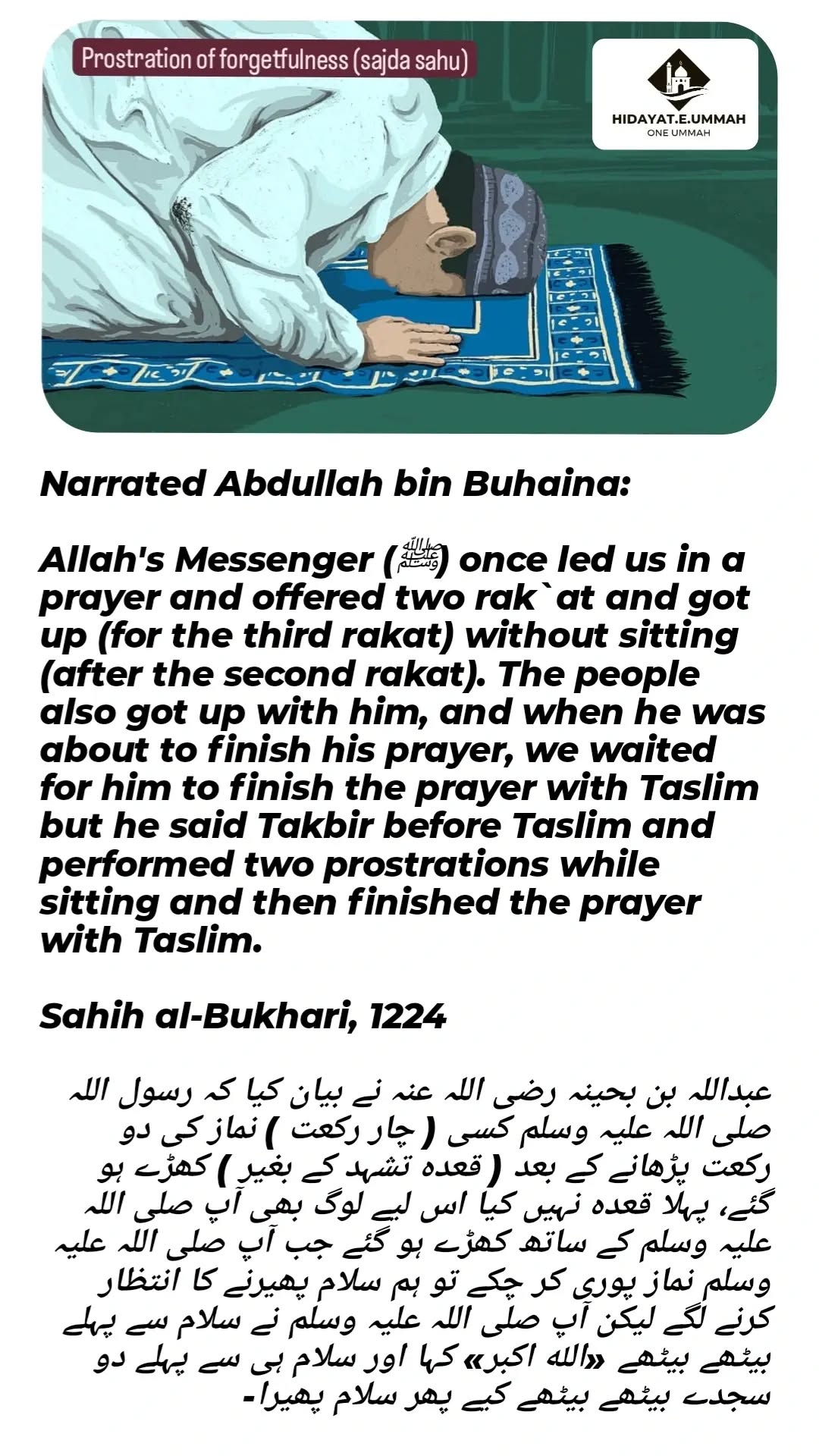
1. This hadith describes an instance when the Prophet Muhammad (peace be upon him) unintentionally missed sitting for Tashahhud (the first sitting) after completing two rak'ahs in prayer.
2. Instead of sitting, he stood up directly for the third rak'ah, and the congregation followed him.
3. Toward the end of the prayer, before concluding with Taslim (saying 'As-Salamu Alaikum'), the Prophet performed two prostrations of forgetfulness (Sujood as-Sahw).
4. These prostrations are a way to correct unintentional mistakes made during the prayer.
5. After performing the two prostrations, he completed the prayer by saying Taslim.
6. This hadith teaches that if an unintentional mistake occurs during prayer, it can be rectified by performing Sujood as-Sahw, ensuring the validity of the prayer.
Hadith 5
5 of 29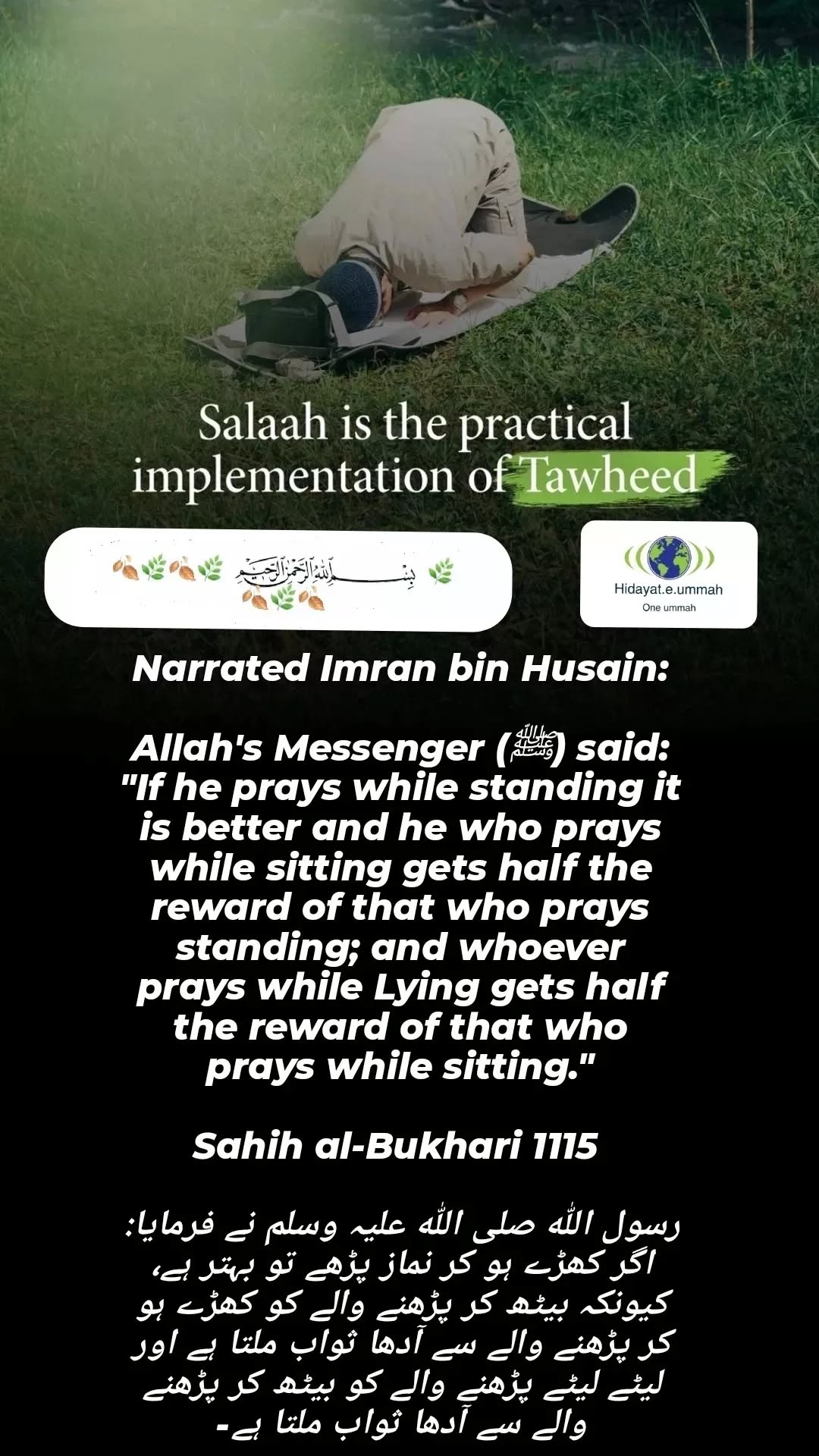
1. In this hadith, the Prophet Muhammad (peace be upon him) explains that the reward for prayer depends on the position in which one performs it.
2. The best way to pray is while standing, and this gives the full reward.
3. If a person prays while sitting, they receive half of the reward compared to someone praying while standing.
4. If a person is unable to pray standing or sitting and prays while lying down, they receive half the reward of someone who prays sitting.
5. This hadith highlights that the physical ability to perform prayer affects the reward, but the intention and effort to pray are still rewarded by Allah.
Hadith 6
6 of 29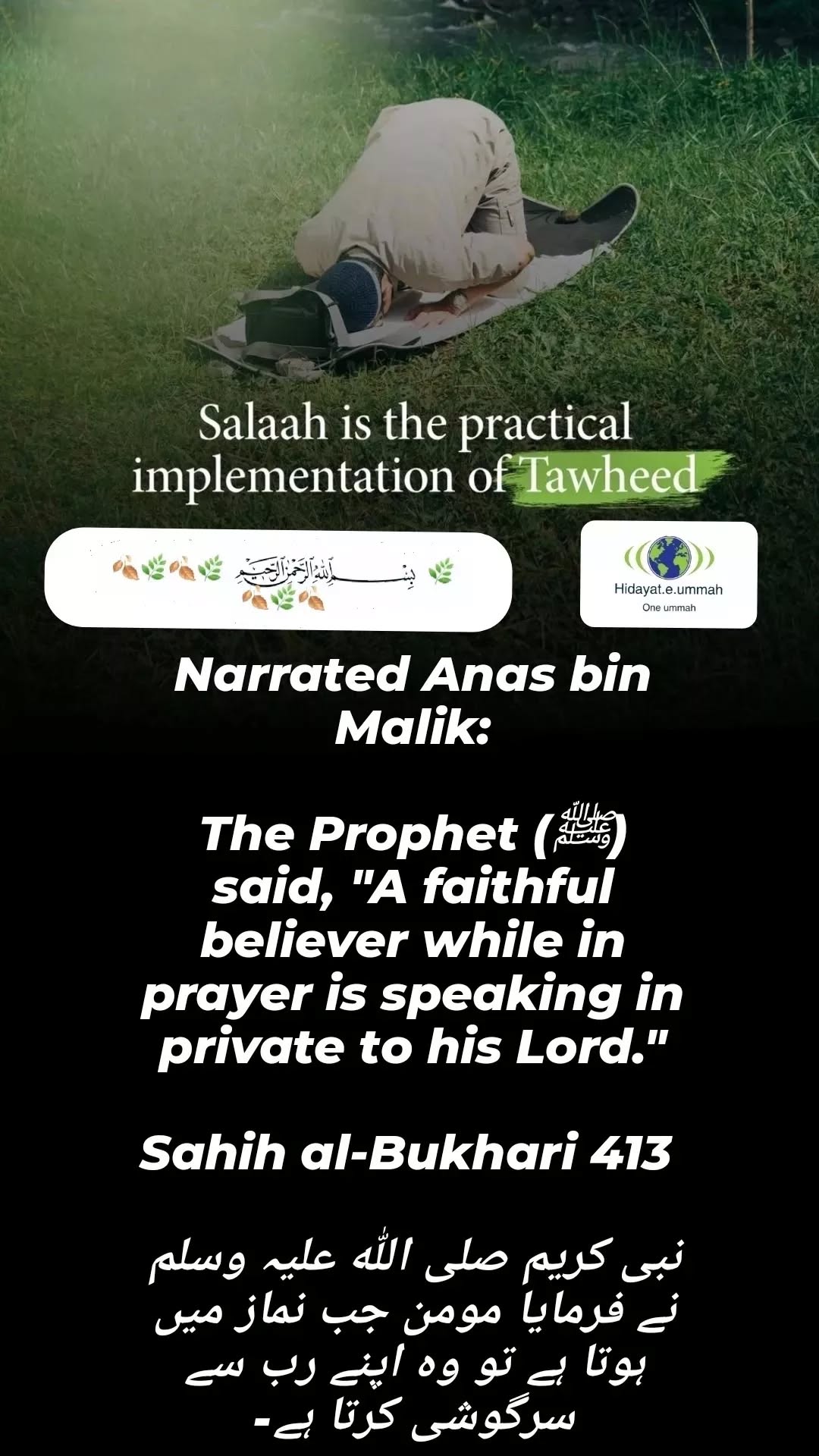
1. In this hadith, the Prophet Muhammad (peace be upon him) is emphasizing the intimate and personal connection a believer has with Allah during prayer.
2. When a person prays, they are not just performing physical actions but are speaking directly to Allah, their Creator.
3. This shows the importance of sincerity and concentration during prayer, as it is a private conversation with Allah.
4. The prayer is not merely a ritual but a spiritual experience where the believer communicates with their Lord, asking for guidance, mercy, and forgiveness.
5. This hadith encourages believers to approach their prayer with mindfulness and understanding of its deep meaning and purpose.
Hadith 7
7 of 29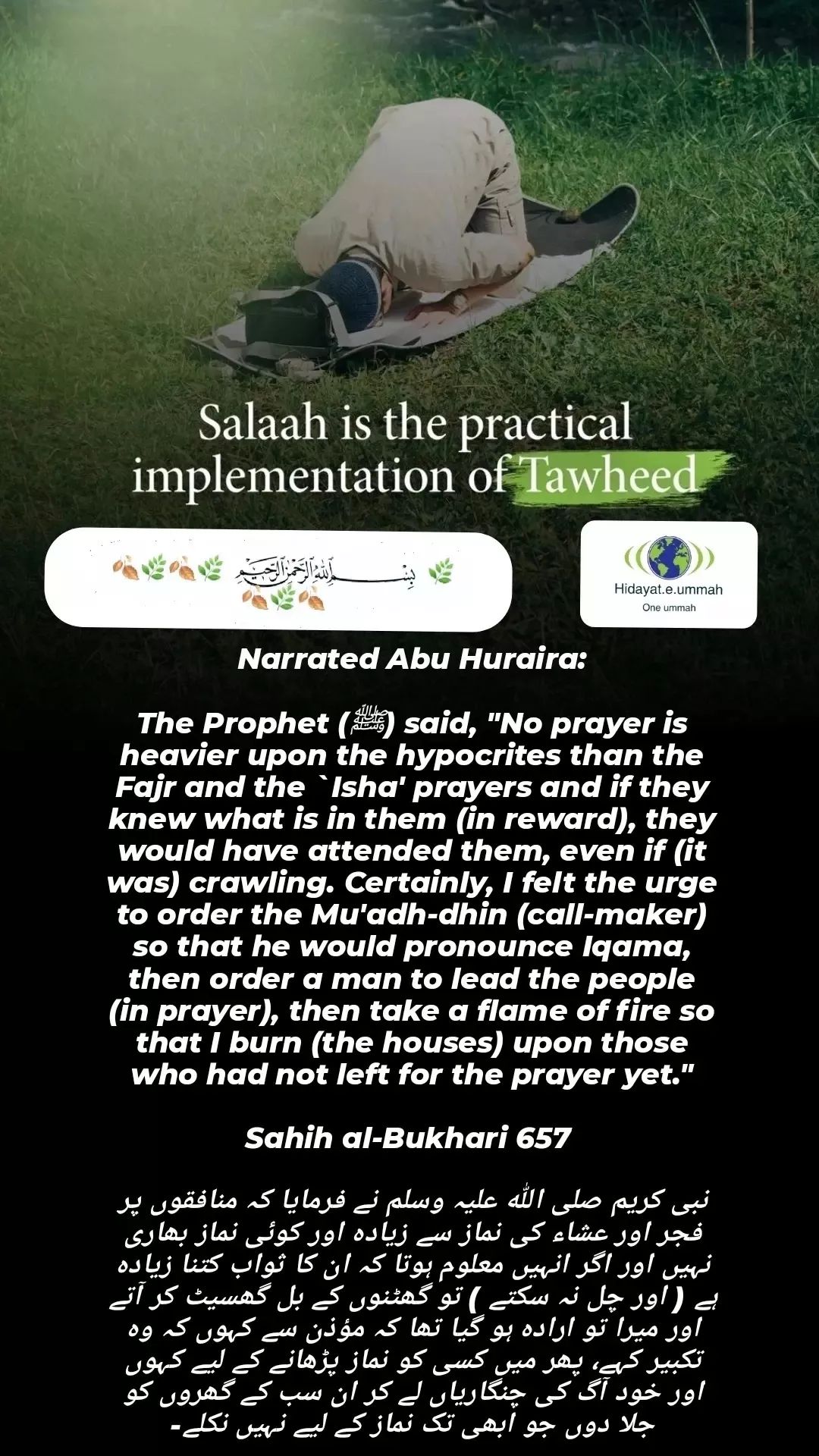
1. In this hadith, the Prophet Muhammad (peace be upon him) highlights how certain prayers, particularly Fajr and Isha', are difficult for hypocrites to perform.
2. The Prophet emphasizes that if people truly knew the immense rewards of these prayers, they would make every effort to attend them, even if it meant crawling to the mosque.
3. He then shares that he once felt so strongly about the importance of these prayers that he considered ordering the call to prayer (Iqama) and having someone else lead the prayer in congregation.
4. The Prophet even contemplated taking drastic action, such as burning the houses of those who neglected the prayer, to emphasize the serious importance of participating in these obligatory prayers.
5. The overall message is that the Fajr and Isha' prayers carry great spiritual reward, and those who neglect them without a valid reason are missing out on significant blessings. The Prophet's reaction shows how seriously he viewed the responsibility of prayer in the lives of Muslims.
Hadith 8
8 of 29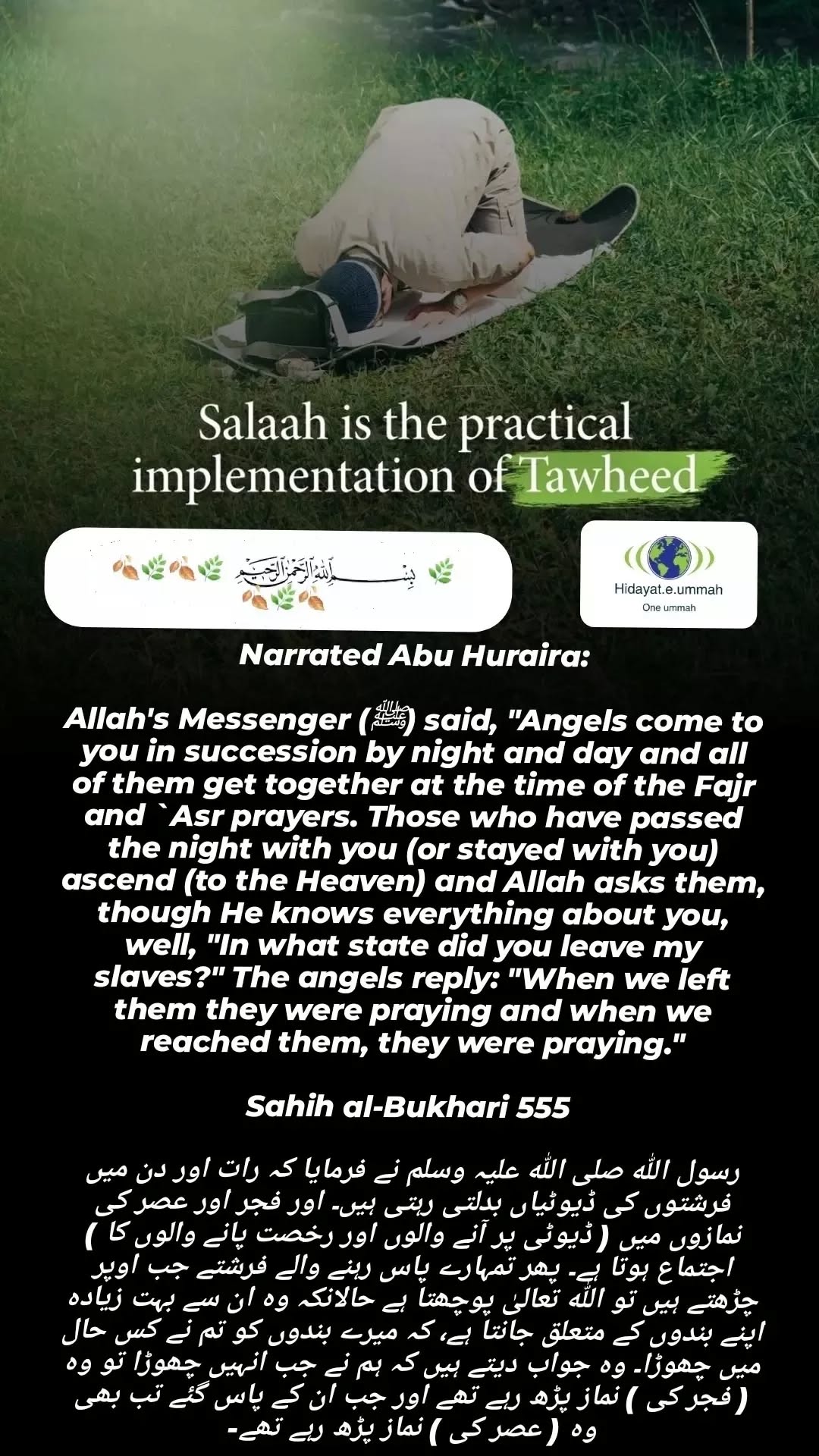
1. This hadith describes the angels who visit believers at different times of the day and night.
2. The angels who are assigned to observe people during the night stay with them until the Fajr prayer, and those assigned to observe during the day stay with them until the Asr prayer.
3. These angels gather at the time of the Fajr and Asr prayers, and then those who were with the believers during the night ascend to the heavens.
4. Allah, who knows everything, asks the angels about the condition of His servants, 'In what state did you leave My slaves?' despite His knowledge.
5. The angels respond by saying, 'When we left them, they were praying, and when we arrived, they were still praying.' This highlights the importance and continuous nature of prayer in a believer's life.
6. The hadith shows how the angels witness and bear witness to the devotion of believers, and how they remain in a state of prayer throughout the day and night, especially during the significant prayers like Fajr and Asr.
Hadith 9
9 of 29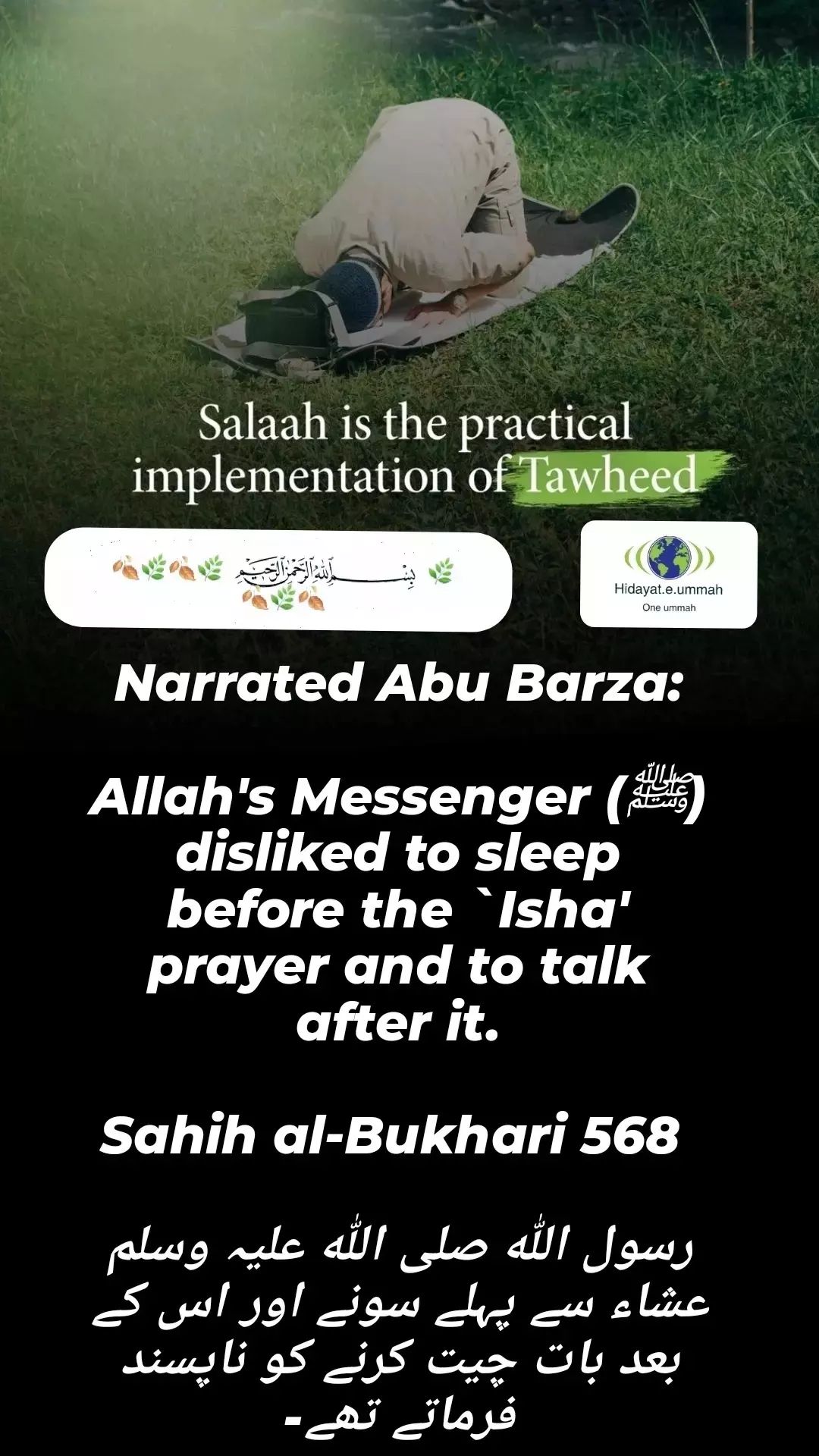
1. This hadith tells us that the Prophet Muhammad (Peace be upon him) disapproved of two specific things related to the Isha prayer.
2. The first is sleeping before the Isha prayer. It is discouraged because it could interfere with performing the prayer on time or with the quality of the prayer.
3. The second thing the Prophet (Peace be upon him) disliked was talking after the Isha prayer. This is because after the Isha prayer, it is an ideal time for rest or quiet reflection before sleeping.
4. The purpose of this hadith is to remind the believers to maintain focus and discipline in their routines, especially around the important prayers, to make sure they fulfill their religious duties well and also get proper rest.
Hadith 10
10 of 29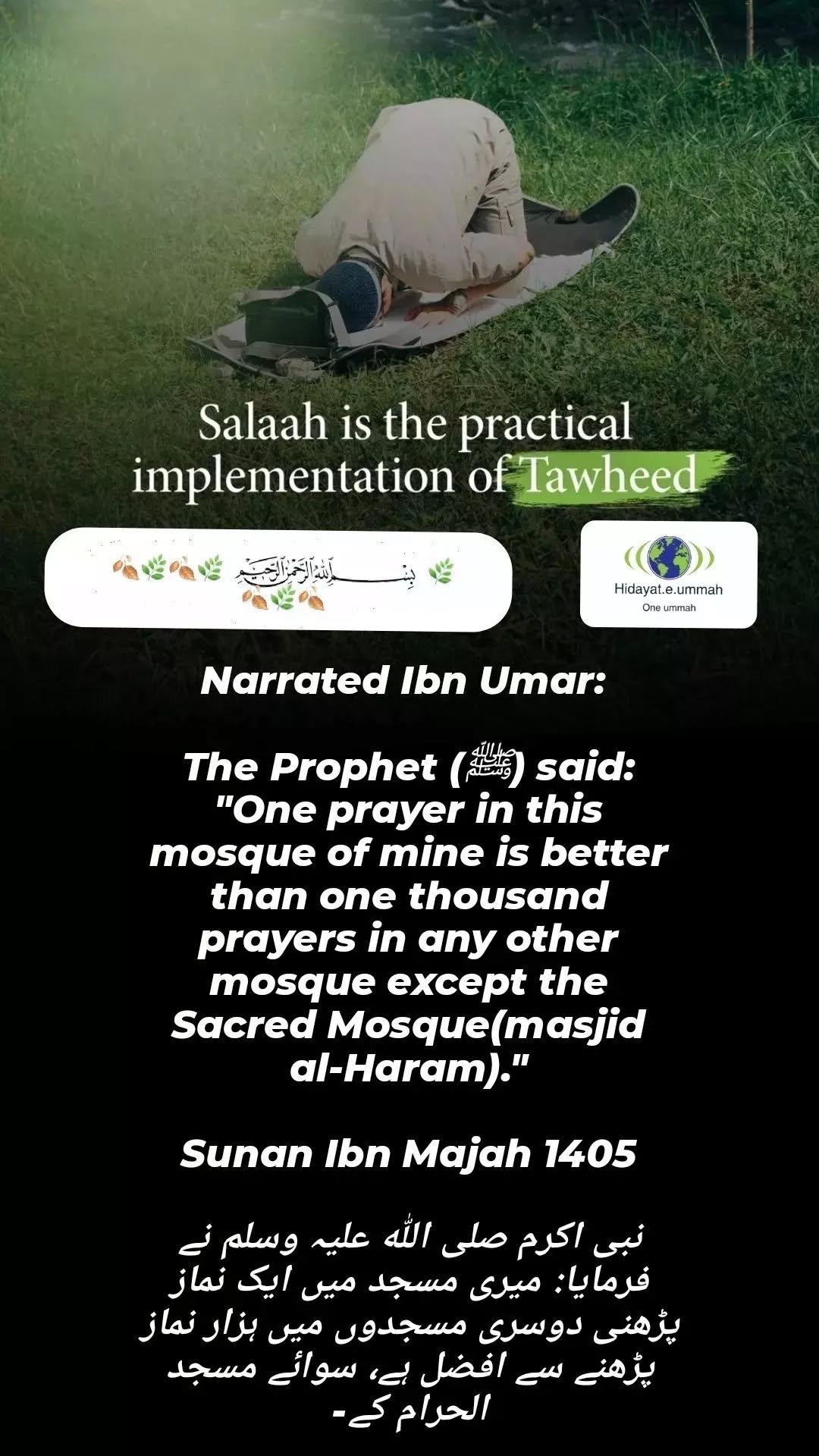
1. This hadith highlights the great reward of praying in the Prophet Muhammad's (Peace be upon him) mosque in Medina.
2. The Prophet (Peace be upon him) says that one prayer in his mosque is better than one thousand prayers in any other mosque.
3. However, there is an exception for the Sacred Mosque (Masjid al-Haram) in Mecca. Prayers performed there hold a greater reward.
4. The importance of this hadith is to emphasize the significance of praying in certain holy places, as they hold higher rewards, and also encourages believers to make an effort to pray in these blessed places when possible.
Hadith 11
11 of 29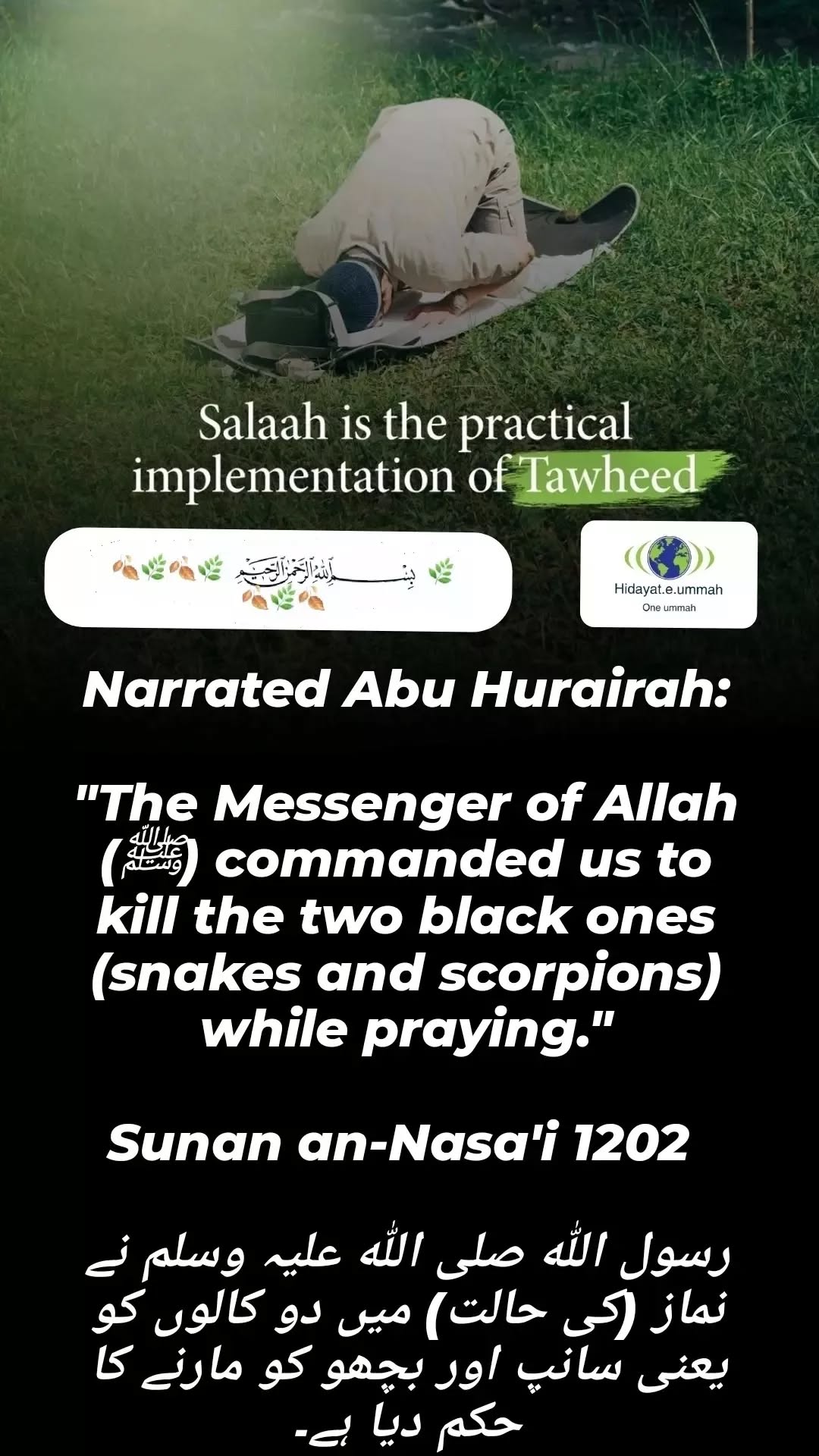
1. In this hadith, Abu Hurairah narrates that the Prophet Muhammad (Peace be upon him) instructed his followers to kill two specific harmful creatures: black snakes and scorpions, even if they are encountered while praying.
2. The reason for this command is based on the danger these creatures pose, as they are venomous and can harm people.
3. The Prophet (Peace be upon him) made this instruction known to ensure the safety and well-being of his followers, even during prayer, as protecting oneself from harm takes precedence.
4. This hadith illustrates the balance between the spiritual focus of prayer and the practical need for self-defense against dangers.
Hadith 12
12 of 29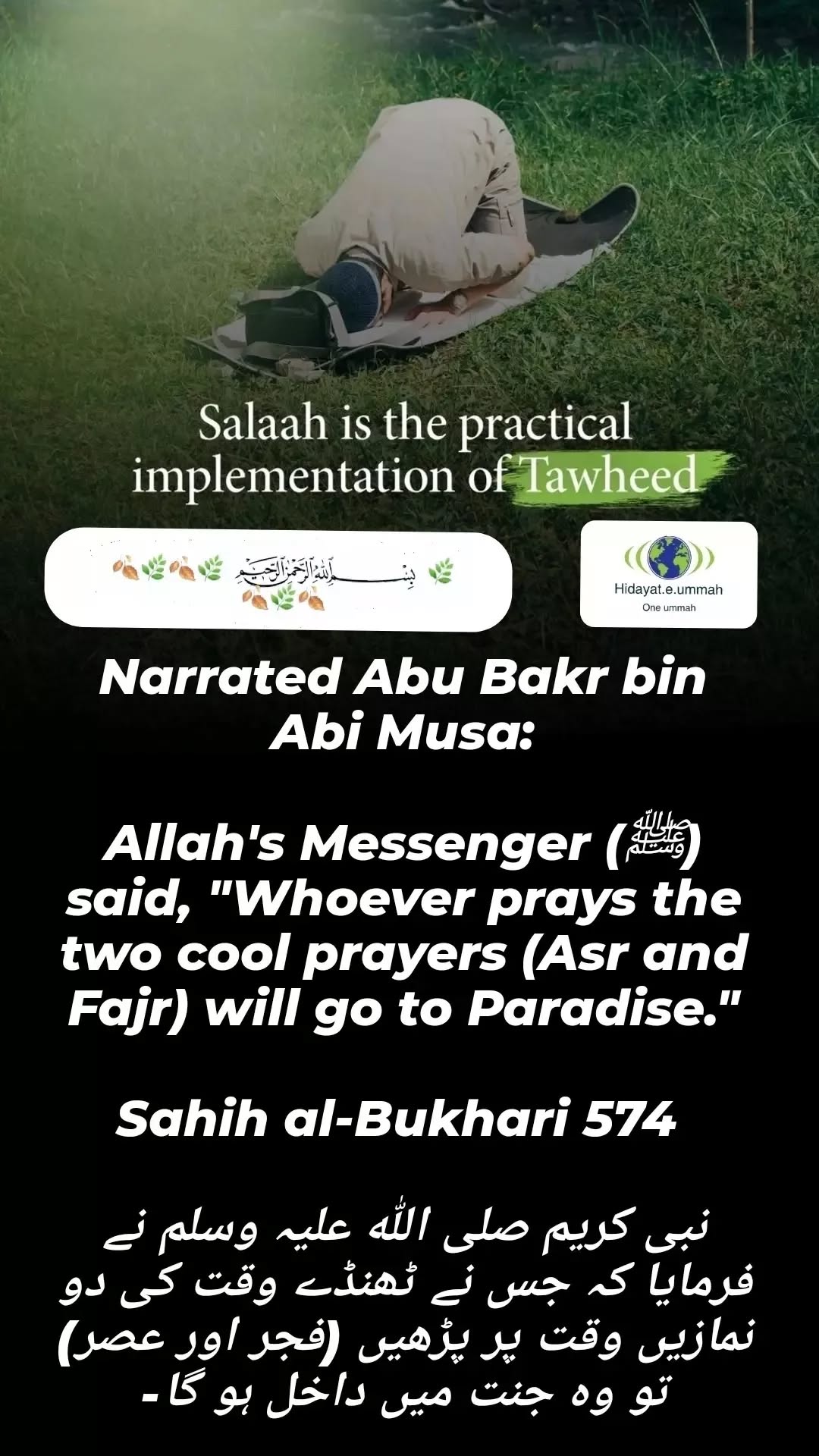
1. In this hadith, Abu Bakr bin Abi Musa narrates that the Prophet Muhammad (Peace be upon him) said that anyone who regularly prays the two cool prayers—Asr and Fajr—will be granted entry into Paradise.
2. The two cool prayers refer to the Fajr prayer, which is performed early in the morning, and the Asr prayer, which is performed in the late afternoon.
3. These prayers are referred to as 'cool' because they are performed at times when the temperature is typically lower, either in the early morning or late afternoon, compared to midday.
4. The hadith emphasizes the importance of these prayers and how consistent observance of them can lead to great reward in the Hereafter, highlighting their spiritual significance.
Hadith 13
13 of 29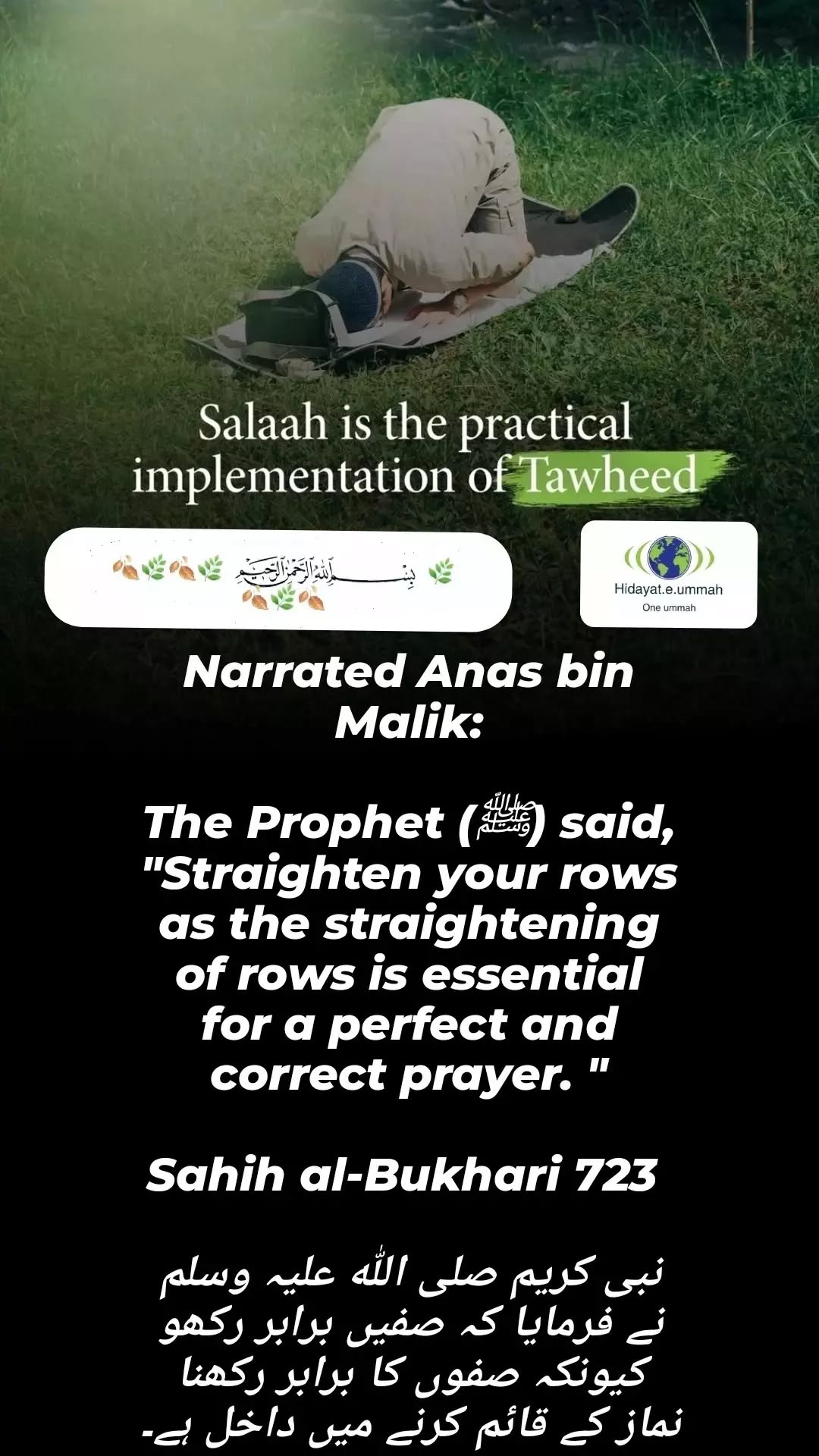
1. In this hadith, Anas bin Malik narrates that the Prophet Muhammad (Peace be upon him) emphasized the importance of straightening the rows during prayer.
2. Straightening the rows means ensuring that the people in prayer stand aligned with one another, shoulder to shoulder, without any gaps between them.
3. The Prophet (Peace be upon him) stated that the straightening of rows is essential for a perfect and correct prayer, indicating that it contributes to the unity and discipline of the congregation.
4. This teaches the believers that maintaining order and discipline in the physical aspects of prayer is important, as it reflects the unity and harmony among Muslims in worship.
Hadith 14
14 of 29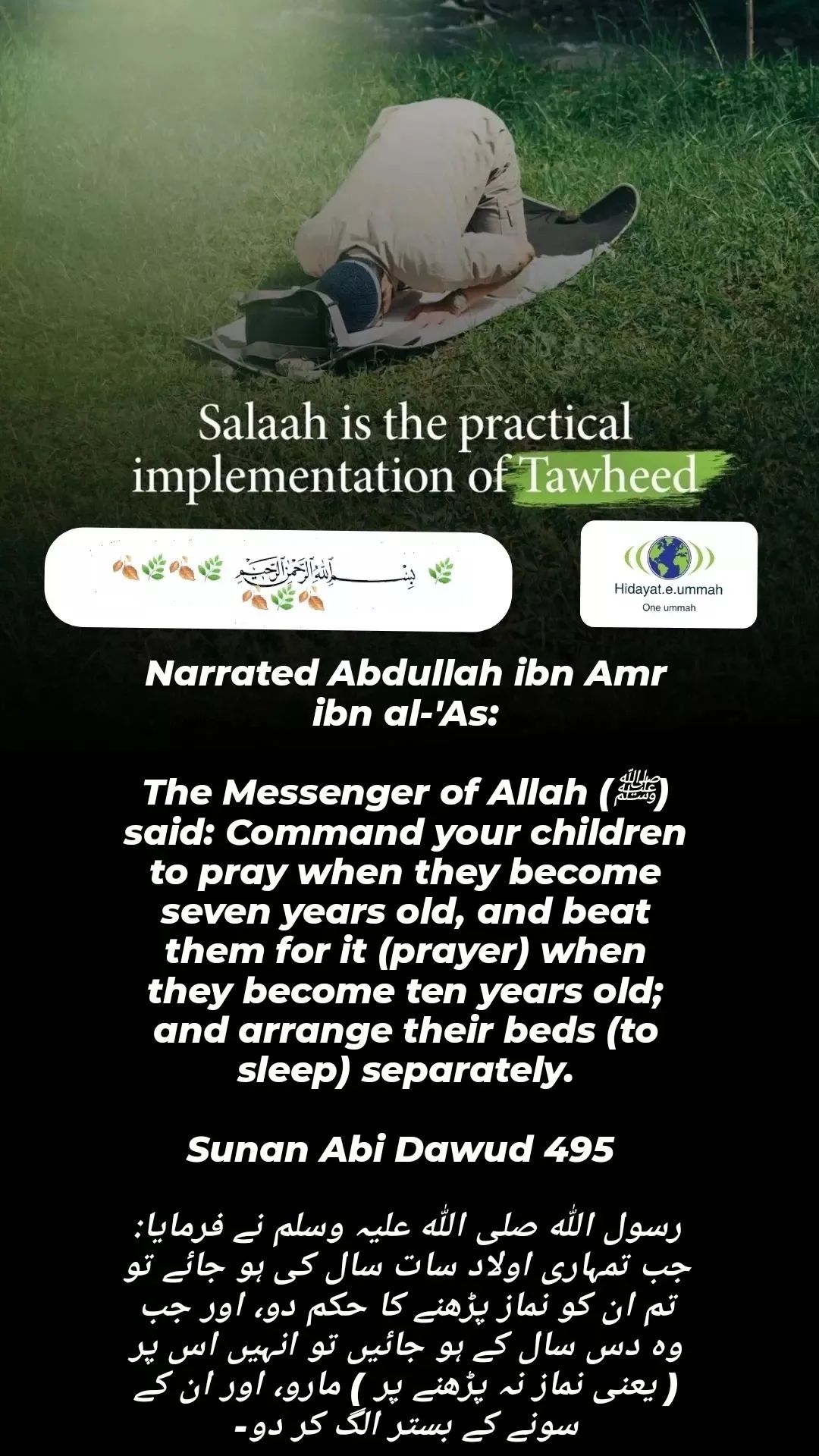
1. In this hadith, Abdullah ibn Amr ibn al-'As narrates that the Prophet Muhammad (Peace be upon him) advised parents to command their children to pray when they reach the age of seven.
2. The Prophet (Peace be upon him) also mentioned that when the children reach the age of ten, parents should discipline them by gently beating them if they do not pray, to encourage them to establish the habit of regular prayer.
3. Additionally, the Prophet (Peace be upon him) instructed parents to arrange their children's sleeping arrangements separately after the age of ten, promoting personal responsibility and discipline.
4. This hadith highlights the importance of instilling the habit of prayer in children from a young age and teaching them the value of discipline and respect for personal space as they grow older.
Hadith 15
15 of 29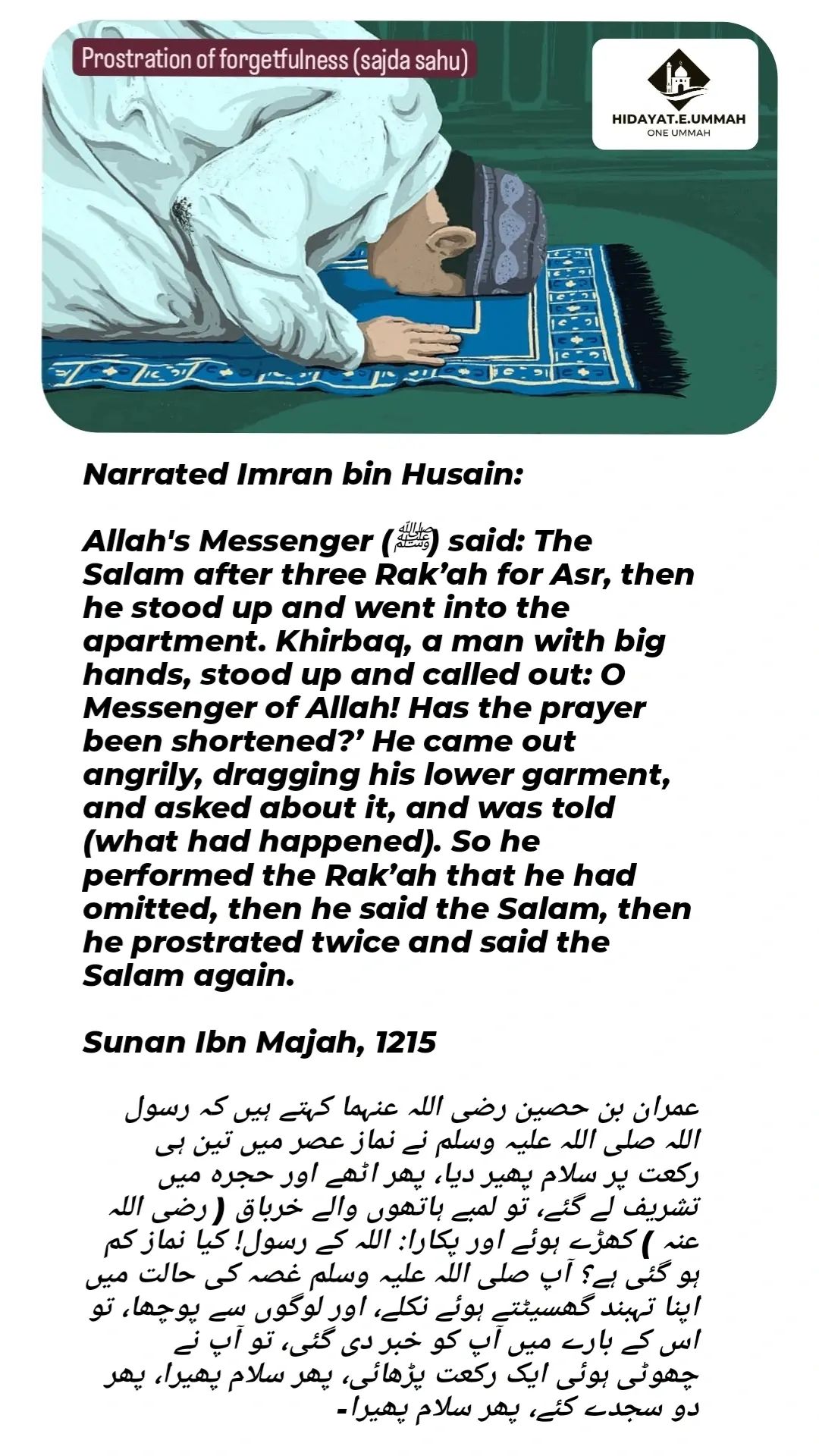
1. This hadith describes an incident where the Prophet Muhammad (Peace be upon him) led the Asr prayer, and after three rak'ahs, he gave the salam, signifying the end of the prayer.
2. A man named Khirbaq, who was tall and had big hands, stood up and asked if the prayer had been shortened, as he thought something was missing.
3. The Prophet (Peace be upon him) became angry and came out of his apartment to inquire about the situation. He was informed about the man's question.
4. The Prophet (Peace be upon him) then realized that he had mistakenly shortened the prayer. He performed the missed rak'ah, completed the prayer, and then performed two prostrations of forgetfulness (Sujood as-Sahw) to compensate for the error.
5. After the prostrations, he finished the prayer by saying the salam again. This shows the Prophet's commitment to ensuring the prayer is performed correctly and his ability to make up for mistakes in prayer.
Hadith 16
16 of 29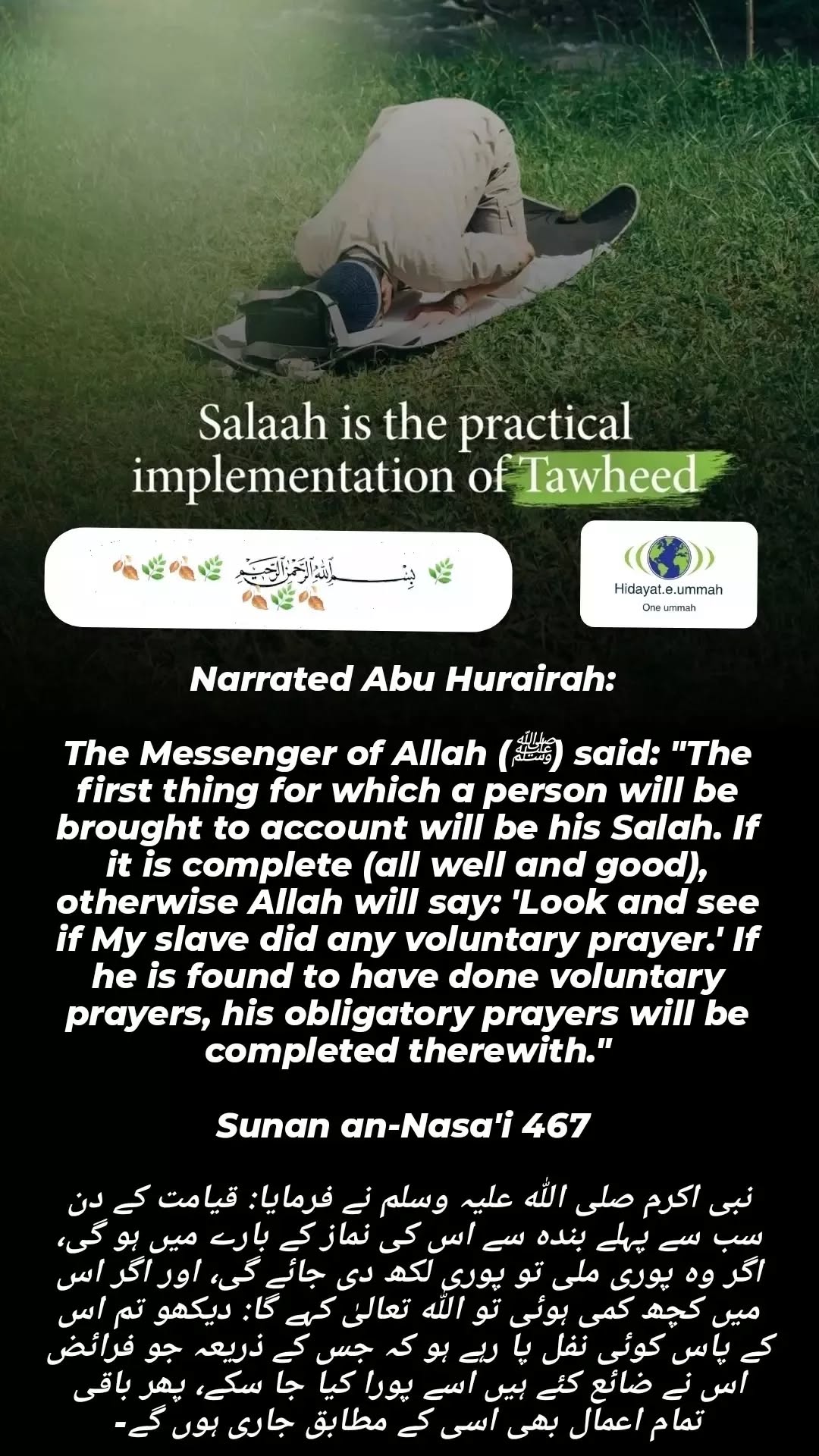
1. This hadith explains that the first thing a person will be questioned about on the Day of Judgment is their Salah (prayer).
2. If the person's obligatory prayers are found to be complete and correct, all is well.
3. If the obligatory prayers are found lacking or incomplete, Allah will then check if the person performed any voluntary (nafl) prayers.
4. If the person has performed voluntary prayers, Allah will use these to complete the missing parts of the obligatory prayers.
5. This highlights the importance of both obligatory and voluntary prayers in the sight of Allah, and how voluntary prayers can help compensate for any deficiencies in the obligatory ones.
Hadith 17
17 of 29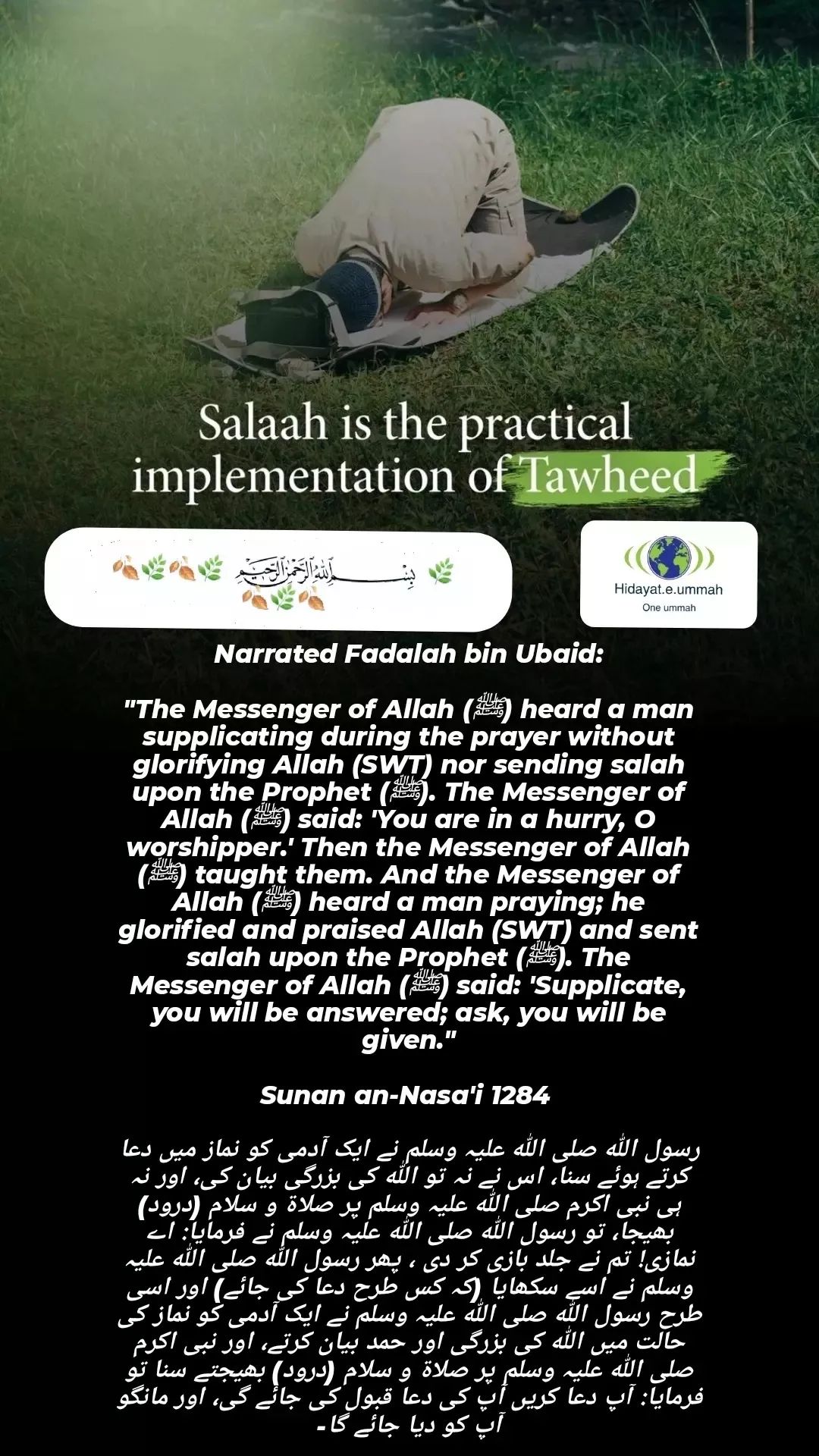
1. The hadith begins by describing an incident where the Prophet (Peace be upon him) heard a man making supplications during prayer, but the man did not praise or glorify Allah (SWT) nor send blessings upon the Prophet (Peace be upon him).
2. The Prophet (Peace be upon him) told the man that he was rushing in his supplication and should take his time.
3. The Prophet (Peace be upon him) then heard another person praying, who glorified Allah (SWT) and praised the Prophet (Peace be upon him). This man’s supplication was proper.
4. The Prophet (Peace be upon him) responded by saying that this person’s supplication would be answered, and his request would be granted.
5. The lesson is that one should glorify Allah and send blessings upon the Prophet (Peace be upon him) when making supplications, as this ensures that the supplication is answered and granted.
Hadith 18
18 of 29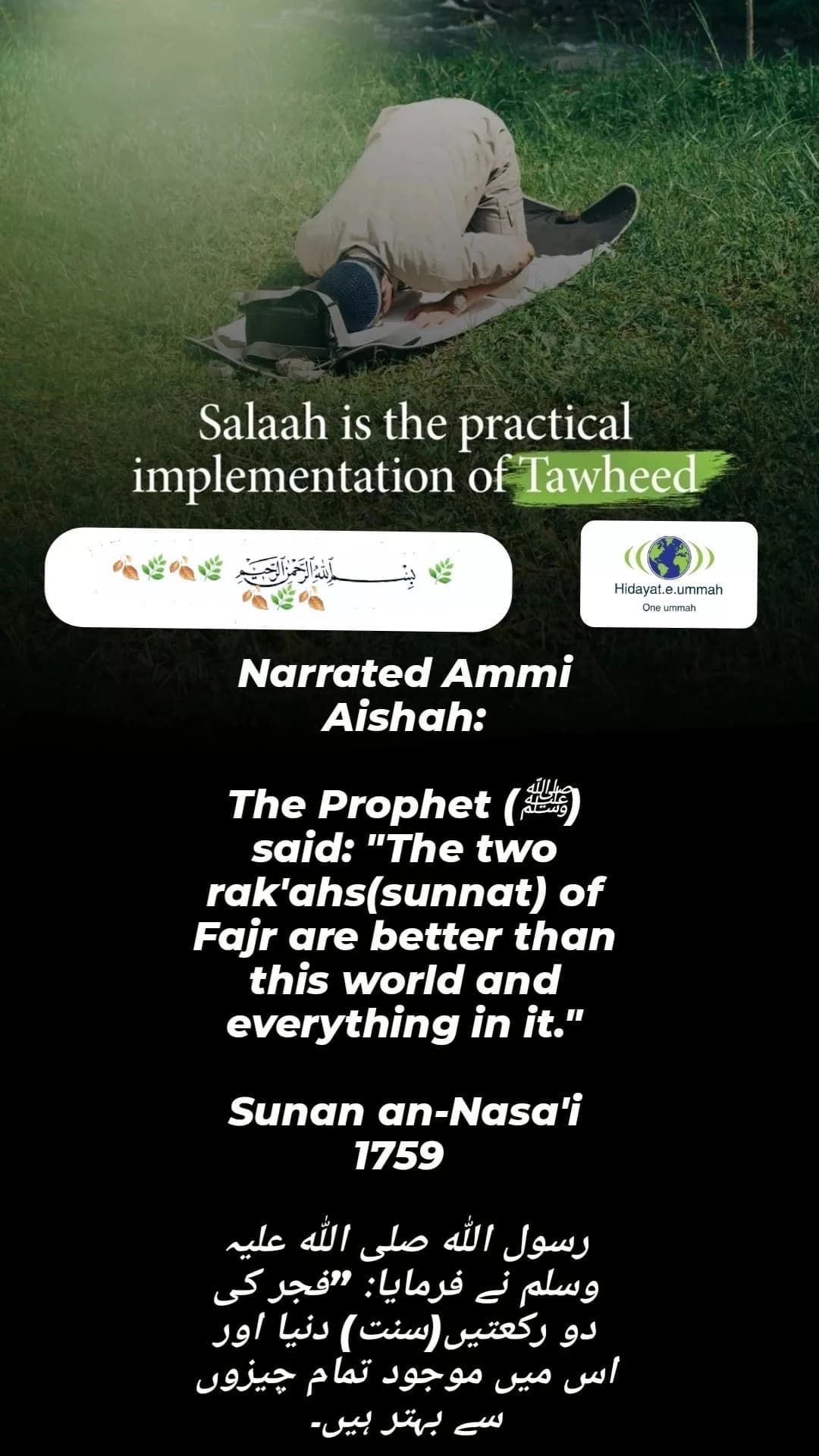
1. This hadith is about the two rak'ahs (Sunnah prayers) performed before the Fajr (dawn) prayer.
2. The Prophet (Peace be upon him) said that these two rak'ahs are more valuable than the entire world and everything in it.
3. This highlights the immense reward and significance of the Sunnah prayers, especially the ones before Fajr, as they hold a greater reward than all the worldly possessions and wealth.
4. The lesson is that even small acts of worship, like the Sunnah prayers, hold great value and importance in the sight of Allah (SWT).
Hadith 19
19 of 29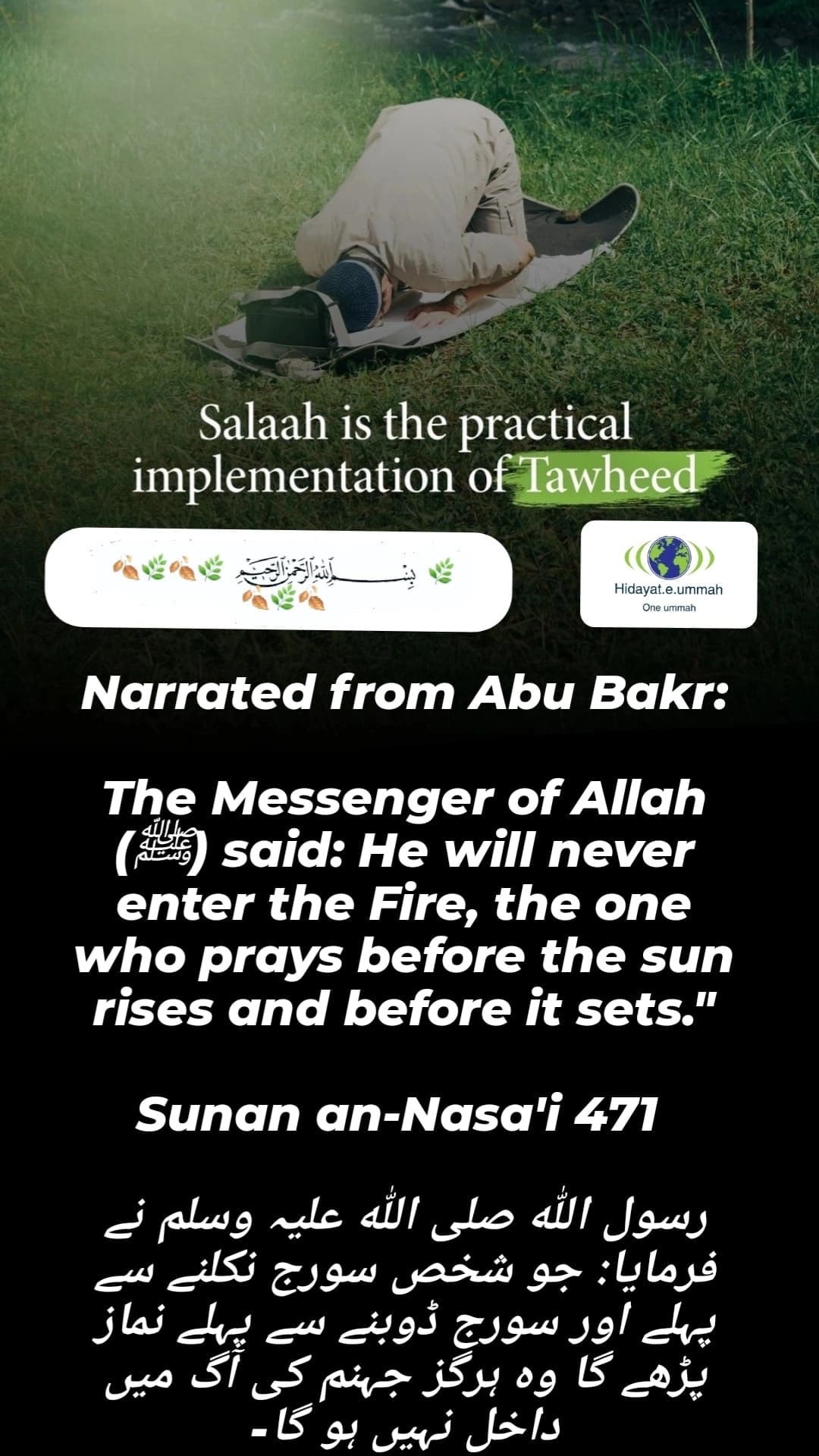
1. This hadith speaks about two specific times of prayer that are highly emphasized by the Prophet (Peace be upon him).
2. The Prophet (Peace be upon him) mentions that anyone who prays before the sun rises (i.e., the Fajr prayer) and before it sets (i.e., the Asr prayer) will never enter the Fire (i.e., Hell).
3. The reward for praying these two prayers at their prescribed times is great in the sight of Allah (SWT), and it is a means of protection from Hell.
4. This encourages Muslims to be diligent in performing the Fajr and Asr prayers on time, as they hold a special status and significance.
5. The lesson is that regularity in offering the obligatory prayers at the proper times is a way to gain Allah's protection and mercy.
Hadith 20
20 of 29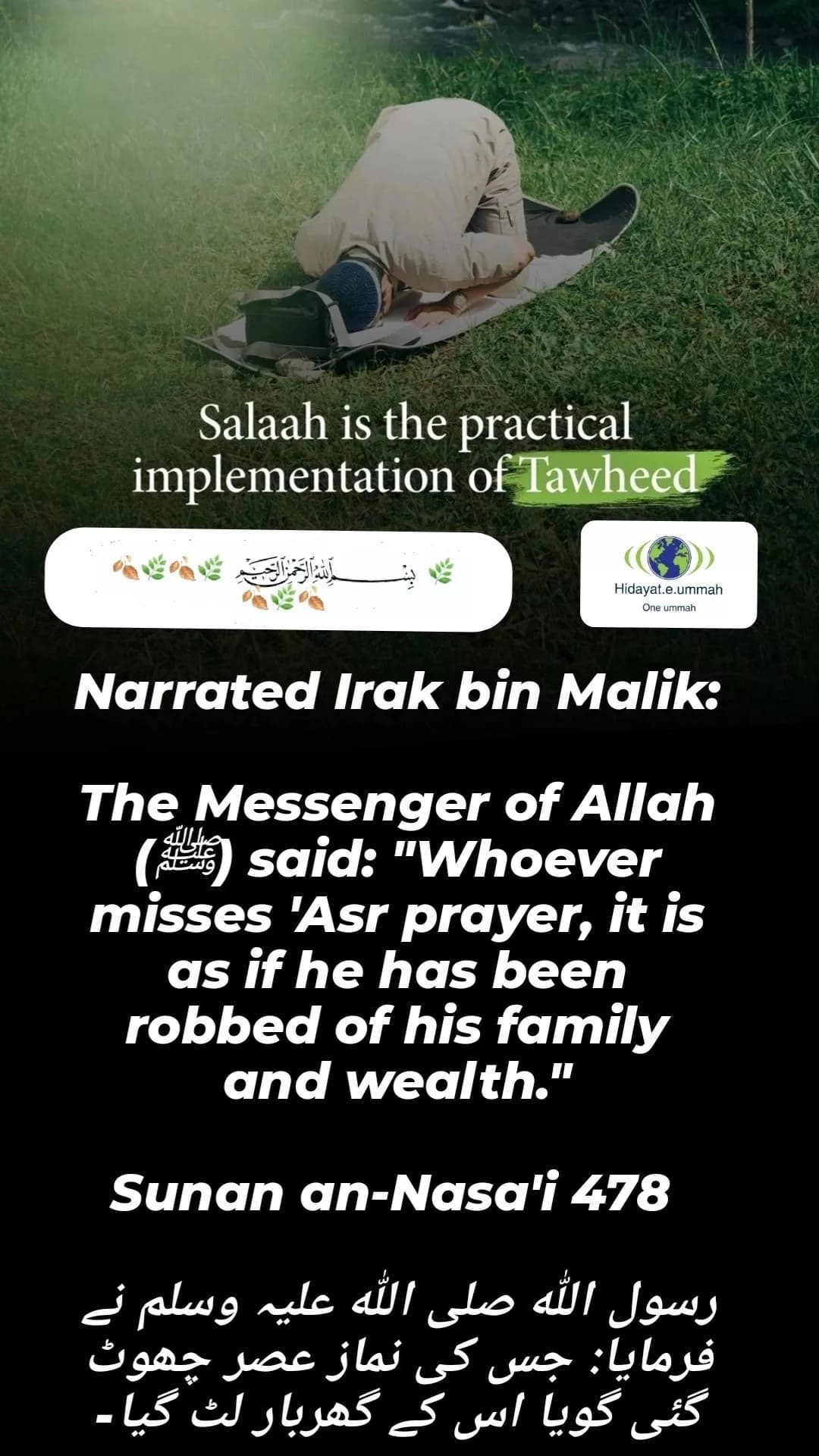
1. This hadith highlights the importance of the 'Asr prayer.
2. The Prophet (Peace be upon him) said that missing the 'Asr prayer is such a significant loss that it is like being robbed of one's family and wealth.
3. This is meant to emphasize the great value of the 'Asr prayer, indicating that it is not something to be taken lightly or neglected.
4. Losing out on the 'Asr prayer is likened to losing the most important possessions one has in life, which is a strong warning for Muslims to be mindful of their prayers.
5. The lesson is that Muslims should make every effort to perform the 'Asr prayer on time, as missing it leads to a loss far more severe than material possessions.
Hadith 21
21 of 29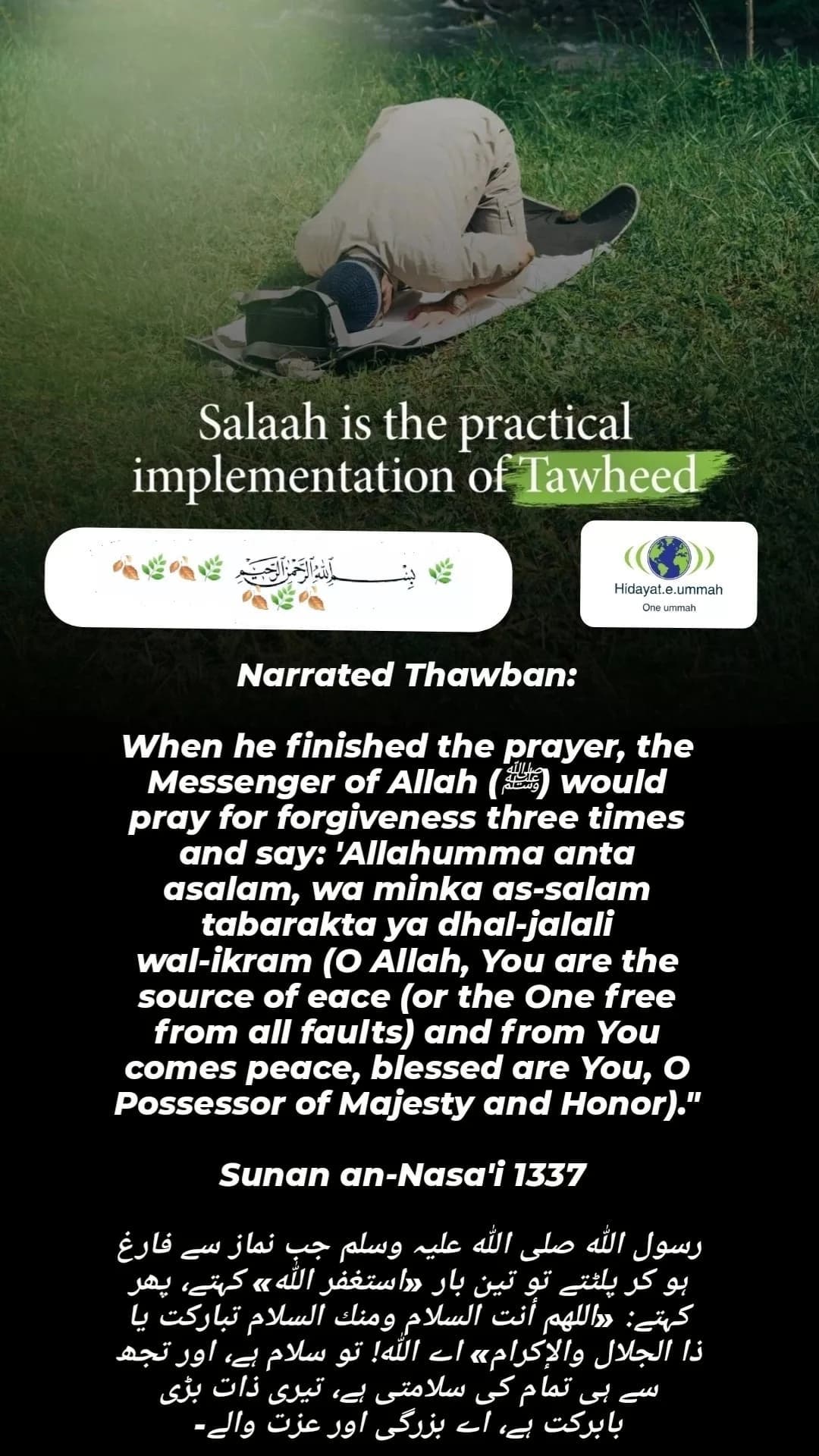
1. This hadith describes the actions of the Prophet (Peace be upon him) after completing his prayer.
2. After finishing his prayer, the Prophet (Peace be upon him) would seek forgiveness from Allah three times.
3. The Prophet (Peace be upon him) would then recite a supplication which acknowledges Allah as the source of peace and as free from all faults.
4. The supplication also praises Allah, mentioning His majesty and honor.
5. The phrase 'Allahumma anta asalam, wa minka as-salam' highlights that peace comes from Allah and is granted by Him.
6. The message is to seek Allah's forgiveness and remember His greatness and attributes after completing an act of worship.
Hadith 22
22 of 29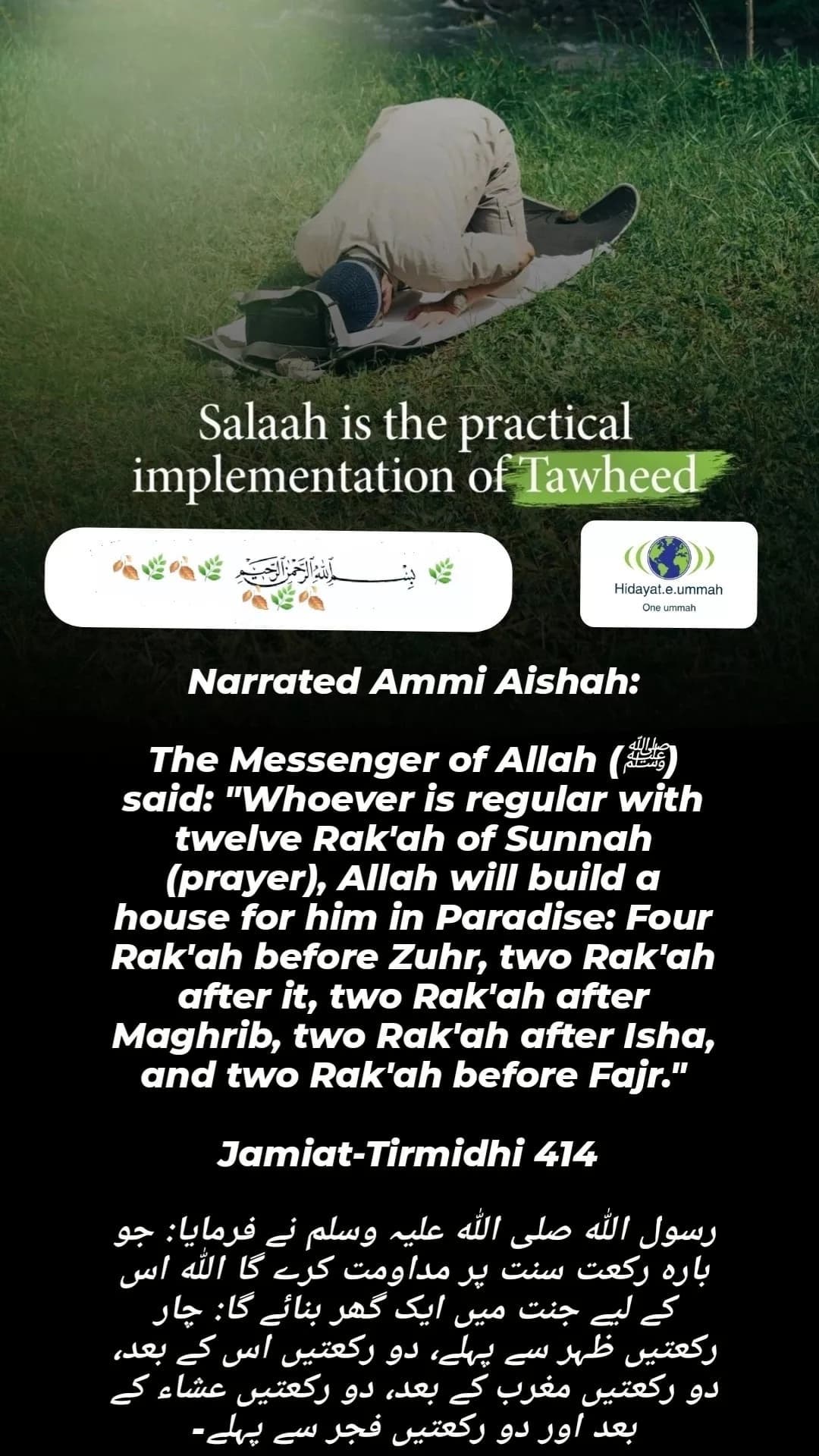
1. This hadith mentions the importance of regular Sunnah (voluntary) prayers in Islam.
2. The Prophet (Peace be upon him) said that whoever consistently performs twelve Rak'ah of Sunnah prayers will have a house built for them in Paradise.
3. The specific prayers are: four Rak'ah before Zuhr, two after Zuhr, two after Maghrib, two after Isha, and two before Fajr.
4. This shows that regular voluntary prayers hold great reward and are a means to gain a special place in Paradise.
5. The message is to encourage Muslims to perform these Sunnah prayers, as they bring both spiritual and material rewards.
Hadith 23
23 of 29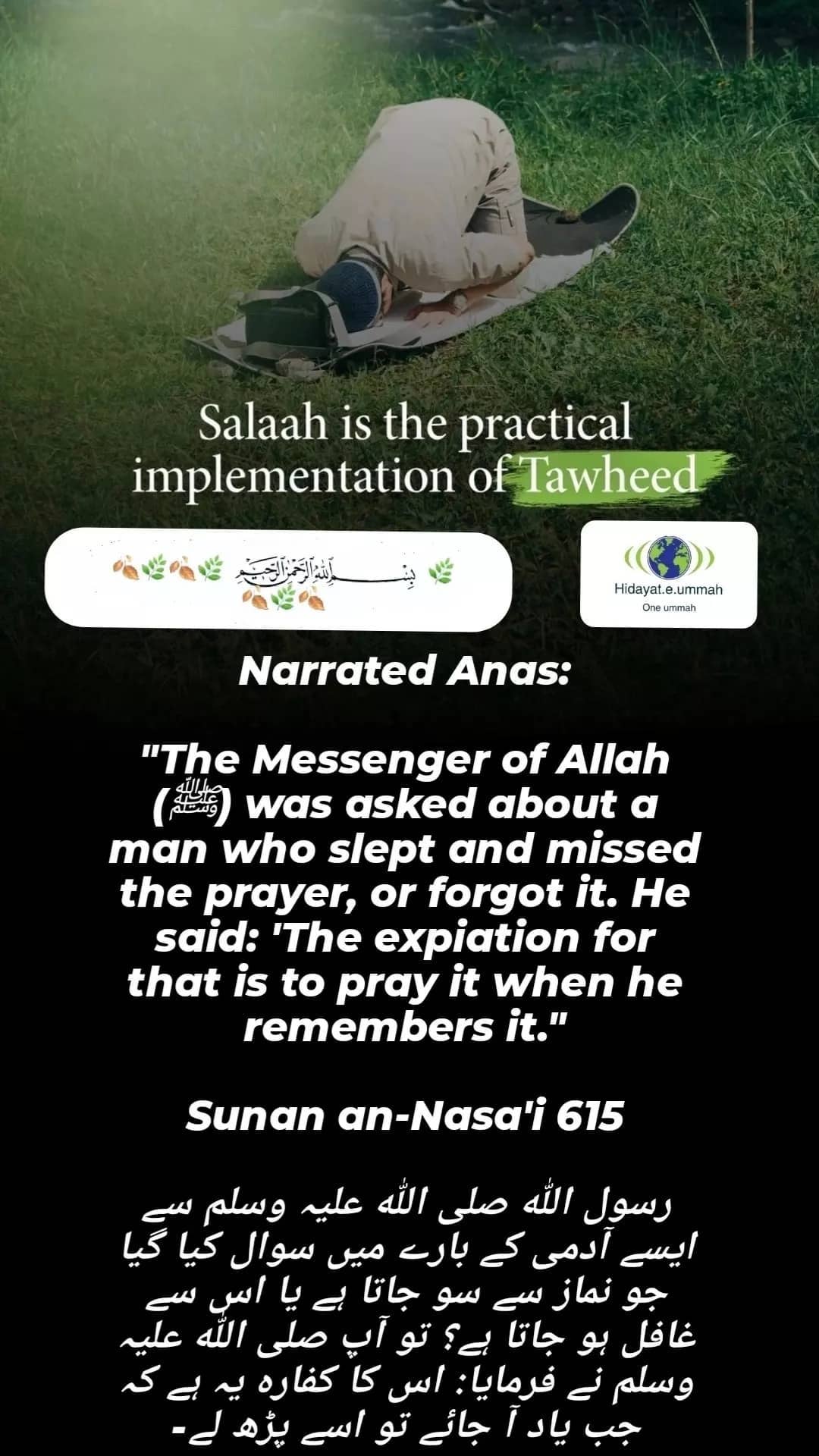
1. This hadith addresses a situation where a person misses a prayer due to sleep or forgetfulness.
2. The Prophet (Peace be upon him) was asked about what to do in such cases, and he explained that the person should pray the missed prayer as soon as they remember it.
3. The key message is that missing a prayer is not a major issue if it is due to forgetfulness or sleep, as long as the person makes up for it once they realize they missed it.
4. This shows the mercy of Allah and His understanding of human limitations, while still emphasizing the importance of performing prayers.
Hadith 24
24 of 29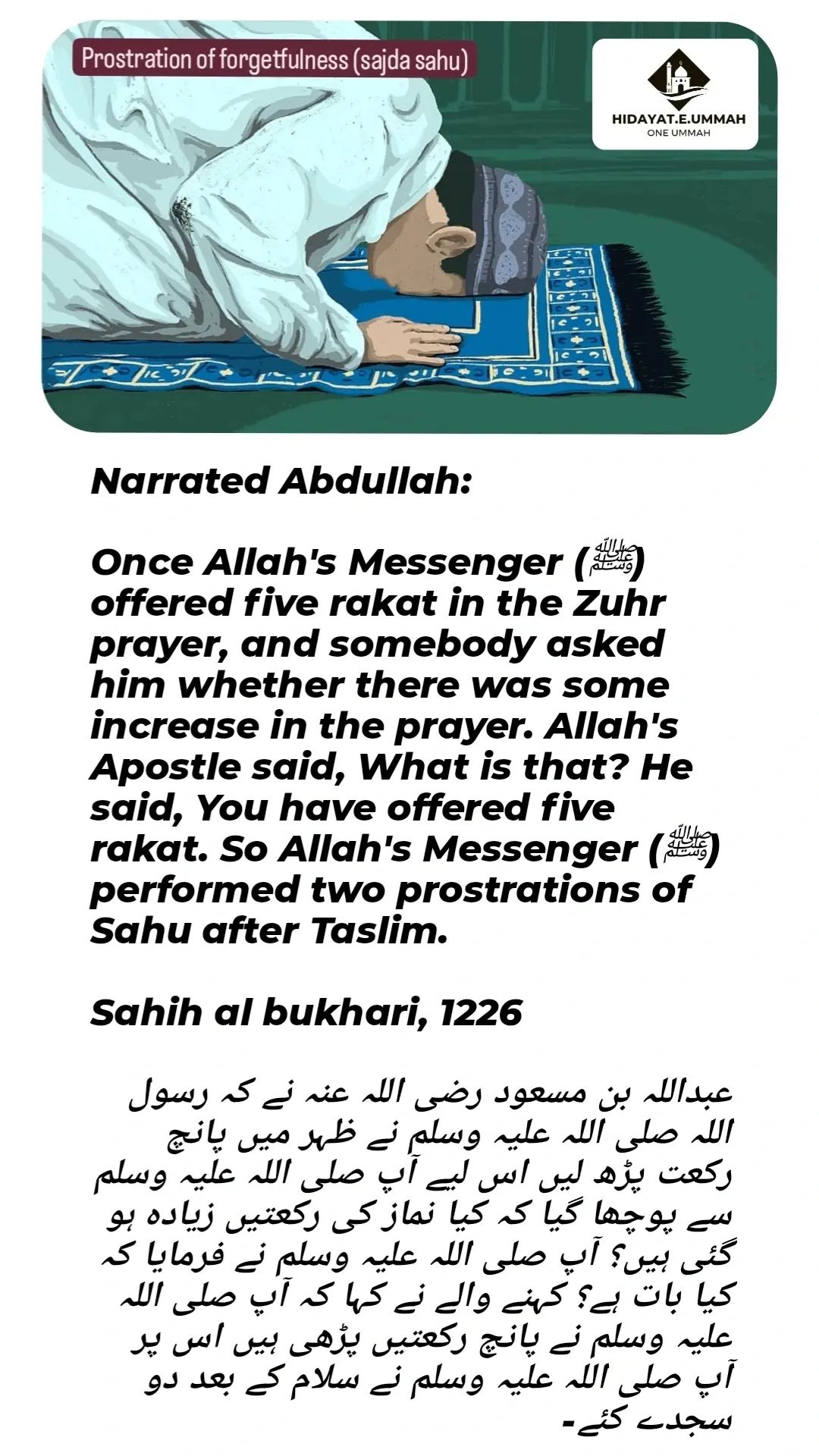
1. This hadith tells about an incident where the Prophet (Peace be upon him) offered five rak'ahs in the Zuhr prayer, which is normally four rak'ahs.
2. A person observed this and asked the Prophet (Peace be upon him) if there had been an increase in the prayer.
3. The Prophet (Peace be upon him) responded by confirming that he had prayed five rak'ahs, then performed two prostrations of Sahu (prostrations for forgetfulness) after completing the prayer with Taslim (saying 'Salam' to end the prayer).
4. This shows the process of correcting mistakes in prayer, and that the prostration of Sahu can be done to make up for any unintentional error during the prayer.
Hadith 25
25 of 29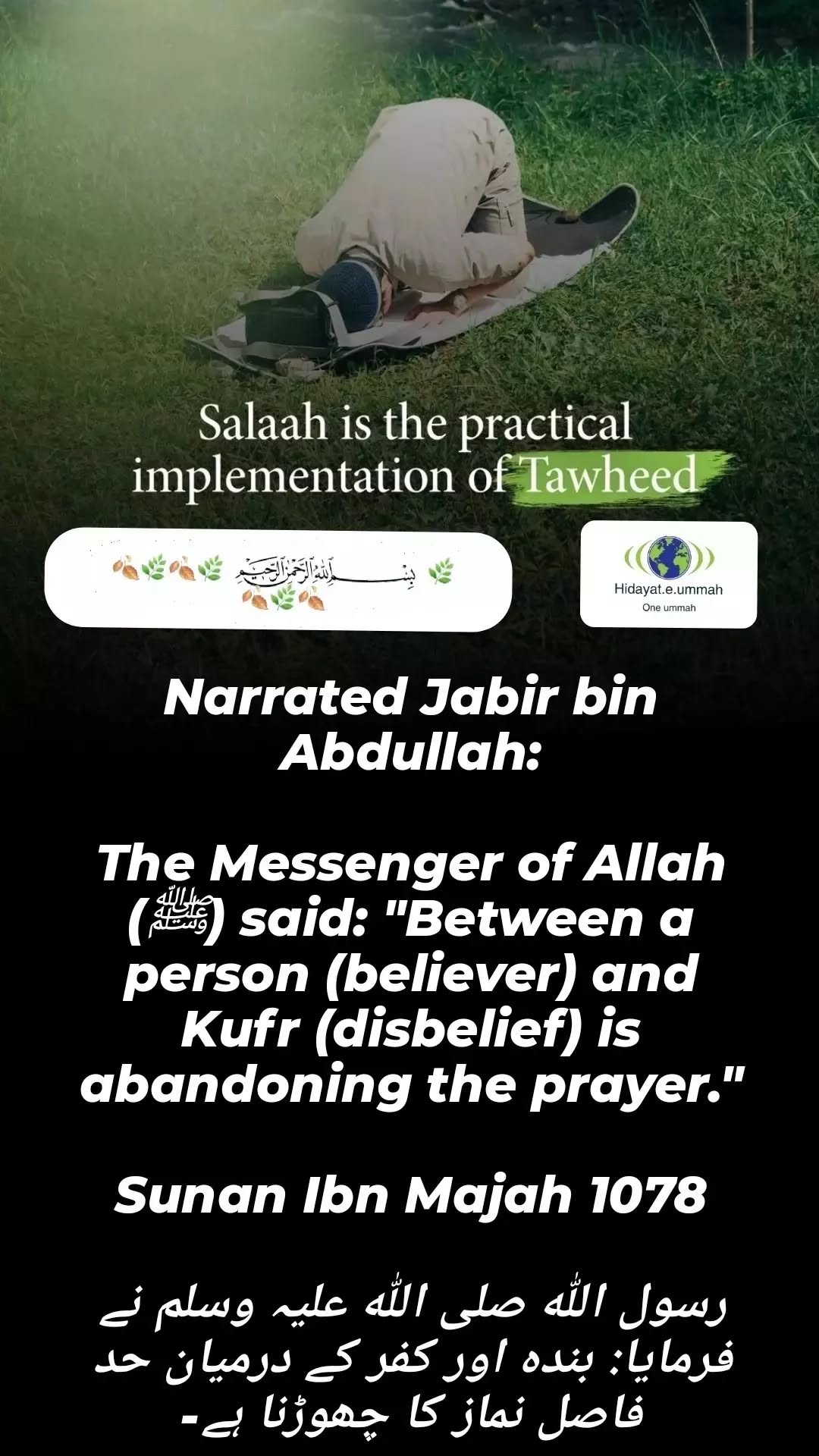
1. This hadith emphasizes the importance of prayer in Islam.
2. The Prophet (Peace be upon him) said that abandoning the prayer creates a separation between a believer (Muslim) and Kufr (disbelief).
3. It highlights how the act of praying is a key distinction that keeps a person firmly within the faith of Islam.
4. Neglecting the prayer is seen as a serious matter because it indicates a person turning away from the essential practices of Islam.
Hadith 26
26 of 29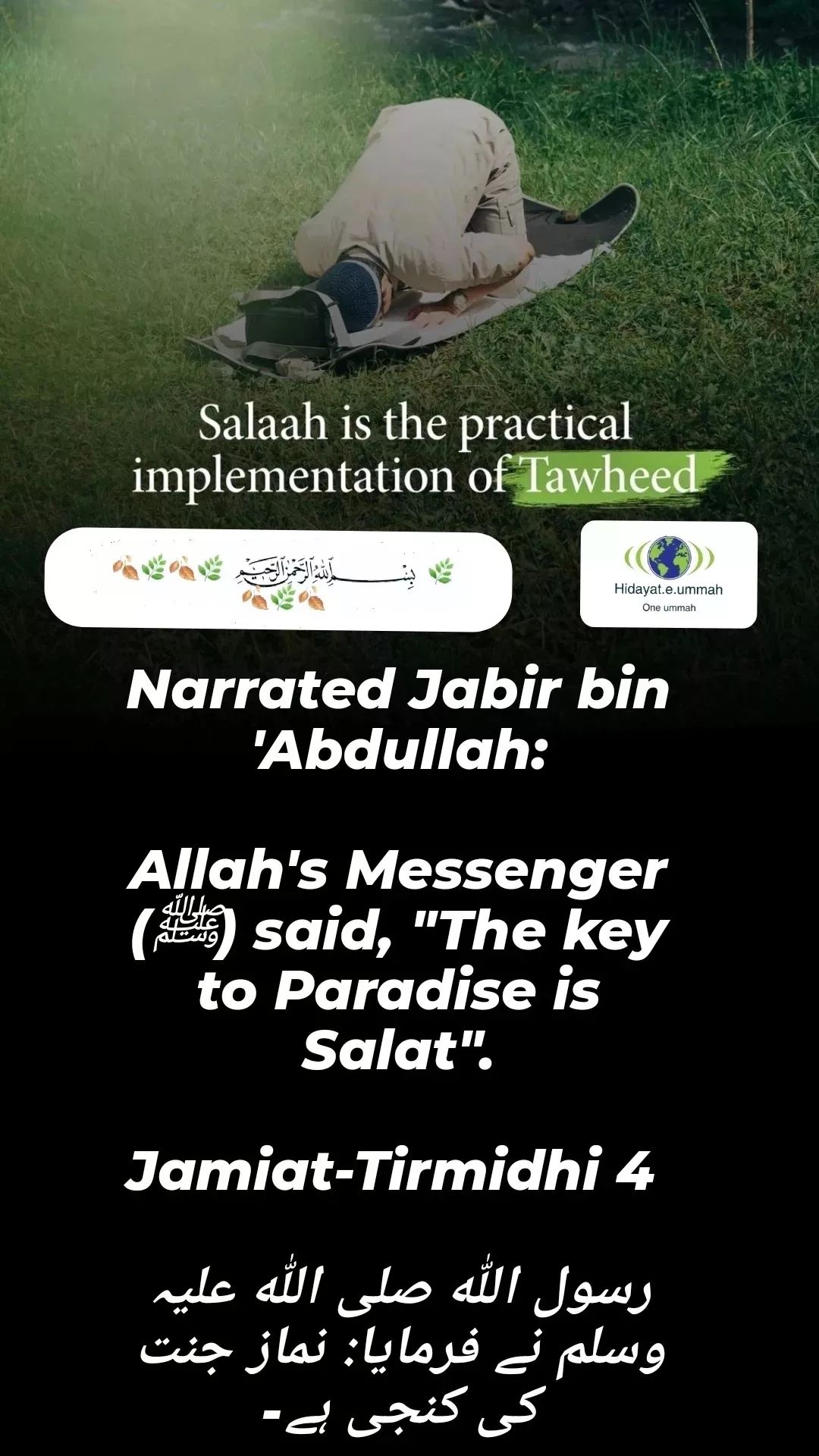
1. In this hadith, the Prophet (Peace be upon him) states that Salat (prayer) is the key to entering Paradise.
2. Prayer is an essential act of worship in Islam and is considered the foundation of a Muslim's relationship with Allah.
3. By performing regular prayers, a Muslim earns the reward and mercy of Allah, which leads them closer to Paradise.
4. This hadith highlights the importance of maintaining regular prayers as a means to secure one's place in the afterlife.
Hadith 27
27 of 29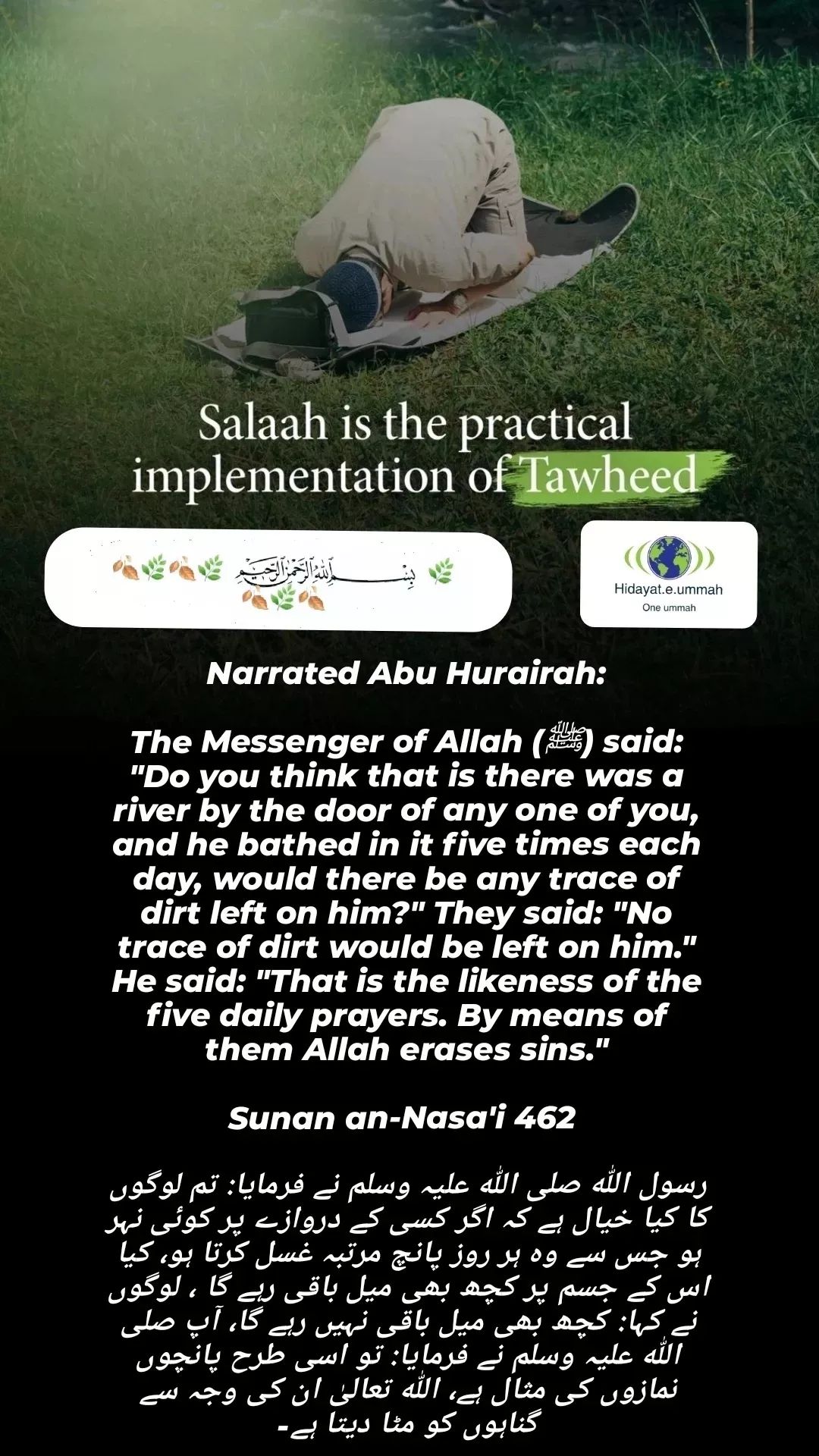
1. In this hadith, the Prophet (Peace be upon him) compares the five daily prayers to a river that washes away dirt.
2. The analogy is made that if a person were to bathe in a river five times a day, no dirt would remain on them.
3. Similarly, performing the five daily prayers regularly cleanses a person's sins and purifies them spiritually.
4. This highlights the importance of the five daily prayers as a means of maintaining purity and closeness to Allah, as well as the forgiveness they offer for sins.
Hadith 28
28 of 29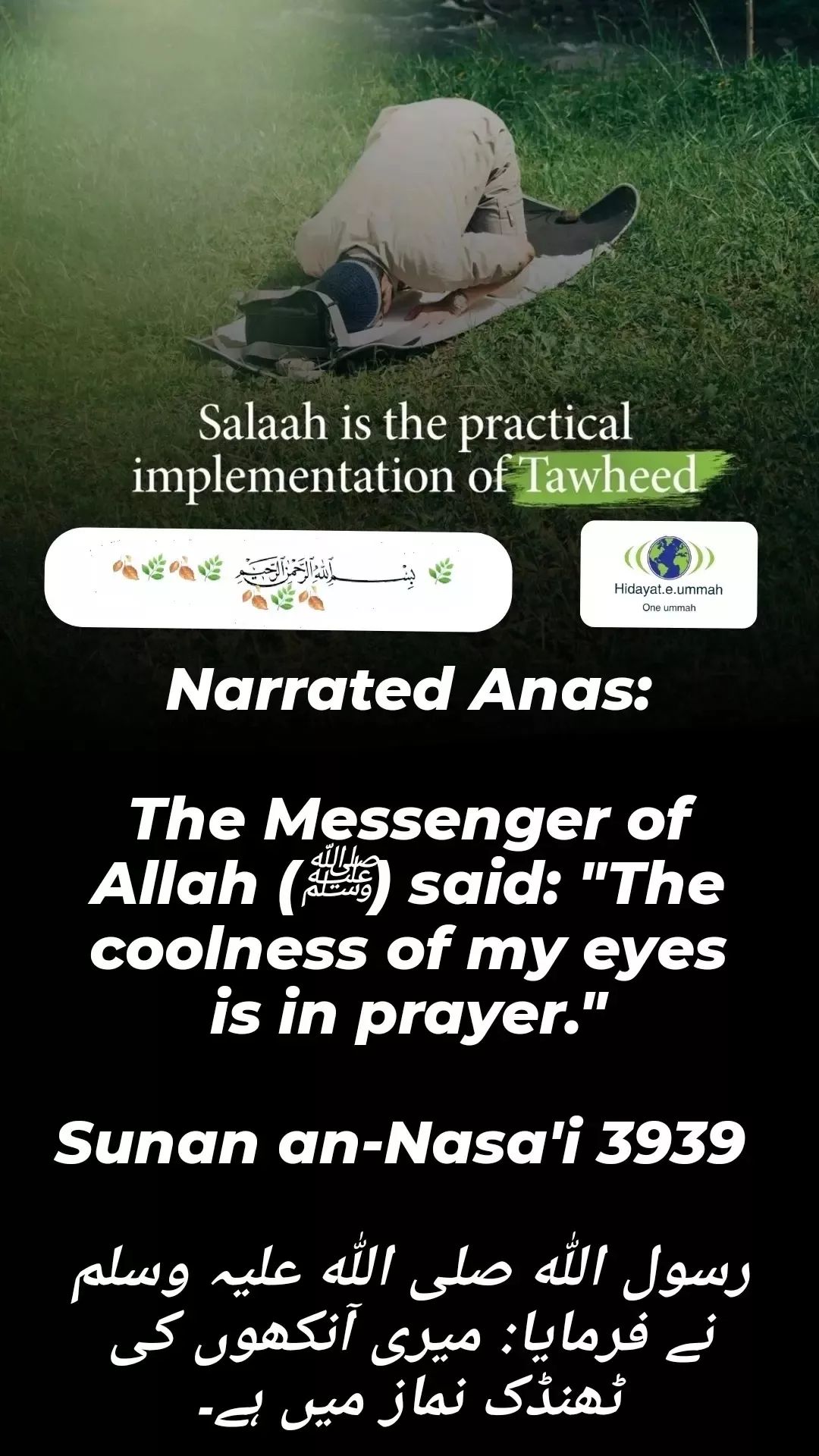
1. In this hadith, the Prophet (Peace be upon him) expresses that prayer brings him peace and comfort, referring to it as the 'coolness of his eyes.'
2. The phrase 'coolness of my eyes' is a metaphor used to describe something that brings joy, satisfaction, and relief.
3. This shows the importance of prayer in the Prophet's life as a source of tranquility and spiritual fulfillment.
4. The hadith emphasizes the deep connection and comfort one can find in worship, encouraging Muslims to find peace in their own prayers.
Hadith 29
29 of 29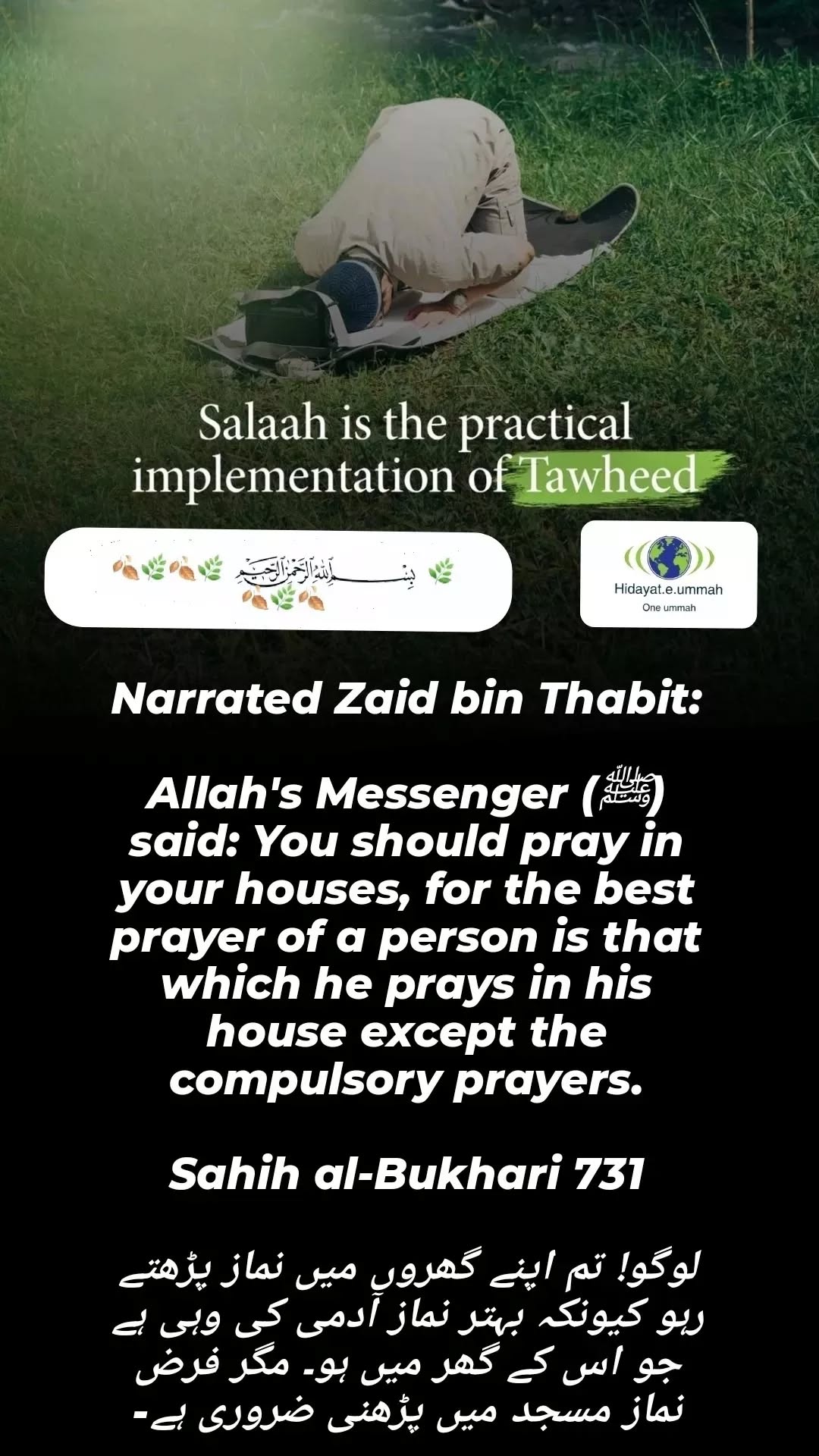
1. In this hadith, the Prophet (Peace be upon him) advises that people should perform prayers at home, as the best prayer for a person is the one prayed in their house.
2. The exception to this is the obligatory prayers (such as the five daily prayers), which are typically performed in congregation at the mosque.
3. The hadith emphasizes the significance of praying in one's own home, highlighting the reward of private worship.
4. This encourages individuals to establish a habit of regular prayer in their homes and make it a part of their daily routine.